

E-Financial
Report Reveals Foreign Investors Withdrew N45.8bn from NGX in January 2025

Foreign investors withdrew N45.85bn from the Nigerian stock market in January 2025, an outflow that significantly overshadowed the N25.66bn recorded as foreign inflows within the same period.

The latest Nigerian Exchange Domestic and Foreign Portfolio Investment Report revealed that foreign outflows accounted for 64.12 per cent of total foreign transactions on the exchange, reinforcing concerns over declining foreign participation in the market despite the relative stability of the naira.
It showed that total foreign transactions increased by 7.13 per cent, rising from N66.75bn in December 2024 to N71.51bn in January 2025.
However, this increase was largely driven by investors liquidating their holdings, as evidenced by the much larger outflow compared to inflows.
This trend indicates that while some foreign investors may still engage with the Nigerian market, a greater proportion opt to exit, contributing to capital flight.
The withdrawal of foreign funds from the market came amid a 9.89 per cent decline in total equity transactions on the NGX, which fell from N673.66bn in December 2024 to N607.05bn in January 2025.
On a year-on-year basis, total transactions dropped by 6.83 per cent from N651.52bn recorded in January 2024.
This suggests that investor sentiment remained subdued as both foreign and domestic players exercised caution in response to prevailing economic conditions.
The report read, “On a monthly basis, Nigerian Exchange Limited polls trading figures from market operators on their Domestic and Foreign Portfolio Investment flows.
“As at 31 January 2025, total transactions at the nation’s bourse decreased by 9.89 per cent from N673.66bn (about $438.64m) in December3 2024 to N607.05bn (about $410.84m) in January 2025.
“The performance of the current month when compared to the performance in January 2024 (N651.52bn) revealed that total transactions decreased by 6.83 per cent. In January 2025, the total value of transactions executed by Domestic Investors outperformed transactions executed by Foreign Investors by circa 76 per cent.”
The report further disclosed that foreign investors’ share of total market transactions stood at 11.78 per cent, with domestic investors dominating with 88.22 per cent.
This represents a slight increase from 9.91 per cent foreign participation in December 2024 but remains far below historical averages when foreign investors played a more substantial role in market liquidity and depth.
The disparity between inflows and outflows further highlights the persistent reluctance of foreign investors to commit fresh funds to Nigerian equities.
A closer look at domestic transactions revealed a notable shift in investor behaviour. Institutional investors, who traditionally drive market stability, significantly reduced their participation, with transactions falling by 33.95 per cent from N406.04bn in December 2024 to N268.19bn in January 2025.
This decline contrasts sharply with the retail segment, which saw a 33.10 per cent increase, as retail transactions rose from N200.87bn to N267.35bn within the same period.
This shift suggests that while institutional investors remain cautious, retail investors are showing increased enthusiasm, possibly seeking bargain opportunities in a market where valuations may appear attractive.
Despite concerns over foreign outflows, the exchange rate showed signs of stability, with the naira appreciating from N1,535.81/$ in December 2024 to N1,478.22/$ in January 2025.
This stability, however, was not sufficient to reverse foreign investor sentiment, as broader macroeconomic challenges persist.
The NGX report also provided a broader historical context, showing that over an 18-year period, domestic transactions increased by 33.15 per cent from N3.556tn in 2007 to N4.735tn in 2024, while foreign transactions grew by 38.31 per cent, from N616bn to N852bn over the same period.
However, foreign participation has steadily declined in recent years, with foreign investors accounting for only 15 per cent of total transactions in 2024, while domestic investors controlled 85 per cent of the market.
There is a need for foreign investors to increase their stake in Nigerian equities and for more stable macroeconomic policies, improved market transparency, and strengthened investor confidence.
However, the Central Bank of Nigeria’s monetary tightening policies, designed to curb inflation and stabilise the naira, are gradually boosting renewed foreign interest in the equity market.


Galaxy Backbone (GBB) has engaged banks, fintech firms and other technology stakeholders in fresh discussions on strengthening digital trust, regulatory compliance and secure digital infrastructure in Nigeria’s financial sector.

The engagement took place during the organisation’s second-quarter webinar, which brought together Chief Information Officers (CIOs) and industry leaders to examine strategies for building resilient digital infrastructure as financial services become increasingly technology-driven.
The webinar, themed “Building Digital Trust in Nigeria’s Financial Sector: Navigating Regulatory Compliance and Infrastructure Performance,” comes amid the Central Bank of Nigeria’s (CBN) directive requiring banks, fintech companies, mobile money operators and other payment service providers to store payment transaction data generated within the country on local servers.
The CBN had said the policy is aimed at strengthening regulatory oversight, improving transparency, reducing concentration risks and ensuring that critical payment data remains within Nigeria’s jurisdiction.
Opening the webinar, GBB’s Executive Director, Finance, Ibrahim Sani, said the rapid transformation of the country’s financial services industry had made trusted digital infrastructure indispensable to the delivery of secure, reliable and future-ready financial services.
He noted that Galaxy Backbone already provides digital infrastructure supporting both public and private sector organisations, including several financial institutions that rely on its secure connectivity, cloud computing and data centre services.
According to him, “Galaxy Backbone continues to provide the digital backbone that supports both public and private sector institutions. We remain well positioned to support the industry’s compliance journey by delivering resilient infrastructure that meets evolving regulatory and business requirements.”
Also speaking, the Executive Director, Digital Exploration and Technical Services, Olumbe Akinkugbe, stressed that compliance with CBN directives and other regulatory frameworks was essential to strengthening transparency, accountability, consumer confidence and the security of financial data in an increasingly digital economy.
He maintained that regulatory compliance had become a key pillar in safeguarding Nigeria’s financial ecosystem as digital transactions continue to expand.
The webinar also featured a presentation by GBB’s Head of Automation and Integration, Thomas Oghenebhumhe, who showcased the organisation’s sovereign cloud platform and highlighted the importance of secure cloud adoption across the financial services industry.
He explained that resilient cloud infrastructure enables financial institutions to innovate more rapidly, improve operational efficiency, safeguard sensitive information and comply with evolving regulatory standards.
His presentation was followed by an interactive session during which participants sought practical insights on cloud migration, data sovereignty and regulatory compliance.
Head of Data Centre Operations, Samuel Olusola Oyeleke, later highlighted Galaxy Backbone’s globally certified Tier III and Tier IV data centre infrastructure, describing it as resilient enough to guarantee uninterrupted digital services, disaster recovery and business continuity for mission-critical financial operations.
Closing the webinar, Executive Director, Customer Centricity and Marketing, Olusegun Olulade, said building digital trust required sustained collaboration among regulators, technology providers and financial institutions.
“As Nigeria’s financial ecosystem becomes increasingly digital, organisations must invest in infrastructure that not only meets regulatory requirements but also guarantees resilience, security, business continuity and customer confidence,” he said.
Olulade reaffirmed Galaxy Backbone’s commitment to supporting the financial services industry with secure, resilient and globally aligned digital infrastructure that enables institutions to innovate with confidence while maintaining compliance with changing regulatory standards.
The organisation said its Uptime-certified data centres, Payment Card Industry Data Security Standard (PCI DSS) certification, sovereign cloud platform and nationwide fibre-optic network provide trusted platforms for secure data hosting, payment security, regulatory compliance, business continuity and disaster recovery.
According to GBB, the infrastructure also supports Nigeria’s growing data sovereignty agenda by ensuring that critical financial data is securely hosted, readily accessible and remains within the country’s jurisdiction in line with regulatory expectations.
With more than two decades of delivering shared ICT infrastructure and digital services, Galaxy Backbone said it has continued to support digital transformation across both the public and private sectors through secure connectivity, cloud services, cybersecurity, managed ICT services and enterprise-grade data centre solutions.

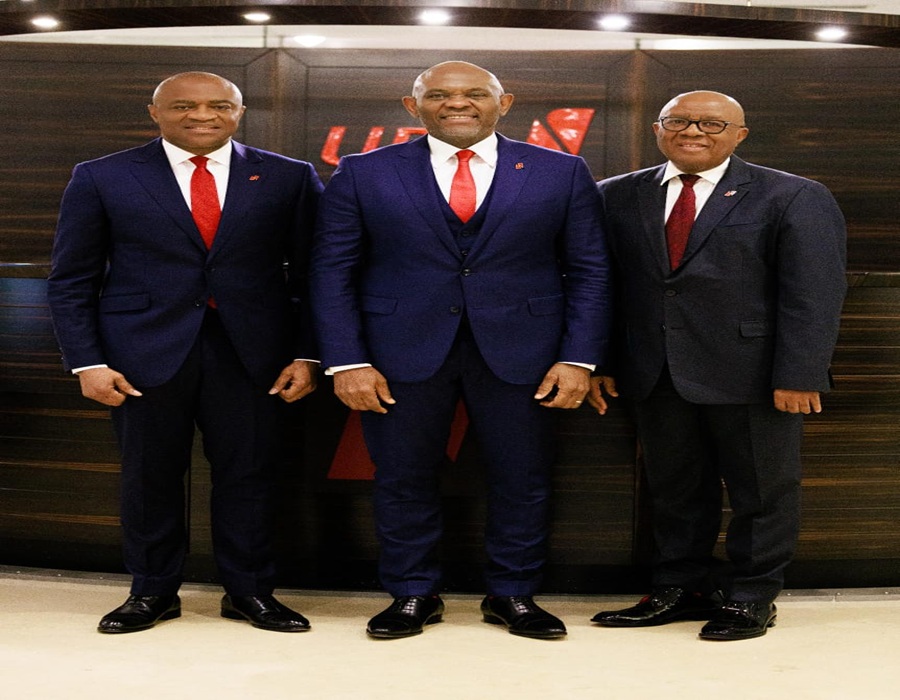
United Bank for Africa (UBA) Plc has announced that its Group Chairman, Mr Tony O. Elumelu, will retire from the Board of Directors on Aug. 21, 2026, upon completing the 12-year tenure limit for non-executive directors prescribed by the Central Bank of Nigeria (CBN).

The bank disclosed this in a statement issued following a meeting of its Board of Directors held on July 6.
According to the statement, the board accepted Elumelu’s retirement and elected Mr Emmanuel N. Nnorom, a Non-Executive Director of the bank, as his successor with effect from Aug. 21, 2026.
The board expressed appreciation to Elumelu for what it described as his visionary leadership and immense contributions to the growth and institutional development of the UBA Group.
It noted that under his leadership, UBA expanded into a leading pan-African financial institution with operations in 20 African countries and four global financial centres, serving more than 50 million customers.
The board described Elumelu’s tenure as a defining period in the bank’s history.
Nnorom, who will assume office as chairman upon Elumelu’s retirement, is a chartered accountant with more than 40 years of experience in banking, finance and auditing.
The statement said he brings extensive leadership experience and deep institutional knowledge of the bank to his new role.
Speaking on his retirement, Elumelu described serving UBA as one of the greatest privileges of his professional career.
“Serving United Bank for Africa has been one of the great privileges of my career.
“UBA has established a unique competitive position across Africa and globally, and I leave the Board with great confidence in UBA’s future.
“Emmanuel Nnorom is a leader of integrity, experience and sound judgement, and I am confident that the bank will continue to thrive under his leadership,” he said.
Responding to his appointment, Nnorom expressed gratitude to the board for the confidence reposed in him.
“I am honoured by the trust the Board has placed in me and deeply conscious of the legacy I inherit.
“I look forward to working with my colleagues on the Board, Management and our staff across all our markets to sustain UBA’s momentum and continue delivering long-term value to our shareholders, customers and stakeholders,” he said.
UBA operates in 20 African countries as well as the United Kingdom, the United States, France and the United Arab Emirates.
The bank provides retail, commercial and institutional banking services and serves more than 50 million customers globally, with a workforce of about 25,000 employees across its operations.

Zedvance Finance Limited has appointed Professor Pius ‘Deji’ Olanrewaju as Chairman of its Board of Directors, effective July 1, subject to the approval of the Central Bank of Nigeria (CBN).

Professor Pius ‘Deji’ Olanrewaju
The company disclosed this in a statement, describing the appointment as a significant step in strengthening its corporate governance structure and positioning the organisation for its next phase of growth.
According to Zedvance, the appointment reflects its commitment to building a robust governance framework capable of driving innovation, sustainable growth and long-term value creation for stakeholders.
The company said Olanrewaju brings extensive boardroom experience, leadership credentials and expertise in governance, strategy and organisational transformation to the role.
It noted that the strengthened board structure would enhance oversight and support the company’s strategic growth ambitions.
Speaking on his appointment, Olanrewaju expressed appreciation for the confidence reposed in him.
“I am honoured to assume the role of Chairman of the Board of Zedvance Finance.
“The company has established a strong reputation as a trusted financial partner, leveraging innovation and technology to create meaningful impact.
“I look forward to working with the board and management to support the company’s strategic aspirations and deliver sustainable value for our stakeholders,” he said.
Olanrewaju is a legal scholar, banking expert and corporate leader with more than four decades of experience spanning banking, finance, academia and institutional governance.
He holds degrees in Law, Arts and Social Sciences, including a Bachelor of Laws (LL.B), Bachelor of Laws (B.L.), Bachelor of Arts (B.A.), Master of Science (M.Sc.), Master of Laws (LL.M.) and a Doctor of Philosophy (Ph.D.).
He is a Fellow of the Chartered Institute of Bankers of Nigeria (FCIB), Fellow of the Institute of Capital Market Registrars (FIMA), Fellow of the Institute of Management and Administrative Technology (FCMR), and Fellow of the Enterprise Risk Management Professionals (FERP).
Olanrewaju is also a member of several professional bodies and served as the immediate past President and Chairman of the Council of the Chartered Institute of Bankers of Nigeria (CIBN).
During his more than 35 years of service to the institute, he held several strategic positions, including Chairman of its Capacity Building and Certification Committee.
He is currently a Professor of Banking Law at Babcock University, where he previously served as Provost and Dean of the School of Law and Security Studies.
He has authored and co-authored several academic publications and serves on the boards of a number of organisations, including Babcock University Microfinance Bank.
The company expressed confidence that his experience in strategic leadership, corporate governance and financial services oversight would support its long-term growth and institutional development.

DSS Spyware Acquisition Enables Illegal Wiretaps, Detentions – The ICIR

Microsoft to Lay Off 4,800 Workers

Access Bank, Fifth Chukker and UNICEF Renew Commitment to Expanding Educational Opportunities for Nigeria’s Most Vulnerable Children

IHS Nigeria, FCT-HSES Concludes Clean Cooking Energy Campaign “Project Breathe Clean Air” in Abuja

Kaspersky Transforms Threat Intelligence Reporting into an Interactive Content Hub

Mobile Internet Gender Gap Widest in Africa – GSMA

NASENI Moves to Digitize CCB’s 5m Assets Declaration and Operations

Nigeria Launches FreeTV Nationwide

CANAL+ Partners Samsung to Pre-Load DStv Stream on New Samsung TVs In Nigeria, Other African Countries

UK, Nigeria Launch £15m Growth Programme to Accelerate Economic Transformation




 E-Financial2 days ago
Tokenization, Blockchain Technology will Transform Financial Institutions – IMF

 General News2 days ago
NIS Deploys Advanced Surveillance Masts, other Critical Infrastructure to Boost Border Security

 Broadcasting2 days ago
Obi, NDC Presidential Candidate Faces N50Bn Defamation Claim over Alleged Podcast Remark

 E-Business2 days ago
Weebly Websites to Shut Down for Nigeria, 66 Other Countries from September

 E-Financial2 days ago
FG Denies N8 Trillion ‘Shadow Budget’, Says IMF Quoted out of Context

 Telecom2 days ago
No Plans for Fresh Tariff Hike – MTN

 News2 days ago
World Bank Sounds Alarm: Low Revenue, Not Debt, Is Nigeria’s Biggest Fiscal Threat

 Telecom2 days ago
Airtel Africa Foundation Equips 200 Young Women with Digital Skills to Drive Nigeria’s Tech Economy