

/home/kenneth/web/nigeriacommunicationsweek.com.ng/public_html/wp-content/themes/zox-news/parts/post-single.php on line 153
">
Warning: Undefined array key 0 in /home/kenneth/web/nigeriacommunicationsweek.com.ng/public_html/wp-content/themes/zox-news/parts/post-single.php on line 153
Warning: Attempt to read property "cat_name" on null in /home/kenneth/web/nigeriacommunicationsweek.com.ng/public_html/wp-content/themes/zox-news/parts/post-single.php on line 153
Reps Summon Alison-Madueke over 8Bn Oil Swap Deal

House of Representatives joint Committee on Petroleum Resources (Downstream and Upstream) and Judiciary yesterday asked Diezani Alison-Madueke, minister of Petroleum Resources to appear before them over the alleged diversion of $8 billion meant for the federal government’s coffers.
The committees claimed that the $8 billion represents the under- declared amount in the crude oil swap deal.
The House joint committees which have written the minister over the alleged diversion of multi-billion dollars on importation of petroleum products, also summoned the Executive Secretary of the Petroleum Products Pricing Regulatory Agency (PPPRA).
It would be recalled that the House had mandated the joint committees to investigate allegation by a Swiss- based non governmental and advocacy organisation, Berne Declaration, that two Swiss oil trading companies – Vitol and Trafigura – in connivance with the Nigerian National Petroleum Corporation (NNPC) have ripped the country off about $6.8 billion in two years.
.
Also fingered in the scam include Ontario, Aiteco, Vitol, PPPRA, Mercuria Energy and Eterna Oil and Gas.
The Nigeria Extractive Industries Transparency Initiative (NEITI) also accused some oil traders of under-delivering 500,075,239.3 litres of products worth $8 billion in year 2011.
NEITI, in its report submitted to the House, gave their names as: Trafigura (173,786,600 litres); Vitol (654,440.7 litres); Taleveras (152,308,878 litres); Aiteo Nigeria Limited (193,046,590 litres) and Ontario Oil and Gas (180,278,732 litres).
Speaking at the resumed hearing on “the alleged connivance by NNPC with Swiss oil dealers to rob Nigeria of billions of dollars”, Muraina Ajibola, chairman, House Committee on Petroleum (Upstream), said there was need to hear from the Minister of Petroleum Resources.
“I have not heard anything from her (Minister). We will give her a date to appear before us and that will be the last,” he warned.
However, Mrs Ada Ugo-Ngadi, MD/CEO, Ontario Oil and Gas Limited, who made submissions before the committee, derided the allegations of the Swiss-based organisation.
She said:”The publication is a figment of the writers’ imagination, seeking to distract Nigerians and cause distrust of indigenous oil companies. It is baseless, faulty and deserves no serious attention.”
Mrs Ugo-Ngadi said the selection of buyers of Nigerian crude was done on transparent and competitive basis, adding that her company’s business dealings with the NNPC was above board.
“Ontario’s SWAP arrangement with NNPC/PPMC is in line with international standard, transparent and complies with all audit requirements. It is transparent and conducted in line with global best practice,” she said.
She, however admitted that she had been arrested by the Economic and Financial Crimes Commission (EFCC).
The committee expressed dissatisfaction over Mrs Ugo-Ngadi’s presentation, particularly as she could not justify the quantity of crude oil lifted against the refined products supplied during the period under review.
She was, therefore, requested to submit documents on the volume of crude oil lifted, contract agreements signed with other partners, date and cost of products lifted and the vessels involved and list of the agencies, which authorised the transaction and the terminals the products berthed.
AITEO Energy Resources Limited, which also appeared before the committee, said it lifted 10,231,122 barrels of crude oil valued at $1.170,732,027.62 and supplied refined products worth $1,111,972,698.18.18 in 2011.


Warning: Undefined array key 0 in /home/kenneth/web/nigeriacommunicationsweek.com.ng/public_html/wp-content/themes/zox-news/parts/post-single.php on line 493
Warning: Attempt to read property "cat_ID" on null in /home/kenneth/web/nigeriacommunicationsweek.com.ng/public_html/wp-content/themes/zox-news/parts/post-single.php on line 493

Lebara Nigeria has become a member of the Global System for Mobile Communications Association (GSMA) as it expands operations in the West African country.

The membership places Lebara Nigeria within a global network of more than 1,000 mobile operators, device manufacturers, technology companies and digital service providers.
Through the GSMA, the company will have access to industry research, technical standards, policy engagement and industry initiatives.
Lebara Nigeria said the move reflects its participation in the wider telecommunications ecosystem as it develops its operations in Nigeria’s mobile market.
Nigeria’s telecommunications sector plays a central role in the country’s digital economy, with more than 170 million active mobile subscriptions supporting services such as digital payments, e-commerce, education and healthcare.
Industry analysts say participation in international bodies such as the GSMA supports knowledge sharing and the adoption of industry standards.
Lebara Nigeria said GSMA membership will support its engagement with industry developments and policy discussions in the telecommunications sector.
The company said it remains focused on operating in Nigeria’s mobile telecommunications market as demand for connectivity continues to grow.
GSM Association is the advocacy and lobbying organization for the mobile communications industry, representing more than 1,000 mobile operators as full members and a further 400 companies in the broader mobile ecosystem as associate members.
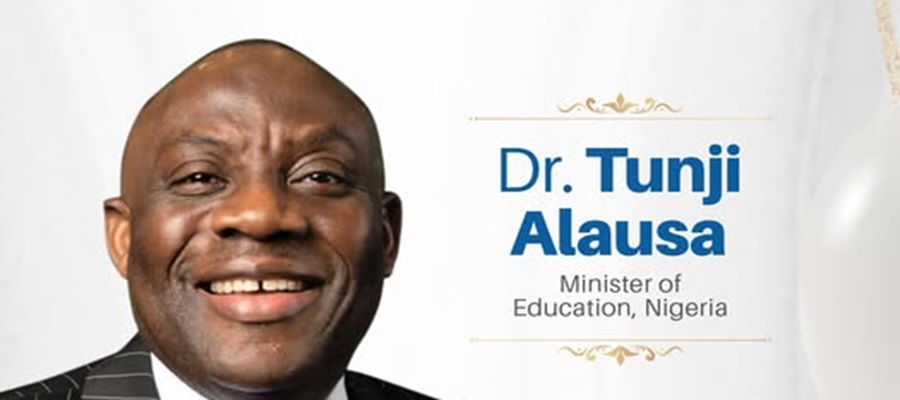
Federal government has announced plans to end the separation between Junior Secondary School (JSS) and Senior Secondary School (SSS) as part of efforts to improve school retention and reduce the high number of pupils dropping out before completing secondary education.

Tunji Alausa, minister of Education
Tunji Alausa, minister of Education, announced the proposal on Tuesday during the inauguration of the Ministerial Implementation and Monitoring Committee of the Universal Basic Education Commission (UBEC) in Abuja.
Alausa said the existing “disarticulation policy,” which requires junior and senior secondary schools to operate independently with separate principals, management structures and facilities, has failed to achieve its intended objectives and has instead worsened access to education.
According to him, the Federal Government will present a proposal to abolish the policy at the next meeting of the National Council on Education (NCE), the country’s highest education policymaking body.
“We have 20 million dropouts from primary school to JSS. Where are those students?” the minister queried.
“We also found we have 80,000 public primary schools and only about 15,000 junior secondary schools. That’s a one-to-eight ratio.”
He explained that the mismatch between the number of primary and junior secondary schools has created severe bottlenecks in the education system, leading to overcrowded classrooms at the junior secondary level while many senior secondary school facilities remain underutilised.
Alausa cited Kaduna and several northern states as examples where the policy has contributed to poor transition rates between basic and secondary education.
“This disarticulation policy has failed. We will phase it out. We can’t be creating positions because we want to create director-level appointments for people while we harm our education system. It’s about doing what is best for every Nigerian child,” he said.
The minister said the proposed reform forms part of broader efforts by the Tinubu administration to improve access to education, increase retention rates and enhance learning outcomes across the country.
He acknowledged previous shortcomings in tackling the out-of-school children crisis but expressed confidence that the current administration would reverse the trend.
“This government will not fail. We are fixing it,” Alausa declared.
At the ceremony, the minister also inaugurated the UBEC Ministerial Implementation and Monitoring Committee, chaired by Prof. Rashid Aderinoye, to supervise the execution of UBEC-funded Smart Schools, Bilingual Schools and Alternative Schools nationwide.
He said the committee had been tasked with ensuring that the projects are completed, handed over to state governments and opened for teaching and learning.
Although UBEC has invested in hundreds of Smart Schools and related educational projects across the country, Alausa lamented that many remain abandoned, unfinished or yet to admit pupils, describing the situation as an unacceptable waste of public resources.
He stressed that improving education requires more than constructing schools, insisting that completed facilities must become fully operational and accessible to learners.

Management of Vitel Wireless, mobile virtual network operator (MVNO), has distanced the company from a fraudulent scheme operating under the name: “Vitel Shares Services.”

In an official statement, the management clarified that Vitel Wireless is not selling shares or running any investment schemes.
They warned that the operators of “Vitel Shares Services” are using unauthorised websites, mobile applications, social media promotions, and bank accounts falsely linked to Vitel Wireless to mislead the public.
The statement reads: “The attention of Vitel Wireless has been drawn to a fraudulent scheme operating under the name ‘Vitel Shares Services.’
“We wish to state clearly that Vitel Wireless has no affiliation with Vitel Shares Services, or any platform claiming to offer Vitel shares, investments, or financial products through unofficial channels.
“We do not solicit investments through agents, social media, websites, apps, or third parties. Any platform claiming to offer Vitel Wireless shares or investments outside our official channels is fraudulent and should be treated as such.
“We urge the general public to remain vigilant and verify all information through official Vitel Wireless communication channels before making any payments or sharing personal data.”

Lebara Nigeria Becomes Member of GSMA Network

FG to Abolish JSS-SSS Separation Policy after 20m Pupils Drop Out

Vitel Wireless Warns Public, Says it Not Running any Investment Scheme

Army Says Terrorists Now Recruiting, Raising Funds Online

FG Mulls National Skills Database to Tackle Unemployment

Mobile Internet Gender Gap Widest in Africa – GSMA

London Strengthens Global Investment Ties with Africa @ First Ever London-Africa Business Summit

FG Targets Alleged N3tn Capital Flight, Opens Airtime Credit Market to Nigerian Fintechs

Japan, UNESCO Boost Digital Learning in 15 CoEs with Donation of ICT Equipment

Good News for DStv Users: Watch over 160 Channels Without Paying Extra




 E-Business2 days ago
LG Showcases AI-Powered Smart Living Innovations @ Africa Technology Expo 2026

 Telecom2 days ago
OADC Reaffirms Abundant Capacity in Data Centres in Nigeria to Host Financial Data

 E-Financial2 days ago
UBA mobilises employees across Africa for environmental clean-up, wellness campaign

 General News2 days ago
LASTMA Launches 3367 Toll-Free Hotline for Emergency Response, Traffic Management

 E-Financial2 days ago
PalmPay Calls for Trust, Infrastructure and Responsible AI to Drive Payment Ecosystem Innovation

 Telecom2 days ago
ALTON Backs NCC’s Local Smartphone Manufacturing Drive to Widen Digital Access

 E-Business2 days ago
Want a Business Loan Without Interest? SMEDAN Launches N500m Fund

 E-Financial2 days ago
ngCERT Raises Alarm over Surge in Banks’ ATM Cyberattacks