

E-Business
Retailers Who Offer IoE Experiences Can Capture 15.6% Profit Improvement- Cisco

Actually, the digital consumer has come of age and expects a rich palette of retail experiences that provide ever-increasing value and convenience both in-store and out.
On Monday, Cisco released survey findings from 1,240 retail consumers in the U.S. and U.K. that uncover their preferences for Internet of Everything (IoE) enabled retail experiences and provides insight to help retailers capture the new digital consumer through IoE innovations fueled by mobility, video, and analytics.
Retailers in Nigeria can also benefit from the study findings to grow their fortunes.
The research is part of a global study that when fully completed will survey 6,000 consumers in 10 countries.
Key Highlights From The Study:
Customers Want a Convenient, Contextually Relevant Shopping Experience
The fifth annual Cisco® Consulting Services retail survey found that most shoppers want innovations that improve convenience and efficiency, extending beyond personalization into hyper-relevance.
Cisco said that hyper-relevance delivers value—such as greater savings, efficiency, or engagement—in real time throughout the shopping lifecycle, using analytics to determine the experience that best suits the customer’s context (where he is, what she is looking to accomplish in that moment).
Also, analytics helps retailers track in-store patterns and use existing video technology to determine, for example, where shoppers are spending more time in the store and which shelves need restocking, information that can immediately be used to improve shoppers’ experience and drive better store performance.
When asked to identify primary areas for in store retail improvements, 39 percent of consumers identified the process of selecting and purchasing goods – for example, having the products they want in stock and an efficient checkout process.
By contrast, 13 percent chose a more personalized shopping experience.
That is not to say that customers don’t want personalization at all, but consumers made it clear that targeted offers must be contextual, relevant, and easy to participate in.
Digital Consumers Exhibit Strong Interest in IoE-Enabled Experiences, Creating Savings, Efficiency and Engagement
To help provide guidance to retailers on where and how to make their strategic innovation investments, Cisco tested 19 different shopping concepts with consumers in its survey.
Together, these provide a snapshot of consumer receptivity to new IoE-enabled innovations in the shopping experience.
These use cases are at the heart of the IoE value that is up for grabs for retailers in terms of revenue uplift and employee productivity. For an illustrative $20 billion retailer, these use cases drive a total gross annual value opportunity of $312 million and a 15.6 percent improvement in profitability.
Product Delivery
Drive-Through Lane at Store (57 percent): Order products online from preferred retailers, and then pick them up in person using a drive-through lane at the store.
Same-Day Delivery (53 percent): Same-day delivery at home of orders placed online for a fee of $5 per delivery.
Secure Locker (40 percent): Pick up online shopping orders from a secure locker at a convenient location.
Augmented Reality
Augmented Reality Offers (73 percent): Use a smartphone to scan products for special customized offers and promotions in the store.
In-Store Guidance (63 percent): Use augmented reality apps to help locate items on their shopping list in the store.
Reviews (57 percent): Use augmented reality apps to receive information about products, such as online consumer reviews or ingredients.
Mobility Enabled Shopping
Smartphone and Tablet Apps Are Becoming the Norm: Nearly half of consumers (42 percent in the U.K. and 47 percent in the U.S.) are using smartphones to enhance their in-store experience.
About one-fourth of U.K. shoppers and one-third of U.S. shoppers are using independent shopping apps on a smartphone or tablet at least once a week.
Smartphone Checkout (60 percent): Scan barcodes on items while shopping to track and pay at a self-service checkout.
Smart Cart (50 percent): “Smart online shopping cart” uses information from smart home appliances, purchasing history and items added by the consumer to maintain a constantly updated virtual cart reflecting current purchase needs.
Mobile Payments (49 percent): Store several payment cards on smartphones and smartwatches to pay in stores by swiping the device at the checkout.
Interactive Digital Signage
Checkout Wait Times (77 percent): Want digital signs at each checkout line to provide estimated wait times.
Targeted Offers (67 percent): View offers tailored to their interests and preferences.
In-Store Maps (67 percent): Obtain information about the location of a product in the store and the best path to get there.
IoE is shaking up the competitive dynamics in nearly all industries — particularly retail, which accounts for $1.5 trillion of the total private sector Value at Stake.
Much of the Value at Stake for retail will be generated by innovations that depend on real-time analysis of data that is captured at the edge of the business from sensors, cameras and mobile devices.
To meet the needs of new digital consumers and attain their potential Value at Stake, retailers need to increase their focus on innovations that deliver hyper-relevance, build a dynamic infrastructure and agile processes that enable hyper-relevance and develop new business models that drive innovation and hyper-relevance.
Cisco offers a portfolio of mobility, interactive digital services platforms, video collaboration, analytics, and cloud computing solutions that help retailers provide more efficient and more engaging shopping experiences to their customers.
Speaking on the trend, Joseph Bradley, vice president & founder IoT / IoE Practice, said “The opportunity ahead is tremendous. Of the $14.4 trillion in IoE value for the private sector, $1.5 trillion is there for retailers. The key to capturing this value is realizing that digital consumers aren’t static—they’re dynamic. And IoE’s connections between people process, data, and things now enable retailers to engage with customers on their terms—whether rushing through the airport to catch a flight or spending more time than usual in the shampoo aisle.”
Also, Doug Stephens, founder, Retail Prophet, added, “If a retailer thinks that at some point this is going to slow down, and that they have time to wait and then jump in, they’re wrong. Because these rates of adoption — the speed at which technology is moving — is becoming more exponential and will continue to do so.”
Cisco is the worldwide leader in IT that helps companies seize the opportunities of tomorrow by proving that amazing things can happen when you connect the previously unconnected.


Lagos state government has unveiled a comprehensive set of cybersecurity guidelines designed to enhance digital safety for businesses, public institutions, and residents across the state.

Babajide Sanwo-Olu, Lagos State Governor
Gbenga Omotoso, commissioner for Information and Strategy, said the initiative represents a significant step in Lagos’ ambition to establish itself as a smart, secure, and globally competitive digital hub.
He noted that as one of Africa’s fastest-growing technology ecosystems, Lagos is increasingly exposed to cyber threats, necessitating stronger and more coordinated security measures.
Citing data from the National Information Technology Development Agency (NITDA), Omotoso, said Nigeria loses over $500 million (about N250 billion) annually to cybercrime, emphasizing the urgency of proactive interventions.
According to him, while the state’s transition into a smart city offers vast opportunities, it also heightens vulnerability to digital attacks.
“The guidelines, available online, provide practical and scalable recommendations for small businesses, large enterprises, and Ministries, Departments, and Agencies (MDAs),” he said.
He added that the framework aligns with key national regulations, including the Cybercrime Act (2024), the Nigeria Data Protection Act (2023), and the National Cybersecurity Policy and Strategy (2021).
Omotoso emphasised that the document is not intended as a regulatory instrument but rather as a resource to equip stakeholders with actionable and context-specific guidance.
He reiterated the state government’s commitment to fostering a secure digital environment that supports innovation, attracts investment, and strengthens public confidence.
The commissioner commended the Lagos State Cybersecurity Advisory Council, led by Prof. Fene Osakwe, for its contribution to the development of the guidelines, and also acknowledged Tubosun Alake, commissioner for Innovation, Science and Technology, for his support.
He added that the framework is expected to boost collaboration between the public and private sectors, enabling organisations, from small enterprises to multinational firms, to operate more securely.
Omotoso further noted that the guidelines would be reviewed periodically to keep pace with emerging threats and evolving technologies, stressing that cybersecurity remains central to Lagos’ digital transformation agenda.
E-Business
Laundry Without Interruptions: Why LG Auto Restart Washing Machines Are Perfect for Nigerian Homes

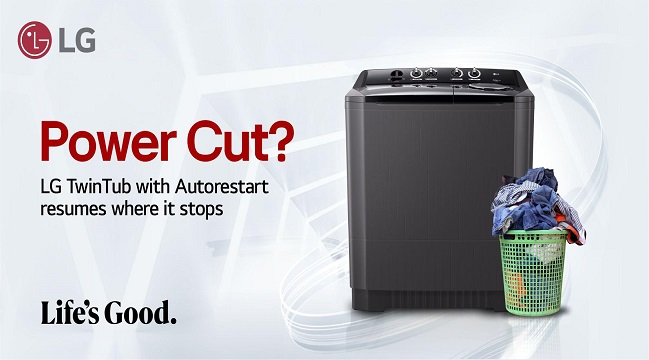
In many Nigerian households, laundry day often comes with an added challenge, unpredictable power supply. A washing cycle that suddenly stops due to a blackout can leave clothes half-washed, soaked, and inconveniently delayed. For families with busy schedules, restarting laundry from scratch is not just frustrating, it wastes time, water, and electricity.

LG Electronics addresses this everyday concern with a simple but powerful innovation: the Auto Restart feature in LG Twin Tub Washing Machines. Designed with real-life Nigerian conditions in mind, this feature ensures your laundry continues seamlessly, even after an unexpected power outage.
Understanding the Auto Restart Feature in LG Washing Machines
The Auto Restart feature allows an LG washing machine to automatically resume its wash cycle from the exact point it stopped when power is interrupted. Instead of resetting the cycle or requiring manual input, the machine retains the previous settings and continues washing once electricity is restored.
This intelligent design removes the need to:
- Restart the wash cycle manually
- Guess how long the clothes were already washed
- Repeat washing unnecessarily
For households experiencing frequent power cuts, Auto Restart turns a common inconvenience into a non-issue.
Why Power-Friendly Washing Machines Matter in Nigeria
Power outages remain part of daily life across many parts of Nigeria. From urban centres to rural communities, sudden electricity interruptions can disrupt household routines, especially when appliances are running.
Traditional washing machines often reset completely after power failure. This can result in:
- Incomplete washing
- Over-washing clothes when cycles are restarted
- Increased water and electricity usage
- More time spent monitoring the laundry
LG’s Auto Restart feature is designed specifically to overcome these challenges, making it a highly practical solution for Nigerian homes.
Key Benefits of LG Auto Restart for Nigerian Households
- Uninterrupted Laundry Experience
With Auto Restart, you don’t need to stay close to your washing machine or worry about power restoration while you’re away. The machine takes care of itself and resumes washing automatically.
- Saves Time, Water, and Energy
Restarting a wash cycle means using extra water and electricity. Auto Restart ensures that no part of the wash is wasted, helping households operate more efficiently.
- Protect Your Clothes
Repeated washing or incorrect restarting can lead to fabric wear. By continuing from the correct wash stage, LG Auto Restart helps maintain proper fabric care.
- Ideal for Busy Families and Professionals
Whether you’re managing a large household or balancing work and home responsibilities, Auto Restart ensures laundry doesn’t become another task that demands constant attention.
LG Twin Tub Washing Machines: Built for Real Living
LG Twin Tub Washing Machines are widely appreciated in Nigeria for their durability, affordability, and strong washing performance. Combined with Auto Restart, these machines become even more responsive to local household needs.
Other features include:
- Powerful wash action for tough stains
- Separate wash and spin tubs for greater control
- Long‑lasting build quality designed for frequent use
- Efficient water usage, especially useful in water‑conscious households
These qualities make LG Twin Tub washing machines a popular choice among Nigerian consumers looking for reliability and value.
Ideal Washing Machine for Areas with Frequent Power Outages
If you live in an area where electricity supply can be unpredictable, choosing a washing machine with Auto Restart is no longer optional but it’s essential. LG washing machines with Auto Restart are especially suitable for:
- Homes with irregular power supply
- Large families with frequent laundry needs
- Users who value convenience and efficiency
- Households looking to reduce water and energy waste
Why LG Washing Machines Stand Out in Nigeria
LG continues to be a trusted name in home appliances across Nigeria due to its focus on durability, smart features, and customer-centric innovation. By designing washing machines that work reliably under local conditions, LG reinforces its position as a brand that understands and responds to everyday challenges.
From Auto Restart technology to powerful wash performance, LG washing machines provide practical solutions that simplify daily life.
Final Thoughts: Less Stress, More Control Over Laundry
Laundry should not depend on the perfect electricity supply and with LG Auto Restart washing machines, it doesn’t have to. By automatically continuing wash cycles after power outages, LG helps Nigerian households enjoy greater convenience, efficiency, and peace of mind.
For anyone searching for the best washing machine for power cuts in Nigeria, LG washing machines with Auto Restart offer a smart, reliable, and stress‑free solution – every wash, every time.
For more information, visit https://www.lg.com/africa/twin-tub-washing-machines

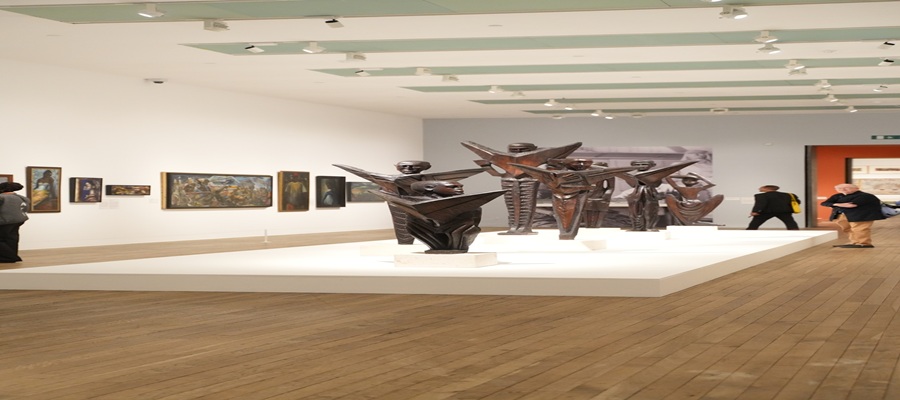
Access Holdings Plc and Coronation Group have partnered with Tate Modern to commemorate World Art Day with a virtual session highlighting the global significance of Nigerian modernism.

Access Holdings
The event, titled “In Conversation with Osei Bonsu: Inside Nigerian Modernism,” featured a virtual tour of the Nigerian Modernism exhibition and discussions on the evolution of modern art in Nigeria.
The session brought together staff members across both organisations, reflecting growing institutional engagement with arts and culture as a driver of societal development.
Speaking at the event, Chief Communications and Marketing Officer of Coronation Group, Ngozi Akinyele, emphasised the role of art in shaping identity and national development.
She said that beyond financial capital, cultural and intellectual capital are essential in defining a nation’s prosperity and inspiring dialogue.
Akinyele noted that both organisations were committed to democratising access to art, ensuring it is accessible to a wider audience rather than a select few.
The discussion also featured insights from Tate Modern Curator, Osei Bonsu, and art expert Daniel Wallis, who examined the development of Nigerian modernism and its global relevance.
Bonsu said Nigerian modernism represents an independent reimagining of global art, rooted in the country’s diverse cultural heritage and expressed through unique visual languages.
According to him, the movement challenges narrow, Eurocentric definitions of modernism and highlights the richness of African artistic expression.
The session further underscored the growing international recognition of Nigerian art, particularly through exhibitions at Tate Modern.
Participants also reflected on the visit of Bola Ahmed Tinubu to the exhibition, described as a milestone in promoting Nigeria’s cultural heritage globally.
In his closing remarks, Chief Communications Officer of Access Holdings, Amaechi Okobi, reaffirmed the organisation’s commitment to advancing African narratives on the global stage.
He said the collaboration with Tate Modern aligns with broader efforts to promote dialogue, preserve cultural identity and support the creative sector.
The event reinforced a shared commitment by Access Holdings, Coronation Group and Tate Modern to elevate African art globally and ensure Nigerian cultural narratives continue to shape international conversations.

FG Carpets W/Bank, Denies Alleged Diversion of Federation Revenue

Lagos Unveils Cybersecurity Guidelines to Tackle Rising Digital Threats

FG Borrows N100Bn from Unclaimed Dividends, Dormant Bank Accounts

CitiTrust Heads to Appeal Court over Alleged Ponzi Scheme

IHS Nigeria, Ilorin Innovation Hub Showcase 19 High Growth Startups

NBC Boss Urges Content Ceators to Participate in DSO

NITDA Takes Over National Digital Architecture System

DLM SPV PLC Lists ₦9.00bn AAA-Rated Medium-Term Notes on FMDQ Exchange, Sets Benchmark in Corporate Bond Market

FG Shifting Focus to “Meaningful Connectivity” to Drive Inclusion – Minister

Jury Finds Meta, Google Liable for Woman’s Social Media Addiction




 Telecom2 days ago
Airtel Nigeria Suspends Airtime and Data Credit Services

 E-Financial2 days ago
Court Suspends Enforcement of FCCPC’s Reform on Loan Apps

 Telecom2 days ago
FCCPC Denies Banning Airtime Borrowing, Blames Cartel for Misinformation

 E-Financial2 days ago
FG Rules Out Borrowing from IMF’s $50Bn Support Fund

 E-Financial2 days ago
CBN Introduces Overnight Financing Rate to Compete with US, EU

 General News2 days ago
AfriStakes Unveils Platform to Connect SMEs with Investors

 News2 days ago
NITDA, CAC Activate Cybersecurity Measures Amid System Concerns

 General News2 days ago
Nigeria’s Human Capital Key to Global Competitiveness – NITDA DG