

E-Financial
Rethinking Agency Banking with New Innovations in Nigeria

Emmanuel Okoegwale
Few weeks ago, I attended a national financial services agency forum, organized by one of the leading industry players in Nigeria with very impressive attendance from agents, nationwide.
The venue was filled up with enthusiastic agents but with significantly eroded transactional abilities, due to operational challenges that is affecting their service delivery at the last mile and causing significant friction, with customers.
It was a complains galore for the agents as they churn out different negative experiences, disappointments linked to poor support arising from failed transactions, delayed and inadequate reconciliation processes, poor support from providers etc.
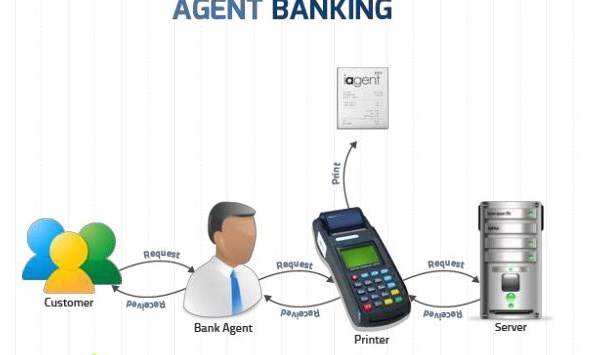
Agency banking is provisioning of basic financial services such as cash deposit, cash withdrawal, fund transfer, bills payment etc through third party agents within communities. They deploy their own resources like cash, outlets etc while the service provider, will provide items such as branding materials etc. Point of sale devices are provided by service providers and in some instances, paid for by the agents but recently, some providers are issuing them at no cost.
The agency network is the distribution network, front-end and customer facing entities which require significant resources to build, manage and cultivate.
Cost of building these networks can be significant for many operators if the overall strategy of the provider, is not well defined and it becomes more complex as they reach new geographies, requiring diverse implementation plans.
While the ultimate for service providers, is to unlock the customer value, by enabling them convert cash to electronic value and use the services themselves but the agent as the middle-Man, wants to keep the customers locked into over-the-counter transactions so that, they can continuously, earn fees.
The agent has no compelling reason to educate the customer to acquire and learn how to use the wallet. It’s a loss for the agent whereas the Banks are banking on this front-end partner to provide that education and conversion. There might be value for the agents if the providers can rethink their commissioning strategy that gives the agent some long-term value for converting customers to wallet users with consideration for residual commissions strategies etc.
Shared Agency
Shared agency is visible at the front-end but disaggregated at the back-end with locked-in, float accounts. At the front end, the POS will accept any Bank card issued in Nigeria seamlessly but at the back end, the agent may have multiple agency agreements, so the agent keeps multiple float accounts with multiple providers which fragments His total e-float inventory and its, inefficient. The agent may need to keep switching transaction devices, re-balancing different float accounts, frequently.
Agents are Working, Blindly
From the various complaints of the agents at the event, it was evident that the agents had not been well equipped aside the almighty Point of sale device which most providers think as the ultimate, in setting up, equipping and activating agents.
Operational issues had to be reported through telephone or email to back-office, transaction reconciliation issues must back with POS prints-out which might have faded, missing etc.
Delayed resolution period to resolve agent transaction issues, leading to customer dissatisfaction and sometimes intervention by security personnel and sometimes, loss of agent funds.
A well-equipped agent will save the provider significant time and resources by using digital and innovative tools provided by the provider to manage day -to-day operations in an innovative manner, that adds value to the entire value chain.
The Agent Dashboard
Agency dashboard provides actionable transaction data, which is used to manage customer transaction outcomes, identify and isolate issues which will then increase efficiency and performance of the agents.
The dashboard will enable agents to have simple, intuitive and secure interaction with all their transactions channels like POS, Mobile money transaction data etc via a single interface. It provides critical operational functional that will enable the agent to transact effectively and securely which will then improve the customer trust and overall experience.
Some customers will never sign up for wallets services because of trust issues, they need someone they can hold accountable when things do not work and that is the agent, who should be well equipped to address operational challenges, adequately.
Benefits
The dashboard reduces the agent’s support cost with agents having visibilities on some transaction data via their dashboard and increase uptime and performance.
Agents will be able to report suspicious transaction timely for flagging by the service providers thereby reducing losses, arising from fraud etc.
It will help the providers to reach agents in a timely and efficient manner if there is a ‘run’ on the system.
Agents can deliver improved services which reduces agent and customer friction and improves the customer experiences.
It’s a major win for agents to be able to work more effectively and efficiently in stressful, street-level “Ojuelegba” environments.
Conclusion
For agent banking to prosper in Nigeria, forward thinking and innovative providers, can deliver innovative directions that can empower the agent network with effective tools (front and bank-end) that can drive Nigeria’s match into the digital financial services era.


The Central Bank of Nigeria in its 2025 Fintech Policy Insight Report, has raised concern over Nigeria’s fintech sector heavily dependent on foreign investment, exposing it to swings in global markets.

The report said the sector has shown resilience despite global economic pressures, but warned that reliance on external capital leaves it vulnerable to market fluctuations.
It would be recalled that startups in the country raised $520m in equity funding in 2024, down from about $747m in 2019, when Nigeria captured roughly 37 per cent of all African startup investment.
This performance, amid significant global macroeconomic gyrations, underscores Nigeria’s position as a key hub for financial innovation. The sharp rise in interest rates in advanced economies during 2022 contributed to a slowdown in venture capital funding.
“These dynamics highlight the importance of developing domestic funding avenues, such as leveraging Nigeria’s capital markets, to reduce currency risk and sustain fintech growth,” the apex bank stated.
Olayemi Cardoso, CBN Governor, said Nigeria is undergoing a rapid and significant financial evolution. Over the past decade, the nation’s fintech landscape has grown from a handful of startups into one of Africa’s most vibrant innovation ecosystems.
“Even amid global economic headwinds, Nigerian fintech firms continued to attract investment and drive change. Today, with improved stability of our currency and domestic economy, it is clearer than ever that financial innovation can advance inclusion at scale,” the executive commented on the report.
In addition to funding, the central bank underscored Nigeria’s continued leadership in digital financial infrastructure. More than 25 per cent of all electronic transactions in Africa’s most populous nation are processed via real-time payment channels, with close to 11 billion transactions processed in 2024, up from five billion in 2022. The report described Nigeria’s instant payments platform, NIBSS NIP, as among the most mature and widely adopted globally.
The report also mentioned the need to strengthen system integrity and reputation, pointing to compliance reforms, anti-money laundering supervision, and consumer protection measures as key priorities for sustaining investor confidence.
By focusing on domestic funding, regulatory modernisation, and innovation infrastructure, the CBN aims to position Nigeria not only as a fintech front-runner but also as a rule-setter whose regulatory lessons are relevant to peer emerging and high-growth economies globally, the central bank said.
Stakeholders surveyed by the CBN also cited compliance costs as a significant challenge to innovation. According to the report, 87.5 per cent of respondents said that the cost of meeting regulatory and risk requirements significantly impacts their capacity to innovate, while delays in product approvals and regulatory timelines also remain major bottlenecks.
The report noted that 62.5 per cent of fintech firms plan to expand regionally, and there is strong support for regulatory pass-porting frameworks to enable compliant expansion into other African markets. However, the CBN warns that such cross-border growth requires a stable funding base and coordinated regulation.


After a few years abroad, I returned to Nigeria and faced a dilemma. Let me tell you all about it.

UBA
A few days ago, I was dragging my luggage through Murtala Muhammed International Airport. Everything felt bright and beautiful. Not necessarily in aesthetics, but in the vibrant colours, sounds, and energy all around. After three intensive years in the UK, I was finally back home. Ready for the hustle and bustle of Lagos life, and yes, the comfort of my parents’ home.
The plan was simple. Settle down and get my life on track. I’d sorted the job, and I had my person. But then came my dilemma. Money!. This doesn’t mean I was short of it or had too much of it. The real issue is where to actually keep and manage it in this country with daily dramatic happenings. With just two weeks left before I resumed at my new workplace, I had no time for long queues, endless paperwork, or the classic “Nigeria bank stress.” So, I needed an account, and I needed it fast.
So I turned to my best friend, Google, and typed, “Instant account opening in Nigeria.”
In less than a second, I was redirected to the United Bank for Africa instant account opening portal. A few taps later, and I had a fully functional account. Just like that. I could receive my funds, transfer my funds, and start building my financial life here again.
In less than a second, I was redirected to the United Bank for Africa instant account opening portal. A few taps later, and I had a fully functional account. Just like that. I could receive my funds, transfer my funds, and start building my financial life here again. Talk about ease, and this beautiful experience truly exemplified that definition
I was genuinely amazed. It felt too easy, almost suspiciously easy. But it was real, I mean, really soft like they were just thinking all about me while developing this new feature.
If you’re like me and pressed for time, avoiding unnecessary stress, or just ready to sort your finances without the hassle, consider this your sign.
UBA’s instant account opening is a game-changer. No queues to cut into your precious time. Just you and your phone, minutes away from being banked.
Get started here: https://aop.ubagroup.com
Trust me, if I could do it between unpacking and settling in, you can do it too. Your future self will thank you.

Bank of Industry (BOI) has received Central Bank of Nigeria (CBN) approval to launch a Non-Interest Banking (NIB) Window, expanding ethical financing for underserved businesses nationwide.

BOI
The move positions BOI to mobilise Sharia-compliant funds, finance assets and raw materials without interest, and target MSMEs plus high-impact sectors previously sidelined by conventional loans.
Divisional Head of Public Relations, Theodora Amechi, said the window aligns BOI with social goals, boosting real economy support and sustainable industrial growth.
MD/CEO Dr. Olasupo Olusi hailed it as a “pivotal moment,” enabling the bank to serve faith-sensitive enterprises shunning riba-based loans.
Analysts see it as CBN’s vote of confidence in BOI’s governance, set to spur innovation and inclusive financing for Nigeria’s ethical business segments.
Established in 1959 as Nigeria’s top Development Finance Institution, BOI now strengthens its drive for broad-based economic transformation.

EFInA Unveils Research Fellowship Programme to Deepen Financial Inclusion Impact

Indigenous Firm Deploys 400,000 Smart Electricity Meters in 2025

CBN Expresses Concern Over Foreign Investments in Nigeria Fintechs

UBA’s Easy and Instant Account Opening Thrills Returnee

NCC Committed to Regional Digital Integration – Maida

Firm Detected a Fivefold Surge in QR Code Phishing Attacks in the Second Half of 2025

US invests $115m in counter-drone tech for World Cup security

Nigerian Terra Industries Secures $11.8m for Expansion

Firm Detected a Scam Exploiting OpenAI’s Teamwork Features

Nigeria Targeted with 4,622 Cyber-attacks Per Week in December 2025




 General News2 days ago
Globacom Donates ₦1Bn to Lagos State Security Trust Fund

 Telecom2 days ago
Airtel Nigeria Commits to Upgrade of its Network Infrastructure for Improved Quality of Service

 E-Business2 days ago
PwC Reveals AI Scaling Gap Slows Africa’s Digital Transformation

 News2 days ago
CIoD, NIPSS Partner to Deepen Governance, Leadership Standards

 News2 days ago
NRS Chairman Outlines Ways Nigeria can Move from Potential to Economic Prosperity

 E-Financial2 days ago
Ecobank Profit Jumps 29 Percent to N950Bn

 General News2 days ago
WIEG to host Nigeria’s first International Investment Summit in Lagos

 News2 days ago
Orya, Ex-NEXIM MD Jailed 490 Years for N2.4Bn Fraud