

E-Financial
Rethinking Agency Banking with New Innovations in Nigeria

Emmanuel Okoegwale
Few weeks ago, I attended a national financial services agency forum, organized by one of the leading industry players in Nigeria with very impressive attendance from agents, nationwide.
The venue was filled up with enthusiastic agents but with significantly eroded transactional abilities, due to operational challenges that is affecting their service delivery at the last mile and causing significant friction, with customers.
It was a complains galore for the agents as they churn out different negative experiences, disappointments linked to poor support arising from failed transactions, delayed and inadequate reconciliation processes, poor support from providers etc.
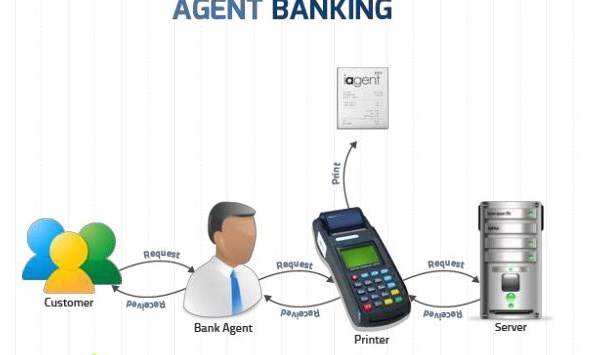
Agency banking is provisioning of basic financial services such as cash deposit, cash withdrawal, fund transfer, bills payment etc through third party agents within communities. They deploy their own resources like cash, outlets etc while the service provider, will provide items such as branding materials etc. Point of sale devices are provided by service providers and in some instances, paid for by the agents but recently, some providers are issuing them at no cost.
The agency network is the distribution network, front-end and customer facing entities which require significant resources to build, manage and cultivate.
Cost of building these networks can be significant for many operators if the overall strategy of the provider, is not well defined and it becomes more complex as they reach new geographies, requiring diverse implementation plans.
While the ultimate for service providers, is to unlock the customer value, by enabling them convert cash to electronic value and use the services themselves but the agent as the middle-Man, wants to keep the customers locked into over-the-counter transactions so that, they can continuously, earn fees.
The agent has no compelling reason to educate the customer to acquire and learn how to use the wallet. It’s a loss for the agent whereas the Banks are banking on this front-end partner to provide that education and conversion. There might be value for the agents if the providers can rethink their commissioning strategy that gives the agent some long-term value for converting customers to wallet users with consideration for residual commissions strategies etc.
Shared Agency
Shared agency is visible at the front-end but disaggregated at the back-end with locked-in, float accounts. At the front end, the POS will accept any Bank card issued in Nigeria seamlessly but at the back end, the agent may have multiple agency agreements, so the agent keeps multiple float accounts with multiple providers which fragments His total e-float inventory and its, inefficient. The agent may need to keep switching transaction devices, re-balancing different float accounts, frequently.
Agents are Working, Blindly
From the various complaints of the agents at the event, it was evident that the agents had not been well equipped aside the almighty Point of sale device which most providers think as the ultimate, in setting up, equipping and activating agents.
Operational issues had to be reported through telephone or email to back-office, transaction reconciliation issues must back with POS prints-out which might have faded, missing etc.
Delayed resolution period to resolve agent transaction issues, leading to customer dissatisfaction and sometimes intervention by security personnel and sometimes, loss of agent funds.
A well-equipped agent will save the provider significant time and resources by using digital and innovative tools provided by the provider to manage day -to-day operations in an innovative manner, that adds value to the entire value chain.
The Agent Dashboard
Agency dashboard provides actionable transaction data, which is used to manage customer transaction outcomes, identify and isolate issues which will then increase efficiency and performance of the agents.
The dashboard will enable agents to have simple, intuitive and secure interaction with all their transactions channels like POS, Mobile money transaction data etc via a single interface. It provides critical operational functional that will enable the agent to transact effectively and securely which will then improve the customer trust and overall experience.
Some customers will never sign up for wallets services because of trust issues, they need someone they can hold accountable when things do not work and that is the agent, who should be well equipped to address operational challenges, adequately.
Benefits
The dashboard reduces the agent’s support cost with agents having visibilities on some transaction data via their dashboard and increase uptime and performance.
Agents will be able to report suspicious transaction timely for flagging by the service providers thereby reducing losses, arising from fraud etc.
It will help the providers to reach agents in a timely and efficient manner if there is a ‘run’ on the system.
Agents can deliver improved services which reduces agent and customer friction and improves the customer experiences.
It’s a major win for agents to be able to work more effectively and efficiently in stressful, street-level “Ojuelegba” environments.
Conclusion
For agent banking to prosper in Nigeria, forward thinking and innovative providers, can deliver innovative directions that can empower the agent network with effective tools (front and bank-end) that can drive Nigeria’s match into the digital financial services era.


NOVA Bank has opened its regional office in Owerri, Imo State, as part of its expansion drive across the South-East and South-South regions.

At the inauguration ceremony, recently, Senator Hope Uzodinma, Imo State Governor, announced that the state government would provide land for the development of the bank’s permanent regional headquarters for the South-East and South-South in Owerri.
The event was attended by government officials, business leaders from the two regions, and members of the Nigerian diaspora.
Governor Uzodinma stated that the bank’s entry into Imo State aligned with the government’s efforts to promote economic growth through infrastructure development, improved road networks, and market-driven initiatives.
He described NOVA Bank as an early investor in the region’s emerging economic opportunities.
He also commended the bank’s approach of combining physical banking infrastructure with digital platforms, noting that it aligns with the state’s emphasis on technology-driven governance and commerce.
“In recognition of NOVA Bank’s vision and long-term commitment to the region, the Imo State Government will allocate a suitable parcel of land in a prime location for the development of its permanent South-East/South-South Regional Headquarters,” the governor said.
Speaking at the event, Phillips Oduoza, chairman, NOVA Bank, thanked the Imo State Government and residents for their support, describing the Owerri office as a key part of the bank’s national expansion strategy.
“The opening of our regional office in Owerri marks a strategic milestone in NOVA Bank’s growth and underscores our commitment to the South-East and South-South,” Oduoza said, adding that the city would serve as a hub for the bank’s operations in the region.
He said the bank’s expansion is driven by a focus on sustainable growth, innovation and strong financial fundamentals, noting that NOVA Bank is investing in digital infrastructure and financial solutions to support small and medium-sized enterprises, corporates, public-sector institutions, high-net-worth individuals and the mass market.
According to him, the planned regional headquarters is expected to support job creation, improve access to credit, promote enterprise growth and deepen financial inclusion across the two regions.
Oduoza said the bank remains focused on building a resilient institution that delivers value to customers, partners and shareholders.
The opening of the Owerri regional office marks NOVA Bank’s latest step in expanding its presence in southern Nigeria.
Securities and Exchange Commission (SEC) has announced that Capital Market Operators (CMO’s) are to renew their registration from January 1 to 31, 2026.

In a bid to make the process seamless, the Commission says it will commence electronic receipt and processing of applications for registration and updates of registration information in the first quarter of 2026.
Dr. Emomotimi Agama, director general of the SEC, stated this during an interview in Abuja.
According to Agama, “These initiatives reflect our commitment to leveraging technology for faster, more transparent, and efficient regulatory processes. The Commission is taking deliberate steps to make regulatory processes faster, more transparent, and technology-driven. We are investing in automation, databased supervision, and secure infrastructure to improve how we interact with the market.
The SEC Boss stated that through its Digital Transformation Portal, the Commission has automated registration and licensing end-to-end as operators can now submit applications, upload documents, and track approvals online, cutting down manual processing time and reducing the need for physical visits.
Commercial Paper Issuance Module
He said the Commission has also rolled out the Commercial Paper issuance module, which allows operators to file documents, monitor progress, and receive approvals electronically while feedback from early users shows a clear improvement in turnaround time.
“Work is ongoing to automate quarterly and annual returns submissions, with structured templates and system checks to ensure accuracy. A returns analytics dashboard is also in development to support risk based supervision and exception reporting.
“To back these changes, we have started upgrading our IT infrastructure, servers, storage, networks, and security layers, to boost speed and reliability. Selective cloud migration is underway for platforms that need scalability and external access, while core internal systems remain on premisev5p for now as we assess security and cost implications.
“At the same time, we are strengthening data integrity and cybersecurity with vulnerability assessments and planned penetration testing once automation and migration phases are stable. These efforts show our commitment to building a modern, resilient regulatory environment that supports efficiency, investor confidence, and market stability.
Agama affirmed that the Nigerian Capital Market is clearly on a path toward digital transformation, therefore, there is an urgent need for regulatory clarity on advanced technologies, targeted support for smaller firms, and capacity-building initiatives.
He said, “A phased and proportionate approach to regulating emerging technologies such as AI is essential, complemented by internal readiness through supervisory technology tools. Furthermore, investor education, particularly among younger demographics, will be critical to future-proof participation and drive fintech adoption.
“Innovation is vital, but it must be accompanied by responsibility. As operators embrace automation, artificial intelligence, and data-driven tools, they bear a duty to ensure ethical, secure, and compliant deployment. Safeguarding investor data, preventing market abuse, and maintaining operational resilience are non-negotiable.”
The SEC DG said that ultimately, responsible technology adoption is about building trust, the cornerstone of our markets saying that trust thrives on fairness, transparency, accountability, and regulatory compliance.
He therefore urged operators to uphold these principles adding that it would not only protect investors and systemic stability but also strengthen the long-term credibility and competitiveness of the Nigerian Capital Market.


The naira is projected to remain largely stable in the coming months, while borrowing costs are expected to ease as inflation moderates, according to the Central Bank of Nigeria’s (CBN) latest Business Expectations Survey (BES).

CBN
The survey, which polled about 1,900 businesses nationwide, revealed that confidence in the local currency has strengthened. Respondents expect the naira to rise from an index of 28.8 points to 42.2 points by May 2026, extending the rare period of stability recorded throughout 2025.
Borrowing rates are also forecast to decline, with the index dropping from 15.4 points to 11.7 points, reflecting expectations of softer monetary conditions as inflationary pressures ease.
“Respondents expect the naira–US dollar exchange rate to steadily appreciate across the review periods, as indicated by the positive indices. They also anticipate a continuous positive outlook for borrowing rates during the same periods,” the BES report stated.
The naira has enjoyed an unusually long stretch of stability after losing about 41% of its value in 2024 following the unification of exchange rates. Analysts attribute the current calm to the CBN’s calibrated interventions and steady inflows from foreign portfolio investors.
Inflation, which stood at 14.45% in November 2025, is projected to fall to single-digit levels in 2026. This outlook could give monetary authorities room to begin a gradual easing cycle, potentially improving credit access for businesses.
Despite the improving macroeconomic environment, businesses continue to grapple with structural constraints. The survey highlighted insecurity (70.1 points), high/multiple taxation (69.7 points), and insufficient power supply (69.3 points) as the most pressing challenges. Other concerns include poor infrastructure and an unfavorable political climate, both scoring 57.7 points.
While optimism surrounds the naira and borrowing costs, the BES underscores the need for sustained reforms to tackle deep-rooted operational challenges. Analysts say that without addressing insecurity, taxation burdens, and infrastructure gaps, Nigeria’s businesses may struggle to fully benefit from the improving macroeconomic outlook.

NOVA Bank Opens Regional Office in Owerri

US Begins Partial Visa Ban on Nigerians January 1

DPLAN Threatens NDPC with Legal Action for Setting aside $32.8m Meta Fine

Glo Extends Christmas Greetings, Urges Unity and Care for Others

Galaxy Backbone Tops FG’s Website Performance Ranking

Nigeria Records Highest Weekly Cyberattacks in Africa — Report

Cyber Tsunami Hits Nigeria as Breaches Surge 1,047%, esentry Q3 Report Reveals

GenAI Adoption Among African workers Outpace Global Peers

Minister Claims Bandits Exploit Poor Network, Bounce Calls Off Multiple Towers

Jumia’s Data Shows Nigerians Turning to Digital Retail to Navigate Inflation Pressures



 News2 days ago
US Okays $2.1Bn for Christian Healthcare in Nigeria

 General News2 days ago
The Mood Market to Light Up Lagos with a Rooftop Gifting, Food & Lifestyle Fair this Christmas

 Broadcasting2 days ago
Tim Akano Recounts 20-Year Growth, Media Support at NITRA End-of-Year Meet

 News2 days ago
SERAP Asks Tinubu to Release CTC of Tax Bill

 E-Financial2 days ago
Sterling Bank, Water.org, Sterling One Foundation Partner on WASH Loan for Millions

 General News2 days ago
Leo Stan Ekeh: A “Rare Avis”, an Unconquerable Entrepreneur

 General News2 days ago
FCCPC Forces Ikeja Electric Into Compliance, Unseals Headquarters After Rights Breach

 General News2 days ago
NITDA Wins Triple SERVICOM Honours for Citizen-Centred Service Delivery