

E-Financial
Rethinking Agency Banking with New Innovations in Nigeria

Emmanuel Okoegwale
Few weeks ago, I attended a national financial services agency forum, organized by one of the leading industry players in Nigeria with very impressive attendance from agents, nationwide.
The venue was filled up with enthusiastic agents but with significantly eroded transactional abilities, due to operational challenges that is affecting their service delivery at the last mile and causing significant friction, with customers.
It was a complains galore for the agents as they churn out different negative experiences, disappointments linked to poor support arising from failed transactions, delayed and inadequate reconciliation processes, poor support from providers etc.
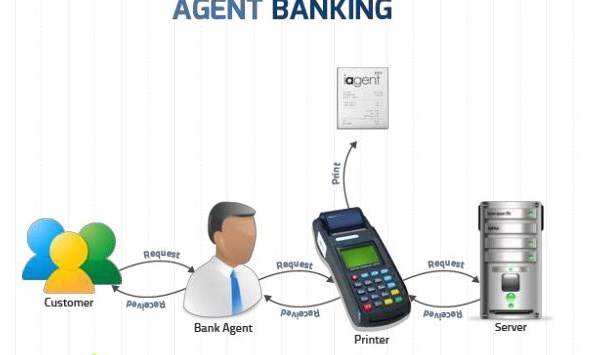
Agency banking is provisioning of basic financial services such as cash deposit, cash withdrawal, fund transfer, bills payment etc through third party agents within communities. They deploy their own resources like cash, outlets etc while the service provider, will provide items such as branding materials etc. Point of sale devices are provided by service providers and in some instances, paid for by the agents but recently, some providers are issuing them at no cost.
The agency network is the distribution network, front-end and customer facing entities which require significant resources to build, manage and cultivate.
Cost of building these networks can be significant for many operators if the overall strategy of the provider, is not well defined and it becomes more complex as they reach new geographies, requiring diverse implementation plans.
While the ultimate for service providers, is to unlock the customer value, by enabling them convert cash to electronic value and use the services themselves but the agent as the middle-Man, wants to keep the customers locked into over-the-counter transactions so that, they can continuously, earn fees.
The agent has no compelling reason to educate the customer to acquire and learn how to use the wallet. It’s a loss for the agent whereas the Banks are banking on this front-end partner to provide that education and conversion. There might be value for the agents if the providers can rethink their commissioning strategy that gives the agent some long-term value for converting customers to wallet users with consideration for residual commissions strategies etc.
Shared Agency
Shared agency is visible at the front-end but disaggregated at the back-end with locked-in, float accounts. At the front end, the POS will accept any Bank card issued in Nigeria seamlessly but at the back end, the agent may have multiple agency agreements, so the agent keeps multiple float accounts with multiple providers which fragments His total e-float inventory and its, inefficient. The agent may need to keep switching transaction devices, re-balancing different float accounts, frequently.
Agents are Working, Blindly
From the various complaints of the agents at the event, it was evident that the agents had not been well equipped aside the almighty Point of sale device which most providers think as the ultimate, in setting up, equipping and activating agents.
Operational issues had to be reported through telephone or email to back-office, transaction reconciliation issues must back with POS prints-out which might have faded, missing etc.
Delayed resolution period to resolve agent transaction issues, leading to customer dissatisfaction and sometimes intervention by security personnel and sometimes, loss of agent funds.
A well-equipped agent will save the provider significant time and resources by using digital and innovative tools provided by the provider to manage day -to-day operations in an innovative manner, that adds value to the entire value chain.
The Agent Dashboard
Agency dashboard provides actionable transaction data, which is used to manage customer transaction outcomes, identify and isolate issues which will then increase efficiency and performance of the agents.
The dashboard will enable agents to have simple, intuitive and secure interaction with all their transactions channels like POS, Mobile money transaction data etc via a single interface. It provides critical operational functional that will enable the agent to transact effectively and securely which will then improve the customer trust and overall experience.
Some customers will never sign up for wallets services because of trust issues, they need someone they can hold accountable when things do not work and that is the agent, who should be well equipped to address operational challenges, adequately.
Benefits
The dashboard reduces the agent’s support cost with agents having visibilities on some transaction data via their dashboard and increase uptime and performance.
Agents will be able to report suspicious transaction timely for flagging by the service providers thereby reducing losses, arising from fraud etc.
It will help the providers to reach agents in a timely and efficient manner if there is a ‘run’ on the system.
Agents can deliver improved services which reduces agent and customer friction and improves the customer experiences.
It’s a major win for agents to be able to work more effectively and efficiently in stressful, street-level “Ojuelegba” environments.
Conclusion
For agent banking to prosper in Nigeria, forward thinking and innovative providers, can deliver innovative directions that can empower the agent network with effective tools (front and bank-end) that can drive Nigeria’s match into the digital financial services era.



Despite lingering regulatory uncertainty, Nigeria processed an estimated $92.1 billion in cryptocurrency transactions between July 2024 and June 2025, reaffirming its position as Sub-Saharan Africa’s largest crypto market, according to PricewaterhouseCoopers (PwC).

The figure, published in PwC’s Nigeria Economic Outlook 2026 titled “Turning Macroeconomic Stability into Sustainable Growth”, shows that Nigeria received nearly three times the crypto transaction value recorded in South Africa over the same period.
PwC attributed Nigeria’s dominance to its large population, youthful and digitally savvy users, persistent inflation, and continued foreign exchange (FX) access constraints, which have pushed many individuals and businesses toward crypto and stablecoins as alternative financial channels.
The report noted that crypto adoption in Nigeria reflects both economic necessity and structural transformation in financial behaviour.
PwC said Bitcoin continues to dominate fiat-to-crypto purchases in Sub-Saharan Africa, accounting for 89 per cent of transactions in Nigeria and 74 per cent in South Africa, underscoring its role as a default hedge and entry asset in volatile or constrained financial environments.
It added that stablecoin usage is structurally higher in Nigeria, signalling reliance on crypto rails as an informal FX market and dollar-substitute channel.
However, PwC cautioned that the data reflects only centralised exchange activity and excludes peer-to-peer transactions and informal flows, suggesting that actual volumes may be significantly higher.
PwC projected that Nigeria is likely to retain its position as the region’s largest crypto market in 2026, driven by FX access challenges, inflation sensitivity, and sustained demand for stablecoins as a store of value and settlement mechanism.
The firm also noted that Nigeria had earlier processed about $59 billion in crypto transactions, largely driven by young, tech-savvy users, highlighting deepening adoption momentum.
“The rising usage of crypto, especially among Nigeria’s youth, underscores the urgent need to accelerate regulatory cohesion in the near term,” the report stated.
PwC identified several key issues that will shape Nigeria’s crypto landscape in 2026, including industry adoption and compliance challenges, licensing and regulatory frameworks, a structural shift in crypto taxation, capital flow management, and market surveillance.
On licensing and regulation, PwC observed that progress remains slow, with only two exchanges granted provisional approval so far.
This, it said, highlights capacity and sequencing challenges within the regulatory framework. The firm warned that the planned rollout of crypto-asset taxation could outpace supervisory readiness, raising concerns about effective enforcement without a fully operational licensing regime.
In terms of taxation, PwC disclosed that the new Tax and Tax Administration Acts, effective from 2026, will treat crypto profits as income taxed up to 25 per cent, replacing the previous 10 per cent capital gains tax.
This represents a significant increase in tax burden and complexity for crypto users. It also noted that Virtual Asset Service Providers (VASPs) will face higher compliance and reporting obligations, raising operating costs for licensed platforms and potentially pushing more activity into informal or offshore channels


Renaissance Capital Africa (Rencap) has named Zenith Bank Plc its top conviction pick among Nigerian banks, ahead of GTCO and AccessCorp, in a fresh research report highlighting the lender’s robust balance sheet and dividend potential despite sector headwinds.

Zenith Bank
The comprehensive review of the Nigerian banking industry notes that Zenith’s current market valuation lags its improving fundamentals, even as the NGX Banking Index posts strong gains recently.
Rencap upgraded Zenith from HOLD to BUY, lifting its target price by 96 per cent based on a lower risk-free rate from falling government bond yields, refined beta estimates, and expectations of cleaner assets post-forybearance resolutions.
Balance Sheet Strength Drives Outlook
Analysts project challenges to earnings growth from anticipated Central Bank of Nigeria (CBN) rate cuts but foresee higher dividend payouts from resolved forbearance and single obligor loan (SOL) exposures alongside rising cash profits.
“Although we expect banks to face challenges in growing earnings… the balance sheet clean-up… will support higher dividend payouts relative to prior years,” the report states, ranking Zenith first, followed by GTCO and AccessCorp.
Key positives include loan write-offs that bolstered asset quality, enabling sustainable growth amid financial system reforms.
Dividend Recovery in Focus
Sector profitability from 2023-2024 was inflated by unrealised foreign exchange gains, which regulations barred from cash dividends, capping payouts despite headline profits.
Zenith historically led payout ratios in 2021-2022 via strong cash generation and capital discipline; Rencap expects a rebound as pressures ease, attracting income-focused investors.
Tier-1 Leadership Reinforced
Zenith Bank recently topped Nigeria’s tier-1 capital rankings for the 16th straight year, per The Banker magazine (Financial Times), affirming its resilience and positioning for long-term value creation.


CBN
- Access Bank Plc
- Fidelity Bank Plc
- First Bank of Nigeria Ltd
- Guaranty Trust Bank (GTBank)
- United Bank for Africa (UBA)
- Zenith Bank Plc
- FCMB (First City Monument Bank) – currently pushing to raise additional capital to secure its international licence.
- Wema Bank
- Standard Chartered Bank (Nigeria)
- Citibank Nigeria
- Stanbic IBTC Bank
- Sterling Bank
- Globus Bank
- Premium Trust Bank

Lebara Launches Agent Registration Portal

Nigeria Processed $92.1Bn Crypto Transactions in 12 Months — PwC

Zenith Bank Top Nigerian Bank Pick Ahead of GTCO, AccessCorp

Here Are Nigerian Banks That Have Secured Their Licences

ICPC Charges Ozekhome with Forgery, Corruption Over London Property

Banks quietly move to enforce new ₦50 transfer levy from Jan. 1

FIRS says NIN, CAC Numbers to Serve as Tax IDs from 2026

FIRS Declares NIN, CAC Numbers as Tax IDs from 2026

US Begins Partial Visa Ban on Nigerians January 1

Galaxy Backbone Tops FG’s Website Performance Ranking




 E-Financial2 days ago
SEC Hikes Minimum Capital Requirements for Market Operators After a Decade

 News2 days ago
Nigeria Off EU High-Risk Money Laundering List in Major Financial Win

 Telecom2 days ago
Study Shows Blocks in Telegram are Pushing the Underground Out

 News2 days ago
NGX Unveils Net-Zero Plan for Greener Capital Market

 Telecom2 days ago
Vodacom Crowned Africa’s Top Employer 3rd Year Running on Innovation, Ethical AI

 Telecom2 days ago
Galaxy Backbone Marks Two Decades of Powering Nigeria’s Digital Evolution

 Telecom2 days ago
Galaxy Backbone Marks 20 Years, Tops FG Website Scorecard
 News8 hours ago
ICPC Charges Ozekhome with Forgery, Corruption Over London Property