

General News
Revealed! How Middle Eastern Backers Fund Boko Haram

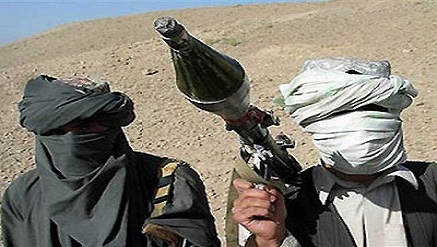
Boko Haram’s recent attacks are notable for the expensive military hardware on display. Where is it getting funds to acquire these hardware?
The Independent reports on the sources of this money, from wealthy Middle Eastern backers to the black market
If there was an exact moment that the international community understood the breadth of Boko Haram’s evil, it came last month, when the group’s leader grinned and announced that he would sell more than 200 kidnapped schoolgirls in his “market of selling human beings”.
Behind Abubakar Shekau, a man who rose to the top of Boko Haram through unmatched brutality and religious fanaticism, loomed several armoured vehicles.
Local experts said the video was likely to have been filmed in the remote Sambisa forest in north-eastern Nigeria. The juxtaposition between rural land and advanced machinery made a jarring contrast.
Despite the poverty of northern Nigeria – where 70 per cent of people live on less than 60p a day – the Boko Haram terrorist group has at its disposal a seemingly limitless amount of heavy weaponry, vehicles, bombs and ammunition that it uses to kill with unfathomable wantonness.
The Islamic militants, masquerading as members of the military, raided three villages in north-eastern Nigeria this week and killed 400 villagers “from house to house” using “sophisticated weapons”, one local leader told Bloomberg.
Dozens more Boko Haram members arrived at another village, Bargari, disguised as preachers and assembled all those living in the village, ostensibly to teach Islam. Once they had gathered, another “large number of terrorists” arrived and “opened fire on the congregation”, one resident told Nigeria’s Daily Post.
“The gunmen numbering 20 ambushed the village with four Toyota Hilux vehicles, AK-47 rifles, improvised explosive devices, and petrol bombs,” the paper said.
Saleh Mohammed, a member of Civilian JTF – one of a number of vigilante groups that have sprung up to fight the militants – told Reuters: “Boko Haram wreaked havoc in the villages. They burned houses and killed people mercilessly after tricking the residents.”
The expensive equipment on prominent display soon prompted questions about who was funding Boko Haram’s campaign of slaughter.
According to a survey of academic, governmental and journalistic accounts, Boko Haram funds its escalating acts of terror through black market dealings, local and international benefactors, and links to al-Qa’ida and other well-funded groups in the Middle East.
Analysts say its fundraising apparatus is intricate and opaque. “The actual source of the funding is as elusive as the militants themselves,” Heather Murdock wrote for Voice of America.
The story of Boko Haram’s fundraising began after the 2001 terrorist attacks on the World Trade Centre and the Pentagon.
The group’s original leader, a charismatic cleric named Mohammed Yusuf, who was later killed, founded the group in 2002 pushing an alternative to Western education, which he claimed undermined Nigeria’s development. (The group’s Hausa name translates as “Western education is sin”.)
Around that time, Osama bin Laden sent an aide to Nigeria with about £1.8m in local currency to dispense among groups that shared al-Qa’ida’s mission to impose Islamic rule. One of the “major beneficiaries”, the International Crisis Group said, was Boko Haram.
EJ Hogendoorn, the International Crisis Group’s deputy programme director for Africa and an author of the report, told The Daily Beast: “What I can tell you from talking to lots of conservative Muslims in Nigeria is that there was a lot of money coming into northern Nigeria. There are many sources of that money. One of those sources was from al-Qa’ida.”
The connection between Boko Haram and al-Qa’ida – and its money – perhaps deepened when Yusuf fled to Saudi Arabia to escape one of Nigeria’s first crackdowns on the terrorist group. It remains unclear what happened while he was in Saudi Arabia, or who he met, but Boko Haram leaders have later said that much of their funding comes from al-Qa’ida.
A Boko Haram spokesman said in 2011: “Al-Qa’ida are our elder brothers. We enjoy financial and technical support from them. Anything we want from them we ask them.”
But even such alleged financial connections with al-Qa’ida cannot explain Boko Haram’s money. The group reportedly also gets cash from Islamic terrorist groups such as al-Shabaab in Somalia and local al-Qa’ida affiliates.
Then there’s the black market money. Beyond a hatred of Western education, economic motives may have also driven Boko Haram’s recent abduction of the schoolgirls. A robust and terrifying slave market exists in Nigeria and neighbouring countries.
The Combating Terrorism Centre at West Point, the US military academy, said: “Kidnapping has become one of [Boko Haram’s] primary funding sources, a way to extract concessions from the Nigerian state and other governments, and a threat to foreigners and Nigerian government officials.”
Experts now estimate that kidnapping is worth “millions of dollars in ransom money” to the militants.
What experts agree on is that one of the best ways to stall Boko Haram is to cut off its funding. But how to do that remains unclear. The group is an entrenched part of life in northern Nigeria, possessing control and influence, and even collecting taxes.
Next week, Foreign Secretary William Hague will host a meeting of African and Western officials in London aimed at stepping up efforts to defeat the militants. Its effectiveness may hinge on the West’s ability to cut off the group’s funding



Association of Radiographers of Nigeria (ARN) has rejected the Medical and Dental Practitioners Act (Repeal and Re-enactment) Bill 2026 currently before the National Assembly, describing it as a targeted and calculated existential assault on their profession.

According to the body the legislative attempt will erode the profession of radiography and transfer its statutory responsibilities to the Medical and Dental Council of Nigeria.
Dr Musa Dembele, president of the association, gave the warning while addressing a press conference at the Kano NUJ Press Centre on Saturday.
He said, “The Medical and Dental Practitioners Act (Repeal and Re-enactment) Bill, 2026 (HB 2695) is not a reform but a targeted, calculated, and existential assault on the profession of radiography.”
He also described the bill as an attempt to introduce a “jurisdictional override” intended to dismantle the Radiographers Registration Board of Nigeria.
“This is a legislative execution of a profession that has served Nigeria for over 50 years,” he said.
Dembele pointed to Section 8(1) of the bill, which grants the Medical and Dental Council of Nigeria exclusive authority, describing it as “a legislative nuclear weapon” that strips the Radiographers Registration Board of Nigeria of its mandate.
The association also accused the bill of “conceptual theft” by redefining radiology in a way that erases radiography as an independent scientific discipline.
“The bill seeks to legally erase radiography as an independent profession and subjugate radiographers to the disciplinary authority of a council composed of individuals with no expertise in radiographic science,” the association said.
On financial matters, the association accused the bill of promoting “extortion as regulation,” noting that it mandates that 70 per cent of practising fees be shared with the Nigerian Medical Association.
“This reveals the true motive — financial colonisation,” Dembele said.
The association also raised concerns over HB 2699, the Radiographers Registration Board of Nigeria Amendment Bill, which it said seeks to weaken the board from within.
It described the inclusion of medical doctors on the board as “a fundamental violation of the doctrine of professional self-regulation” and warned against excessive ministerial control that could politicise regulation.
The association stressed that globally, radiography regulation is profession-led, citing examples from the United Kingdom, Canada, and Australia, and noted that Nigeria cannot afford to adopt a substandard model that contradicts established international norms.
The association therefore called on the National Assembly to protect the integrity of the Nigerian healthcare system by rejecting the bill in its entirety.
It also called for a stakeholders’ summit to develop a harmonised regulatory framework that respects the co-equal status of all health professions, as obtained in the United Kingdom, Canada, and Australia.
“The association aligns with the position of the Joint Health Sector Unions, medical laboratory scientists, physiotherapists, and other critical stakeholders who have also rejected similar legislative attempts,” he added.

Zarttech extends a sincere apology to individuals and partners who may have been affected during the course of its operations. The company recognizes that its journey included challenges and acknowledges the importance of accountability, respect, and transparency toward everyone who was part of its story.

At its core, Zarttech was founded with a mission to bridge the global tech talent gap by connecting diverse IT professionals with opportunities around the world. The company sought to remove barriers that often prevent talented individuals from accessing global work, while promoting fairness and reducing bias in the technology recruitment process.
Through its work, Zarttech contributed to a broader shift in how Africa is perceived in the global technology ecosystem. By highlighting the expertise, creativity, and potential of African developers and technology professionals, the company helped bring greater visibility to the continent’s growing pool of world-class talent.
Zarttech’s mission centered on creating opportunities that connected businesses with skilled professionals across Africa, Europe, and South America while demonstrating that innovation and excellence in technology know no geographic boundaries.
Beyond its business activities, Zarttech also supported initiatives aimed at empowering women in technology across Africa through training and education programs, reinforcing its belief that inclusive access to opportunity can help shape a more equitable global tech industry.
While the company’s chapter has come to an end, the impact of the conversations it helped spark about African talent, global collaboration, and opportunity without borders continues to be part of a larger movement transforming the global technology landscape.

Nigerian Content Development and Monitoring Board (NCDMB) has been named a Local Content Partner at African Energy Week (AEW) 2026, in a move that positions the agency as a key driver of indigenous capacity building in Africa’s energy sector.

NCDMB
The event, scheduled to hold from October 12 to 16 in Cape Town, South Africa, will give the NCDMB a high‑profile platform to showcase Nigeria’s local content framework, industrial projects and investment opportunities to global investors and policymakers.
The NCDMB, a parastatal regulatory agency under the Federal Ministry of Petroleum Resources, has increasingly anchored its interventions on skills development, infrastructure and industrialisation.
In March 2026, the board launched a 12‑month pipeline engineering training programme for 33 young engineers in Port Harcourt, in partnership with Renaissance Africa Energy and MJD Oilfield Services.
The programme focuses on pipeline pigging, corrosion control and integrity management, aligning the workforce with major government infrastructure projects such as the Ajaokuta‑Kaduna‑Kano Gas Pipeline.
On infrastructure, the NCDMB is advancing construction of a 204‑room Radisson‑managed hotel and conference centre in Yenagoa, Bayelsa State, expected to be commissioned in December 2026. Located adjacent to the Nigerian Content Tower, the facility is designed to support industry collaboration, conferences and business meetings within the local content ecosystem.
The board has also commissioned a Clinical Skills and Simulation Laboratory at Bayelsa Medical University, enhancing healthcare training and service delivery in host communities through modern simulation technology.
Industrial expansion remains a core pillar of the NCDMB’s strategy. Under the Nigerian Oil and Gas Parks Scheme, pilot parks in Odukpani, Cross River State, and Emeyal‑1, Bayelsa State, are nearing completion and are projected to generate about 2,000 jobs each.
These shared‑services industrial hubs are designed to localise manufacturing, reduce project costs and enable indigenous companies to scale up production along the upstream and midstream value chains.
From a financing and policy standpoint, the NCDMB is deploying multiple funding mechanisms, including a 100‑million‑dollar equity investment scheme, a 500‑million‑dollar intervention fund and a 20‑million‑dollar initiative targeted at women‑owned enterprises in the oil and gas sector.
Recent enforcement measures, such as tighter expatriate quota controls and mandatory compliance certification for operators, signal a shift toward deeper localisation, greater transparency and stronger investor confidence in Nigeria’s energy industry.
Speaking on the significance of the board’s role at AEW 2026, the Executive Chairman of the African Energy Chamber, NJ Ayuk, said the NCDMB’s participation underscores Africa’s commitment to building domestic capacity and retaining value within the continent.
“Local content is not just policy – it is the foundation for sustainable growth, job creation and energy security across African markets,” Ayuk noted.
As African Energy Week 2026 gathers global investors, policymakers and energy operators, the inclusion of the NCDMB as a Local Content Partner highlights the growing importance of in‑country value creation. With focused sessions on skills development, technology transfer and industrialisation, the forum is expected to generate concrete partnerships and commitments that can help build resilient, competitive and investment‑ready energy ecosystems across Africa, with Nigeria positioned at the centre of the regional value chain.

ARN Rejects Medical Bill over Attempt to ‘Scrap’ Profession

Meningitis Kills a Quarter Million People a Year -Study

NIGCOMSAT Supports Startups Growth with the Launch of Accelerator 3.0

Stakeholder says AI is Crucial to Nigerian Data Centres Amid Persistent Grid Collapse

NFVCB Boss Urges Stronger Distribution Channels @ Coal City Film Festival 2026

Spotify’s Loud & Clear Report Reveals Over ₦60Bn Revenue for Nigerian Artists in 2025

Madonna University Taps Tech Guru Adote for Strategic Board Role

China Threatens to Shut Nigeria’s Satellite Over $11.44m Unpaid Debt

Jumia Tech Week 2026 Begins with Tech Deals on Smartphones, Electronics, and Everyday Technology

FCCPC Bans Lagos ‘No Refund’ Policy, Vows Fines and Shutdowns for Traders




 E-Financial2 days ago
Breaking…..Kuda Lays Off Many Employees in Broad Restructuring

 Telecom2 days ago
Google Rolls Out Search Live AI to 200+ Countries, Including Nigeria

 E-Financial2 days ago
CBN Bars Chronic Loan Defaulters from Accessing Loans

 E-Financial2 days ago
NDIC Insures 99 Percent of Bank Customers

 E-Business2 days ago
FG Shifting Focus to “Meaningful Connectivity” to Drive Inclusion – Minister

 General News2 days ago
Anti Graft Agencies Raise Alarm over Rising Crypto-Linked Financial Crimes

 E-Business2 days ago
NITDA Takes Over National Digital Architecture System

 E-Financial2 hours ago
CBN bars large‑ticket loan defaulters from banking services in tough new crackdown