

General News
Right of Reply: SAHCOL Got it all Wrong


Indigenous Software: SAHCOL got it all wrong! The purpose of this write up is to present an empirically informed understanding of the processes inherent in software development dynamics as a professional response by the Institute of Software Practitioners’ of Nigeria (ISPON) to statements and opinion published in the Nigeria Communications Week – Online version of Friday, August 3, 2012 (Online News Letter August 3, 2012) and credited to one Adejare Adekitan, a staff and head information and Communications Technology (ICT) at Skyway Aviation Company Limited.
The views would definitely not go unnoticed by discerning I.T Professionals and indigenous Software Developers. This response therefore aims to correct the very misleading and ignorant impression by the source – Mr. Adejare.
Mr. Adejare in his remark emphasised the continued patronage of Foreign Software as against indigenous software-and a critical look at this statements did not present any argument on technicalities as to the reason why indigenous software is not of reckoning to the Aviation.
This is a fallacy and goes to a long way to publicly display the deep of ignorance of how software product functionality, quality and integrity emerges and are sustained. It is therefore constructive to emphasize that “No software in the World is perfect” – that is why continuous versioning of Applications and solutions are strategic imperatives. Software Engineering is about transforming organisational policy, functions, business-processes and operations culture into an automated systems solution.
It is important to emphasise the following to debug and debunk the fallacy embedded in the statement of Mr Adejare: 1. All Software Solutions of the world are delivered with one, many, and several process flaws or errors in them – that is why there are many versions, leading to system capability and maturity model (CMM). Even at that, the complexity of human needs continues to demand more perfection that makes flawless software process a mirage.
2. There are numerous Foreign Software – imported into Nigeria and deployed\implemented by the Aviation and Banking sectors and other core Industries at colossal cost to shareholders and national economy – that have either FAILED to perform, or fulfill the contract scope of works!
3. I doubt is Mr Adejare is listed in the membership registry of Professional IT/Software Practitioners’ of Nigeria and his opinion to say the least is grossly uninformed and a layman view. His views are grossly misleading, ignorant and should not be taken as expert opinion.
Least Mr Adejare forgets, that as an electrical engineering graduate who to my view had never ventured nor written any reasonable Software application for the Aviation industry, will arrogate to himself to be an expert judge on Indigenous Software. By extension, he missed the point by expressing the view that Africa has no credible Software Developers which is equal to saying that orthodox medicine cures all illnesses in Africa.
Nay, the matter is about human intellect and creativity – that is software and Africa/Nigeria have them plenty. Let is be said that indigenous software applications are driving the significant operations of some of Nigeria’s top performing industries, including Aviation banks, oil and Gas, and so on.
The critical issue of this subject matter is focused on the fact that Software development lifecycle has two fundamental elements: Domain Knowledge and Professional Expertise on Analytical Process to codify the required solution – applying specific tools and standard procedures. In that context, Aviation Applications are predominantly and indirectly address and specified by Domain Knowledge Resources from the sector (who generate the operational policy roadmap brief) working directly with Software Analysts’ Engineers and Developers who apply technology process logic and tools to deliver the assessed needs of the client.
Same applies to Space Exploration, Communications, Financial, Accounting, Payroll, Construction, Medical, Agricultural, Oil & Gas Solutions to mention but a few. Software from the above mentioned domain are often subjected to intensive domain research through various channels of investment –particularly encouraged by the financial institutions.
The gestation period is long – maturity timeline ranges from minimum 3 to 5 to 7 years. To the best of our knowledge, there has not been any of such classified investment in the Software industry in Nigeria by the Banking Sector. What Mr Adejare seems to forget is that Indigenous Software Developers read from the same Universities, book and use the same tools as their foreign counterparts. Enabling environment may differ.
Indeed, the domain policy, operational requirements and briefs from the clients are then matched with the technology needs-assessment of the clients to enable the Software developers come up with the desired design and appropriate tools capable of delivering the solution.
Software – simply defined as computer software, or just software, is the collection of computer programs and related data designed to provide the logical instructions directing a computer hardware or related devices on what to do.
The term was coined to contrast to the old term hardware (meaning physical devices). In contrast to hardware, software is intangible, meaning it “cannot be touched”.
Software is also sometimes used in a more narrow sense, meaning application software only. Most of these software applications are derived from DOMAIN needs and replicate the operational characteristics of such domain.
Coming from the banking sector which should be concerned about the growth of the economy, this is really heart breaking and goes a long way to show that majority of our financial institutions are not committed to the growth of the Nigerian economy.
Mr. Adejare of SAHCOL got it all wrong by while asserting that foreign software solutions are the answer to Nigeria’s Aviation Sector, he has not stopped to think of the peculiarity of adaptive technology which can only be guaranteed by the local developers. By extension, he might have become a paid ally of those countries who intend to box us into the Digital Colony Domain, where Aviaton Application software becomes the major tool to assassinate stubborn African/Nigerian President in Future.
He probably has not realised that the domain knowledge is most critical to the development of application software solutions and that Nigerian Developed Software is perhaps the most fundamental component for the future and survivability of the Nigerian nation.
His argument that the Software industry in Nigeria might be young, thus unable to handle enterprise software and solutions of ‘Aviation Proportions’ is flawed on the background of the cognate experience of Nigerian Software Developers which spans more that 30 years of the 50 years origin of modern software development culture.
Mr. Adejare has not taken into account of the fact that Nigerian software developers have worked and continue to support the sustainability of foreign software.
Indeed, these Nigerians still head those foreign software organisations operating in Nigeria.
Mr Adejare not only sleights the software industry which was given credence by the Obasanjo Administration when the then President directed all MDA’s to use Indigenous software but also berates himself as an IT professional for being incapable of meeting the technical and intellectual needs of an industry which prides itself on imported software.
Nigeria may not have dedicated tertiary institutions as concerns software development, but that does not mean that the higher institutions/indigenous companies are not meeting the software needs of discerning Nigerians. How much of investment has the bank committed into software development in Nigeria?
Mr. Adejare needs to sit with developers and let them showcase their milestones and challenges instead of insulting the intellectual capability of software practitioners by falsely asserting that indigenous application software are not robust enough to meet the rigours of enterprise demands.
Indeed that false statement becomes transparently misleading when weighed against the following false statements: 1. Nigerians are not capable of developing and managing Banking business!
2. Nigerian Pilots are not capable of flying an A380 Airbus!
3. Nigerian Lawyers and Judges are not capable of handling international judicial litigation!
4. Nigerian Scientists are not capable of making new discoveries! 5. Nigerian writers are not capable of writing internationally acclaimed books! 6. Nigerians are not capable of being the President of their nation!!!
ISPON demands and unreserved apology from Mr. Adejare for insulting Nigerian Software Developers. To SAHCOL, the employers of Mr. Adejare, ensure that your staff is registered to practice the ICT Profession in Nigeria, else, he is undertaking and illegal employment.
That the software industry in Nigeria is not being patronised is due to the subconscionable bias towards foreign goods which majority of colonised countries still carry.
They should liberate themselves from this mental slavery and wake up to the reality of Nigerian Entrepreneurial spirit.
Furthermore, the foreign exchange transfer factor of Foreign Software and services is why people like Mr. Adejare have become their spokesman.
The digital space and laboratory for the practice of Software in our nation is the client’s domain the is our current and future laboratory – and no one has the right to deny indigenous software developers the fundamental and intellectual rights (IPRs) to practice their profession within that digital/cyberspace.
It is a great illusion to belief that things will remain the way they presently are!
There is need to inform Mr. Adejare that our education system is currently producing Information Technology Practitioners in very large numbers.
And that the Nigerian code warriors have arrived and ready to take charge. Finally, Nigerian Aviation should open the digital space and create a level playing field for Indigenous Software developers – both at home and in the Diaspora.
They should proof their support for indigenous software by challenging them with project calls. The hide and seek game in defence of foreign software to corruptly earn foreign exchange is over! With the Local Content act, Game is up.



Federal Competition and Consumer Protection Commission (FCCPC) has warned Lagos traders against enforcing the unlawful “no return, no refund” policy, declaring it illegal under the Federal Competition and Consumer Protection Act (FCCPA) 2018.

FCCPC
Dr Olubunmi Otti, FCCPC Southwest Zonal Coordinator, issued the directive during the inauguration of new executives of the Phone and Allied Products Dealers Association (PAPDA) on Wednesday, stressing consumer education as the strongest defence against market exploitation.
“There is no such thing as ‘no return, no refund’. If a product does not fulfil its intended purpose, the consumer has the right to return it,” Otti declared, adding the commission mediates complaints for refunds, replacements, or exchanges.
Non-compliant businesses face fines, product withdrawals, seizures, prosecutions, or shutdowns. Otti noted thousands of monthly complaints via the FCCPC portal in the Southwest alone, with sensitisation expanding to Alaba Market and Trade Fair Complex.
She urged consumers: “When your rights are violated, do not just say, ‘You give it to God.’ Bring your complaints to the FCCPC. The law empowers us to protect you,” while calling for traders’ collective responsibility to ensure quality products and services.


African Development Bank Group (AfDB) has approved a €6.5 million investment in the Saviu II venture capital fund to boost technology start-ups across Francophone West and Central Africa.

The Bank Group will contribute €4.5 million as equity investment and an additional €2 million as a first-loss hedging tranche on behalf of the European Commission under the Boost Africa Programme.
The investment is expected to strengthen early-stage financing for innovative businesses with strong technological and digital components, particularly in French-speaking countries.
Saviu II, the second investment vehicle managed by Saviu Partners, plans to invest between €500,000 and €3 million in about 20 seed-stage or early institutional fundraising start-ups. The fund will primarily target B2B technology-oriented companies with scalable models.
At least 60 per cent of the fund’s commitments will focus on French-speaking countries in West and Central Africa, including Côte d’Ivoire, Cameroon, Benin, Senegal, Togo, Burkina Faso and Mali.
The fund may also co-invest in promising East African technology firms seeking expansion into Francophone markets.
In addition, Saviu II will dedicate a special funding envelope for pre-seed investments, mainly through minority equity stakes, often in collaboration with incubators, venture studios and other ecosystem partners.
Industry observers say the AfDB’s backing is expected to de-risk early-stage investment and crowd in more private capital into Africa’s growing digital economy.
Saviu Partners previously launched Saviu I in 2018 with a capitalization of €10 million.
The first fund invested in 12 start-ups, mainly based in French-speaking West Africa, offering not just funding but hands-on support in business development, recruitment, international expansion and fundraising.
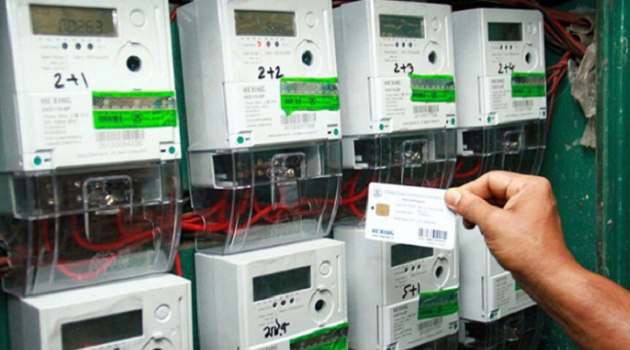
Nigerian Electricity Regulatory Commission (NERC) has ruled in favor of electricity consumers, directing distribution companies (DisCos) to refund ₦20.33 billion in outstanding costs for meters bought under the Meter Asset Provider (MAP) framework.

NERC
Signed on February 27, 2026, by Musiliu Oseni, chairman,NERC and Dafe Akpeneye, commissioner Order No. NERC/2026/025 amends a 2023 directive.
It requires DisCos to disburse the funds via energy credits over 12 months starting March 1, 2026, addressing years of slow refunds.
As of December 31, 2025, DisCos owed this amount due to delays in reimbursing prepaid customers who funded their own meters.
DisCos must automate credits for the full MAP meter cost upon activation, disbursed monthly over 120 months based on the customer’s tariff—credits cannot offset legacy debts.
Prepaid customers will receive a monthly token by the 4th day equivalent to the reimbursement value; for arrears, they’ll get two tokens per month.
Postpaid customers will see a distinct credit line on bills subtracted from totals, with two line items monthly for arrears.
NERC mandates monthly reports on reimbursement values using an approved template, plus dedicated email channels for complaints with resolution status included.
The order aims to end delays, improve notifications, and boost sector trust. DisCos must accelerate arrears recovery over 12 months without further excuses.
This follows NERC’s February 2026 compliance review, amid ongoing power sector challenges highlighted by Power Minister Adebayo Adelabu.

GCR Affirms Afreximbank’s International Scale Ratings of A, A2

SmartCash Launches ‘No Be Cho Cho Cho’ Campaign to Boost Digital Banking in Nigeria

MTN Nigeria Non-Executive Director Mazen Mroue Quits to Focus on Group Role

Google Adds Yorùbá, Hausa to AI Search, Boosting Access for Millions of Nigerians

MultiChoice Shuts Down Showmax After 11 Years Amid Streaming Wars

Dr. Cairo Ojougboh Foundation Bolsters Nigeria’s Education Drive with ₦2.7m Student Support

Kaspersky Brings more Transparency to Threat Detection with New Hunt Hub

NDPC Commits to Balancing Data Privacy, Protection Information

PwC Reveals AI Scaling Gap Slows Africa’s Digital Transformation

Firm Reviews the Evolution of Phishing Threats in 2025




 E-Financial3 days ago
NRS Targets N40trillion in Tax, Royalty Revenue in 2026

 E-Financial3 days ago
SEC Revokes Registration of Kensington Agro Trading Limited

 General News3 days ago
Purple Woman 3.0 Is Back, to Empower Women in Tech this IWD 2026

 News3 days ago
EFCC Arraigns Two FSDH Bank Officials Over $307k, €50k Fraud

 E-Financial2 days ago
Nigeria’s VAT Jumps 34%, CIT Soars 48% to ₦14trn in 9M’25 – NBS

 Telecom2 days ago
FG Approves GIS-enabled Digital Postcode to Tackle Logistics Gaps, Boost E-commerce
 E-Business3 days ago
NDPC, 60 DPAs Collaborate on Enforcing Privacy Rights in the Use of Al

 Telecom3 days ago
Konga Launches ‘Berekete Sales’ with Up to 50% Discounts Across Major Categories