

News
Russia Eyes Opportunities in Nigeria Telecom, Energy

Alexander D. Polyakov, visiting ambassador extraordinary and plenipotentiary of the Russian Federation, has expressed the desire of Russian investors to take active interest in Nigerian economy, especially in the energy and telecommunications sectors.
The Ambassador said in Abuja, when he paid a courtesy visit to t Mrs. Irene Chigbue director general of the Bureau of Public Enterprises (BPE),
Said he, "Russia is very much interested to invest in Nigeria, especially in power and Telecommunications," disclosing that some Russian investors, may express interest in NITEL, the nation’s telecommunications giant when the transaction opens for investors to express interest.
He said the Russian Government whom he represents, acknowledges the crucial role the BPE has been playing in the reform and restructuring of Nigerian economy. He reiterated his willingness to promote mutually rewarding economic relations between the Russian Government and Nigeria. According to him, "my task is to draw a picture of how things are going in Nigeria," affirming that privatization is not always easy anywhere in the world.
The Ambassador promised that in spite of the current world economic meltdown, the Russian Aluminum (Rusal) would fulfill all their contractual obligations in ALSCON. He said the company has since commenced production.
While receiving the envoy in her office, the director general said that the BPE had been desirous to meet with him because of the relationship the BPE enjoys with Russia, noting that Russian privatization programme had come a long way with lessons to be learnt and experience drawn.
She spoke of the efforts Nigerian government had made to cultivate the Russian investors and that one of the results is the Rusal’s acquisition of ALSCON. While acknowledging that Rusal had done quite a lot in spite of the challenges, she was however not happy that the company has not fulfilled some of its obligations especially with regards to the dredging of Imo River. She noted that this is a matter of national interest, which the people will not take kindly to, especially in a democracy, and that government is always sensitive to the feelings of the people.


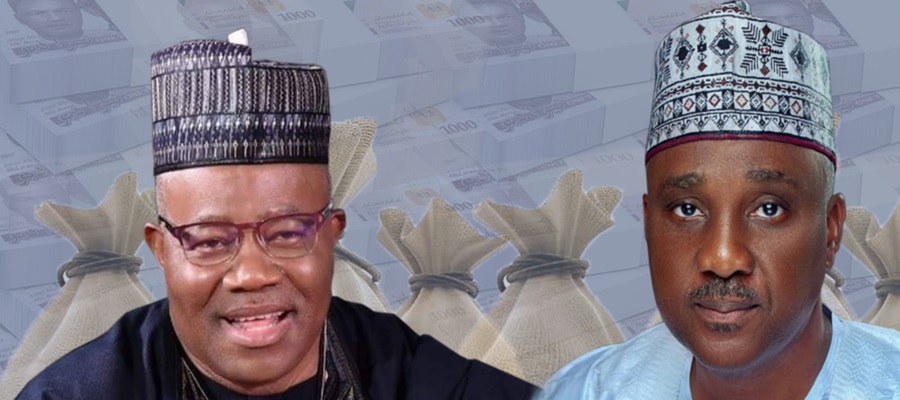
Socio-Economic Rights and Accountability Project (SERAP) has given Godswill Akpabio, Senate President, and Tajudeen Abbas, speaker of the House of Representatives, seven days to explain how over N1.3 billion was allocated in the 2026 Appropriation Act to a presidential council that the Presidency has described as fictitious.

In a Freedom of Information (FoI) request dated July 4, 2026, SERAP asked the National Assembly leadership to release certified copies of all documents related to the approval of the N1,302,978,784 allocation to the Presidential Foreign Intervention Promotion Council (PFIPC)/Presidential Economic Advisory Council.
The rights group also called on the National Assembly to invoke its investigative powers under Sections 88 and 89 of the 1999 Constitution to probe the circumstances surrounding the allocation and identify those responsible for what it described as apparent irregularities in the budget process.
SERAP further requested records identifying the lawmakers and committees that considered the allocation, as well as the public officials or representatives who defended the budget proposal before the committees.
The civil organisation also sought clarification on whether the allocation originated from the Executive’s 2026 Appropriation Bill or was introduced during the legislative appropriation process.
It equally demanded to know whether any lawmaker questioned the legal status or operational mandate of the council before approving the allocation.
The FoI request follows a July 1 statement by the Presidency denying the existence of the Presidential Foreign Intervention Promotion Council and insisting that the Federal Government never created the body.
Describing the conflicting claims as alarming, SERAP said they raised “serious concerns regarding the integrity of Nigeria’s appropriations process, legislative oversight, public financial management, and accountability.”
The FoI request, signed by Kolawole Oluwadare, deputy director, SERAP, stressed that Nigerians have a constitutional right to know whether public funds were appropriated to an entity that does not legally exist.
SERAP said, “Nobody has a more sacred obligation to obey the law than those who make the law, and that the National Assembly has a constitutional responsibility not merely to approve the Executive’s budget proposals but to rigorously scrutinise them before authorising public expenditure.”
The organisation argued that disclosure of the requested documents would enable Nigerians to determine whether the National Assembly fulfilled its constitutional obligations under Sections 80, 81, 88, and 89 of the Constitution in approving the allocation.
SERAP warned that if the requested information is not released within seven days of receipt or publication of the letter, it would initiate legal proceedings to compel the National Assembly to disclose the documents.
The organisation further maintained that making the records public would strengthen confidence in the National Assembly’s credibility, enhance transparency in the appropriation process, and promote accountability in the management of public funds.
It also cited the Freedom of Information Act, the Nigerian Constitution, the African Charter on Human and Peoples’ Rights, the International Covenant on Civil and Political Rights, and the Tshwane Principles as legal bases for its demand for full disclosure.

World Bank has said Nigeria’s greatest fiscal challenge is weak revenue mobilisation rather than excessive borrowing, urging the Federal Government to strengthen revenue generation to support sustainable economic growth and meet its debt obligations.

The World Bank Country Director for Nigeria, Mr. Mathew Verghis, stated this during an interview on Channels Television on Friday.
According to him, Nigeria’s debt profile remains moderate by international standards and does not place the country among nations experiencing debt distress.
“From our assessment, Nigeria doesn’t have a high indebtedness problem; it has a low revenue problem,” Verghis said.
He explained that Nigeria’s debt-to-Gross Domestic Product (GDP) ratio is lower than that of many comparable economies, adding that the country’s fiscal challenge lies more in its limited revenue base than in the volume of its borrowing.
“When we looked at the numbers, Nigeria is a moderately indebted country, meaning it has less debt relative to its economy than most of its neighbours and many other countries.
“Nigeria is in a very different situation from Ghana, for example, which is going through a debt restructuring,” he said.
Verghis defended government borrowing, describing it as a legitimate tool for financing long-term investments capable of stimulating economic growth and improving citizens’ welfare.
“Nigeria borrows for the same reasons that all countries borrow. If you want to deliver results to people, the money available on an annual basis is not enough.
“So you borrow, deliver results, and that improves your ability to repay,” he said.
He cited electricity infrastructure as an example, noting that expanding access to power for millions of Nigerians would require substantial upfront financing.
“To be able to connect and provide energy to 32 million Nigerians, Nigeria needs to borrow money now.
“But with increased access to energy, the country will become wealthier and better positioned to repay the loans,” he added.
The World Bank official, however, warned that Nigeria’s low revenue generation poses a greater risk to fiscal sustainability than its current debt burden.
“Nigeria’s debt is not particularly high, and in fact, it is quite moderate by international standards.
“Its revenues are very low by international standards, and unless those revenues are raised, it will not be able to pay back debt,” he said.
Verghis said improving revenue mobilisation would enable the government to invest more in critical sectors such as infrastructure, healthcare, education and agriculture, while supporting job creation, strengthening human capital development and reducing poverty.
He noted that the World Bank’s recently unveiled Country Partnership Framework for Nigeria for 2026 to 2032 places job creation at the centre of its support for the country.
According to him, the framework will focus on investments in infrastructure, healthcare, agriculture and digital connectivity to promote inclusive and sustainable economic growth.
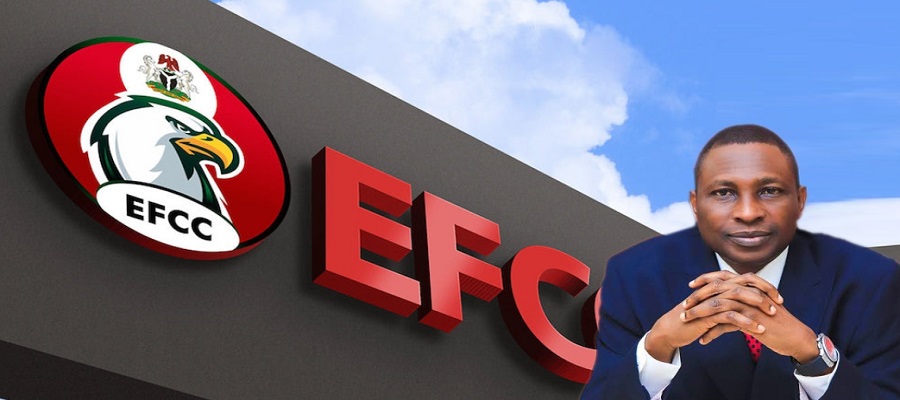
Ola Olukoyede, chairman of the Economic and Financial Crimes Commission (EFCC), has disclosed that the commission recovered more than N7.2 million stolen from the bank account of a serving judge by suspected internet fraudsters in a midnight cyberattack.

Ola Olukoyede, Chairman of the Economic and Financial Crimes Commission (EFCC).
Olukoyede made the disclosure at the public presentation of two books authored by retired High Court judge, Justice Alaba Omolaye-Ajileye.
He said the serving judge, who is from a South-South state, contacted him around 1:00 a.m. after receiving multiple debit alerts indicating that funds had been withdrawn from her account.
According to him, the stolen money represented savings the judge had accumulated over six years to finance her child’s education.
Olukoyede said the EFCC immediately swung into action and successfully recovered the entire sum before 6:00 p.m. on the same day.
He said the incident underscored the increasing sophistication of cybercriminals and the urgent need for stronger collaboration among law enforcement agencies, the judiciary and members of the public in tackling financial crimes.
The EFCC chairman also called for amendments to Nigeria’s legal framework to accommodate the use of artificial intelligence (AI) in criminal investigations and prosecutions.
According to him, existing evidence laws should be reviewed to recognise AI-generated evidence as technology continues to reshape crime detection and investigation.
Also speaking at the event, former Attorney-General of the Federation and Minister of Justice, Chief Kanu Agabi (SAN), urged anti-corruption agencies to intensify efforts to trace and recover public funds allegedly stolen and stashed in foreign countries.
Agabi stressed the need for sustained collaboration among relevant institutions to strengthen Nigeria’s anti-corruption efforts and improve accountability in public service.
In his remarks, a former President of the Nigerian Bar Association (NBA), Chief Wole Olanipekun (SAN), called for stricter enforcement of the country’s cybercrime laws to curb the growing menace of internet fraud.
Olanipekun said effective implementation of existing laws, alongside stronger institutional cooperation, would help address the increasing threat posed by cybercriminals to individuals and the nation’s financial system.

Zedvance appoints Prof. Olanrewaju as board chairman

SERAP Asks Akpabio, Abbas for Explain N1.3Bn Budgeted for ‘Fictitious’ Presidential Council

No Plans for Fresh Tariff Hike – MTN

FG Denies N8 Trillion ‘Shadow Budget’, Says IMF Quoted out of Context

Tokenization, Blockchain Technology will Transform Financial Institutions – IMF

Mobile Internet Gender Gap Widest in Africa – GSMA

Nigeria Launches FreeTV Nationwide

NASENI Moves to Digitize CCB’s 5m Assets Declaration and Operations

UK, Nigeria Launch £15m Growth Programme to Accelerate Economic Transformation

CANAL+ Partners Samsung to Pre-Load DStv Stream on New Samsung TVs In Nigeria, Other African Countries




 Broadcasting3 days ago
Why We’re Partnering With NIHOTOUR To Bring Nigerians In South Africa Home – Steve Babaeko

 News3 days ago
FG Clears N39Bn Pension Arrears for NITEL, PHCN, Other Retirees

 News3 days ago
How Fraudsters Emptied a Judge’s Account of N7.2 Million in Midnight Attack

 Telecom3 days ago
MTN Nigeria Celebrates Volunteers at Y’ello Care Impact Showcase

 E-Financial3 days ago
SEC Grants Approval to Luno, Other Crypto Firms under Regulatory Sandbox

 Telecom3 days ago
Google Play launches $1m fund to support African game developers

 Telecom3 days ago
Xenophobia: MTN Nigeria Belongs to Nigerians, Not Only South Africans — Toriola

 Telecom3 days ago
MTN Takes ‘The Gathering on 100’ Youth Empowerment Initiative to Kano