

E-Financial
SEC, Stakeholders Harp on Fintech, Collaborations for Capital Market Efficiency

The Securities and Exchange Commission (SEC) and other stakeholders in the Nigerian capital market, have championed the adoption of technology and fintechs in the development of innovative products critically needed for capital market efficiency.

This was revealed over the weekend at the 12th annual conference of the Institute of Capital Market Registrars (ICMR) with the theme: “Navigating Nigeria’s Economic Realities: The Transformative Power of Technology in the Capital Market.”
Speaking on the topic; “Empowering market participants through education and capacity building,” the Executive Commissioner, Operations, SEC, Dayo Obisan, urged registrars to first of all identify the participants in the sector, which has changed due to technology, in order to educate them.
He said, “The market has changed. There has been a lot of dynamics. A lot of people use the word, fintechs loosely but a lot is happening in that space and that was one of the reasons we had to quickly revise the capital market master plan. Back then, there were no fintechs, there were no digital brokers, there were no robot advisors, but we now have those, and we had to quickly register.”
Ade Bajomo, the President, FinTech Nigeria, during his keynote address urged capital market operators to harness technology’s potential to boost their operations while being cautious of associated risks.
Bajomo said, “Technology has the potential to be a powerful equaliser and if our industry is to play a part in the fifth industrial era, then we must have capital market operators use the technology. It has been proven time and time again that those who exploit technology in a certain manner will keep competitive advantage.
“We must also be mindful of the potential risks in the use of the technology in our capital market. We must ensure we have appropriate regulatory framework in place to protect investors and maintain market integrity. In conclusion, the power of technology in transforming the capital market is undeniable. However, we must use this power responsibly and with caution.”
In his presentation at the conference, Professor of Capital Market, Uche Uwaleke, advised companies to diversify their business operations in order to weather the economic headwinds in the country.
He said innovation and resilience are essential for sustainable business growth in an uncertain world.
“Core principles of business resilience include risk identification, contingency planning, diversification, innovation, and strong relationships with customers and suppliers.
“Strategies for sustainable business growth during uncertain times include developing new products and services, adopting new technologies, creating sustainable business models, focusing on innovation management, building a strong brand and reputation, leveraging customer-centric innovation, data-driven decision-making, and nurturing strong relationships with customers and suppliers,” he said.
Speaking at the event, the Chief Executive, Central Securities Clearing System Plc, Haruna Jalo-Waziri, said, “One of the reasons everyone had to accommodate the fintechs in the banking space was that the entry of the fintechs was translating to the growth of the market.
“So even though they came in as fringe players, they brought in a lot of innovations. So those who are traditional are beginning to say, ‘If we remain traditional, we will lose relevance in this market.’ And that’s why every bank today is investing in a fintech with all the HoldCos coming up or strategically supporting a fintech brand.
Jalo-Waziri, who was represented by a director at the CSCS, Tobe Nnadozie, added “If we want this market to grow, we need to encourage fintech so that they can come in and bring very innovative products.”
In his welcome remarks, the President/Chairman of Council, ICMR, Oluseyi Owoturo, said the theme of the conference had been premised on the challenging economic conditions of the country.
He said, “At this conference, owing to the weakened macroeconomic environment, surging inflation that is pushing millions of Nigerians into poverty amidst global commodity shocks, depreciating currency, trade restrictions, steady decline in per capita income, fall in real GDP growth to 3.3 per cent in 2022 from 3.6 per cent in 2021, and the dramatic alteration of the capital markets over the past few decades through technology-induced innovations such as electronic exchanges and high-frequency trading; the Institute would want us to deliberate on how Nigeria is navigating these economic realities. Consequently, our theme for this year’s conference is “Navigating Nigeria’s Economic Realities: The Transformative Power of Technology in the Capital Market.”
“It is our desire that this conference should expose what should be done to regain economic momentum through the capital markets in Nigeria, discover the secrets of navigating uncertainties in the economy, and how innovative technology could help transform and expand the capital market.”


MoneyMaster Payment Service Bank has introduced a refreshed mobile banking experience designed to make purchasing airtime and data more convenient and straightforward for customers.

As part of the rollout, customers will enjoy added value on their transactions. Airtime purchases on the Glo network come with a 100 percent bonus, while data purchases attract a 10 percent bonus, giving users amazing rewards on each purchase.
With this revamp, the app is now much easier to use, especially for airtime purchases. From selecting accounts to choosing amounts, the process is more seamless, with clearer options and fewer steps. Data plans are now neatly organized into categories such as daily, weekly, and monthly, making it easier for users to find what they need without endless scrolling.
Beyond the improved layout, customers now have more flexibility in how they recharge. Lower airtime denominations have been introduced, giving users the freedom to choose amounts that better suit their needs, while navigation has been adjusted to be quicker and more intuitive.
Speaking on the update, the bank’s Head of Business, Tajudeen Omokhide, explained that the goal is to make payments as simple and seamless as possible. According to him, customers expect speed, clarity, and affordability, and these improvements are part of the bank’s ongoing effort to meet those expectations. He also encouraged both existing and new users to get the latest version of the app.
These updates are a testament to MoneyMaster’s broader mission of developing practical, relevant products for everyday life. Promoted by Globacom and licensed by the Central Bank of Nigeria, the bank offers mobile wallets, savings accounts, individual current accounts, and business banking services.
MoneyMaster continues to position itself as a flexible, customer-centric platform, enabling over 4,000 individual and business billers to manage payments, access financial services, and stay connected with ease.

Central Bank of Nigeria (CBN) has directed all International Money Transfer Operators (IMTOs) operating in the country to open and maintain naira settlement accounts with authorised dealer banks, as part of efforts to tighten oversight of diaspora remittances and improve transparency in the foreign exchange market.

The directive was contained in a circular dated March 24, 2026, signed by Dr Musa Nakorji, director of the Trade and Exchange Department, and addressed to IMTOs, authorised dealer banks and the general public.
The circular was published on the apex bank’s website on Tuesday.
The CBN said the measure is aimed at “enhancing diaspora remittances, strengthening transparency, traceability, and effective monitoring of all transactions.”
It stated that “all IMTOs are hereby directed to open naira settlement accounts and ensure that all transactions are routed strictly through their designated settlement accounts, maintained with Authorised Dealer Banks in Nigeria.”
Under the new rule, all inflows, beneficiary payments and related settlements linked to international money transfers are to be processed solely through these accounts.
IMTOs may, however, operate multiple settlement accounts across different banks in line with their operational needs.
The circular also introduced tighter controls on how the accounts can be funded, stating that they “shall only be credited with remittance flows and proceeds of foreign exchange conversions by licensed IMTOs (or their agents)” within the Nigerian foreign exchange market.
Operators are required to clearly designate the accounts and submit the details to the CBN, with updates provided periodically where necessary.
To improve market operations, authorised dealer banks are permitted to process foreign currency transfers from IMTO settlement accounts to other banks and approved participants, including licensed Bureau De Change operators.
The apex bank further directed IMTOs to adopt market-reflective pricing by referencing the Bloomberg BMatch system. It said IMTOs “shall observe real-time market prices from the Bloomberg BMATCH and utilise this as guidance for pricing transactions with their customers and Authorised Dealers.”
According to the CBN, this approach is expected to “improve price discovery, reduce information asymmetry between IMTOs and banks, and encourage increased participation in the official FX market.”
The bank added that all operators must maintain proper transaction records for regulatory checks and comply fully with anti-money laundering, counter-terrorism financing and counter-proliferation financing rules.
“This directive takes effect from May 1, 2026. Please note and ensure compliance,” the circular stated.
The move shows the CBN’s push to channel remittance inflows through formal banking channels, boost liquidity in the official foreign exchange market and strengthen regulatory oversight of cross-border transactions.
E-Financial
DLM Capital Group’s AAA-Rated Sovereign Bond-Backed Composite Notes (“SBCNS”) Strengthens Investor Confidence with Successful First Principal & Interest Payment
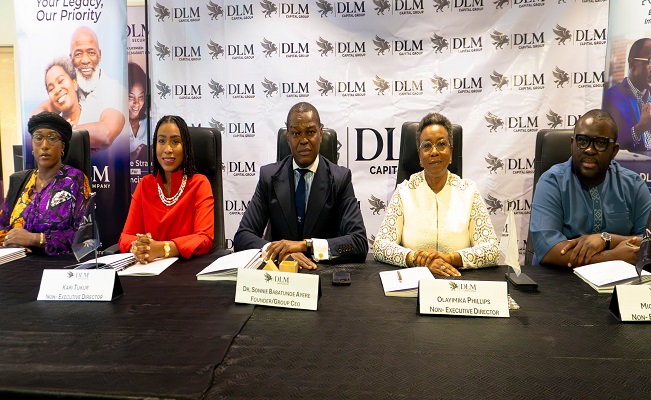
Foremost Development Investment Bank, DLM Capital Group has reinforced its position as a leader in innovative fixed income solutions with the successful payment of the first principal and interest (coupon) to investors under its Sovereign Bond-Backed Composite Notes (“SBCNs”) issuance.

This milestone, alongside the consistent delivery of quarterly performance reports, underscores the Group’s commitment to transparency, capital preservation, and investor confidence.
DLM SPV PLC’s 40.62% Hold-to-Maturity return ₦7.30 billion (Tranche A) and 19.07% ₦1.70 billion (Tranche B) Plain Vanilla Series 1 Notes, issued under its ₦30.00 billion Medium-Term Notes Programme and developed by Sonnie Babatunde Ayere, Group CEO of DLM Capital, was recently listed on the FMDQ Exchange with the Tranche A bond becoming the most valuable AAA-rated corporate bond on the market.
This represents a new class of structured debt instruments designed to meet both issuer funding needs and investor expectations. As a platform widely recognised for supporting innovative debt structures, FMDQ provides an enabling environment for instruments like DLM’s SBCNs to thrive.
At launch in July 2025, DLM SBCNs, which achieved a 9-notch upgrade from BBB- (GCR Sponsor ratings at issuance) without securitisation, entered the market with a healthy degree of skepticism, as is typical with pioneering financial instruments. However, after six months of post-issuance, DLM Funding SPV Plc has delivered on its promise by comfortably and successfully meeting its first principal and coupon obligations to its investors.
This performance milestone has significantly strengthened market confidence and validated the robustness of the structure. The notes are rated AAA by Global Credit Rating and AAA by DataPro Limited, reflecting their strong credit fundamentals and low-risk profile. Designed to prioritise capital preservation, liquidity, and above competitive market returns, the instrument stands out as one of the most compelling corporate fixed income offerings for institutional investors currently available in the market.
Investor response has been notably strong and institutional investors who are beginning to recognize the value of a well-structured de-risked, high-return and, high-quality fixed income investment backed by a credible issuer with a proven track record. The combination of timely coupon payments, high credit ratings, and ongoing transparency has positioned SBCNs as a preferred option for investors seeking stability and performance in today’s evolving financial landscape.
As investor interest continues to build towards Series 2, DLM SBCNs are not only demonstrating resilience but also setting a benchmark for innovation in Nigeria’s debt capital markets. In its role as a Development Investment Bank (“DIB”), DLM Capital Group remains committed to delivering structured solutions that align with investor needs whilst maintaining the highest standards of governance and execution.

Mobile Money Transactions Accounted for $2 trillion in 2025

MoneyMaster Enhances App, Rewards Users with Data and Airtime Bonuses

Nigeria, Finland Sign Cybersecurity Pact

Firm Shares Tips for Updating Your Digital Habits for an AI-driven World

EU Pumps €290m into Nigeria’s Digital, Health, Agri Sectors

Kaspersky Discovers New Phishing Campaign Exploiting Google Tasks Notifications to Steal Corporate Credentials

esentry 2025 Report Shows Healthcare, Financial Services and Telecoms as Staging Grounds for Increased Cyberattacks in Africa

AfDB, UNDP Launch $10Bn AI Initiative for Africa

MultiChoice Suspends Yearly DStv Price Hike as Canal+ Pushes Growth

Spotify’s Loud & Clear Report Reveals Over ₦60Bn Revenue for Nigerian Artists in 2025




 E-Financial3 days ago
DLM SPV PLC Lists ₦9.00bn AAA-Rated Medium-Term Notes on FMDQ Exchange, Sets Benchmark in Corporate Bond Market

 News3 days ago
Metaverse Collapses, Horizon Worlds Shuts Down on Quest

 E-Financial2 days ago
CBN Directs IMTOs to Open Naira Settlement Accounts

 Telecom2 days ago
Nigerians Lose N12.5Bn to AI-Driven Scams- PwC

 Telecom3 days ago
Legend Internet, Spectranet in Merger Talks

 General News2 days ago
Court Remands Hacker for Allegedly Stealing N3.09Bn from FCMB

 News3 days ago
NITDA Reaffirms Commitment to Advancing Creative Economy with Digital Initiatives

 E-Financial3 days ago
SEC Issues Six-Week Ultimatum to Market Operators to Submit Recapitalisation Plan