

E-Financial
Secret Service Seizes $400M in Crypto, Cold Wallet among World’s Largest

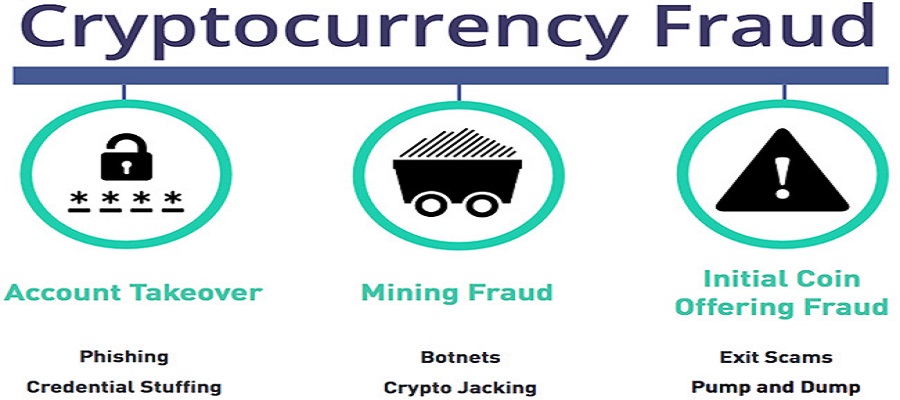
US Secret Service has quietly seized nearly $400 million in digital assets over the past decade, amassing one of the world’s largest crypto cold wallets, Bloomberg reported at the weekend, citing people familiar with the matter.

The agency’s Global Investigative Operations Center (GIOC) has tracked funds through open-source tools, blockchain analysis, and patience, Jamie Lam, an investigative analyst with the US Secret Service, reportedly told law enforcement officials in Bermuda last month.
The agency’s crypto trove, much of which sits in a single cold-storage wallet, results from a string of investigations into scams. Scammers lure targets into seemingly legitimate crypto investment platforms in one typical scheme.
Victims often see initial profits before the sites vanish with their deposits.
“That’s how they do it,” Lam said. “They’ll send you a photo of a really good-looking guy or girl. But it’s probably some old guy in Russia.”
Lam’s team uses domain records, blockchain transactions, and VPN slip-ups to identify fraudsters. In one case, a cryptocurrency payment led investigators to another wallet. In another one, a brief VPN failure exposed an IP address, helping agents piece together the scam’s digital trail.
At the helm of the Secret Service’s crypto strategy is Kali Smith, who directs a team that has trained officials in over 60 countries to unmask online financial crimes.
The agency has focused on jurisdictions with weak oversight or programs selling residency to foreign nationals. “Sometimes after just a week-long training, they can be like, ‘Wow, we didn’t even realize that this is occurring in our country,’” Smith said.
The Secret Service’s work has uncovered scams ranging from romance-investment schemes to sextortion cases. One investigation involved an Idaho teenager who sent a nude photo to an online stranger. The scammer extorted $300 twice before the teen went to the police.
Analysts traced the payments through another coerced teenager acting as a money mule, leading to an account tied to nearly $4.1 million in transactions under a Nigerian passport.
British police arrested the suspected extortionist when he arrived in Guildford, England, where he remains in custody pending extradition.



Central Bank of Nigeria (CBN) has introduced stricter rules guiding the use and management of the Bank Verification Number (BVN) as part of efforts to reduce fraudulent transactions within the financial system.The revised framework, which takes effect from May 1, includes tighter controls on BVN enrolment, data access and customer information updates.

The apex bank said the measures are aimed at strengthening identity management, improving fraud monitoring and safeguarding the integrity of banking transactions.
Under the new guidelines, BVN enrolment is now restricted to individuals aged 18 and above, while customers will only be allowed to change the phone number linked to their BVN once.
The restriction is designed to curb identity manipulation often exploited by fraudsters through repeated updates of personal information.
The CBN also directed financial institutions to maintain a temporary watchlist for BVNs linked to suspicious transactions.
Affected BVNs may be flagged for up to 24 hours, during which customers are expected to verify or clarify flagged transactions before further action is taken.
In addition, access to BVN data has been tightened, with the apex bank retaining exclusive control over the database while granting access only to licensed financial institutions under defined conditions.
The move, according to the CBN, is expected to enhance data security and support a more resilient financial system as BVN enrolment continues to grow.

Ghana’s Securities and Exchange Commission has given the nod to 11 crypto trading platforms to participate in its new regulatory sandbox programme, its first major step in support of crypto after passing a law to provide the local market with regulatory clarity in December.

The big news however is that Binance, the world’s largest crypto exchange by trading volume is nowhere on the list, raising questions about the crypto exchange’s future in one of West Africa’s fastest-growing digital asset markets.
Newsghana reported that industry analysts covering the sandbox launch specifically flagged Binance as a notable absent player, alongside Yellow Card, whose mobile payment product Yellow Pay had previously been warned against by the Bank of Ghana (BoG) for operating without authorisation. Neither company has publicly explained its absence from the cohort.
For Binance, the omission carries particular weight. The exchange has cultivated a visible presence in Ghana for several years, including direct engagement with regulators, public financial literacy campaigns, and the presence of senior representatives in Accra.
Despite that groundwork, it did not secure a place in the inaugural sandbox when the Securities and Exchange Commission (SEC) published its list of approved Virtual Asset Service Providers (VASPs) on March 10, 2026.
Analysts have pointed to Binance’s ongoing legal battle in neighbouring Nigeria as a factor likely complicating its regulatory position across the region.
And the Nigeria Revenue Service (NRS) is pursuing Binance for an $81.5 billion claim covering alleged economic losses and unpaid taxes, arguing the exchange has a significant economic presence that makes it liable for corporate income tax for 2022 and 2023, along with a 10 percent annual penalty on outstanding amounts.
The stakes of remaining outside Ghana’s regulatory framework are rising fast.
The BoG made clear on March 5, 2026, that all VASPs operating within Ghana’s jurisdiction including those serving Ghanaian residents through digital platforms with no physical office in the country must register with the Bank.
Firms that do not comply face sanctions and potential disqualification from future licensing.
Ghana’s digital asset market has grown rapidly, recording over $10 billion in cryptocurrency transactions by November 2025, up from roughly $6 billion the year before, making it one of West Africa’s most active markets.
With over three million users estimated to be active in the ecosystem, the country represents a market Binance cannot easily afford to be shut out of through regulatory non-compliance.
The eleven sandbox participants will effectively serve as the reference models for what a compliant licensed VASP looks like under Ghana’s framework.
Those that perform well within the first six months may transition to full licensing early, while those that fall short risk being shut out of the regulated market once the sandbox period concludes.
Binance did not respond to a request for comment before publication. The SEC Ghana and BoG have not publicly commented on why specific companies were excluded from the first sandbox cohort.
World Bank Group has debarred three African subsidiaries of global advisory firm, PricewaterhouseCoopers (PwC), for 21 months after being allegedly found guilty of manipulating procurement processes for a major cross-border electricity project.

In a statement, the Washington-based multilateral lender said PricewaterhouseCoopers Associates Africa Ltd, based in Mauritius, along with its Kenyan and Rwandan affiliates, engaged in “collusive and fraudulent practices” linked to the Eastern Electricity Highway Project, a flagship initiative to transmit hydropower from Ethiopia to Kenya.
The decision sidelines PwC from lucrative World Bank-funded projects on the continent, dealing a blow to one of the region’s most influential audit and advisory firms.
This development could reshape competition for high-value consulting work across emerging markets, potentially disrupting startups and tech firms reliant on World Bank funding, as scrutiny over governance and compliance tightens.
The World Bank, through its private sector arm, International Finance Corporation (IFC), offers grants and low-interest loans to startups across emerging markets.
Earlier this week, the IFC committed $20 million to invest in high-growth startups in Kenya, Nigeria, and South Africa.
“The debarment makes PwC Associates, PwC Kenya, PwC Rwanda, and any affiliates they control ineligible to participate in Bank Group-financed projects and operations,” the World Bank said.
“It is part of a settlement agreement under which the three companies admit culpability for sanctionable practices.”
The determination was based on the company’s conduct between 2019 and the award of contracts for consultancy services and asset valuation work for the Ethiopian state power utilities.
According to the World Bank statement, the firm obtained confidential procurement documents to improperly influence the award of a contract for the implementation of International Financial Reporting Standards at the Ethiopian Electric Power Corporation.
They also attempted to steer a separate contract for a fixed asset inventory and revaluation for the power utility towards PwC Associates.
During the bidding and execution of that contract, the bank found that the company misrepresented the availability and qualifications of key experts and failed to disclose the full list of subconsultants involved.
According to the World Bank, the debarment is shorter than would otherwise apply because PwC admitted misconduct.
The advisory firm also agreed to a series of remedial measures, including internal investigations, disciplinary action against responsible staff, terminating relationships with all subconsultants involved, and additional staff training.

CBN Introduces Stricter BVN Rules to Curb Fraudulent Transactions

Binance is Missing from Ghana’s Crypto Sandbox

Canal+ to Cut Jobs as Part Sweeping Restructuring

Activist Warns against Rising Junk Food Culture in Nigeria

World Bank Debars 3 PwC Subsidiaries for 21 Months over Alleged Project Fraud

Kaspersky Discovers New Phishing Campaign Exploiting Google Tasks Notifications to Steal Corporate Credentials

esentry 2025 Report Shows Healthcare, Financial Services and Telecoms as Staging Grounds for Increased Cyberattacks in Africa

AfDB, UNDP Launch $10Bn AI Initiative for Africa

Mutual Benefits Assurance Settles ₦5.9bn Claims in January 2026

MultiChoice Suspends Yearly DStv Price Hike as Canal+ Pushes Growth




 E-Financial1 day ago
Kuda MFB Increases Kuda for Her Business Grants to ₦10 Million

 News2 days ago
Kaspersky Discovers Infostealers Mimicking Claude Code, OpenClaw and Other AI Developer Tools

 General News2 days ago
Banks, Offices to Close for Thursday and Friday for Eid-el-Fitr

 Telecom2 days ago
Nigeria, Ghana Trigger Stunning 45 Percent Surge in MTN Dividends

 E-Financial2 days ago
SEC Shuts Over 400 Fraudulent Investment Schemes, Arrests Operators

 Telecom2 days ago
ATCIS Urges FG to Ensure Safety of Consumers Data

 Telecom1 day ago
Vitel Wireless Lures Subscribers with “Data that Never Expires” Campaign

 News1 day ago
NSIA Sign MoU with UK’s Asset Green Ltd to Develop $496M Integrated Dairy Livestock Production Platform in Nigeria