

Broadcasting
Senate Asks Pay-TV Providers to Slash Tariff

The Senate has asked all cable television service providers to immediately review their bouquet prices downwards, in tandem with the prevailing reality of the economic situation in Nigeria.

Ahmad Lawan, president of the Senate, also on Wednesday, constituted a seven-man ad hoc committee to investigate the hike in the tariffs imposed on subscribers by pay-tv service providers operating in Nigeria.
Lawan, while announcing members of the committee chaired by Senator Aliyu Sabi-Abdullahi, deputy majority whip, tasked the panel with carrying out a comprehensive probe into how pay-tv service providers impose bills on subscribers in other countries.
Members of the committee include Senators Sulaiman Kwari, Oluremi Tinubu, Yusuf Yusuf, Lekan Mustapha, Chukwuka Utazi, Akon Eyakenyi.
The Senate had earlier kicked against the increase in tariffs by MultiChoice Nigeria, owners of DStv.
A member, Senator Abba Moro, had moved a motion titled ‘Nigerians Dumbfounded, Outraged Over Pay-TV Tariff Hikes, Demand for Pay-Per-View Subscription model.’
Moro noted the concern and uproar in the public over tariff hikes by service providers on their bouquets.
The lawmaker made reference to DStv which told its Compact bouquet subscribers on August, 22 2020, to expect a 13.3 per cent price increase to N7,900, up from N6, 975, with effect from September 1, 2020.
Moro decried that the Compact plus was jacked up by 9.8 per cent, from N10,925 to N12,000; and Premium from N16, 200 to N18,400, indicating a 13.6 per cent hike.
He said, “MultiChoice Nigeria willfully and perpetually increases the cost of its bundles because there is no regulation whatsoever in the area of fixing rates.”
“As usual, without recourse to the economic situation of the country, MultiChoice has again raised the cost of its DStv and GOtv bundles, stating them as follows: DStv Premium (N21,000), Compact (N14,250), Compact (N9, 000), Confam (N5, 300), Yanga (N2, 950), Padi (N2, 150), Business(N2, 669), Xtraview PVR access fee (N2, 900).
“Those of GOtv are as follows: GOtv Max (N4,150), GOtv Jolli (N2, 6669), GOtv Jinja (N1, 900), GOtv Lite (N900).”
The lawmaker expressed concern that thousands of pay-tv subscribers in Nigeria have bitterly reacted to the development on different social media platforms, ranging from deep shock to pure outrage with many asking the Nigerian government to checkmate the activities of pay-tv service providers in Nigeria, especially in the area of fixing prices.
Moro added that among the bitter complaints of Nigerian subscribers of pay-tv services was the poor network service experienced as a result of bad weather/ epileptic electricity supply, which sometimes makes a whole month subscription wasteful without the subscriber watching anything before the expiration.
According to him, Nigerians are demanding that, rather than paying fixed rates for packages monthly, pay-tv service providers should introduce a subscription model which allows subscribers to pay per view to enable them to match their TV consumption to subscription, as is the case with electricity metering and mobile telephony.
The lawmaker explained that the pay-per-view that Nigerian subscribers are demanding is a flexible model plan of subscription which allows subscribers of pay-tv to pay-per-watch, to avoid paying for services that they do not consume.
Adopting the motion, the Senate urged the Federal Ministry of Communications and Digital Economy and the Nigerian Communications Commission to direct all pay-tv providers to introduce a pay-per-view model of subscription as against the monthly prepaid model presently in place.
The Senate also directed all pay-tv service providers in Nigeria to immediately review their bouquet prices downwards in tandem with the prevailing reality of the economic situation in the country.
It also resolved to set up an ad hoc committee to embark on the full-scale investigation of the pricing activities of DStv in Nigeria to bring it in line with international practices.
Efforts previously made by the House of Representatives to ensure the introduction of pay-per-view by DStv and other cable services had failed.
The House had set up and mandated the panel on March 17, 2020, to investigate DSTV and other cable television service providers in Nigeria.
The House had, again on June 2, passed another resolution, mandating the panel to invite DSTV to explain its tariff increment on June 1.



Drone
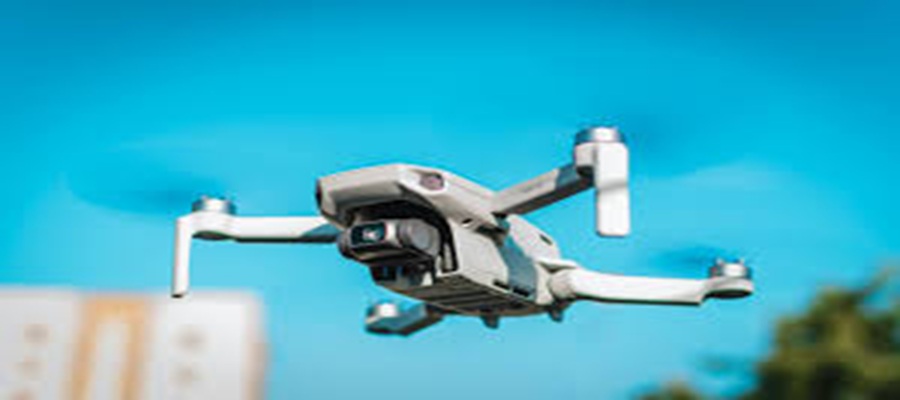
The US Department of Homeland Security (DHS) will invest $115 million in counter-drone technology to safeguard the 2026 FIFA World Cup and events marking America’s 250th independence anniversary, creating a dedicated office for rapid drone system deployment.
Homeland Security Secretary Kristi Noem described drones as “the new frontier of American air superiority,” stressing the need to counter threats from drug cartels using unmanned aircraft for smuggling and surveillance, alongside incidents like a 2025 NFL stadium drone flight and 2024 New Jersey sightings.
The funding supports 11 World Cup host cities expecting over one million visitors, building on FEMA’s $250 million grants to those states and addressing risks heightened by cartels’ advancing tech, including a reported FBI tracking plot in Mexico.
DHS has conducted over 1,500 counter-drone missions since 2018, with the new Program Executive Office accelerating acquisitions amid President Trump’s border security push.
Broadcasting
Youth Talent Takes Center Stage as T2 Ignites High-Octane Rap Battles @ Carnival Calabar

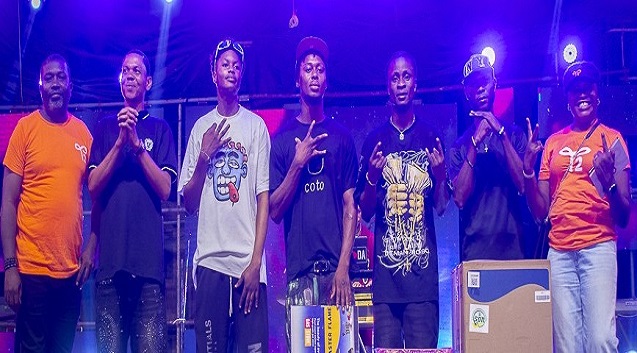
The energy at the Carnival Calabar Music Concert reached a new high as T2 introduced a first-ever rap battle platform, giving young Nigerians an electrifying stage to showcase their talent, creativity, and self-expression while competing for exciting prizes.

Held at the U.J. Esuene Stadium, the activation blended pulsating music, vibrant culture, and youthful energy into a dynamic celebration that kept thousands of carnival-goers fully engaged from start to finish.
Eight fearless contestants stepped into the spotlight, going bar for bar in an intense lyrical showdown. Rappers fused local languages, pidgin, and sharp punchlines, creatively weaving the T2 brand into their verses.
Anchored by the energetic hosting duo MC Double I and MC Princess, the rap battles thrilled over 16,000 attendees, including the Governor of Cross River State, Senator Bassey Otu, delivering an unforgettable showcase of youth talent and cultural expression.
With prizes including fridges, gas cookers, sound systems, and airtime top-ups, the competition remained fierce throughout the night. After two high-energy rounds narrowed the field to a five-man final duel, Emmanuel Eye emerged as the overall winner, taking home the grand prize — a fridge.
“I never expected this at all,” Emmanuel said. “I came to the concert like anyone else, and hearing about the T2 rap battle was a surprise. When I got the chance to perform, I just went for it. Being named the overall winner is amazing, and I’m grateful to T2 for creating this platform to showcase our talent.”
Beyond the stage performances, T2’s presence added a digital layer to the carnival experience. As part of its role as Digital Technology Partner of Carnival Calabar, the brand introduced the MyT2 App as a lifestyle companion, while also enabling line reactivations, airtime top-ups, and instant rewards for hundreds of attendees, blending technology seamlessly into the live celebration.
Commenting on the activation, Chinelo Manefo, Specialist, Events and Sponsorship at T2, said:
“The energy from both the rappers and the crowd was incredible. This platform reflects exactly what T2 aims to create — a celebration of youth, creativity, and culture, enhanced by technology that connects people and experiences. Seeing the audience so immersed shows how music and performance can empower the next generation.”
The Carnival Calabar Music Concert, headlined by Tiwa Savage, Timaya, and top local performers, was further energized by T2’s interactive rap battle platform. By blending music, culture, youth expression, and digital innovation, T2 reinforced its commitment to championing Nigeria’s next generation, giving young creatives a stage to shine while enriching how they experience the festival.
Broadcasting
Aig-Imoukhuede Foundation Wrapped Up 2025 with Real Change in Governance, Health, Media Across Africa

Aig-Imoukhuede Foundation has announced its 2025 achievements, marking a year of accelerated impact, systemic reforms and innovation in public leadership and service delivery across Africa.

Aig-Imoukhuede Foundation
A statement issued on Wednesday in Lagos said the foundation strengthened governance, improved primary healthcare, drove digital transformation and elevated media’s role in promoting public sector accountability.
It said the AIG Public Leaders Programme (PLP) trained 72 public sector leaders from Nigeria, Egypt, Tanzania, Cameroon, Zambia, Malawi and Kenya—its fastest growth to date—bringing the alumni network to 309.
These alumni are driving 237 reform projects to enhance public institutions, from faster decision-making to greater transparency, with nine promoted to higher roles for their contributions.
On civil service modernisation, the foundation accelerated digitalisation at the Office of the Head of the Civil Service of the Federation (OHCSF), streamlining 19 processes and achieving a 75 per cent increase in work speed through automated workflows.
It also trained over 400 officials from the Federal Ministry of Justice, Federal Civil Service Commission and Federal Ministry of Innovation, Trade and Investment in digital skills to support the FCCSIP 25 initiative and ongoing digital rollouts.
In healthcare, the Adopt-A-Healthcare-Facility Programme renovated four primary healthcare centres in Edo State, boosting antenatal visits by 73 per cent, immunisation coverage over 100-fold and fully vaccinating 554 children, while supporting 6,788 patients.
The foundation recognised 18 outstanding public servants with ₦500,000 each via the Emily Aig-Imoukhuede Endowment Awards and received a partnership award from the OHCSF for civil service reform efforts.
To empower media, it trained 50 journalists from top Nigerian media houses in impact storytelling, data analysis, visual and ethical reporting to better inform citizens on public sector changes.
Over five years (2021–2025), the foundation invested £2.6 million in PLP, saved ₦2.38 billion for the public sector through capacity building, trained 1,500+ civil servants, upskilled 660 digitally, trained 40 permanent secretaries and awarded 33 scholarships driving seven policy changes.
Other milestones include digitising 5,000 files, automating 333 processes, a 61 per cent efficiency gain, 60 per cent digital file creation at OHCSF, 128 excellence awards, 116 process reforms, 23 advocacy projects, 25 capacity initiatives, 18 podcasts, four healthcare articles, three policy papers, 23 adopted PHCs (four renovated) and 878+ fully immunised children aged 0–9 months.
Executive Vice Chair, Mr Aigboje Aig-Imoukhuede, said: “2025 was a year of real, measurable impact. From training hundreds of public servants to improving healthcare, helping ministries go digital, and equipping journalists to tell stories that matter, our work is making governments work better for citizens and communities across Africa.”

SEC Hikes Minimum Capital Requirements for Market Operators After a Decade

Study Shows Blocks in Telegram are Pushing the Underground Out

Galaxy Backbone Marks Two Decades of Powering Nigeria’s Digital Evolution

NGX Unveils Net-Zero Plan for Greener Capital Market

Galaxy Backbone Marks 20 Years, Tops FG Website Scorecard

Banks quietly move to enforce new ₦50 transfer levy from Jan. 1

FIRS says NIN, CAC Numbers to Serve as Tax IDs from 2026

FIRS Declares NIN, CAC Numbers as Tax IDs from 2026

US Begins Partial Visa Ban on Nigerians January 1

Galaxy Backbone Tops FG’s Website Performance Ranking




 E-Financial3 days ago
Paystack Expands Beyond Payments into Banking

 E-Financial3 days ago
SEC Partners Police in Nationwide Crackdown on Ponzi Schemes, Crypto Frauds

 General News3 days ago
EFCC to Use Space Technology to Boost Asset Tracking, Investigations

 E-Business3 days ago
Nigeria Targeted with 4,622 Cyber-attacks Per Week in December 2025

 E-Financial3 days ago
FG Halts Tax Guidelines Amid Uncertainty Over Final Laws – Oyedele

 E-Financial3 days ago
Paystack Buys Microfinance Bank, Enters Nigeria Banking Arena

 News3 days ago
FG Directs Banks, Fintechs to Remit VAT on Service Fees
 E-Financial2 days ago
SEC Hikes Minimum Capital Requirements for Market Operators After a Decade