

E-Business
Senate, DG BPP and NITDA Call for .ng Adoption to Promote Nigeria’s Digital Identity

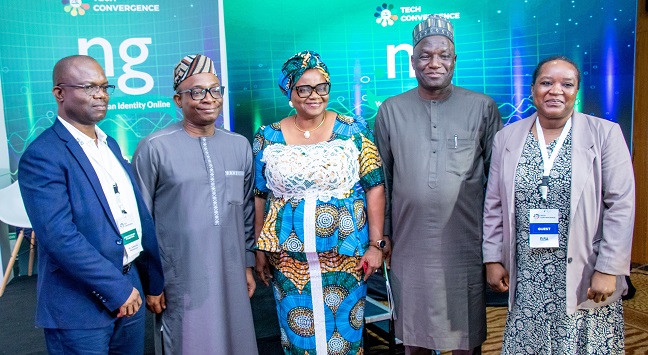
The fundamental truth that a nation’s digital identity is an extension of its national identity, and that it directly impacts both digital and national development, is not yet fully understood. This was the driving force behind Tech Convergence 2.0.

The Nigerian Senate, the Bureau of Public Procurement (BPP), and the National Information Technology Development Agency (NITDA) have joined a broad coalition of stakeholders to call for the urgent and comprehensive implementation of .ng domain adoption to promote and solidify Nigeria’s digital identity.
The collective call was the central theme of the Tech Convergence 2.0 event, recently organized by the Nigeria Internet Registration Association (NiRA) in Abuja, where policymakers, government officials, and industry leaders converged to deliberate on Nigeria’s digital future.
At the heart of the Tech Convergence 2.0 discussions was the fundamental concept that a nation’s digital identity is an extension of its national identity. The event, held on October 14, 2025, focused on the Nigeria First Online agenda, urging for digital patriotism by leveraging the .ng domain and the Domain Name System (DNS) industry to drive the development of the Nigerian Internet ecosystem.
While the .ng ccTLD already ranks second in Africa, stakeholders stressed that the national drive to patronize “Made-in-Nigeria” products and services, as espoused by President Bola Ahmed Tinubu’s policy, must now aggressively extend to the digital space. Owning Nigeria’s digital identity through .ng is seen as both an act of sovereignty and strategic necessity in an era where governance, business, and innovation are increasingly digital-first.
The Senate, government agencies and industry leaders strongly backed the call for increased .ng domain adoption, emphasizing the critical role of government in leading the charge.
Representing the Senate President, Senator Godswill Akpabio, Senator Diket Plang underscored the vital role of government in shaping digital policy. “We now live in a digital world, and we must also take ownership of our presence online, and for us, the true mark of that ownership is through the .ng domain,” he stated, highlighting what digital identity ownership means for all Nigerians. Senator Shuaib Afolabi Salisu, Chairman of the Senate Committee on ICT & Cybersecurity, reinforced this, stating, “We must understand we are stakeholders in our Internet space and must promote what is ours.”
NiRA President Adesola Akinsanya described .ng as “a symbol of Nigerian digital pride,” emphasizing that ownership of the national domain reflects both national confidence and capacity. The President further stated, our mission is to build trust through the Nigerian identity online, and ensure every Nigerian is identifiable online through our digital identity, the .ng domain. Mrs. Ibukun Odusote, Chairperson of the NiRA Board of Trustees, urged stakeholders to prioritize the adoption of local digital infrastructure: “There should be an urgent need to adopt what is ours, which is the .ng domain.”
The representative for the DG NITDA stressed that the public sector must be the primary representative of the Nigerian government online, stating, “The internet has gone beyond just communication, but an infrastructure for innovation and identity.” Crucially, Dr. Adebowale Adedokun, Director General of the Bureau of Public Procurement (BPP), made efforts to ensure that all communications across the over 1, 200 Ministries, Departments, and Agencies (MDAs) are hosted under the .ng domain. This move is intended to strengthen national identity and prevent use of generic domains in the public service.
The Tech Convergence 2.0 was a call to individual and institutional accountability. Oluwaseyi Onasanya, Chief Operating Officer of NiRA, urged Nigerians to reflect on their digital presence: “Nigerians need to adopt .ng to allow us to own our narrative online.” This reinforced that promoting the .ng domain is a patriotic act that builds national trust and unity.
In conclusion, the event challenged individuals, institutions, and government bodies to move beyond rhetoric and act. Tech Convergence 2.0 underscored a single truth as stated by NiRA president, Nigeria’s digital identity must be owned, built, and secured by Nigerians.


Federal government is determined to protect Nigerians’ rights and privacy in the digital space, according to Dr Ayodele Bakare, assistant director, Cybersecurity Department, National Information Technology Development Agency (NITDA),

To achieve that, Bakare, said that the government has developed several policy and regulatory frameworks to strengthen cybersecurity.
Bakare, stated all these during an interview with the News Agency of Nigeria (NAN) in Abuja on Monday.
He said that cybersecurity governance in Nigeria was implemented through a collaborative approach involving multiple government institutions with different responsibilities.
According to him, the Office of the National Security Adviser (ONSA) provides overall coordination of national cybersecurity efforts through the National Cybersecurity Coordination Centre, which serves as its operational arm.
“At the national level, cybersecurity implementation is done collectively, and different government organisations are responsible for implementing different aspects of the national cybersecurity framework.
“At the top, however, the Office of the National Security Adviser coordinates these efforts through the National Cybersecurity Coordination Centre,” he said.
Bakare said that one of the key policy instruments guiding the country’s cybersecurity efforts was the National Cybersecurity Policy and Strategy Framework.
He also highlighted the legal framework provided by the Cybercrimes Prohibition and Prevention Act 2015, which was recently amended in 2024 to strengthen Nigeria’s response to cyber threats and digital crimes.
According to him, NITDA has also introduced sector-specific regulations to enhance cybersecurity in the country.
“One such regulation is the National Public Key Infrastructure Regulation, which is one of the core infrastructures required to ensure trust and security in digital communications and transactions,” he said.
Bakare said that NITDA played a pioneering role in Nigeria’s data protection landscape through the Nigeria Data Protection Regulation 2019, which laid the foundation for the current data protection framework.
He said the regulation had since evolved into a full legal framework implemented by the Nigeria Data Protection Commission.
Bakare disclosed that the agency was also finalising an Information Security Regulation that would soon be made available to the public.
He further explained that the regulation would provide organisations and individuals with clear guidelines on their responsibilities in safeguarding information and digital assets.
“Nigeria has continued to strengthen its legal and policy environment for cybersecurity, a development reflected in the country’s performance in the Global Cybersecurity Index.
“One of the pillars of the index focuses on legal measures and assesses the availability of national cybersecurity laws and regulations.
“Nigeria recorded a strong performance under the legal measures pillar, reflecting the country’s efforts to establish the necessary frameworks to support cybersecurity governance,” he told NAN.
He said that sustained collaboration among government agencies and stakeholders remained essential to effectively implement the existing policies and strengthen Nigeria’s digital security architecture.

According to Kaspersky telemetry, in 2025, spyware and password stealers attacks showed the biggest year-over-year growth in Nigeria among different analysed malware types.

Spyware, which is a type of malicious software installed on users’ devices to collect their data, grew in the number of attacks by 28% compared with the previous year. Password stealers, designed to gather users’ account information, increased in the number of attacks by 22%.
Exploits decreased slightly in the number of attacks in Nigeria, however they remain an acute threat that should not be underestimated. These are programs designed by cyber attackers to take advantage of vulnerabilities in an application or operating system to gain unauthorised access to it and to cause unintended behaviour to occur on software.
Ransomware, though very targeted in distribution, remains a high-risk threat for organisations, who should also guard themselves from supply chain and trusted relationship attacks.
Overall, Kaspersky security tools blocked more than 4 million online attack attempts on users in Nigeria in 2025. Online threats typically include different types of malware attacks, such as for example, password stealers, exploits, spyware, etc. Another 9 million on-device threats were blocked in the country, including malware delivered via infected USB drives.
“Operations coordinated by INTERPOL, such as Serengeti to which Kaspersky has contributed, demonstrate how international cooperation and threat intelligence sharing can strengthen the fight against cybercrime across Africa. At the same time, both organisations and individual users in the region play an important role in improving cybersecurity by staying informed about evolving threats and practicing good cyber hygiene.
“Dedicated security solutions, including Kaspersky Next for organisations and Kaspersky Premium for individuals, can further help reduce exposure to cyber risks,” said Moses Munguti, Technical Expert & Team Lead in Africa at Kaspersky.
Malware often reaches a device through phishing messages and websites employing social engineering techniques. If an operating system, browser, or application is outdated, attackers may exploit security flaws to install malware. To significantly reduce the risk of infections with malware, Kaspersky experts advise individuals and organisations to follow these best practices:
- Be cautious with links and attachments received, verify the sender before opening files or clicking links.
- Download software only from official sources.
- Install updates for systems and applications as soon as they become available.
- Use strong, unique passwords and enable multi-factor authentication wherever possible.
- Install reputable security software that can detect malware before it compromises the system.
- Regularly back up important data.
- Staying informed about current cyber threats and maintaining good digital hygiene helps keep devices and data safe.
E-Business
Nigus International, Elmirate Capital Ink $200m MoU for Nigeria’s Defense Tech, Satellite Hub

Nigus International Investment Limited and Elmirate Investment LLC (Elmirate Capital) have inked a strategic memorandum of understanding to launch a next-generation defense technology, satellite systems, and advanced manufacturing platform in Nigeria, backed by up to $200 million in planned investment.

Nigus International
The partnership, channeled through a new Special Purpose Vehicle called Nigus Tactical Systems Ltd, aligns with Nigeria’s push for sovereign defense capabilities under the Defense Industries Corporation of Nigeria (DICON) Act 2023.
It targets local production of drones, armored vehicles, munitions, cyber defense tools, and satellite networks to cut import reliance and boost regional security.
“Africa is entering a pivotal phase where technological capability defines economic strength and national security,” said HRH Prince Malik Ado-Ibrahim, Executive Chairman of Nigus International.
“This platform supports innovation, advanced manufacturing, and technology transfer to build a sustainable industrial base for national and regional needs.”
Pankajj Ghode, Managing Director of Elmirate Capital, added: “We’re proud to partner with Nigus to position Nigeria as a technology and aerospace hub.
“Our $200 million commitment connects global expertise in defense, cybersecurity, and aerospace with local talent for resilient growth.”
Key focus areas include Class C manufacturing platforms for tactical/ISR drones, unmanned aerial systems, ammunition, munitions, armored vehicles, and protected mobility; counter-terror surveillance with data analysis and border security tech; military cyber defense and cyber ranges; plus earth observation satellites, secure networks, and geospatial intelligence for defense and civilian use. The initiative aims to create high-value jobs, foster technology transfer, and establish Nigeria as a regional tech hub.

Breaking…….Nigerian Firms Pledge Millions, Create UK Jobs

Crypto Transactions Hit $96Bn in Nigeria -SEC

PwC Warns Nigeria Telcos of AI Fraud Risks

Lawyer Drags FG Court over Controversial Health Data Sharing Agreement with US

Elumelu Tags Elon Musk, Disowns AI-Generated Scam Video

Kaspersky Discovers New Phishing Campaign Exploiting Google Tasks Notifications to Steal Corporate Credentials

esentry 2025 Report Shows Healthcare, Financial Services and Telecoms as Staging Grounds for Increased Cyberattacks in Africa

AfDB, UNDP Launch $10Bn AI Initiative for Africa

Mutual Benefits Assurance Settles ₦5.9bn Claims in January 2026

MultiChoice Suspends Yearly DStv Price Hike as Canal+ Pushes Growth




 E-Financial2 days ago
CBN Rolls Out New Rules for Safer Instant Payments, More Customer Control

 News2 days ago
NIMMME Inaugurates Engr. Michael Orekyeh as 13th National Chairman in Abuja

 Telecom2 days ago
MTN Nigeria Races Ahead in Fibre Broadband Market

 E-Financial2 days ago
CBN Tightens BVN Rules to Curb Fraudulent Banking Transactions

 E-Financial2 days ago
Nova Bank Appoints Jude Anele as Managing Director/CEO

 E-Business2 days ago
Tech Expert Unveils BAT-BOT AI App to Curb Fake News ahead of 2027 Elections

 Broadcasting22 hours ago
Spotify’s Loud & Clear Report Reveals Over ₦60Bn Revenue for Nigerian Artists in 2025
 Telecom22 hours ago
PwC Warns Nigeria Telcos of AI Fraud Risks