

General News
Senate Orders Full Probe into N1.3 Trillion CBEX Ponzi Scandal


The Senate Wednesday launched a full-scale investigation into the operations of Ponzi schemes in the country. The development followed the catastrophic collapse of the Crypto Bullion Exchange (CBEX), a digital investment platform that allegedly defrauded Nigerians of over N1.3 trillion ($847 million), making it one of the most devastating financial scams in the nation’s history.

The motion, sponsored by Senators Mukhail Adetokunbo Abiru (Lagos East) and Osita Izunaso (Imo West), received overwhelming support from lawmakers during the debate at plenary.
The federal lawmakers unanimously described the proliferation of such schemes as a direct threat to national security, economic stability and public trust in government institutions.
Rising in support of the motion, senators from across the country decried the systemic regulatory failure that allowed CBEX and similar fraudulent platforms to operate unchecked.
They lamented that the fraudulent operators leveraged on technology, social media influence, fake testimonials, and referral commissions to lure millions into financial ruin.

Presenting the lead debate, Senator Abiru detailed how CBEX capitalized on weak oversight by the Central Bank of Nigeria (CBN), the Securities and Exchange Commission (SEC), the Nigerian Financial Intelligence Unit (NFIU), and the Economic and Financial Crimes Commission (EFCC) to dupe unsuspecting investors.
He warned that beyond financial losses, such platforms are fueling depression, suicides and the erosion of public confidence in legitimate financial institutions.
“Over N1.3 trillion was lost to CBEX alone. This is not an isolated incident. It is a continuation of a troubling pattern, from MMM in 2016 to MBA Forex in 2020. Nigerians are being robbed, again and again,” Abiru said.
Senator Tahir Monguno (Borno North) called the situation “alarming” and stressed that existing laws must not only be amended but “strengthened” to prevent further exploitation.
He said: “These operators prey on vulnerable and gullible citizens. Some victims have died by suicide. It is time we acted decisively.”
Senator Sadiq Suleiman Umar (Kwara North) emphasized the trust Nigerians place in their government and urged agencies to live up to their mandate.
“People trust that the government will protect them. We must ensure that SEC, CBN, EFCC and others never allow such lapses again,” Umar said.
Senator Solomon Adeola (Ogun West) lamented the regulatory gap in Nigeria’s rapidly evolving fintech space. He warned that many digital platforms operate under the radar.
He said: “It’s not just Ponzi schemes. There are several other unregulated online payment platforms riding on fintech buzzwords. CBN must tell us what rules are in place.”
Senators Abdul Ningi (Bauchi Central) and others urged the National Assembly to utilize its constitutional powers under Sections 88 and 14 of the 1999 Constitution (as amended) to hold regulatory agencies accountable.
“These laws exist, but for too long we’ve failed to enforce them. The people are suffering,” Ningi declared.
Senate President Godswill Akpabio recounted a personal experience from the early 1990s involving a now-defunct Ponzi scheme in Port Harcourt, drawing parallels with today’s CBEX.
Akpabio said: “That scheme collapsed. People lost everything. History is repeating itself, only now on a bigger scale—N1.3 trillion gone. Students, civil servants, even pensioners were affected. This is an emergency.”
He backed calls for nationwide public sensitization and zonal public hearings.
According to the Senate President, “We must educate our people. Many of these victims are not literate in financial matters. If it doesn’t concern you directly, it will affect someone close to you.”
In its resolution, the Senate mandated a joint investigation by its Committees on Capital Market; Banking, Insurance and Other Financial Institutions; Anti-Corruption and Financial Crimes; and ICT & Cybersecurity.
The committees, to be led by that of Banking and Finance, are expected to conduct a comprehensive investigative hearing, including public sessions, and submit their report within four weeks.
The inquiry, according to Akpabio, will focus not only on CBEX but also on the broader Ponzi ecosystem, regulatory lapses and proposals for legislative and administrative reforms.
The Senate also called for immediate steps to educate the public, especially the youth and rural populations on the dangers of fraudulent investment schemes.
As the motion passed unopposed, Senator Akpabio declared: “We cannot sit back while Nigerians are being robbed blind. “We must act to prevent more suicides, restore trust, and reclaim our economy from digital predators.”


Ugo Nwokolo, Nollywood actor, has shared a controversial opinion on internet fraud, saying it has been keeping the nation’s economy afloat amid a tougher economic climate.

Ugo Nwokolo, Nollywood Actor
Nwokolo made the assertion in a video interview currently circulating on social media.
According to the actor, the cost of living and soaring house rent have made life unbearable for legitimate income earners.
He said high rent in major cities like Lagos and Abuja has edged out those earning N50,000 and N90,000 monthly.
Nwokolo said, “Personally, I think Yahoo has helped keep the economy afloat. Do you expect a civil servant to afford house rent of N3 million or N5 million in Abuja?”
The actor maintained that only the rich, including fraudsters, could meet up with the rising cost of living.
“If you go to Lagos now, the least you’ll see for a two-bedroom apartment is about N7 million or N8 million. Who is supposed to afford it? The civil servants? Of course, it’s the fraudsters,” he stressed.
However, he argued that he was not justifying crime but merely stating fact.
“I’m not justifying crime, but yes, Yahoo is helping the economy. How do you expect people to live in this kind of economy?” he said.
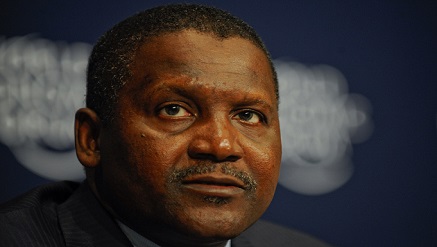
Aliko Dangote, Africa’s richest man, plans to dedicate one-third of his wealth to charity as part of his succession plan, Halima Dangote, his daughter, has revealed.

Aliko Dangote
Halima, a trustee of the Aliko Dangote Foundation, disclosed this in an interview with Bloomberg published on Tuesday, saying the billionaire had secured the support of his family to commit 33 per cent of his estate to philanthropy.
According to the Bloomberg Billionaires Index, Dangote’s net worth is estimated at $35.1 billion, meaning one-third of his current wealth would be worth about $11.7 billion if his fortune remains at that level.
Halima explained that her father views philanthropy as a key part of his legacy and has incorporated it into the family’s long-term succession plans.
She said Dangote had structured his estate to ensure that charitable giving continues across generations, particularly in areas such as healthcare and education.
“He sort of put all the structure in place whereby we focus a lot on health and education. He actually donated 25 per cent to the foundation. If you look at it, it is what we call in Sharia Code in Islam; it means he has donated 33 per cent of his whole inheritance to his foundation,” she said.
Halima added that Dangote believes giving back is central to the success of his businesses and the family’s values.
She said the billionaire asked her, her two sisters, and his mother to sign the agreement allowing 33 per cent of his inheritance to be dedicated to humanitarian causes.
The planned donation builds on Dangote’s longstanding philanthropic activities through the Aliko Dangote Foundation, which was established in 1994.
According to Halima, the foundation received an endowment of $1.25 billion about a decade ago and has since received an additional $700 million in funding.
She said about 70 per cent of the foundation’s spending goes to programmes in Nigeria, while 20 per cent supports projects across Africa, with the remaining funds directed to initiatives in other parts of the world.
The foundation’s interventions focus on healthcare, education, nutrition, and humanitarian support, including partnerships that contributed to the eradication of wild poliovirus in Africa.
Dangote’s planned charitable commitment adds to increasing global attention on billionaire philanthropy.
Although the proposed 33 per cent allocation is below the 50 per cent commitment associated with the Giving Pledge, it would rank among the largest philanthropic commitments announced by an African billionaire.
Earlier this year, Dangote was named among the world’s most influential philanthropists by TIME magazine’s inaugural TIME100 Philanthropy list, recognising the impact of the Aliko Dangote Foundation, which reportedly spends more than ₦50 billion annually on programmes across Africa.

Nigeria Atomic Energy Commission (NAEC), has said that there are plans for Nigeria to begin to generate electricity from nuclear sources.

Mr Anthony Godwin Ekedegwa, chief executive, NAEC stated this when he recently visited Mr Umar Yusuf Girei, acting managing director, National Inland Waterways Authority (NIWA),in Abuja.
He was at NIWA’s office to solicit the support of NIWA in achieving the numerous advantages of using nuclear energy technology in the country.
According to him, the partnership of critical stakeholders in Nigeria will position the country well in developing and maintaining its nuclear power plant.
The NAEC chief said Nigeria intends to begin the generation of electricity from nuclear sources instead of fossil-based power plants and hydro-based power plants, stressing that for Nigeria to develop, there is a need for the country to diversify its energy needs.
In his remarks, Mr Girei assured NAEC of his agency’s readiness to collaborate on the advancement of a nuclear power plant in Nigeria.
He promised the full support of NAEC for the success of a nuclear power plant in the country, saying that as the organisation saddled with the responsibility of regulating and developing Nigeria Inland Waterways, his entity is strategically positioned to play a critical role in the federal government’s quest for sustainable energy through the new technology.

Nwokolo, Nollywood Actor Claims Internet Fraud is “Keeping Economy Afloat’

SEC Begins Full e-Registration for Capital Market Operators

Elon Musk Launches Invite-only X Money with Visa Debit Card

CBN Fines Banks N430m for Ignoring Customers’ Complaints

Kaspersky Uncovers New Mirage Kitten Malware Used in Cyber-espionage Campaign Across Africa, Others

NRC, Ponzi Scheme Collapses Resulting Loss of Billions of Naira

EFCC Busts NIS Visa Overstay Racket, Uncovers N700m in an Account

From Scarcity to Scale: What Africa Can Learn from India’s Agricultural Transformation

Tokenization, Blockchain Technology will Transform Financial Institutions – IMF

BON Establishes Six Ad Hoc Committees to Modernize Broadcasting




 News2 days ago
History as Lagos Becomes First Nigerian State to Launch Greenhouse Gas Registry

 E-Business2 days ago
UNN to Partner Firm on AI, Smart Mobility Innovation Centre

 Telecom1 day ago
Fact-Check: Elon Musk’s “Tesla Pi Phone” is Internet Rumor

 Telecom2 days ago
AI Investment Gap Threatens Africa’s Future Growth

 Telecom2 days ago
AMCON Puts ntel Up for Sale, Seeks Investors

 E-Financial2 days ago
Remita Raises Alarm Over Nigeria’s Digital Divide, Calls for More Investment

 Telecom2 days ago
Court Affirms NDPC’s Powers to Register Major Data Controllers, Processors

 E-Financial1 day ago
Malpass, Ex World Bank Chief Raises Alarm over Nigeria’s Secretive Debt Structures