

/home/kenneth/web/nigeriacommunicationsweek.com.ng/public_html/wp-content/themes/zox-news/parts/post-single.php on line 153
">
Warning: Undefined array key 0 in /home/kenneth/web/nigeriacommunicationsweek.com.ng/public_html/wp-content/themes/zox-news/parts/post-single.php on line 153
Warning: Attempt to read property "cat_name" on null in /home/kenneth/web/nigeriacommunicationsweek.com.ng/public_html/wp-content/themes/zox-news/parts/post-single.php on line 153
Senator Nwaogu for Microfinance Bank Technology

Senator Nkechi Nwaogu, Senate committee chairman on banking is expected to be part of the dignitaries that will grace the forth-coming Microfinance Bank Technology Forum being organized by foremost financial services application solution provider, Progenics Corp Limited.
The Senate committee chairman on banking, insurance and other financial institutions, is scheduled to be the special guest of Honour for the maiden event.
While accepting to be a part of the industry-shaping forum that is due to be held in Sheraton Hotel Lagos come 17th of July, the distinguished Senator affirmed that the decision to be a part of the event is in line with the policies of the federal government to encourage and partner with the organized private sector (OPS) that are contributing positively to the growth and development of the nation’s economy. According to her, ‘my committee takes special interest in supporting any group or individual who are in any form adding value to the economic development of the nation, especially in the Microfiance enterprise sector which is targeted at social empowerment and eradication of poverty amongst our people’.
In his reaction, Tony Udoh, managing director of Progenics, stated that the Microfinance Technology forum will benefit immensely from the presence of the distinguished Senator who incidentally has a solid background in the Banking sector as well as having a passion for the development of the microfinance bank sector.
"The overall benefit of the forum is to showcase to the microfinance banks the way and manner technology, especially application solutions, can enhance their operations", he said.
The avenue will also be used to unveil the latest application solution from the stables of Progenics for the Microfinance Banks called SymbolsM®. The application, which will be publicly unveiled during the technology forum, is coming into the market with tested modules that benefits from the successes and tested values of Progenics’ highly functional Banking application solution CorpBank®. As a scaled-down version of this robust application, SymbolsM has been designed to be the complete answer to the challenges of the technology requirements of the local Microfinance Banks.


Warning: Undefined array key 0 in /home/kenneth/web/nigeriacommunicationsweek.com.ng/public_html/wp-content/themes/zox-news/parts/post-single.php on line 493
Warning: Attempt to read property "cat_ID" on null in /home/kenneth/web/nigeriacommunicationsweek.com.ng/public_html/wp-content/themes/zox-news/parts/post-single.php on line 493

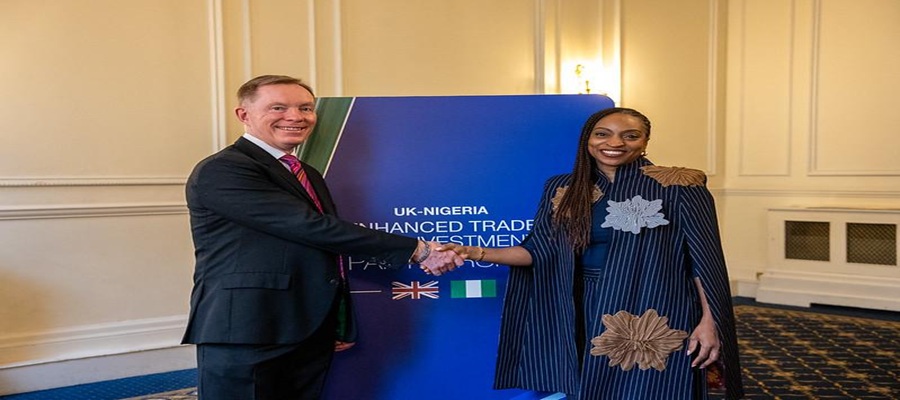
Hundreds of new jobs are set to be created as Nigerian banks, fintech innovators and creative industry businesses scale up their operations in Britain.

UK-Nigeria
The move will see millions invested, reinforcing the UK’s position as a leading global business hub, backed by world‑class talent, strong access to capital, and a stable regulatory environment – while showcasing Nigeria’s expanding role as a key source of innovation and investment into the UK, growing both economies.
UK’s Twinings Ovaltine has launched a £24 million manufacturing facility in Lagos, its first in Africa, creating over 100 direct jobs and boosting the company’s exports across West Africa.
It comes as the President of the Federal Republic of Nigeria, Mr. Bola Ahmed Tinubu, accompanied by the First Lady, Mrs. Oluremi Tinubu, are set to commence an historic State Visit on Wednesday [tomorrow, 18th March], strengthening the UK’s position as a global hub for African business.
Thanks to the UK’s Trade and Industrial Strategies – combined with commitments made through the UK-Nigeria Enhanced Trade and Investment Partnership (ETIP) – the government is attracting investment into key growth sectors including financial services, technology, education and advanced manufacturing.
The Deputy Prime Minister held an ETIP reception yesterday at Kensington Palace, bringing together 180 senior representatives from government and industry to celebrate the breadth, depth, and continued growth of our trade relationship across priority sectors including financial services, education, creative industries, infrastructure and technology. The UK’s Trade Envoy to Nigeria, Florence Eshalomi, also addressed the group.
Business and Trade Secretary Peter Kyle said: “The UK and Nigeria share a belief in the power of enterprise, innovation and education to transform lives, and today’s commitments show exactly that. With Nigerian firms creating jobs across the UK and British businesses expanding into one of the world’s fastest growing markets, our partnership is strengthening both economies and delivering real benefits for people in both countries.”
Deputy Prime Minister David Lammy said: “The UK and Nigeria’s Strategic Partnership is bringing momentum and opportunity to innovators in both our countries.
“We are reducing barriers, creating jobs and opening new pathways for growth. Growth is the core mission of this government, and it underpins our relationship with Nigeria.
“I am deeply proud that the cultural and commercial bonds between our nations are thriving and that both our businesses and people are feeling the benefits of that.”
Zenith Bank, one of Nigeria’s largest financial institutions, opens its Manchester branch today [Tuesday 17 March] with the capacity to create up to 30 new direct jobs in a boost for the Northwest economy.
The bank is also exploring a 2027 London Stock Exchange listing to deepen its UK market presence and unlock long-term funding for UK-Africa growth.
Fidelity Bank’s acquisition and rebrand of Union Bank UK into FidBank UK with plans to double its 62‑person workforce in 2026 and add new capital, while the Fidelity Group makes London its global hub.
FCMB has also selected the UK as the first international destination for its digital cross border payments platform, boosting trade and investment flows between Africa and the rest of the world. Seven Nigerian banks now operate in the UK, supporting at least 1,000 jobs in total.
Dame Dr. Adaora Umeoji OON, Group Managing Director/CEO, Zenith Bank PLC said: “The United Kingdom remains a key global financial centre.
“The opening of Zenith Bank, Manchester, therefore, marks another important milestone in our international expansion strategy, enabling us to deepen relationships with our customers, support trade and investments, and connect businesses between Africa and the UK more effectively.”
Nigerian fintech investment is also accelerating rapidly:
- LemFi will invest £100 million over the next five years as it designates London its global headquarters.
- Moniepoint plans to grow its London based team to 100 employees in 2026, building the infrastructure that supports millions of African users worldwide.
- Kuda Bank is strengthening its UK headquarters as the base for global expansion and plans to double its UK footprint in 2026.
The UK’s reputation as a global creative capital also continues to deepen ties through:
- EbonyLife, one of Nigeria’s leading creative industry brands, will launch EbonyLife Place London, creating up to 40 new jobs and strengthening the UK’s role as a home for African storytelling and creative talent.
- The SCALE Creative Entrepreneur Award Programme, developed by the British Council and supported by the Department for Business and Trade, will support young Nigerian and UK creative entrepreneurs to grow internationally and build lasting ties to benefit both the UK and Nigerian creative economies.’
- The UK Advertising Exports Group will announce a strategic partnership with the Nigerian advertising sector. This will include a UK-Nigeria Advertising Summit taking place later this year and a talent exchange scheme which will deepen bilateral engagement.
- The British Council and the Federal Ministry of Art, Culture, Tourism and Creative Economy in Nigeria, will deliver the UK/Nigeria Season of Culture in 2028, involving a range of innovative initiatives and events designed by UK and Nigeria creative organisations.
- A Creative Industries Roundtable at Lancaster House will bring together alumni, Chevening scholars and creative leaders from both countries.
The following British businesses are also set to benefit thanks to:
- Twining’s Ovaltine launching a £24 million manufacturing facility in Lagos, its first in Africa, creating over 100 direct jobs and boosting the company’s exports across West Africa.
- British fintech Wise will receive approval for its first Nigerian licence, enabling it to expand in a remittances market valued at up to £39.9 million.
- The Nigeria Sovereign Investment Authority (NSIA), which was set up with UK Support in 2011, has signed an agreement with Asset Green Ltd to explore a largescale integrated dairy project that will strengthen Nigeria’s dairy value chain, reduce reliance on imports and improve nutrition.
Leading UK universities are also expanding into Nigeria, helping train the next generation of Nigerian and British scientists, technologists and innovators. Nigeria is a key education partner and a priority country for the UK’s International Education Strategy.
- The University of Birmingham and the University of Lagos have signed a new agreement to deliver programmes in Applied AI, Digital Communications and Global Surgery.
- The LSE has launched a new Data Science partnership with Nile University of Nigeria alongside the University of the West of England opening a dedicated office in Lagos.
- Wellington College International Lagos will open in 2027, offering places for 1,500 students – becoming one of West Africa’s flagship British curriculum schools.
- EStars, a UK‑owned educational esports and technology company, will partner with the Lagos State Ministry of Basic and Secondary Education to deliver esports‑based digital learning programmes to around three million students.

Securities and Exchange Commission (SEC) yesterday said that Nigeria’s digital finance ecosystem recorded about $96bn in cryptocurrency and other virtual asset transactions.

Emomotimi Agama, director-general, SEC,
Emomotimi Agama, director-general, SEC, revealed this during a Citizens and Stakeholders Engagement Session organised by the Federal Ministry of Finance in Abuja.
He noted the the size of transactions within the digital asset space makes regulation necessary in order to protect investors and ensure transparency.
According to him, the regulatory framework for the sector was strengthened following the enactment of the Investment and Securities Act 2025, which gives the commission powers to regulate digital assets and other emerging financial technologies.
He said the law also confirms the SEC as the apex regulator of the capital market while introducing provisions aimed at monitoring systemic risks and aligning Nigeria’s market operations with global standards.
Agama said the Nigerian capital market has continued to support investment activities across the economy, adding that the commission approved ₦3.68 trillion worth of new capital market issues in 2024, covering both equities and fixed income instruments.
He added that the market played a major role in strengthening the banking sector during the recent recapitalisation exercise, with more than 31 banks raising funds through the capital market to meet new capital requirements.
The SEC director-general said the performance of the market has improved significantly in recent years, with total market capitalisation rising from ₦55 trillion in 2024 to about ₦127 trillion currently.
He added that the capital market’s contribution to the economy has also expanded, with the market capitalisation-to-GDP ratio rising from about 13 per cent to roughly 33 per cent.
According to him, the commission has introduced several measures aimed at protecting investors and building confidence in the market.
He disclosed that the regulator has issued more than 90 advisory notices warning Nigerians about suspicious investment schemes and risky financial offers.
Agama also said the commission has intensified its actions against fraudulent investment schemes, including Ponzi operations, while working with the Nigeria Police Force to investigate and prosecute offenders.
He warned that many people who fall victim to such schemes often invest in unregistered platforms promising unrealistic returns, advising investors to verify whether any investment opportunity is approved by the SEC before committing funds.
The SEC boss said the capital market has also supported infrastructure development across the country through bond issuances by state governments.
He explained that several public projects including markets, stadiums and other infrastructure have been financed through subnational bond issuances raised in the capital market.
According to him, Nigeria protects investors in state bonds through the Irrevocable Standing Payment Order (ISPO) system, which allows loan repayments to be deducted directly from states’ allocations from the Federation Account.
Agama said the commission has also established an Office of Municipal Fund Development to help state and local governments access capital market financing for development projects at the grassroots level.
He added that the SEC supported the launch of the Ministry of Finance Incorporated Real Estate Investment Fund (MREIF) to help address Nigeria’s housing deficit by providing long-term funding that allows Nigerians access to mortgages at single-digit interest rates.
Looking ahead, he said the commission is working to deepen the market by raising the capital market capitalisation-to-GDP ratio from about 30 per cent toward levels seen in emerging economies such as India, where the ratio stands at about 92 per cent.
Also speaking at the session, Mr. Raymond Omenka Omachi, permanent secretary of the Federal Ministry of Finance, addressed concerns about the performance of the federal budget, explaining that several factors have affected implementation.
He said Nigeria has faced challenges meeting the oil production benchmark of about 2.1 million barrels per day, while fluctuations in global oil prices have also affected revenue.
The Permanent Secretary added that the budget benchmark was set at $75 per barrel, but oil prices at some point fell below $60 per barrel, reducing expected government revenue.
He noted that rising debt servicing obligations and increased salary commitments have also placed pressure on available funds.
According to him, the government is taking steps to improve the situation through regular monitoring of revenue and expenditure.
He said the ministry now holds weekly cash management meetings every Monday to review government finances and identify ways to boost revenue performance.
The Permanent Secretary added that the government expects improvements once Nigeria returns to operating a single budget cycle, noting that plans are underway to collapse overlapping budgets so that the country will run only one national budget from 2026 onward.

Telecom companies should invest in sophisticated anti-fraud tools that employ machine learning and Artificial Intelligence (AI) to enhance detection and response times while conducting regular audits to ensure that systems remain up-to date and effective.

That’s according to Pricewaterhouse Coopers (PwC’s) latest paper on AI fraud in the Telecom sector.
The paper notes the dual role of Artificial Intelligence as both a threat and a shield highlights the need for Nigerian telecom operators to adopt AI deliberately and strategically.
It calls for a deeper understanding of how technological disruption is transforming fraud risks today and how those risks may evolve in the.
The professional services firm noted that the rapid adoption of AI is reshaping the fraud landscape in the telecommunications sector, enabling criminals to automate scams, impersonate victims through deepfake technologies, and scale fraudulent schemes with unprecedented speed.
The 16-page report, titled ‘AI’s Dual Role in Telecom Fraud’, noted that while AI is helping fraudsters launch more sophisticated attacks, the same technology can also serve as a powerful defensive tool for telecom operators and financial institutions.
“AI has tremendous potential to drive positive change across sectors, but it also enables fraudsters to create and disseminate scams quickly and at scale,” PwC said, warning that the expanding digital ecosystem linking telecom networks and financial services is creating new vulnerabilities.
Fraud has long posed a significant challenge for telecom operators worldwide, resulting in financial losses, reputational damage, and regulatory scrutiny.
Globally, telecom fraud was estimated at approximately $38.95 bn in 2023, highlighting the scale of the problem. In Nigeria, the sector has also faced rising risks.
According to the Nigerian Communications Commission (NCC), citizens lost approximately N12.5 bn to telecom-related financial crimes between 2019 and January 2023.
PwC said the growing integration between telecom networks and financial services, such as mobile money platforms and digital banking, is further complicating the fraud landscape.
“When fraud occurs across interconnected platforms, both telecommunications and financial services providers face regulatory scrutiny and erosion of customer trust,” the report said.
The firm added that telecom operators are increasingly becoming critical infrastructure for digital financial services, exposing them to greater risk as criminals target the ecosystem.
Despite these risks, PwC said telecom companies have a unique advantage in the fight against fraud due to the vast amount of network and customer data they possess.
By deploying advanced AI systems, telcos can detect suspicious activity patterns, flag unusual call behaviour, and identify fraudulent transactions in real time.
For example, AI-driven pattern recognition can analyse large datasets to detect irregular call durations, unusual call frequencies, or activity occurring at odd hours, indicators that may signal fraudulent activity.
Machine learning models trained on historical fraud cases can also help identify subtle warning signs that traditional detection systems might miss.
PwC noted that some telecom operators are already deploying AI-powered spam detection tools capable of analysing hundreds of behavioural parameters to determine whether a message is fraudulent.
Real-time data analysis, the firm added, can allow companies to block fraudulent activities before they cause major financial damage.
Beyond fraud detection, AI can also help organisations respond more effectively to incidents.
Using natural language processing, generative AI systems can convert technical security data into simplified reports tailored for regulators, executives, and compliance officers.
However, PwC said technology alone will not be enough to curb the growing threat.
The firm stressed that stronger collaboration between telecom operators, financial institutions, and regulators is essential to prevent fraud from spreading across digital platforms.
Telecom companies, it said, possess sophisticated tools capable of monitoring call patterns and network behaviour, which could help banks detect suspicious activities such as SIM swap attempts.
At the same time, banks have developed advanced fraud detection algorithms that could enhance telecom operators’ ability to identify suspicious activity across their networks.
“By sharing insights and real-time threat intelligence, both sectors can strengthen their individual and collective defences,” PwC said.
The firm cited international examples where such collaboration has improved fraud detection and response times, including initiatives in the United Kingdom, Singapore, Australia, and the Philippines. PwC also emphasised the importance of closer engagement with regulators such as the Central Bank of Nigeria and the Nigerian Communications Commission to ensure clear and responsive regulatory frameworks that support innovation while protecting consumers.

Breaking…….Nigerian Firms Pledge Millions, Create UK Jobs

Crypto Transactions Hit $96Bn in Nigeria -SEC

PwC Warns Nigeria Telcos of AI Fraud Risks

Lawyer Drags FG Court over Controversial Health Data Sharing Agreement with US

Elumelu Tags Elon Musk, Disowns AI-Generated Scam Video

Kaspersky Discovers New Phishing Campaign Exploiting Google Tasks Notifications to Steal Corporate Credentials

esentry 2025 Report Shows Healthcare, Financial Services and Telecoms as Staging Grounds for Increased Cyberattacks in Africa

AfDB, UNDP Launch $10Bn AI Initiative for Africa

Mutual Benefits Assurance Settles ₦5.9bn Claims in January 2026

MultiChoice Suspends Yearly DStv Price Hike as Canal+ Pushes Growth




 E-Financial2 days ago
CBN Rolls Out New Rules for Safer Instant Payments, More Customer Control

 News2 days ago
NIMMME Inaugurates Engr. Michael Orekyeh as 13th National Chairman in Abuja

 Telecom2 days ago
MTN Nigeria Races Ahead in Fibre Broadband Market

 E-Financial2 days ago
CBN Tightens BVN Rules to Curb Fraudulent Banking Transactions

 E-Financial2 days ago
Nova Bank Appoints Jude Anele as Managing Director/CEO

 E-Business2 days ago
Tech Expert Unveils BAT-BOT AI App to Curb Fake News ahead of 2027 Elections

 Broadcasting23 hours ago
Spotify’s Loud & Clear Report Reveals Over ₦60Bn Revenue for Nigerian Artists in 2025
 Telecom23 hours ago
PwC Warns Nigeria Telcos of AI Fraud Risks