

News
SERAP Sues INEC Over Alleged ₦55.9Bn Election Funds Diversion


Socio-Economic Rights and Accountability Project (SERAP) has dragged the Independent National Electoral Commission (INEC) to court over the alleged failure to account for ₦55.9 billion reportedly meant for the procurement of election materials for the 2019 general elections.

The grave allegations are documented in the latest annual report published by the Auditor-General on 9 September 2025.
In the suit number FHC/ABJ/CS/38/2026 filed last Friday at the Federal High Court in Abuja, SERAP is seeking: “an order of mandamus to direct and compel INEC to account for the missing or diverted N55.9 billion meant to buy smart card readers, ballot papers, and other election materials for the 2019 general elections.”
SERAP is also seeking: “an order of mandamus to direct and compel INEC to disclose the names of all contractors paid the N55.9 billion for the procurement of smart card readers, ballot papers, result sheets, and other election materials for the 2019 general elections, including the names of their directors and shareholders.”
In the suit, SERAP is arguing that: “INEC must operate without corruption if the commission is to ensure free and fair elections in the country and uphold Nigerians’ right to participation.”
SERAP is also arguing that, “INEC cannot ensure impartial administration of future elections if these allegations are not satisfactorily addressed, perpetrators including the contractors involved are not prosecuted and the proceeds of corruption are not fully recovered.”
According to SERAP, “INEC cannot properly carry out its constitutional and statutory responsibilities to conduct free and fair elections in the country if it continues to fail to uphold the basic principles of transparency, accountability and the rule of law.”
SERAP is also arguing that, “These allegations also constitute abuse of public office and show the urgent need by INEC to commit to transparency, accountability, clean governance and the rule of law.”
SERAP also said, “Allegations of corruption in the supply of smart card readers, ballot papers, result sheets and other election materials directly undermine Nigerians’ right to participate in elections that are free, fair, transparent, and credible.”
The lawsuit filed on behalf of SERAP by its lawyers, Kolawole Oluwadare, Kehinde Oyewumi, and Andrew Nwankwo, read in part: “These grim allegations by the Auditor-General suggest a grave violation of the public trust, the Nigerian Constitution 1999 [as amended] and international anticorruption standards.”
“According to the recently published 2022 audited report by the Auditor General of the Federation (AGF), the Independent National Electoral Commission (INEC) ‘irregularly paid’ over N5.3 billion [N5,312,238,499.39] ‘to a contractor for the supply of Smart Card Readers for the 2019 general elections’.
“The contract was awarded without prior approval from the Bureau of Public Procurement (BPP) and the Federal Executive Council. The payment was also ‘made without any document. There was no evidence of supplies to the commission.’”


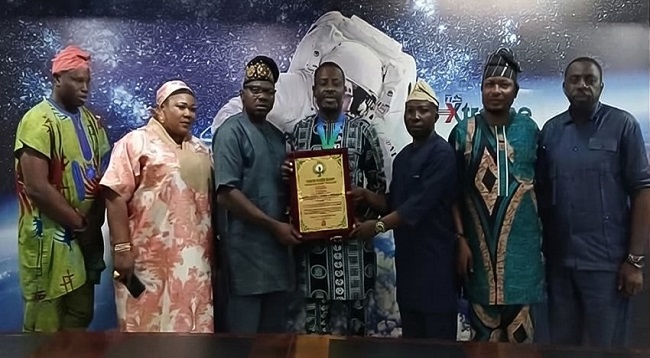
ipNX Director, Dr. Olusola Teniola, has been awarded the prestigious Golden Leadership Excellence Award by the Yoruba Study Group. Dr Teniola, who leads Strategic Business Initiatives (SBI) at ipNX, the leading Nigerian technology and telecommunications company, was conferred with this award at the ipNX Corporate Headquarters, Victoria Island, Lagos.

Dr. Teniola was recognised as an Icon of Excellence & Most Outstanding Administrator of the Year 2025/2026 for his remarkable contributions to the advancement of Nigeria’s telecommunications industry, as well as his unwavering commitment to making data more affordable and accessible to millions of Nigerians.
The award celebrates his embodiment of the revered Omoluabi ethos of Yorubaland, defined by integrity, diligence, excellence, and strong character. His leadership and impact have been particularly notable through his work with the Association of Telecommunications Companies of Nigeria (ATCON) and the Alliance for Affordable Internet, where he has played a pivotal role in shaping policies and initiatives that drive digital inclusion and connectivity across Nigeria.
In its citation, the Yoruba Study Group commended Dr. Teniola for his “exemplary contributions to the advancement and management of telecommunications in Nigeria, his unquantifiable efforts in ensuring affordable data for the teeming masses, and his outstanding record of quality service delivery.”
Reacting to the recognition, Dr. Teniola said “I am deeply honoured to receive this award from the Yoruba Study Group. This recognition is not just a personal milestone, but a reflection of the collective efforts of industry stakeholders committed to advancing Nigeria’s digital future. I remain dedicated to driving initiatives that promote affordable access to connectivity, foster innovation, and empower more Nigerians to participate meaningfully in the digital economy, while upholding the values of integrity, excellence, and service.”
The Yoruba Study Group, a socio-political organisation founded in 2019, is dedicated to promoting Yoruba traditions, values, and cultural heritage. ipNX described the award as a testament to Dr. Teniola’s enduring impact on both the technology sector and society at large.
“Dr. Teniola exemplifies the highest standards of leadership, innovation, and service. His contributions continue to strengthen Nigeria’s digital economy while reflecting the values of excellence and integrity that we uphold at ipNX,” said Mobolaji Caxton-Martins, Head Marketing and Corporate Communications, ipNX Nigeria.
This recognition not only highlights Dr. Teniola’s professional achievements but also underscores his commitment to fostering inclusive growth, strengthening industry collaboration, and advancing Nigeria’s position in the global digital landscape.
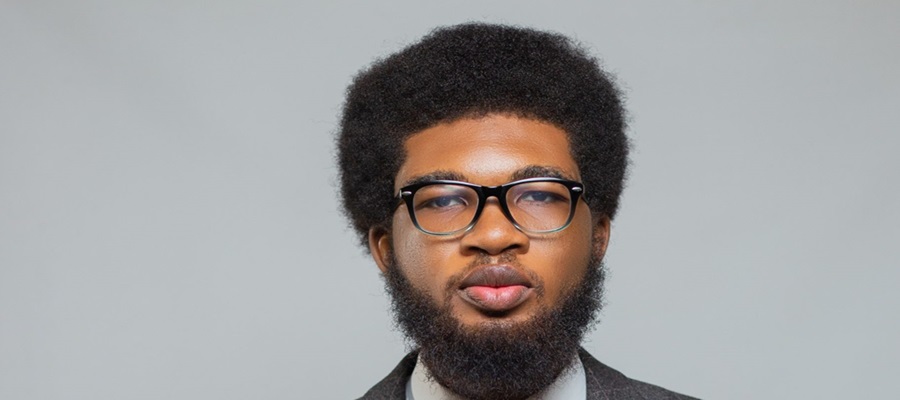
Joshua Ichor, a Nigerian geoscientist and innovator, has secured a rare invitation into the prestigious EWOR Fellowship, one of Europe’s most selective founder programmes built for outlier entrepreneurs with the potential to create billion-euro companies.

Joshua Ichor
The invitation places Ichor inside EWOR’s elite founder ecosystem, a powerful European platform associated with a reported €60 million commitment to backing exceptional founders building the next generation of globally significant companies.
EWOR describes itself as a fellowship for founders who “think in decades and build in days.” The platform says it backs the top 0.1% of founders building potential €10 billion+ companies, with mentorship from unicorn-builders and a founder-first model designed for exceptional entrepreneurs.
For Ichor, the selection is more than another milestone. It is a signal that one of Europe’s most ambitious founder networks sees major global potential in the Nigerian innovator.
While the technology Ichor is currently building has not been disclosed to the public, sources close to the development describe it as a powerful and ambitious piece of technology with the potential to scale internationally.
The project remains under wraps as Ichor continues to refine the product, strategy, and long-term market direction.
According to the fellowship invitation, EWOR believes Ichor is among the few founders with what it takes to build a company that could be valued at €1 billion or more.
That belief places him in a rare class of founders being watched not only for what they have done, but for what they are quietly building next.
EWOR has earned attention for its radical selectivity and founder-first approach.
Its own platform highlights a 0.1% acceptance rate, describing the fellowship as a community of outlier founders who push and sharpen one another.
EWOR’s public materials also reference the fellowship as “Harder than Y Combinator,” built by unicorn founders for founders seeking a higher level of ambition.
The fellowship connects selected founders with a powerful network of unicorn builders, investors, and operators.
Ichor is expected to build alongside a high-calibre founder community that includes names such as Ricky Knox, known for two nine-figure exits; Andrew Nutter, associated with a €180 million revenue company and Sequoia Scout experience; Nick D’Aloisio, widely known for achieving a major technology exit as a teenager; and Jörgen Tveit, who raised one of Europe’s biggest-ever pre-seed rounds by a first-time founder.
The EWOR ecosystem also gives founders access to sessions with globally recognized operators and investors, including Fabrice Grinda, founder of OLX; Kevin Hartz, founder of Eventbrite and Xoom; Mark Ghermezian, founder of Braze; and Michael Baum, founder of Splunk.
For a Nigerian geoscientist to enter this circle is a major statement. It shows that African technical talent is increasingly stepping into the same rooms as some of the world’s most ambitious venture-backed founders.
Ichor’s current technology remains confidential, but the conviction from EWOR suggests that the opportunity is significant.
The details are not yet be public, but the direction is clear: Joshua Ichor is building something with global ambition.
EWOR’s wider network includes some of the world’s leading startup investors and venture names, including A16Z, Accel, Atomico, Balderton, Earlybird, EQT, FJ Labs, Lakestar, Sequoia, Speedinvest, World Fund, and others.
Its platform says fellows raise at 50–300% higher valuations than average, further underlining the strength of the ecosystem around selected founders.
To mark the occasion of World Password Day, Kaspersky experts analysed 231 million unique passwords in major password leaks from 2023 to 2026, and uncovered several key patterns.

First, 68% of modern passwords can be cracked within a day. Second, it turned out that the vast majority of compromised passwords either begin or end with a digit – a common pattern that makes them potentially vulnerable to brute force attacks.
And third, users also favour positive and trending words; for example, over the past couple of years, use of the word “Skibidi” in analysed passwords surged 36 times, mirroring the rise of that Internet trend.
In recent years, secure passwords’ rules have become a widely discussed topic. More and more services now demand passwords that are at least 10 characters long, include an uppercase letter, and contain a number or a symbol.
Yet a comparative analysis of leaked passwords from the past few years shows that even following some of those rules does not guarantee resistance to brute‑force or AI‑driven attacks.
Kaspersky experts share practical advice on how to make passwords more complex and secure, and how not to repeat common mistakes.
Be creative with using symbols and numbers
Among the leaked passwords that contain just one symbol, the “@” sign tops the list, appearing in 10% of cases. The next most common symbol is a dot (.), found in 3% of passwords. Among all analysed passwords “@” takes second place in terms of prevalence, and in third place is “!”.
Numbers also follow similarly predictable patterns:
53% of examined passwords end with digits;
17% begin with digits;
Nearly 12% include a numeric sequence that resembles a date (from 1950 to 2030);
3% of leaked passwords include keyboard sequencies like “qwerty” or “ytrewq”, but most of them are digital sequencies like “1234”.
Alexey Antonov, Data Science Team Lead at Kaspersky, notes that commonly used symbols, numbers, or dates – especially when placed in obvious positions (such as at the beginning or end of a password) – significantly simplify brute force attacks for cybercriminals. That’s why it’s highly recommended to give preference to less popular characters, and avoid numeric or keyboard sequences.
“Bruteforce works by systematically trying every possible character combination until the correct password is found. When attackers already know which characters users tend to favour, the time required to crack a password drops dramatically. To avoid the temptation of choosing predictable symbols, entrust password creation to dedicated generators that produce random letters, numbers, and symbols with equal probability”, says Alexey Antonov.
Between… Eden and hell: Try to avoid using words in a password
The research shows that emotional and trending words frequently become the basis for a password. For example, from 2023 to 2026 the use of the word “Skibidi” in passwords increased 36 times – mirroring the rapid rise of that Internet trend.
Kaspersky experts have also conducted analysis of the occurrence of positive and negative words in passwords, and it turned out that there are more positive ones. Among those regularly appearing are positive words like “love”, “magic”, “friend”, “team”, “angel” and “star”, “eden”. Interestingly, positive words are much more common than negative ones. However, words like “hell”, “devil”, “nightmare” and “scar” also occur.
“Using a single‑word password, even with a trailing number or a special character, is a weak choice. The pattern is too predictable, making it easy for attackers to guess. Instead, craft a passphrase that strings together several unrelated words, each supplemented with internal numbers and symbols, and sprinkle in a few intentional misspellings.
The longer and more random and unpredictable the password is, the harder it is to crack. As an additional way to protect yourself, enable two-factor authentication (2FA) wherever possible,” recommends Alexey Antonov.
Is password length important?
It’s well known that longer passwords are harder to crack, and the analysis of leaked passwords confirms this principle. However, with the rise of AI driven tools, length alone no longer guarantees security: even lengthy passwords can be compromised if they follow predictable patterns.
The research shows that short passwords of up to eight characters that appeared in the leak are typically cracked by brute force attacks in under a day. However, thanks to AI-powered smart algorithms, more than 20% of 15-character passwords can be broken in less than a minute.
What’s more 60.2% of all analysed passwords – regardless of length – can be cracked in about an hour; 68.2% – in a day.
In the examples provided, the calculations assume a single RTX 5090 GPU and the MD5 algorithm. In real‑world scenarios, attackers can rent multiple GPUs – ten, a hundred, or even more. Under such conditions, the cracking rate would increase potentially by several orders of magnitude.
In modern terms, truly secure passwords not only meet the gold standard of 16+ characters, but also consist of random, non-repeating letters, numbers, and symbols, and are unique for each account. To help users create such passwords, Kaspersky has added a password generation feature to the Kaspersky Password Generator website. Now users can not only check their passwords for leaks, but also generate secure passwords for free.
For easy and secure password management, auto-fill, and cross-device synchronisation consider using a password manager in which all credentials are stored in a secure vault and protected by a single master password. This eliminates the need to remember hundreds of passwords while keeping them safe from breaches.
What’s more, not only passwords, but also passkeys can be created and stored directly in Kaspersky Password Manager, which allows not only to sign in to supported services with a single tap, but also to access passkeys on all devices owing to secure synchronisation.

Mastercard, BMONI Launch Multi-Currency Payment Cards in Nigeria

NCDC Enhances Monitoring, Releases Advisory amid Rising Global Hantavirus Cases

Metro Digital, Nigerian Firm Accuses Multichoice Of Refusal to Obey Court Judgements

SERAP Demands Probe of Disappearance of N27.9Bn from USPF, Calls Out Minister, Secretary of Fund

Moniepoint Partners GDG Lagos, Women Techmakers to Empower the Next Generation of Women Architects in Tech

Kaspersky Discovers Vulnerability in Qualcomm Snapdragon Chips that can Lead to Data Loss & Device Compromise

MTN Suspends Data, Airtime Borrowing Service over New FCCPC Lending Rules

Vitel Wireless Partners Fintechs to Expand Access to Services

Bank Customers to Pay N1,500 for ATM Card Issuance, Replacement – CBN

MTN, VDT, Zoracom, Digital Realty Back 2026 Girls in ICT Campaign




 E-Financial2 days ago
Transcorp Excites Shareholders with ₦20.3 Billion Dividend @20th AGM

 E-Financial2 days ago
Africa Prudential Launches Sabivest to Boost Digital Investment Access

 Telecom2 days ago
PAFON 3.0: Agency Banking Key to Reaching Millions of Unbanked Nigerians – AMMBAN

 General News2 days ago
PIN Records 3.07Bn Media Reach, Expands Digital Rights Impact Across Africa in 2025

 General News2 days ago
Interswitch Inducts 3rd Interns into Its Developer Academy

 Telecom21 hours ago
MTN, Airtel, Glo Under Pressure as FG Demands Better Service Delivery

 E-Business21 hours ago
Firm Warns of Phishing Attacks via Compromised Amazon Simple Email Service Accounts
 E-Financial21 hours ago
Mastercard, BMONI Launch Multi-Currency Payment Cards in Nigeria