

News
SERAP Tells Akpabio to Reject Wike’s Proposal in 2024 Budget

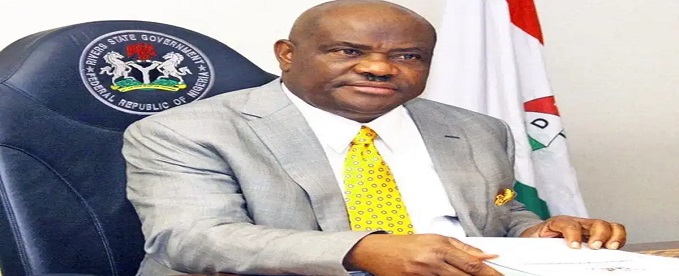
Socio-Economic Rights and Accountability Project (SERAP) has urged Mr Godswill Akpabio, Senate president, to use his leadership position “to promptly reject the plan by Nyesom Wike, minister of the FCT, to spend N15 billion for the construction of ‘a befitting residence’ for Mr Kashim Shettima, vice president.”

SERAP also urged Akpabio to “assert Senate’s authority and constitutional oversight roles to reject the N2.8 billion on publicity for the FCTA and other proposed wasteful and unnecessary spending that may be contained in the 2023 supplementary budget and the 2024 budget proposed by President Bola Tinubu.”
In the letter signed by, Kolawole Oluwadare, SERAP deputy director ,at the weekend, the organisation said: “The plan to spend N15 billion on ‘a befitting residence’ for the vice president is a fundamental breach of the Nigerian Constitution and the country’s international anticorruption and human rights obligations.”
SERAP said: “The Senate has the constitutional duties to ensure that Mr Wike’s proposed spending is entirely consistent and compatible with constitutional provisions including his oath of office. All public officials remain subject to the rule of law.
“The National Assembly including the Senate has a constitutional responsibility to address the country’s debt crisis, including by rejecting wasteful and unnecessary spending to satisfy the personal comfort and lifestyles of public officials.”
The group added that, “The National Assembly cannot continue to fail to fulfil its oversight function. The Senate must assert and demonstrate its independence by checking and rejecting all wasteful and unnecessary spending by the executive.
“It would be a grave violation of the public trust and constitutional oath of office for the Senate to approve the plan to spend N15 billion on ‘a befitting residence’ for the vice president at a time when the Federal Government is set to spend 30% (that is, N8.25 trillion) of the country’s 2024 budget of N27.5 trillion on debt service costs.
“The Federal Government also plans to borrow N7.8 trillion to fund the 2024 budget. Nigeria’s public debt stood at 87.4 trillion naira as of June with 38% owed to external creditors including multilateral and commercial lenders.
“Should the Senate and its leadership fail to stop wasteful and unnecessary spending and rein in government borrowing, SERAP would consider appropriate legal action to compel the National Assembly including the Senate to discharge its constitutional oversight roles in the public interest.
“SERAP urges you to refer to the Economic and Financial Crimes Commission (EFCC) and Independent Corrupt Practices and Other Related Offences Commission (ICPC) the allegations of corruption in the spending of the previously approved N7 billion for the construction of a new residence for the vice president.
“The ‘construction’ was reportedly abandoned but the whereabouts of the N7 billion remain unknown.
“The Senate has the constitutional competence and legitimacy to compel compliance with the Nigerian Constitution and the country’s international obligations.
“The Senate ought to assert its authority and vigorously exercise its constitutional oversight roles to check the apparently wasteful and unnecessary spending by Mr Wike especially given the growing debt crisis and the indiscriminate borrowing by the government.
“It is a travesty and a fundamental breach of the lawmakers’ fiduciary duties for the National Assembly to allow the executive to use the national budget as a tool to satisfy the comfort and lifestyle of public officials.
“Nigerians have a right to honest and faithful performance by their public officials including lawmakers, as public officials owe a fiduciary duty to the general citizenry.
“Cutting the N15 billion on ‘a befitting residence’ from the FTCA budget would be entirely consistent with your constitutional oath of office, and the letter and spirit of the Nigerian Constitution, as it would promote efficient, honest, and legal spending of public money.
“According to our information, the Minister of the FCT, Nysom Wike and the Federal Capital Territory Administration (FCTA) plan to spend N15 billion for the construction of ‘a befitting residence’ for the Vice-President, Mr Kashim Shettima.
“The plan is contained in the N67 billion FCT supplementary budget which President Bola Tinubu had on Tuesday transmitted to the National Assembly for approval.
“SERAP notes that Mr Wike proposed plan to spend N15 billion on a new residence for the vice president despite the recent allocation of N2.5 billion for the renovation of the current residence of the VP in the federal government’s supplementary budget already passed by the National Assembly and signed by President Tinubu.
“The House of Representatives has reportedly approved the plan to spend N15 billion on ‘a befitting residence’ for the vice president.
“The National Assembly has also approved another N3 billion for the renovation of the vice president’s residence in Lagos State. Mr Wike also plans to spend N2.8 billion on publicity for the FCTA.
“The proposed plan to spend 15 billion on ‘a befitting residence’ for the vice president is different from the



Nigerian Communications Satellite (NIGCOMSAT) Ltd, in a strategic move to modernise its operations and foster a results-oriented workforce, has officially adopted the Federal Government’s Performance Management System (PMS).

The initiative, aimed at driving efficiency and institutionalising accountability, was marked by an intensive staff training program designed to align the agency’s operations with national performance goals and the Presidency’s vision for a digital-first public sector.
According to a statement from Stephen Kwande, the Agency’s acting head of Corporate Affairs, “the transition to PMS is a departure from historical evaluation methods. The new system is designed to provide real-time performance tracking and instill a stronger work ethic across all directorates”.
Welcoming participants, Mrs. Jane Nkechi Egerton-Idehen, managing director/CEO of NIGCOMSAT, represented by Abiodun Attah, executive diirector, Technical Services, described the adoption as “long overdue.”
She emphasised that the system is critical for ensuring that NIGCOMSAT contributes effectively to Nigeria’s broader digital economy targets.
In her opening remarks, Mrs. Chinwe Udogu, general manager, Human Resources Management, expressed NIGCOMSAT’s enthusiasm for the program, urging staff to dedicate themselves fully to the three-day training.
She noted that the exercise was pivotal in repositioning the company to achieve its highest aspirations.
The training consultant, Mrs. Njoku Chioma, said the program is expected to drive culture change, automate work processes, and strengthen institutional performance.
The three-day training, jointly organised by the Office of the Head of Service of the Federation and NIGCOMSAT Management, covers key themes including:
• Overview of the FCSSI25 as an institutional performance-driven Federal Civil/Public Service
• Service culture and workplace attitude in the Nigerian public sector
• Implementation of the Performance Management System in NIGCOMSAT
• Application of Artificial Intelligence tools to enhance performance in the Nigerian public sector
The move comes at a time when NIGCOMSAT is expanding its footprint, with recent initiatives like the 2026 SpaceTech Accelerator Programme and partnerships for grassroots digital skills training.
By strengthening its internal management framework, the agency aims to ensure that its technical advancements in satellite technology are matched by an equally efficient administrative engine.


Most companies choose to outsource at least part of their Security Operations Center (SOC), with a significant number adopting SOC-as-a-Service (SOCaaS), according to global research by Kaspersky.

This strategic move enables organisations to benefit from round-the-clock protection, ensure compliance with regulatory standards and leverage advanced cybersecurity solutions and qualified expertise that are often beyond their internal capabilities.
As cyberthreats become increasingly sophisticated, organisations are rethinking how they build and operate their Security Operations Centers. With this in mind, Kaspersky carried out a comprehensive global survey to identify the main motivations, strategic goals, and potential challenges associated with its planning and implementation¹.
The findings of this research revealed that 64% of companies plan to outsource part of their SOC, combining internal capabilities with external expertise.
Meanwhile, over a quarter of respondents (26%) are ready to fully implement an SOC-as-a-Service (SOCaaS) model. By contrast, only 9% plan to build their SOC entirely in-house, highlighting the growing challenges of maintaining round-the-clock monitoring and attracting qualified specialists.
SOC outsourcing enables organisations to delegate selected SOC functions or even the entire operational cycle to a trusted external provider. This approach can include a variety of services:
Design and architecture of the SOC.
Deployment and maintenance of SOC technologies.
Monitoring and analysis by external security analysts.
Consulting and training services.
Full SOCaaS delivery, where the provider handles detection, investigation and response around the clock.
Most companies prefer maintaining strategic tasks internally, whilst leveraging external teams and advanced technologies for operational and highly technical workloads. Among organisations planning to outsource SOC functions, the most commonly delegated tasks to third-party providers included solution installation and deployment (55%), solution development and provisioning (53%), and SOC design (47%).
When engaging external SOC specialists, companies also showed a clear preference for augmenting specific roles, with first-line analysts (61%) and second-line analysts (52%) being the most in-demand among external specialists. These figures illustrate that companies focus more on frontline and intermediate security tasks, such as monitoring and responding to threats.
Why do organisations choose SOC outsourcing?
The leading motivator for SOC outsourcing is the need for 24/7 protection (55%) – an operational requirement many internal teams cannot sustain alone. Another highly cited benefit is reducing workload on internal IT security specialists (47%), enabling teams to focus on strategic tasks.
Additionally, access to advanced solutions and technologies (42%) and external support to ensure compliance with regulatory requirements and standards (41%) further drive the decision to outsource, highlighting the value of specialised expertise and cutting-edge tools such as XDR, MDR, MXDR and others.
Budget optimisation is important for only 37% of companies – indicating that the primary value of outsourcing lies in improved protection, not just cost savings.
“The trend towards outsourcing SOC functions, whether fully or partially, is primarily driven by the necessity for enhanced operational focus and strategic agility. By shifting routine and technical tasks externally, organisations are able to concentrate on high-value activities such as strategic decision-making and orchestrating responses to sophisticated threats.
“Moreover, this approach often results in considerable cost efficiencies, allowing for optimised resource allocation. Ultimately, this model transforms the SOC into a critical strategic capability, directly contributing to business continuity,” comments Sergey Soldatov, Head of Security Operations Center at Kaspersky.

Defence Headquarters (DHQ) has made public the full names of 16 officers of the Armed Forces of Nigeria indicted by a Special Investigative Panel over alleged serious misconduct, including an alleged coup plot against President Bola Tinubu.

The officers suspected to be involved in the coup plot include a brigadier general, a colonel, four lieutenant colonels, five majors, two captains, a lieutenant, a lieutenant commander and a Squandron Leader.
Major General Samaila Uba, director of Defence Information, disclosed this on Monday, stating that the panel had concluded its investigation and established that the affected officers had cases to answer.
According to him, the indicted officers will face a military Court Martial in line with established procedures and existing regulations.
Major Gen. Uba said the probe examined the circumstances surrounding the conduct of the officers and identified actions “inconsistent with the ethics, values and professional standards expected of members of the Armed Forces of Nigeria.”
He stressed that the exercise was purely disciplinary and aimed at preserving internal discipline, cohesion and operational effectiveness, adding that the Armed Forces remain loyal to the Constitution and Nigeria’s democratic order.
- Brigadier General Musa Abubakar Sadiq (Nasarawa, 44th Regular Course)
- Colonel M. A. Ma’aji (Niger, 47th Regular Course)
- Lieutenant Colonel S. Bappah (Bauchi, 56th Regular Course)
- Lieutenant Colonel A. A. Hayatu (Kaduna, 56th Regular Course)
- Lieutenant Colonel Dangnan (Plateau, 56th Regular Course)
- Lieutenant Colonel M. Almakura (Nasarawa, 56th Regular Course)
- Major A. J. Ibrahim (Gombe, 56th Regular Course)
- Major M. M. Jiddah (Katsina, 56th Regular Course)
- Major M. A. Usman (Federal Capital Territory, 60th Regular Course)
- Major D. Yusuf (Gombe, 59th Regular Course)
- Major I. Dauda (Jigawa, DSSC 38)
- Captain I. Bello (DSSC 43)
- Captain A. A. Yusuf
- Lieutenant S. S. Felix (DSSC)
- Lieutenant Commander D. B. Abdullahi (Nigerian Navy)
- Squadron Leader S. B. Adamu (Nigerian Air Force)

NITDA, NBC Explore Strategic Collaboration on Digital Transformation, Media Regulation

NDIC Seeks EFCC’s Support to Trace, Recover Assets of Failed Banks

Interpol Arrests over 570 Cybercriminals across Africa

NIGCOMSAT Adopts Government’s Performance System

ASVLP 2026: Africa, MENA VCs Gear Up as Tech Funding Hits $4.1bn Rebound

19 Nigerian Banks Meet CBN Recapitalization Targets Ahead of March Deadline

Jumia CEO says Black Friday Signals Nigeria’s E-Commerce Maturity

Galaxy Backbone Celebrates the Federal Government’s Paperless Civil Service Milestone

DStv Offers Instant Package Upgrade for Customers from January to February

Banks to Impose N50 Stamp Duty on Transfers of N10,000 and Above from January 1




 News2 days ago
LIRS to Invoke NTAA to Recover Unpaid Taxes from Bank Accounts, Others

 News3 days ago
Anambra Cuts Monday Pay to Kill Sit-at-Home

 E-Financial3 days ago
First Asset Management Receives Upgraded Ratings from Agusto &Co and DataPro

 E-Financial3 days ago
NIBSS, Others Flag 13,417 Nigerian Fraudsters on Person of Interest Portal

 General News3 days ago
Nigeria Treats Religious Violence as Attack on State – NSA Ribadu

 E-Financial3 days ago
CBN Prepares Fresh Debit Card Rules to Improve ATM Services

 News2 days ago
Tech Executives Double Down on AI, Talent and Adaptive Strategies to Lead in the Intelligence Age

 E-Financial2 days ago
CBN Upgrades Licences of Opay, Moniepoint, Kuda, Palmpay, Paga to National Status