

Telecom
SIM Swap Fraud Threatens Mobile Money Plan


The rising incidence of Subscribers Identification Module swap fraud in the country has become a major concern for stakeholders in the financial and telecommunication industry.
Telecoms subscribers are also concerned that the same manner in which airtime is lost on the mobile devices will play out when mobile financial services are handled by network operators.
Others who have experienced the fraudulent act alleged that insiders working with telecommunication companies are culpable in the act as network signal suddenly disappears before the victim’s bank account is wiped out.

Economic Confidential reported that Omoniyi Johnson, an engineer based in Lagos, who was once a victim of SIM swap fraud in which his personal information was used in requesting for a new SIM card by a fraudster.
He said over N200,000 was stolen from his bank account before he realised what happened.
According to him, network signal disappeared from his phone which persisted despite rebooting his mobile device.
“Initially, I thought my phone had developed some fault, but after taking it to technician the following day, it was discovered that my SIM card was faulty. On getting to the operators’ customer care centre, I found out that someone else requested for a new SIM with my number and had stolen my savings,” he explained.
Due to the many complaints of financial fraud from SIM swap, the NCC, in 2017, had introduced new requirements for replacing a lost or damaged SIM card.

The commission asked telecoms operators to request for court affidavit, national identification card, SIM pack among others as new requirements for replacing a lost SIM card.
Despite this intervention, the challenge persists.
Mrs. Felicia Onwuegbuchulam, director, Consumer Affairs Bureau, NCC, at the inauguration of newly elected executives of Industry Consumer Advisory Forum in December said the commission had received lots of complaints on how fraudsters were using mobile numbers to steal from bank accounts.
She was quoted as saying, “Though the money is not in their custody, we are not exonerating the telecom operators until we conclude our investigations. We believe there may be a connivance of telecom staff in all these crimes. Why should a subscriber’s line go off at the time fraud is about to be committed on their accounts?”
Speaking on the issue, Segun Akano, managing director, Upperlink Limited advised Nigerians not to entertain any fear that the involvement of telecommunication companies in mobile financial services would increase SIM swap fraud.
According to him, biometrics is an effective way of reducing exposure of customers’ information and curbing financial fraud.

He said, “If mobile money is working elsewhere and we are able to surmount the safety fear, we can as well do it better in Nigeria. I don’t think we should be scared that the fraudsters will take advantage of this. It is just a wakeup call to all the telcos to have their security intact on all their platforms.
“Not only do we have the benefit of Biometrics Verification Number, it is an added advantage for Nigeria when other countries running mobile money right now don’t have the facility that we call BVN.
“It can do a lot to reduce the vulnerability level of our platforms, knowing full well that if anybody does anything and you are caught, the system is closed against you.
“The agency banking is meant to reach the unbanked and all the agencies banking under the SANEF project have access to verify identity through BVN if they want or have a way to verify the identity of customers.”
Already, he said there were measures in place to ensure that transactions on a newly obtained SIM card did not exceed N20,000 on the first day.
He said, “If you transfer N20,000 and by the second day, the owner does not lodge a complaint, you will be allowed to do more, with that the perpetrators will not gain much and they can also be caught.
The motivation is not there because they are all being encumbered by the policies.”
Speaking at a stakeholders’ forum on financial fraud in Abuja, the Adebayo Shittu, minister of Communications, said the incidence of financial fraud using telecom platforms had become pervasive.
He added that the act had led to direct financial loss in the financial services sector, e-commerce, and telecommunications.
He said, “As a fall out of technological advancement, knowledge has increased and control has become even more complex, creating gaps which are being exploited by miscreants and nefarious individuals always looking to beat the system.”
Meanwhile, Gbenga Adebayo, chairman, Association of Licensed Telecommunication Operators of Nigeria, said discussions were ongoing with the telecoms operators, the Central Bank of Nigeria and other stakeholders to ensure adequate safety measures to protect customers were in place.


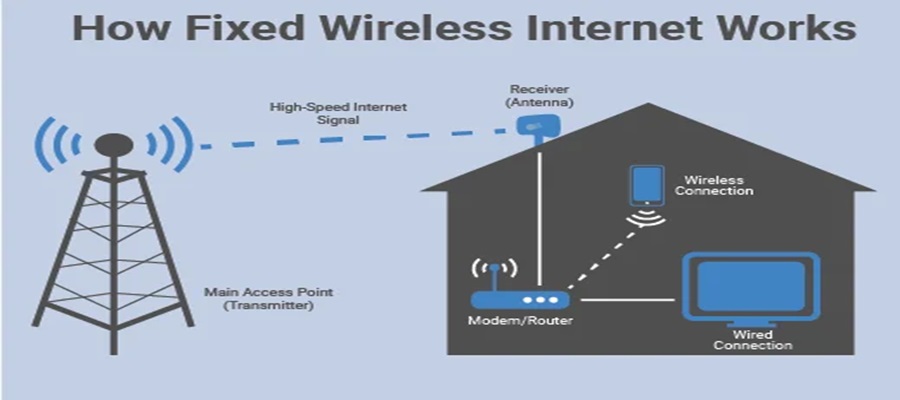
Nigeria has exactly 156,662 active fixed wired internet subscriptions as of mid-2026.

This is a tiny fraction compared to mobile GSM networks, which dominate the market with over 154 million subscribers.
The fixed wired market primarily consists of homes and offices using direct physical cables like fiber optics.
Fixed wired services use physical cables, like glass fiber or copper wire, to bring internet directly into a building.
It is like a dedicated, private water pipe for your home. It provides very fast speeds, unlimited data, and is reliable.
In contrast, mobile GSM uses radio waves transmitted from tall towers to phones, acting more like a sprinkler that sprays a signal across an entire neighborhood.
Because laying physical cables across cities is expensive and hard to do, these subscriptions are very rare.
However, the market has seen recent growth, driven largely by Fiber-to-the-Home (FTTH) services.
The top players are: MTN FibreX with 110,564 subscribers, which is roughly 88.7 per cent of the entire market.
SWIFTNG accounts for about 13,945 connections.
The others are ipNX and 21st Century Technologies which make up the number.


Nigerian Communications Commission (NCC) says it is intensifying efforts to implement Nigeria’s planned 112 national emergency number following its approval by the National Economic Council (NEC).

NCC
The commission disclosed this during a meeting between Vice President Kashim Shettima and an NCC delegation led by the Chairman of its Governing Board, Chief Idris Ibikunle Olorunnimbe, at the Presidential Villa, Abuja.
Briefing the Vice President, Olorunnimbe said the NCC had already established about 35 Emergency Communications Centres (ECCs) across the country to support a unified national emergency response system.
He said the next phase of implementation would focus on closer collaboration with state governments and emergency response agencies to ensure the effective rollout of the initiative.
The development follows the recent approval by the NEC, chaired by the Vice President, for the adoption of 112 as Nigeria’s single national emergency number across all tiers of government and emergency response agencies.
The council also approved the establishment of a multi-agency implementation committee to be jointly coordinated by the Office of the Vice President and the NCC.
Olorunnimbe stressed that the success of the initiative would depend on the commitment of state governments to support and maintain emergency communications infrastructure, as well as the readiness of response agencies to promptly attend to distress calls.
“We need commitment at every level of all response agencies—from top to bottom—including the Nigeria Police Force, ambulance services across the states and, at the national level, the National Emergency Management Agency (NEMA),” he said.
Responding, Shettima directed the NCC to develop a comprehensive roadmap for the nationwide implementation of the single emergency number in line with international best practices.
He also urged the commission to work closely with the National Emergency Management Agency (NEMA), citing the agency’s experience in disaster management, relief and rehabilitation.
The Vice President assured the commission of the Federal Government’s commitment to sustaining the initiative, saying funding would be mobilised through the National Economic Council and partnerships with the private sector.
He also called for greater dedication from all emergency response agencies to ensure the success of the programme.
The adoption of 112 is expected to harmonise emergency communications across Nigeria by providing a single number through which citizens can quickly access police, fire, ambulance and other emergency services.
The initiative is also expected to replace multiple emergency contact numbers currently in use and improve coordination and response during emergencies.

Nigerian Communications Commission (NCC) has said that it was strengthening collaboration with state governments and industry players to develop a transparent, cost-based pricing framework for sharing telecom ducts as part of efforts to speed up broadband expansion across Nigeria.

Ayuba Shuaibu, director of Policy, Competition and Economic Analysis, NCC, disclosed this at the Stakeholders’ Forum in Abuja.
Shuaibu said the initiative was designed to build consensus among all parties.
“The primary purpose of this forum is to ensure seamless synergy between the Commission and all stakeholders,” he said.
The director said the consultation was prompted by longstanding complaints over permits, levies and other charges imposed by different levels of government.
He said bringing together state commissioners, telecom operators, tower companies and representatives of the Nigeria Governors’ Forum had helped improve understanding of the issues.
“This engagement is a work in progress. We expect more input from stakeholders before presenting the outcome to the Nigeria Governors’ Forum,” he added.
Dr Helen Adeneye, commissioner for Innovation, Science and Technology, Kogi State. welcomed the consultation, saying Nigeria needs a harmonised policy that clearly defines the responsibilities of both the federal and state governments.
“We need a harmonised policy that allows states to collaborate better with telecom operators and creates a more business-friendly environment,” she said.
Dr Adeneye added that adopting the Dig-Once policy would establish a uniform pricing system and help resolve disputes over charges for telecom infrastructure deployment.
Chidi Ajuzie, chief executive officer, WTES Projects Limited, whose firm is conducting the consultancy study, said the proposed framework would introduce a common cost structure for duct sharing to support broadband investment and economic growth.
“The study is designed to create a uniform pricing model that will drive broadband growth, economic development and wider adoption across the country,” he said.
Ajuzie explained that the consultants had developed preliminary floor and ceiling prices to guide operators while allowing flexibility within the approved range.
He added that the recommendations remain open to industry input before the NCC finalises the framework.
The Dig-Once Policy is designed to reduce the cost and disruption of deploying broadband infrastructure by requiring fibre ducts to be installed whenever roads are constructed or rehabilitated.
The NCC is developing a cost-based pricing framework for sharing these ducts to promote fair pricing, reduce duplication of infrastructure and encourage investment.
The proposed model is expected to support the Federal Government’s broadband expansion targets while improving collaboration between telecom operators and state governments.

Court Adjourns Alleged Binance Tax Evasion Case over Settlement Talks

Fixed Wired Internet Market Lags as Mobile Gains Ground

Xenophobic Attacks: OYC Threatens to Picket MTN Nigeria Offices

New NIMC Act Strengthens Data Protection, Privacy – Director

BON Establishes Six Ad Hoc Committees to Modernize Broadcasting

NASENI Moves to Digitize CCB’s 5m Assets Declaration and Operations

Mobile Internet Gender Gap Widest in Africa – GSMA

Nigeria Launches FreeTV Nationwide

CANAL+ Partners Samsung to Pre-Load DStv Stream on New Samsung TVs In Nigeria, Other African Countries

Lebara Nigeria Launches Lebara Play, Africa’s First Telecom-Owned Micro-Drama Platform




 News3 days ago
NRC, Ponzi Scheme Collapses Resulting Loss of Billions of Naira

 News3 days ago
NSITF Partners South African Insurer on Digital Transformation

 E-Financial3 days ago
FCT-IRS Unveils New Digital Platform, Taxporta

 General News3 days ago
KPMG Urges Africa’s Most Innovative Tech Entrepreneurs to Enter the Global Tech Innovator 2026 Competition

 E-Business3 days ago
FG Suspends New Internet Regulations to Prevent Overlapping Rules
 E-Business3 days ago
NIN Enrollment Hits over 136m as New ID Law Takes Effect

 Telecom2 days ago
NCC Seeks Cost-Based Pricing Framework for Ducts

 E-Business3 days ago
Plateau PCC Collects Nigerians’ Data without Privacy Policy – FIJ