

Telecom
Smartphone Market Face Challenges Despite 5 Chinese Vendors Top Table

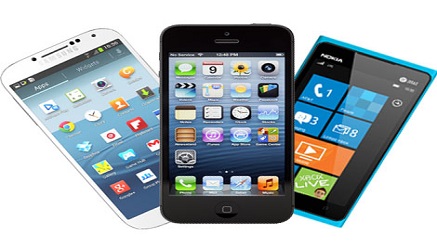
According to the latest preliminary release from the International Data Corporation (IDC) Worldwide Quarterly Mobile Phone Tracker, vendors shipped a total of 334.9 million smartphones worldwide in the first quarter of 2016 (1Q16), up slightly from the 334.3 million units in 1Q15, marking the smallest year-over-year growth on record.
The minimal growth this quarter is primarily attributed to strong smartphone saturation in developed markets, as well as a year-over-year decline from both Apple and Samsung, the two market leaders.
The biggest change to the market, however, was the addition of lesser-known Chinese brands OPPO and vivo, which pushed out previous fourth and fifth place players Lenovo and Xiaomi, respectively.
As the China market matures, the appetite for smartphones has slowed dramatically as the explosion of uptake has passed its peak.
In 2013, China’s year-over-year shipment growth was 62.5%; by 2015, it had dropped to 2.5%. Conversely, the average selling price (ASP) for a smartphone in China rose from US$207 in 2013 to US$257 in 2015.
“Along China’s maturing smartphone adoption curve, the companies most aligned with growth are those with products serving increasingly sophisticated consumers. Lenovo benefited with ASPs below US$150 in 2013, and Xiaomi picked up the mantle with ASPs below US$200 in 2014 and 2015. Now Huawei, OPPO, and vivo, which play mainly in the sub-US$250 range, are positioned for a strong 2016,” said Melissa Chau, senior research manager with IDC’s Worldwide Quarterly Mobile Phone Tracker.
“These new vendors would be well-advised not to rest on their laurels though, as this dynamic smartphone landscape has shown to even cult brands like Xiaomi that customer loyalty is difficult to consistently maintain.”
“Outside of China, many of these brands are virtually unknown and the ability of these rapidly growing Chinese vendors to gain entry into mature markets such as the United States and Western Europe will be essential if they have aspirations of catching Apple or Samsung at the top,” said Anthony Scarsella, research manager with IDC’s Mobile Phone team. “Huawei has proven that it can sell increasingly premium devices.
In China, Huawei is already recognized as a premium brand, but it is now going toe-to-toe on build quality with premium devices like the Nexus 6P that are available worldwide.
While Huawei is furthest along in terms of international recognition, selling equally impressive volumes outside of China remains a challenge for many of these brands, whether it is Xiaomi, Lenovo, OPPO, or vivo. Their ability to drive local growth no longer applies when it comes to international expansion, where premium branding quickly turns to price competition.”
Smartphone Vendor Highlights:
Samsung remained the leader in the worldwide smartphone market despite a year-over-year decline of 0.6% in shipments. Despite the slight decline, the new Galaxy S7 and S7 edge sold vigorously in the month of March and was helped by numerous enticing carrier promotions to help push volume.
The S7 also brought the reintroduction of a microSD card slot in combination with waterproofing, which looks to have paid off for the Korean giant as early sales look healthy.
Within emerging markets, Samsung has performed well with its more affordable J-series as it looks to capture both budget conscious consumers and first-time buyers.
Apple’s saw its’ first-ever year-over-year decline in the first quarter as volumes slipped to 51.2 million units, down 16.3% from last year. Despite the plethora of new features found on the newer “S” models, current iPhone 6/6 Plus owners may feel that a 6S upgrade may not be warranted at the moment. Apple also announced the new iPhone SE, which looks to challenge similarly priced Android options in numerous emerging markets where Apple has traditionally been seen as too expensive.
The SE features all the power of the 6S in a compact form factor that looks to equally target those who desire smaller phones as well. However, at US$399, the SE still faces equally powerful lower-priced devices from competitors, particularly within India and China.
As Apple CEO Cook mentioned on the company’s earnings call, the SE will begin having an impact on iPhone shipments in the second quarter of 2016.
Huawei’s continued domestic dominance, combined with a growing presence outside of China, enabled it to capture the number 3 position worldwide in 1Q16.
Shipment volume for Huawei climbed from 17.4 million units in 1Q15 to 27.5 million this quarter for year-over-year growth of 58.4%. Huawei’s two-pronged approach with a focus on both premium and entry-level devices proved successful in China as well as in many developed European markets.
The recent launch of the P9 smartphone featuring Leica optics provided an additional weapon with which to combat Apple and Samsung. Premium devices like the P9, Mate Series, and Nexus 6, along with entry level devices from its Honor brand, should help Huawei gain further traction worldwide.
OPPO has been shipping smartphones since 2011 and while its primary focus is domestic, it has been shipping internationally since 2012.
Landing first in Thailand, then expanding throughout Southeast Asia and more recently to other countries in Asia, the Middle East and Africa, OPPO’s focus is on fostering channel partnerships, supplemented with large marketing budgets and entertainment sponsorships to increase visibility, culminating in almost 20% of shipments going outside of China in 2015. OPPO’s expansion in China itself has been via offline channels and a strong push to lower-tier cities. In 1Q16, OPPO’s 18.5 million shipments represented 153.2% year-over-year growth, the strongest among the top 5.
Vivo has also shipped smartphones since 2011, but unlike OPPO has been more focused on domestic markets. It first tested the global marketplace in Southeast Asia and India in 2014.
In 2015, less than 10% of its shipments were outside of China. Positioned as a relatively premium product in China, one of its best-selling flagship products, the X5Pro, is also among the most expensive, priced around US$300. Similar to OPPO, vivo’s retail presence and marketing in lower-tier markets is particularly strong and a key factor to its growth.
The vivo brand is also slightly differentiated by its focus on audio. With 14.3 million units shipped in 1Q16, and 123.8% year-over-year growth, vivo remains in tight competition with the other top 10 players.



The Nigerian Communications Satellite Limited (NIGCOMSAT) has unveiled Accelerator Cohort 3.0 as part of efforts to strengthen Nigeria’s space technology ecosystem and support the growth of local startups.

The initiative will be a major highlight of the 2026 Nigerian Satellite Week scheduled to hold on March 30 and 31 in Abuja, where key players in the satellite and digital infrastructure sectors are expected to converge.
In a statement signed by Stephen Kwande, the Head of Corporate Communications, the company described the new accelerator as its most direct investment in building long-term competitiveness within Nigeria’s space economy.
According to NIGCOMSAT, the programme is designed to support early-stage ventures working across satellite applications, last-mile connectivity, agriculture, logistics and other areas where space-based technology can drive impact.
The company said previous cohorts of the accelerator had already contributed to developing innovative solutions and building the human capacity needed to position Nigeria for the next phase of the global space industry.
“With Cohort 3.0, we are making it clear that the accelerator is not a pilot project but a permanent feature of how Nigeria develops its space-tech companies,” the statement said.
NIGCOMSAT noted that the Nigerian Satellite Week has grown into a major platform for policy discussions, partnerships and investment in the sector.
The 2026 edition is expected to attract top government officials, defence leaders, development finance institutions and technology entrepreneurs from across Africa.
Jane Egerton-Idehen, managing director of NIGCOMSAT, said the event also marks two decades of Nigeria’s journey in the space economy.
“Twenty years ago, Nigeria took a bold step to secure its place in space. What we are seeing today is the result of consistent effort and vision,” she said.
She added that the company is focused on shaping the next phase of growth through innovation, partnerships and investment in local talent.
NIGCOMSAT also highlighted recent milestones, including a Low Earth Orbit connectivity partnership with Eutelsat, improved revenue performance and increased global recognition in satellite operations.
Other activities lined up for the event include a Startup Demo Day, where selected African startups will pitch their ideas to investors, and a stakeholders’ forum to discuss policies and infrastructure needed to scale Nigeria’s satellite economy.
The company said the initiative reflects the growing role of satellite technology in national development, particularly in areas such as communications, security and digital services.
NIGCOMSAT, established in 2006 and wholly owned by the Federal Government, provides satellite-based services including telecommunications, broadcasting and broadband across Nigeria and parts of Africa.

The Federal Government has unveiled a N12bn Digital Economy Research Fund aimed at strengthening evidence-based policymaking and supporting Nigeria’s long-term digital transformation agenda.

Dr. Bosun Tijani, the Minister of Communications, Innovation, and Digital Economy, disclosed this in a statement issued on Saturday, announcing the launch of an expression of interest for the National Digital Economy Research Clusters.
“Today my heart is filled with deep joy as we announce the Expression of Interest for the National Digital Economy Research Clusters, a N12bn research funding scheme designed to place ideas, evidence, and research at the centre of Nigeria’s digital transformation,” the minister said.
According to him, the programme is being funded under Project BRIDGE, a federal initiative to deploy 90,000 kilometres of fibre optic backbone infrastructure across Nigeria to expand connectivity and enable a modern digital economy.
“This programme is being funded under Project BRIDGE, our initiative to deploy 90,000km of fibre optic backbone infrastructure across Nigeria to expand connectivity and enable a modern digital economy,” he said.
The minister noted that as the government expands digital infrastructure nationwide, research-backed approaches are required to ensure inclusive benefits.
“As we deepen our digital infrastructure coverage, thoughtful, evidence-based approaches are required to be deployed in society to ensure everyone benefits from this significant investment,” he added.
He observed that digital policy decisions are often shaped by market forces and political cycles rather than rigorous research and long-term thinking. “Too often, the ideas shaping digital policy come predominantly from markets and political cycles rather than from research, evidence, and long-term thinking,” the statement said.
Under the initiative, six national research clusters will be established across key pillars of the digital economy, including connectivity and meaningful use; digital public infrastructure and government services; digital skills and human capital development; digital economy and jobs; online trust and consumer protection; as well as artificial intelligence and emerging technologies.
The clusters will be led by up to 36 professors drawn from Nigerian universities, working alongside international academic partners, with more than 200 researchers, including postdoctoral fellows and PhD candidates, expected to generate policy-relevant research.
“For me, the goal goes beyond research output. We are looking for better policies that lead to stronger institutions and a more prosperous society,” the minister said.
He described the initiative as one of the ministry’s most meaningful programmes, noting that it is intended to produce ideas that will outlast any single administration. “Because nations that lead the future are not simply those that deploy infrastructure; they are the ones that cultivate ideas,” he said.
The ministry invited academic and research institutions interested in participating to review the Terms of Reference released alongside the EOI and submit proposals to lead or collaborate within the national research clusters.
It added that a press conference would be held in the coming week to provide further details and engagement opportunities for vice-chancellors and research institutions across the country.

Nigerian Communications Commission (NCC) has directed Mobile Network Operators (MNOs) to compensate subscribers experiencing poor network service across the country.

The Commission said the directive was part of efforts to ensure that consumers are not made to bear the burden of service failures when operators fall short of required standards.
Under the new regulation, telecom operators will be required to provide compensation directly to affected subscribers for breaches of Quality of Service (QoS) Key Performance Indicators (KPIs).
According to the NCC, the compensation will be issued in the form of airtime credits, calculated based on subscribers’ average usage and their presence within specific Local Government Areas where service disruptions occur.
The Commission emphasised that telecommunications services remain critical to economic activities, social interactions, and access to digital opportunities, noting that poor service delivery negatively impacts productivity and public confidence.
It explained that while regulatory fines have traditionally been used to sanction operators, the new approach prioritises consumer protection and strengthens accountability within the telecommunications sector.
The NCC added that the measure would complement existing efforts to monitor service quality and enforce compliance with performance standards.
In addition, the Commission directed tower companies responsible for telecom infrastructure, such as network masts, to reinvest fines imposed on them into infrastructure upgrades with measurable outcomes.
The regulator reiterated its commitment to ensuring that operators invest in network resilience, expand capacity, and improve infrastructure to meet growing demand.
It also pledged to continue deploying regulatory mechanisms that promote fairness, transparency, and accountability across the industry, while ensuring that subscribers receive the quality of service they deserve.

EFCC Waxes Worriedly over $160Bn Crypto Crime Losses

Dangote Refinery Debunks Speculations on IPO

FG Awards N50m Each to 45 Students under S-VCG

NGX REGCO Fines 5 Firms N291m for Market Manipulation

FG Launches Cross-Border Digital Payments Report

Spotify’s Loud & Clear Report Reveals Over ₦60Bn Revenue for Nigerian Artists in 2025

Madonna University Taps Tech Guru Adote for Strategic Board Role

China Threatens to Shut Nigeria’s Satellite Over $11.44m Unpaid Debt

Jumia Tech Week 2026 Begins with Tech Deals on Smartphones, Electronics, and Everyday Technology

FCCPC Bans Lagos ‘No Refund’ Policy, Vows Fines and Shutdowns for Traders



 General News3 days ago
Anti Graft Agencies Raise Alarm over Rising Crypto-Linked Financial Crimes

 E-Business3 days ago
NITDA Takes Over National Digital Architecture System

 E-Financial1 day ago
CBN bars large‑ticket loan defaulters from banking services in tough new crackdown

 General News1 day ago
ARN Rejects Medical Bill over Attempt to ‘Scrap’ Profession

 Telecom1 day ago
NIGCOMSAT Supports Startups Growth with the Launch of Accelerator 3.0

 News1 day ago
Stakeholder says AI is Crucial to Nigerian Data Centres Amid Persistent Grid Collapse

 News1 day ago
Meningitis Kills a Quarter Million People a Year -Study

 Telecom1 day ago
FG Unveils Digital Economy Research Fund Scheme