

E-Business
Stakeholders Urge FG to Review Cybercrime Law

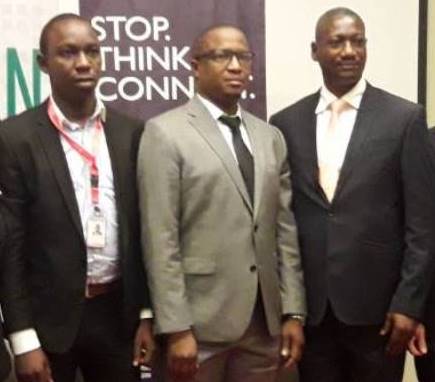
Cybercrime stakeholders have urged federal government to update the existing cybercrime law to take care of new technological developments as well as approaches adopted by the cybercriminals.
They spoke at Cyber Secure Nigeria 2018 conference organized by Cyber Security Experts Association of Nigeria (CSEAN) with the theme: ‘Mitigating Cyber Threats in the Digital Age’.
Remi Afon, president, CSEAN, said that Cybercrime is dynamic and changes from time to time.
“When the cybercrime law was passed a few years ago, there was no mention of cyptocurrency. A lot of cyber criminals were not in the dark web. So, there is a need for cybercrime laws to keep changing to keep pace with the activities in cyberspace,” he said.
He added that Nigeria is vulnerable in the cyberspace. “A lot of our information is online these days. Even the government has started connecting their system online.
“The only way we can tackle this problem is to have a strong legislation, which will make organizations to be compelled to make sure their assets are secured, and whenever there is a breach, there also is a notification.
“Many cybercrime activities are taking place in Nigeria on a daily basis, but because they are not reported, nobody notices them,” he said.
He decried inaction of federal government on data protection law. According to him, ‘It is quite unfortunate that the government is so slow about the data protection law.
“They are not doing anything about it at the moment. There is a need to have a data protection law as a matter of urgency. Otherwise, it is not going to be a crime for anybody to compromise other people’s data.
“We have cybercrime laws, but there is a need to make sure organizations are held accountable if data in their possession are compromised. It is the responsibility of government to have the law in place. Our own responsibility is to sensitize the citizens.
Prof. Umar Danbatta, executive vice chairman, Nigerian Communications Commission (NCC) enumerated challenges in cybercrime management in the country which include; absence of comprehensive and reliable demographic and biometric database, insufficient expertise in the area of cyber and information security; and lack of effective and functional forensics laboratories among others to match the speed, anonymity and fleeting nature of evidence in cybercrimes investigation.
Danbatta who was represented by Mr. Henry Ojiokpota, zonal controller, NCC in Lagos, noted concerns in tackling electronic fraud/ cybercrimes in technology-driven environments such as appropriate legal frameworks, new technologies and standards, critical national security imperatives among others.
John Bray, consul general, US Embassy in Nigeria, said that as the world embraces the Internet of Things, big data, cloud and mobility, security must be more than an afterthought.
“However, things change quickly in the realm of cybersecurity. With new threats appearing on a daily basis and attackers continuously refining their techniques, it can be extremely difficult to keep up.
“Businesses and government agencies need to evolve in order to cope with the ever changing threat landscape. Organizations can no longer merely react to threats, they need to create IT infrastructure that is agile and adaptive, where breaches are addressed before they happen,” he said.



In December 2025, organisations globally faced sustained cyber pressure, as the average number of cyber-attacks per organisation per week reached 2 027, a 1% increase from the previous month and a 9% increase from December 2024.

This is according to December 2025 Global Cyber Attack Statistics by Check Point Research, the threat intelligence arm of Check Point Software Technologies.
According to the statistics, Latin America was the hardest hit, with companies experiencing an average of 3 065 cyber-attacks per week, a 26% year-over-year increase.
In contrast, Africa saw a decline in attacks, with Nigeria (4 622 attacks per week) and Angola (4 002 attacks per week) being the most targeted countries on the continent.
The report’s findings highlight the evolving cyber threat landscape, with ransomware and GenAI-driven data risks posing significant challenges to companies worldwide.
Ransomware attacks jumped 60% year over year, with 945 publicly reported incidents in December. Qilin was the most active ransomware operator, responsible for 18% of publicly disclosed attacks.
“Ransomware continues to scale through industrialised operations, while unmanaged GenAI usage is creating widespread data exposure at enterprise level,” said Omer Dembinsky, data research manager at Check Point Research.
The report noted the education sector was the most targeted industry globally, with 4 349 cyber attacks per week; followed by government (2 666 attacks per week); and associations and non-profits (2 509 attacks per week).
The widespread adoption of GenAI tools has introduced new cyber security risks, with one in 27 GenAI prompts posing a high risk of sensitive data leakage.
Experts warn that companies must prioritise prevention-first security, real-time AI threat intelligence and strong governance over AI tools to mitigate these risks.
Hendrik de Bruin, head of security consulting at Check Point Software, added: “Strengthening ransomware resilience, deploying AI-powered prevention and enforcing clear GenAI governance will be critical to reducing cyber risk in the year ahead.”
E-Business
Half of Global Companies Build SOCs to Enhance Cybersecurity, with a Focus on Human Expertise

Among the primary reasons for establishing a Security Operations Center (SOC) are strengthening cybersecurity posture, enabling faster detection and response and gaining a competitive edge.

Interestingly, despite the increasing demand for automated cybersecurity solutions, businesses rely on skilled security professionals to make key decisions, as human expertise remains essential for effective security management.
A Security Operations Center (SOC) is a dedicated organisational unit responsible for continuous monitoring and safeguarding of a company’s IT infrastructure. Its core mission is to proactively detect, analyse and respond to cybersecurity threats.
To identify the main drivers, strategic priorities, and potential challenges in SOC planning and implementation, Kaspersky has conducted a comprehensive global study involving senior IT security specialists, managers and directors from companies with 500 or more employees.
All participants operate without a SOC but have plans to establish one in the near future. The study spans 16 countries across APAC, META, LATAM, Europe, and Russia, providing valuable insights into the emerging trends and best practices in SOC development worldwide.
The findings of the research reveal that 50% of companies intend to establish SOCs to strengthen their cybersecurity posture, and 45% are motivated by the need to address increasingly sophisticated and dangerous threats.
Other drivers include budget optimisation, the necessity for faster detection and response, and the expansion of software, endpoints and user devices – factors that demand more comprehensive and layered security measures.
These are cited by 41% of organisations. Additionally, 40% seek better protection of confidential information, 39% aim to meet regulatory requirements and one-third (33%) expect SOC capabilities to provide a competitive edge. Larger enterprises tend to cite each of these reasons more often, reflecting the broader operational and regulatory pressures they experience.
Continuous monitoring becomes the leading SOC requirement
Among the key functions organisations plan to delegate, 24/7 security monitoring leads at 54%. This around-the-clock vigilance enables early detection of anomalies, prevents escalation and sustains cyber resilience in real-time. This demand highlights a strategic requirement for proactive risk management, as organisations aim to defend against persistent threats that can strike at any moment.
Companies intending to fully outsource SOC operations show a stronger interest in applying “lessons learned” methodologies, whereas those developing internal SOCs focus more on access management to maintain tighter control.
Human expertise drives SOC technology choices
While SOCs use advanced technology, the choices made by organisations show that human analysts are very important. Among the solutions that organisations plan to include in SOC are – Threat Intelligence Platforms (48%), Endpoint Detection and Response (42%) and Security Information and Event Management systems (40%) – sophisticated solutions that automate data collection and reduce operational load, however, they depend heavily on skilled security professionals who provide critical context, interpret complex findings and make final decisions when guiding appropriate responses.
Other solutions chosen include Extended Detection and Response (38%), Network Detection and Response (37%) and Managed Detection and Response (33%). Large enterprises tend to adopt more technologies (5.5 per SOC on average), while smaller ones integrate fewer (3.8).
“To successfully build a SOC, companies must prioritise not only the right mix of technology but also the careful planning of processes, clear goal-setting and effective resource distribution.
“Well-defined workflows and continuous improvement are essential to ensure that human analysts can focus on critical tasks, making the SOC a proactive and adaptable component of their cybersecurity strategy,” comments Roman Nazarov, Head of SOC Consulting at Kaspersky.

Terra Industries, a Nigerian defence technology startup, has raised $11.75 million to expand its development of defensive systems that protect critical facilities across Africa.

The fundraising round was led by Silicon Valley venture firm 8VC, which was founded by Palantir co-founder Joe Lonsdale.
Other investors in the round include Valour Equity Partners, Lux Capital, SV Angel, and Nova Global, as well as African-focused funds Tofino Capital, Kaleo Ventures, and DFS Lab.
Terra Industries, founded in Abuja by Nathan Nwachuku and Maxwell Maduka, provides multi-domain security solutions for both air and land. Its solutions are intended to detect and respond to threats including terrorism, sabotage, and armed attacks on infrastructure.
The company’s product portfolio includes surveillance drones, ground-based robotic systems, and fixed monitoring towers deployed around sensitive locations.
Co-founder and CEO Nathan Nwachuku said the company has now fully embraced its identity as a defence-focused startup, citing the growing urgency of security challenges across Africa.
He said safeguarding critical infrastructure from terrorist threats has become unavoidable.
Nwachuku argues that protecting Africa’s infrastructure requires a different approach, one that combines local manufacturing, end-to-end system control, and software capable of independently identifying and responding to threats over large areas.
The company aims to position itself as a defence prime, similar to the role played by firms such as Anduril Industries and Palantir in the United States.
Nwachuku also disclosed that the company had earlier raised $800,000 in pre-seed funding.
With the new funding, Terra plans to increase manufacturing capacity within Africa, establish additional defence production facilities, and expand its artificial intelligence and software teams.
While software offices are planned for San Francisco and London, the company said manufacturing operations will remain on the continent.

EFCC to Use Space Technology to Boost Asset Tracking, Investigations

SEC Partners Police in Nationwide Crackdown on Ponzi Schemes, Crypto Frauds

Paystack Expands Beyond Payments into Banking

DalaHill, BoA Partner on $100,000 ACF Climate Finance Initiative

How to Stay Safe Online During Sales Periods

Banks quietly move to enforce new ₦50 transfer levy from Jan. 1

FIRS says NIN, CAC Numbers to Serve as Tax IDs from 2026

Nigeria Takes the Lead in the Global WSIS+20 Digital Agenda

Nigeria Police Arrest Okitipi, Nigerian Allegedly Linked to Microsoft 365 Hack

PalmPay Launches N400 Million World Travel Carnival, Rewarding Users with Free Global Trips




 General News3 days ago
PalmPay, Premier Cool to Reward 10,000 Nigerians with ₦100m in “10k for 10k Campaign”

 E-Financial3 days ago
Ecobank Joins Trillion-naira Club for the First Time in 20 Years

 E-Business3 days ago
Kaspersky Warns Telecom Threats from 2025 will Carry into 2026 as New Technology Adds New Risk

 E-Business3 days ago
Nigerian Terra Industries Secures $11.8m for Expansion

 E-Financial2 days ago
Angst as FG Demands 7.5 Percent VAT on Mobile Bank Transfers, USSD

 Telecom3 days ago
SHELT Named in Prestigious 2025 MSSP 250 List for Cybersecurity Excellence

 News2 days ago
Moniepoint Launches Second Cohort of DreamDevs Initiative to Double Down on Africa’s Tech Talent Pipeline

 E-Business2 days ago
Half of Global Companies Build SOCs to Enhance Cybersecurity, with a Focus on Human Expertise