

News
Stamp Duty Is Revenue Stamp, Not Postage Stamp, LIRS Chief Clarifies

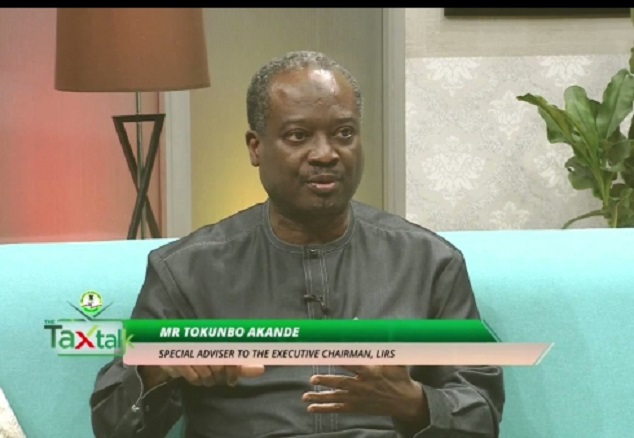
Mr Tokunbo Akande, Special Adviser to the Executive Chairman of the Lagos State Internal Revenue Service, LIRS, has clarified the misunderstanding about stamp duty as he maintained that it is a revenue stamp and not a postage stamp.

Akande made this known while featuring as a guest on The Tax Talk programme on Channels Television recently.
He said contrary to public opinion, stamp is not just for courier services as it is meant to certify the underlying transaction between two entities, whether they are corporate entities or individuals, thus, the framework for stamp duty is to verify the documents for underlying transactions and ensure that they are admissible in court in case any disputes arise.
Akande noted; “It’s interesting to note that stamp duty, a tax law that dates back to 1939, is still in effect today. Although it was reenacted in 2004 and has been updated over time through the Finance Act, the basic premise remains the same.
“Stamp duty places the responsibility on those involved in certain transactions to provide documentation that explains the details of the transaction. For example, if someone purchases an item from another person, a receipt is given to show the transaction.

“This receipt must be stamped to be considered admissible evidence in court in case any disputes arise. In the past, the postal stamp was used to denote the stamp duty.”
Akande, who noted that Stamp duty has contributed significantly to revenue generation in Lagos State, as the state has generated over N5 million from stamp duty over the past few years, said the agency believes there is still room for improvement.
While stating that the agency is considering the introduction of revenue stamps for wholesalers and distributors for receipts over N10,000 in the state, he noted; “This approach was previously utilized in the 1970s, and we are eager to revitalize it. We are fully committed to engagement and process improvement.
He said the agency has taken the step of digitizing its stamp duty operation by transitioning from manual to electronic processes.
According to Akande, “The Joint Tax Board (JTB), which oversees all Internal Revenue Services (IRSs), the Federal Inland Revenue Service (FIRS), customs, immigration, and other related bodies, has been at the forefront of promoting awareness about stamp duty in general.
“LIRS (Lagos State Internal Revenue Service) has also made significant efforts in this area by holding town hall meetings, issuing public notices and guidance notes, and engaging with professional bodies.
“However, despite these efforts, the message has not been fully received. It is important to note that the law requires that all transactions between two entities must be stamped, and even items such as cheques have a small stamp on them.
“This is because they may be admissible in court. Therefore, it is your responsibility to ensure that any documents related to transactions above a certain level of expenses are properly stamped, as failure to do so renders them as ordinary paper.
He said LIRS has expanded its presence across various states, with offices conveniently located to better serve taxpayers as its officials are proud to offer assistance with legal proceedings and have desks located in all the courts of Lagos.
“Our team of experts ensures that all necessary documents are properly stamped and verified by the commissioner for stamp duty. We take record-keeping seriously, as it helps to ensure the authenticity of all documents that pass through our hands.
“Proper stamping of documents is essential, whether you’re borrowing money from a bank or renting a property. Failure to do so could render them inadmissible in court. We are here to help certify your documents and ensure they have the necessary stamps to make them legally binding,” Akande submitted.



DataPro Rating Agency has upgraded the long-term credit rating of Dangote Cement Plc to AA+ from AA, citing the company’s strong financial performance, market leadership and ability to meet its financial obligations despite Nigeria’s challenging economic environment.

In its latest rating report, the technology-driven credit rating agency also affirmed Dangote Cement’s short-term rating at A1, with a Stable Outlook. The ratings are valid until June 16, 2027.
DataPro said the upgrade reflects the cement maker’s sustained financial strength, resilient operating performance and dominant position in Nigeria and across Africa.
According to the agency, the assessment followed a comprehensive review of the company’s capital base, earnings, liquidity, corporate governance, regulatory compliance and the sustainability of its financial performance over the medium to long term.
It noted that Dangote Cement’s strong brand, leading market share, solid earnings, robust asset base and experienced management continue to strengthen its ability to meet financial commitments on time.
The agency also highlighted the company’s outstanding financial performance in 2025.
According to the report, Dangote Cement posted N4.31 trillion in revenue during the year, representing a 20 per cent increase from the previous year. Profit before tax more than doubled, rising 109 per cent to N1.53 trillion, driven by higher sales, improved operating efficiency, lower finance costs and a stronger capital structure.
DataPro said the AA+ long-term rating indicates low credit risk and reflects excellent financial strength, business profile and operating performance relative to its rating benchmarks.
It added that the A1 short-term rating signifies good credit quality and shows that the company has a strong capacity to meet its short-term financial obligations as they fall due.
The rating agency, however, noted that the credit rating has a maximum shelf life of 12 calendar months in line with international best practice and should be used only as a reference, not as an offer to trade in securities or as a substitute for investors’ independent judgement.


Xora Finance has announced it will no longer consider job applicants from Nigeria.

Xora Finance is a digital bank founded by Joren Lundgren, in February 2026 and allows users to deposit and earn interest on their XRP cryptocurrency.
Lundgren, founder, in an announcement on X (formerly Twitter), cited an ongoing pattern of misconduct, such as dishonesty and theft, from previous Nigerian hires as the reason for the decision.
This sudden blanket ban came just days after the company’s official career page was aggressively recruiting remote workers for marketing and content roles.
The announcement generated heavy backlash online, with many people upset that a blanket rule punishes honest job seekers.

Some lawyers have said that victims of Ponzi schemes have legal remedies, although recovering lost funds and prosecuting perpetrators remain major challenges.

A Ponzi scheme is an investment fraud that pays existing investors with funds collected from new participants rather than from actual profits.
Operators lure victims by promising high returns with little to no risk.
The scheme inevitably collapses when the flow of new investors slows down.
Some lawyers who spoke to News Agency of Nigeria (NAN) separate interviews with on Sunday, said that victims could pursue civil actions to recover their money.
Mr Chibuikem Opara, a lawyer at Justification Chambers, Ikeja,said many Nigerians continued to fall victim to Ponzi schemes in spite of repeated warnings.
Opara said it was wrong to attribute participation in Ponzi schemes to a lack of investment opportunities, noting that promoters often exploit investors’ greed through promises of unrealistic returns.
“What you cannot take away is the fact that many Nigerians have fallen and continue to fall victim to these schemes every time,” he said.
According to him, victims may individually or collectively institute civil actions against the beneficiary company for breach of contract or refund arising from failure of consideration.
Opara said victims could also unite to seek an order from the Federal High Court to wind up the beneficiary company.
He, however, noted that such efforts might yield little benefit if perpetrators had already siphoned the funds and left behind an empty shell.
The lawyer said available remedies largely depended on the actions of relevant authorities, adding that recipient accounts could be frozen to facilitate fund recovery and support winding-up proceedings.
Opara said regulators and law enforcement agencies often became aware of Ponzi schemes only after substantial losses had occurred.
According to him, victims frequently failed to report suspicious schemes early enough to enable timely intervention.
He added that funds are sometimes moved outside the country before authorities become aware of the fraud.
Opara also cited inadequate information and the deceptive nature of the schemes as major obstacles to investigation and prosecution.
“Most times, everything about the schemes is made to appear elusive, just like the profits promised to victims,” he said.
Also speaking, Mr Vincent Aminu of A.F. Aminu and Co. advised that victims of investment scams should report such cases to appropriate law enforcement agencies on time.
Aminu said victims could petition the Economic and Financial Crimes Commission (EFCC) or file reports with the police.
He said that after investigation, prosecutors could bring charges against suspects under relevant fraud-related laws, including provisions of the Criminal Code and the Advance Fee Fraud and Other Fraud Related Offences Act.
Beyond criminal prosecution, Aminu said .victims could pursue civil actions to recover their money
According to him, such actions may be based on breach of contract, unjust enrichment, or fraudulent misrepresentation, depending on the circumstances.
He added that victims could petition the Securities and Exchange Commission (SEC), which could investigate illegal operators, shut down unauthorised platforms, and freeze assets.
He identified the anonymity of online fraudsters as one of the biggest challenges confronting investigators.
According to him, many operators concealed their identities through fake digital profiles and technologies that made tracking them difficult.
Aminu also noted that victims who delayed taking legal action risked losing opportunities for redress.
He added that prolonged court proceedings often delayed justice for victims.
“Many fraud-related cases take years before the court reaches a verdict, thereby delaying justice for victims,” he said.
Also, Mr Chris Ayiyi of Ayiyi Chambers, Apapa, described Ponzi schemes as a gamble that benefited early participants at the expense of later investors.
Ayiyi said some early entrants received returns on their investments, thereby encouraging others to join the schemes.
He said the schemes eventually collapsed, leaving late investors to bear the losses
The lawyer called for a complete ban on Ponzi schemes or sustained public enlightenment campaigns against them.
He urged the National Assembly to enact laws that would strengthen regulation and provide greater protection for investors.
According to him, stronger legal safeguards are necessary in a country operating a capital-based economy.

Tinubu Orders NIMC to Enrol Every Nigerian by End of this Year – DG

Nigerians Accumulate $59Bn in Cryptocurrency Assets —FDC

Nearpays, Nigerian Fintech Becomes First African Startup to Win UN’s AI for Good Innovation Factory

Nokia’s 14 Years of Mobile-Phone Supremacy Ended in an Afternoon

MTN Nigeria Slashes Cost of Broadband Internet Router, Unwraps New Data Bundles for Low-Budget Users

NRC, Ponzi Scheme Collapses Resulting Loss of Billions of Naira

Nigeria Launches FreeTV Nationwide

NASENI Moves to Digitize CCB’s 5m Assets Declaration and Operations

Lebara Nigeria Launches Lebara Play, Africa’s First Telecom-Owned Micro-Drama Platform

CANAL+ Partners Samsung to Pre-Load DStv Stream on New Samsung TVs In Nigeria, Other African Countries




 News1 day ago
Xora Finance, Fintech Firm Refuses to Hire Nigerians over Alleged Dishonesty

 General News1 day ago
FG Secures Fresh $208.3m World Bank Loan for Cash Transfer

 Telecom1 day ago
NCC to Keynote Telecom Sector Sustainability Forum 7.0

 Telecom1 day ago
NCC Advances Dig Once Policy, Engages Stakeholders on Cost-Based Framework for Duct Sharing
 News1 day ago
How Ponzi Scheme Victims can Seek Legal Remedies — Lawyers

 General News1 day ago
SERAP Sues INEC over Alleged N800Bn 2027 Tinubu Campaign Fund

 News1 day ago
PalmPay Nigeria Appoints Samuel Oluyemi as Chief Operating Officer

 E-Business1 day ago
Kaigama,Catholic Archbishop of Abuja Warns against Misuse of AI