

Telecom
Starcomms Woos Subscribers with ‘3 Minutes Free Talk’ Promo

Subscribers on the network of Starcomms now have the opportunity of talking with themselves for as long as they want for the cost of three minutes in the ‘3 Minutes Free Talk’ promo. To enjoy the offer, which is only for on-net calls, all Starcomms subscriber have to do is to pay for the first three minutes, and then can talk for as long as he wants. There is no activation code or airtime limits required to enjoy the offer.
Meanwhile, Starcomms customers in Umuahia, the Abia State capital, South-East of the country are now set to enjoy the unparallel customer care service that the telecommunications operator is known for. It has opened a customer care shop at the state capital, Umuahia. With the opening of the new shop services and products of the company are now accessible.
In previous promos, particularly, the “Recharge Bonus” promo through which subscribers enjoyed 24 hours of free on-net calling; they were requested to charge their phone with airtime worth N250 before they could enjoy the offer. Anybody who has airtime enough to sustain a three minutes call can make one on-net call for a long as twenty minutes or more.
According to the Chief Commercial Officer of Starcomms, Tushar Maheshwari, the subscriber is at liberty to enjoy the offer at anytime of the day saying that the promotion, which will last for an initial period of three months, is open to existing and new subscribers on the Starcomms network.
While speaking on the rational for regular free airtime on the Starcomms network, Maheshwari said: “Starcomms is a company that always puts its subscribers first, that is why we continuously put smiles on their faces. This free on-net call promotion will give our subscribers the opportunity to talk for as long as they want on the network within the next three months.”
He said that commitment to its relationship with its subscribers is what has made Starcomms to stand out from other mobile telephone operators stressing that the promotion is one of many ways of reciprocating their loyalty to the company.
Maheshwari explained that “just as our dedication to providing qualitative, state-of-the-art and reasonably priced telecommunication services is strong, we also cherish the bond among people on the Starcomms network and we intend to strengthen the bond with this promotion.”
He said that beyond the promo, subscribers of Starcomms enjoy many other freebies on its network like such as the Missed Calls Notification and Call Waiting Service which goes for free to all its mobile subscribers in 22 states, 31 cities and 170 towns of the country.
For its outstanding performance in the delivery of quality services and value added services, Starcomms in 2009, a winner of several awards both local and international, was adjudged as the CDMA Company of that Year during the Beacon of ICT Awards. Starcomms clinched the award after leading the pack in an online voting process in which all Nigerian subscribers were invited to participate.


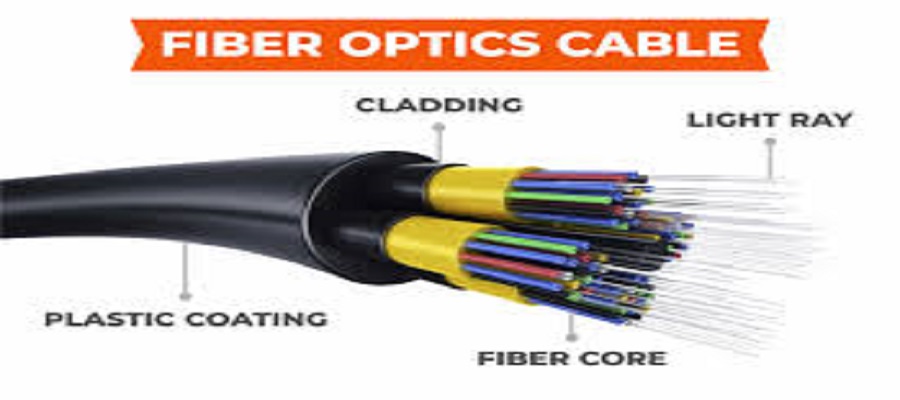
Nigeria’s telecom operators recorded 155, 397 fibre-cut incidents between April and May 2026, and these they blame on why internet or calls suddenly stop working.

Data from the Nigerian Communications Commission (NCC) showed fibre-cut incidents increased from 74 276 in April to a record 79 121 in May, bringing the two-month total to the highest level recorded by the industry.
This represents a 2 428% increase from the 5 934 incidents reported during the first quarter of 2026.
Vandalism remained the leading cause of fibre cuts, accounting for more than 54 000 incidents despite telecom infrastructure being designated as Critical National Information Infrastructure, a classification intended to strengthen protection of key digital assets.

Also road construction constantly damages fiber where iggers and machines tear up buried cables during road repairs or construction.
Even with all these, some state governments make it hard for companies to fix cables quickly across different areas with all manners of fees and levies.
The NCC designation provides for penalties of up to 10 years’ imprisonment for offenders, but operators continue to face widespread infrastructure damage.
Proposed solutions, including Nigeria’s Dig-Once policy and AI-powered fibre sensing technologies, have yet to achieve widespread adoption.
The NCC is developing a cost-based framework for shared underground duct infrastructure, while operators are exploring AI-powered fibre sensing technologies that can detect cable damage in real time and improve network resilience.
Nigeria is pursuing ambitious broadband targets under its National Broadband Plan and has expanded fibre deployment to about 35 000 kilometres.
However, infrastructure protection has not kept pace with network expansion, leaving subscribers vulnerable to unreliable connectivity despite continued operator investment.

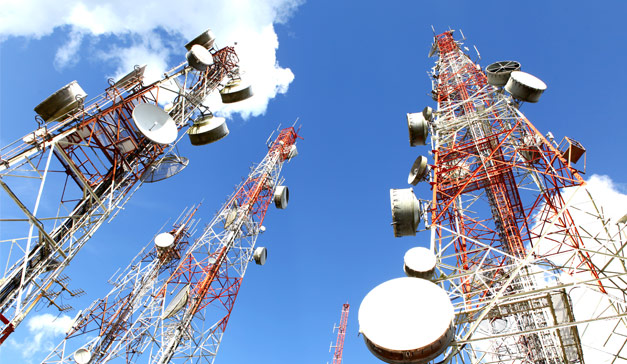
Standard Bank has partnered with Helios Towers to provide a $29 million Social Documentary Credit Facility. According to the financial services company, this transaction marks Standard Bank’s first Documentary Credit Facility structured in a Sustainable Finance format.

It notes that the facility will support the procurement and importation of telecommunications infrastructure and related services across Africa.
It will also provide payment certainty to suppliers, while supporting Helios Towers’ working capital requirements and infrastructure expansion programme, the bank adds.
Structured in accordance with the Loan Market Association’s Social Loan Principles, the financing is designed to promote digital connectivity and telecommunications infrastructure development in underserved markets.
This will help Helios Towers further expand its footprint and enhance mobile network coverage and connectivity across the continent.
Helios Towers operates one of Africa’s independent telecommunications tower platforms, enabling mobile network operators to extend coverage across multiple markets.
Standard Bank notes that the facility supports the expansion of tower infrastructure and services, increased network densification and improved connectivity in underserved markets and remote regions across the African continent.
It will also drive digital inclusion and tackle the digital divide while supporting economic growth and socio-economic development.
“This transaction demonstrates the power of innovation in trade finance. By combining a first-to-market Social Documentary Credit Facility with a cross-border funding solution, Standard Bank has supported Helios Towers’ growth ambitions while helping extend digital connectivity to underserved communities across Africa,” says Benoit Samouilhan, global transaction banker at Standard Bank Corporate and Investment Banking.
According to the bank, this facility enables positive social impact by increasing and improving network coverage and connectivity in some of the world’s most remote regions.
“Reliable digital infrastructure is fundamental to Africa’s future growth and development,” says Alex Carter, group finance director at Helios Towers.
“This facility provides us with the flexibility and certainty needed to support our ongoing infrastructure investments while advancing our mission of expanding connectivity across the continent. We value our longstanding relationship with Standard Bank and look forward to building on this partnership.”


Nigerian Communications Commission (NCC) will on Thursday convene a stakeholders’ consultative forum to review the draft business rules for Mobile Virtual Network Operators (MVNOs) in Nigeria.

NCC
The forum, scheduled to hold at 10 a.m. at the NCC Annex Office, Mbora, Abuja, is expected to bring together telecommunications operators, industry associations and other stakeholders to provide input on the proposed regulatory framework before its finalisation.
The commission announced the event on its official social media platforms, inviting interested stakeholders to participate in the consultation process.
The engagement is part of the NCC’s efforts to strengthen the regulatory framework for MVNO operations and promote greater competition, innovation and consumer choice in Nigeria’s telecommunications sector.
Mobile Virtual Network Operators are telecommunications service providers that offer mobile services by leasing network capacity from licensed Mobile Network Operators (MNOs), rather than owning spectrum licences or telecommunications infrastructure.
The NCC has identified the MVNO licensing framework as one of its initiatives aimed at deepening competition, expanding access to telecommunications services and driving digital inclusion across the country.
The consultative forum is expected to provide stakeholders with the opportunity to review the draft business rules, make recommendations and contribute to the development of a robust operational framework for the emerging MVNO segment.
The commission is expected to issue further details on the outcome of the consultation after the meeting.

NBC Scraps Annual Digital Access Fee on DSO

Surge in Fibre Cuts Hobbles Service Provisioning

Why Bandits, Kidnappers are Hard to Trace despite NIN-SIM Linkage – FG

First Securities Brokers Empowers Nigerians to Trade in the Stock Market with the Launch of FirstInvest App

Quest Merchant Bank Hosts Great Place to Work® Nigeria Study Mission

NRC, Ponzi Scheme Collapses Resulting Loss of Billions of Naira
Nigeria Launches FreeTV Nationwide

NASENI Moves to Digitize CCB’s 5m Assets Declaration and Operations

Lebara Nigeria Launches Lebara Play, Africa’s First Telecom-Owned Micro-Drama Platform

CANAL+ Partners Samsung to Pre-Load DStv Stream on New Samsung TVs In Nigeria, Other African Countries




 Telecom2 days ago
MTN Nigeria Slashes Cost of Broadband Internet Router, Unwraps New Data Bundles for Low-Budget Users

 E-Financial2 days ago
Nigerians Accumulate $59Bn in Cryptocurrency Assets —FDC

 General News2 days ago
Nearpays, Nigerian Fintech Becomes First African Startup to Win UN’s AI for Good Innovation Factory

 E-Financial2 days ago
Flutterwave Partners Xoom on Transfers into Nigeria

 News2 days ago
DataPro Upgrades Dangote Cement’s Credit Rating to AA+

 Telecom2 days ago
Nokia’s 14 Years of Mobile-Phone Supremacy Ended in an Afternoon

 General News2 days ago
LASG Signs PPP Concession Agreements to Advance Digital Services, Others

 General News2 days ago
Fintech Brands Should Communicate Right in a VUCA Economy