

Telecom
Strong Corporate Governance, Ethics are at the Heart of MainOne’s Success – Abimbola

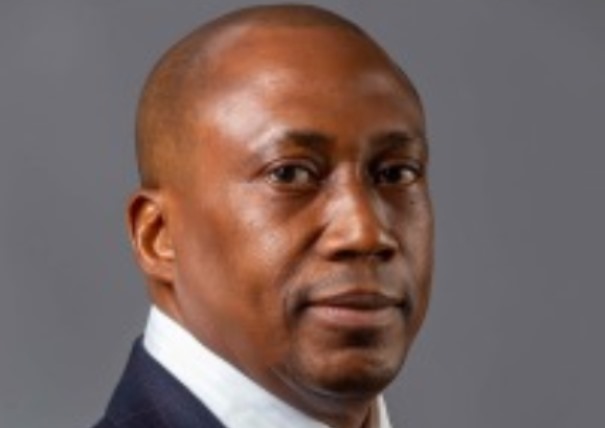
In this interview, MainOne’s Chief Financial Officer, Solanke Abimbola discusses the company’s success over the past decade, expansion plans and projections for 2021 while noting that adherence to corporate governance principles and ethics have been key to the company.

MainOne celebrated its 10 anniversary this year, and the company has been recognized for the leadership role it has played in the expansion of Internet access in Nigeria. What are your projections for the ICT industry and MainOne in 2021?
We are pleased that for a company that is only ten years in operation, we have had such impact on Internet access across the West African region. In 2021, we anticipate that more people will migrate online, businesses will adopt cloud-based solutions to improve operational efficiency and data consumption per capita will increase, resulting in the growth of infrastructure requirements.
To meet the increase in demand across the various market segments, we are expanding our terrestrial fiber footprint across the region and we are making additional data center investments including the expansion of our MDXi facility in Lekki, Lagos, and construction of a new data center facility in Appolonia City, Accra Ghana which will be ready for service in the first quarter of 2021. In addition, we expect to continue to see increased growth and investments in the start-up and innovation ecosystem which are driving locally relevant content and applications.
One of the factors that has distinguished MainOne over the years is the kind of products it brings to the market. What are the recent products you have developed, and what philosophy underlies product development at MainOne?
Our strategy remains enabling businesses and retail ISPs in the West African region with broadband infrastructure solutions to serve their end users and customers. This is built on the significant investments we have made in building out world class infrastructure across the West African region, whether via our Connectivity, Colocation, Cloud or Managed services.
We are a company of many firsts and most recently we announced the launch of the first locally available Microsoft Azure Peering Service in West Africa. This service provides enterprises using Microsoft Cloud services with a secure high-performance experience relative to what is currently available in the market.
What should we expect from MainOne with your new investments in data centers in Nigeria and Ghana?
We want to continue to consolidate our leadership position in the data center space across West Africa. In addition to our existing facilities, the new facilities will also be carrier neutral secure facilities which will allow customers the capacity and flexibility to adapt to market changes especially during these challenging times of a Pandemic and recession.
The data centers provide the highest quality of services to allow our colocated customers run their businesses online with 24X7 operation of a data center. They cater to the increasing demand for colocation and interconnection services we are experiencing from multinationals and local businesses seeking shared services facilities for their ICT resources in world class facilities.
The success of MainOne in the last decade is predicated on its Corporate Governance stance. What is your position on the Accounting Separation Framework (ASF) directive issued by the NCC this year?
MainOne has built a strong reputation of good Corporate Governance and take pride in our compliance practices. We have worked with our regulator’s directives on Corporate Governance and hold ourselves out as a role model and advocate for Nigerian companies in our industry. We think the ASF initiative by the NCC is laudable and long overdue to enhance fair competition in Nigeria’s telecom industry but only if the guidelines are transparent, objectively applied, and implemented.
Have you had issues with reporting your financials in the past, and how have your stakeholders responded to issue of disclosure?
MainOne is a private company but we have an open record of compliance with all our statutory filing obligations since inception with the various relevant agencies including Federal and State Tax agencies, the Corporate Affairs Commission, NCC and also the FRC among others. We have had no issues with reporting our financial statements in the past and we have consistently disclosed information to both shareholders and regulators when required. Of course, as a private company we do not publish our financial information in the public domain.
MainOne is administered from its headquarters (in Lagos), but the company is not solely a Nigerian company. How are the component units administered?
MainOne is a multi-national company, with our Group holding company registered in Mauritius. The group includes subsidiary companies in the various countries in which we operate including Nigeria, Ghana, Ivory Coast and Portugal. Our Group operational headquarters is based in Lagos Nigeria and the company is also majority owned by Nigerian investors. We are proud to be a Nigerian owned multi-national company.
What is your stance with respect to regulations, policies and corporate governance in the countries where you operate?
MainOne conducts its business in an ethical manner and one of our core values is integrity. Our business is focused on doing well and doing good as Africans for Africa in accordance with applicable laws, rules, and regulations in countries in which we operate. Obeying the law, both in letter and in spirit, and ensuring regulatory compliance is a critical performance measure for the entire company and an area in which we have performed well.
We have invested significantly in regulatory and compliance frameworks and ensuring that we adopt international best practices in meeting all compliance requirements.
What are your expansion plans for 2021? Any plans for Cameroon? Any challenges on the road there?
In 2021, we plan to explore further opportunities to expand in Francophone West Africa e.g. Niger and Mali, while we continue to drive plans to further expand in our existing countries i.e. Nigeria (Lagos), Ghana and Cote D’Ivoire.
In Burkina Faso, we have partnered with the World Bank to provide bulk connectivity services to a consortium of operators through the PAV – Burkina Cooperative.
With regards to Cameroon, we have extended our submarine cable to Kribi and partnered with Cameroon Telecommunications Corporation (CAMTEL) to accelerate broadband access and expedite penetration in that country and into neighboring Central African countries.
In the past, issues with taxation and Right-of-Way clearances encumbered broadband deployment, especially in Nigeria. Have they all been resolved? What has changed in the last half decade?
Major improvements have been made in the region especially in the last couple of years with regards to Right of Way challenges. However, there are still some lingering issues. Early this year, Ekiti and Kaduna State governments reduced the cost of Right of Way charges and several other states followed suit.
We believe these moves will help accelerate the deployment of fast and efficient infrastructure in these states though these conditions are not sufficient for the level of investment required.
Challenges remain in terms of infrastructure sharing arrangements and also the need for policy consistency over time that will encourage companies to make these long-term investments. As soon as we tackle these issues effectively, we will be able to realize our vision to diversify from oil and create a digital economy.
Tell us about the developmental impact of your services. What have you seen change in the lives of people and organisations as a result of your services?
Our biggest achievement to date is building the pioneering international backbone that reduced the cost of connecting our region to the Internet by orders of magnitude thus enabling access for our citizens.
We have provided wholesale Internet services to over 10 West African countries and Internet penetration in our region has grown from less than 10% to approximately 40% today.
Today, we have 6 cables landing in Nigeria and the country is ranked 7th globally in terms of Internet population. In addition, we have played a major role in enabling the start-up ecosystem in Nigeria which is now ranked #1 in sub-Saharan Africa and which has relied on the critical technologies we have deployed to drive their business models.


In the wake of increasing geopolitical tension, Cassava Technologies has unveiled its National Sovereign Cloud offering for African governments.

The solution, the company claims, will help the continent’s governments ensure data is kept on infrastructure that remains under local legal and operational jurisdiction.
According to the official announcement, made yesterday, the solution provides “secure, locally-governed digital infrastructure that enables the deployment of AI-enabled public services”.
The overarching solution encompasses cloud, cyber security, AI computing infrastructure, as well as local language AI models and skills support for governments.
The announcement comes amid increasing uncertainty over the hosting of sensitive national data on cloud services operated by foreign hyperscalers, which are subject to legal frameworks, such as the U.S. CLOUD Act. The CLOUD Act opens the door to allow American authorities to access data stored on the servers of US hyperscalers, wherever those servers are physically located.
Cassava has claimed separately that currently, “approximately 33% to 45% of the world’s data is hosted in the USA”.
The company added: “A sovereign cloud reduces exposure to extraterritorial laws, improves cyber resilience, and ensures that model weights and training data for public AI remain under national custody.”
The Africa Data Centres Association’s 2026 Economic Report states that “data sovereignty has evolved from a legal aspiration into a strategic policy lever”.
Ahmed El Beheiry, Group COO and Group Chief Technology and AI Officer, Cassava Technologies said: “Across Africa, governments are accelerating their digital transformation agendas and are increasingly focused on ensuring that data and digital infrastructure remain secure and sovereign.”
Announced at the Mobile Word Congress in Barcelona, this week, the Sovereign Cloud offering launch accompanied the launch of Cassava’s Cloud Partner programme.
The partner programme targets mobile network operators and system integrators across Africa to resell and distribute AI, cloud, and other digital services using Cassava’s infrastructure and technology platforms.
El Beheiry added: “We are expanding Africa’s sovereign AI ecosystem to build solutions that address the continent’s unique challenges while creating new opportunities for growth and digital inclusion.”
The programme offers partners access to NVIDIA Cloud Partner solutions, Cassava’s AI Factory, its own native AI solutions and its AI Multi-Model Exchange, which supports both Anthropic’s Claude and Google’s Gemini models.


Mazen Mroue, a non-executive director at MTN Nigeria Communications Plc, has resigned effective February 27, 2026, to prioritise other responsibilities within the MTN Group, the company announced in a Nigerian Exchange Limited (NGX) filing.

MTN Nigeria
The notice, signed by company secretary Uto Ukpanah, stated: “This is to enable Mr. Mroue to focus on other priorities within MTN Group Limited. The Board wishes to express its appreciation to Mr. Mroue for his immense service to MTN Nigeria and wishes him success in his future endeavours.”
Mroue joined MTN Nigeria’s board on June 1, 2022, bringing over 28 years of telecom experience. A veteran MTN executive, he previously served as CEO of MTN Uganda and MTN Liberia, non-executive director at MTN Cyprus, and held leadership roles at MTN Ghana.
Since February 2022, he has been MTN Group’s Chief Technology and Information Officer, overseeing technology strategy and governance. Earlier, as MTN Nigeria’s COO from August 2018 to January 2022, he also sat on the MTN Nigeria Foundation board.
The exit follows MTN Nigeria’s stellar 2025 results, posting a ₦1.70 trillion profit before tax—reversing a ₦550.3 billion loss in 2024 driven by forex woes—marking one of the telco’s strongest rebounds.

Google has rolled out support for Yorùbá and Hausa languages in its AI-powered Search features—AI Overviews and AI Mode—enabling millions of Nigerians to get quick answers, summaries, and conversational web exploration in their mother tongues.

The update forms part of Google’s push to cover 13 African languages, including Afrikaans, Akan, Amharic, Kinyarwanda, Afaan Oromoo, Somali, Sesotho, Kiswahili, Setswana, Wolof, and isiZulu, selected based on high search activity across the continent.
Now, a Kano student can ask complex questions in Hausa, while an Ibadan trader seeks business tips in Yorùbá—both receiving culturally nuanced AI responses via text or voice on Android, iOS, or web.
Taiwo Kola-Ogunlade, Google’s West Africa Communications Manager, said: “Building truly global Search requires nuanced local understanding. With Gemini-powered AI, we’ve made advanced capabilities relevant in Yorùbá and Hausa, so Nigerians converse naturally with Search in their mother tongues.”
To use: Open the Google app, tap AI Mode, and query in Hausa or Yorùbá for personalised guidance—breaking language barriers and making technology reflect Nigeria’s diverse identity.

Police Says Victims Enable Cyber Attacks Out of Ignorance

Bank Accuses Magistrate, Lawyer of Using Fake Order to Steal N3.5m from Account

FG Launches NERD to Combat Certificate Fraud

NCDC Issues Public Advisory on Cerebrospinal Meningitis

Goodnews Naija Launches ‘Building in Nigeria’ Series on Entrepreneurs, Real Sector Builders

Dr. Cairo Ojougboh Foundation Bolsters Nigeria’s Education Drive with ₦2.7m Student Support

Kaspersky Brings more Transparency to Threat Detection with New Hunt Hub

PwC Reveals AI Scaling Gap Slows Africa’s Digital Transformation

Kaspersky Discovers New Phishing Campaign Exploiting Google Tasks Notifications to Steal Corporate Credentials

esentry 2025 Report Shows Healthcare, Financial Services and Telecoms as Staging Grounds for Increased Cyberattacks in Africa




 E-Financial3 days ago
Nigeria’s VAT Jumps 34%, CIT Soars 48% to ₦14trn in 9M’25 – NBS

 Telecom3 days ago
FG Approves GIS-enabled Digital Postcode to Tackle Logistics Gaps, Boost E-commerce
 E-Business3 days ago
Firm Enhances its Security Awareness Platform with SCORM and PDF Support

 E-Financial3 days ago
Binance Cuts Illicit Activity Exposure by 96%, Leads Global Crypto Compliance Push

 E-Financial3 days ago
NAICOM Signs MoU with BPP to Deepen Insurance Compliance in Public Procurement

 E-Financial2 days ago
Senate Targets Fintech Overreach, Vows Ponzi Crackdown After ₦1.3trn CBEX Scam

 Telecom3 days ago
GSMA, African Operators, Others to Launch Low-cost 4G Devices

 General News3 days ago
NERC Orders DisCos to Refund ₦20.33Bn Meter Costs to Customers