

General News
Systematic Reopening of the Nigerian Economy by the PTF


By Chido Nwakanma
Eight months later, the arteries of the economy are pumping once again. Airports have reopened, bringing in 5,000 to 7,000 passengers daily. Schools have resumed, as have formal and informal markets. Machines are humming again in hitherto shut factories.

The full reopening of the economy after months of a lockdown that required careful management and phasing to reopen has brought relief. Nigerians are eager to get on with their lives. For the managers of the system, it was a delicate balancing act between health and economics. At times, it was akin to the famed chicken and egg scenario.
Caution governed the Presidential Task Force on COVID-19 in the management of the closing and opening of the Nigerian economy in the wake of the global pandemic. It has involved monitoring of local incident statistics and case numbers, international comparison, and trend analysis. It has been sequential and systematic and, importantly, data driven.
Many factors inform this extra caution. COVID-19 came into our shores through a visiting Italian businessman. It came against the backdrop of well-founded fears that Nigeria and other African countries could not cope with any widespread infection. Experts are currently trying to unravel how and why Africa escaped the feared doom.
Across the country, citizens now move freely to do their businesses. It was not so beginning 29 March 2020 when the PTF led the health authorities to announce the first lockdown.
It lasted 14 days during which the country banned interstate movements and imposed a curfew on Lagos and Ogun States as well as the Federal Capital Territory (FCT). The Federal Government ordered the full closure of all land borders and banned all large gatherings.
The ban on large gatherings affected many sectors of the economy from entertainment to religion and others in-between. Schools shut down with the more technically proficient turning to online lessons. Cinemas, restaurants, event centres and stadia all shut down.
The clampdown affected Lagos and Abuja the most for the simple reason that they had the most significant number of infections. Lagos has remained an epicentre of the incidence and spread of COVID19.
PTF then followed with two other shutdowns of less severity. At each stage, it eased the measures for each shutdown in line with what the figures and trends stated. For instance, while Europe and America are currently in the throes of a second round of the COVID-19, Nigeria’s incident numbers have remained low.
Health authorities in Nigeria worry about returnees for the Christmas period importing new cases into the country and the disregard of counsel on best practices to prevent infection by citizens in many cities across the country.
Opening of the economy followed even more caution and recommendations in the thematic areas the PTF established as a guide. These are movement, industry, labour, and community activities. Schools reopened, followed by the NYSC Orientation Camps. It was a significant test of its caution on mass gatherings.
As such, it followed the template of care and caution. Officials went round the states to certify the camps COVID-19 compliant. They then established COVID-19 testing facilities in each of the centres as well as the management of possible cases. It then lifted restrictions on outdoor sporting activities, including football, in consultation with the Ministry of Sports and Youth Development.
In recent times, PTF has increased the volume of its messaging on prevention practices. They include mandatory wearing of face masks in public settings, hand washing and sanitising routines, observing social distances of at least two metres between persons and limitations to the size of gatherings. No more than 20 people can stay together.
The PTF has since relaxed the restrictions on worship places. Worship places were a particular concern because of sensitivities around religion, but the intervention agency walked the tightrope skilfully.
Which comes first? The right to earn a living or the opportunity to stay alive in the first place?. Many a citizen fretted about the denial of the right to work, worship and gather during the restrictions.
Even in those periods, PTF allowed a window for the operations of banks, graduated opening of markets and shopping centres while exempting agricultural produce, petroleum products, manufactured goods, and essential services from the restrictions on movements. Logistics plays a central role in the chain of goods and services in the country.
With the international gateways now re-opened in select airports, Nigeria’s mandatory dual tests for incoming travellers is one of the strictest in the world.
Courtesy of the PTF, the Nigerian Centre for Disease Control (NCDC) and the Federal Ministry of Health, persons arriving Nigeria via the airport gateways must do a COVID-19 CPR test five days before boarding their flight. They then do a confirmation test in Nigeria on Day 7 after arrival.
The test represents one of the mitigation measures Nigeria has implemented to checkmate the spread (and importation) of COVID-19. Additionally, a recent travel advisory by NCDC has urged international travelers to suspend holiday plans to Nigeria unless deemed essential.
Even so, records on 2 December 2020 showed Nigeria had 67, 960 cases of COVID-19. Deaths stood at 1,177 persons. Hospitals had discharged 63,839 COVID survivors. By that date, Nigeria had done 779,708 tests.
The PTF has gradually unsealed the taps to allow the full blossoming of the economy. National Coordinator Dr Aliyu and the Chairman and Secretary to the Government of the Federation Mr Boss Mustapha continue to tread with caution even as they open up more and more of the economy.



Senate on Tuesday approved the fresh $6 billion loan request forwarded to the lawmakers by President Bola Tinubu.

Lawmakers approved the fresh loan on the same date the request letter was read by Godswill Akpabio, senate president.
The Senate approved the loans following the presentation and consideration of the report by Senator Aliyu Wamakko, chairman, Senate Committee on Local and Foreign Debts.
President Tinubu had written to the Senate seeking approval to borrow a total of $6 billion to finance key government projects and address budgetary gaps.
The requests were contained in two separate letters addressed to Godswill Akpabio, president of the Senate, and read during Tuesday’s plenary.
In the first letter, the President requested approval to obtain a $5 billion loan from Abu Dhabi Bank.
According to the President, the facility will be used to cover the nation’s budget deficit and support debt financing, among other fiscal obligations.
The request forms part of the Federal Government’s efforts to stabilise public finances and sustain ongoing government programmes.
In a separate communication, Tinubu also sought approval to secure a $1 billion UK Export Finance loan facility from London Citi Bank.
The loan is intended for the rehabilitation of key port infrastructure, including the Lagos Port Complex and Tin Can Island Port.
The President said the project aims to address critical infrastructure deficiencies in the country’s maritime sector
According to him, the rehabilitation will help improve efficiency, enhance safety standards, and support Nigeria’s efforts to diversify its economy beyond oil.
He added that the initiative would also strengthen Nigeria’s position as a regional trade hub.
Both requests have now been considered and approved by the Upper Legislative Chamber.
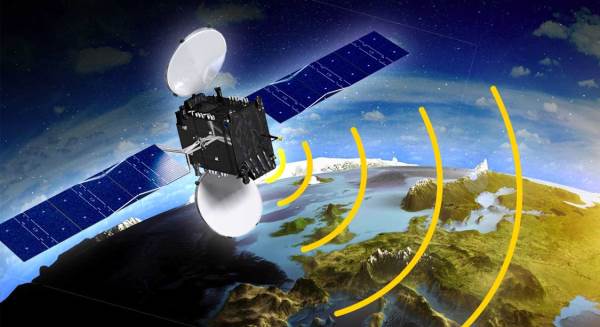
Federal government has fixed 2028 and 2029 for the launch of two communication satellites, NIGCOMSAT-2A and NIGCOMSAT-2B, as part of efforts to strengthen security and expand digital connectivity.

The government will be committing over $22 billion on the ambitious space-led growth agenda focused on new satellite launches, increased industry revenue and expanded broadband access in underserved communities.
At the opening of the 2026 Nigerian Satellite Week in Abuja, Dr Bosun Tijani, minister of Communications, Innovation and Digital Economy, confirmed the government’s approval for the acquisition of two new satellites—NigComSat 2A and 2B, describing the move as a “defining commitment” to national development, digital sovereignty and economic competitiveness.
Also, Mrs Jane Nkechi Egerton-Idehen, managing director of Nigerian Communications Satellite Limited (NigComSat), noted that the projects have moved beyond procurement to the execution stage.
She said the satellites are designed to enhance intelligence gathering, surveillance, and connectivity across Nigeria and neighbouring countries, particularly in support of security operations.
“For 2A and 2B, we have started the process. We have closed the tender and are now back into the financing and implementation stage. 2A is built to come up in 2028, and 2B for 2029.
“When they are up and running, they are expected to provide security within the borders and neighbouring countries. They will support the security agencies because data collection and intelligence in real time is important. Satellites like communication satellites allow that, irrespective of where they are,” she said.
On his part, Tijani, said the satellite programme forms part of a broader government strategy to deepen digital infrastructure nationwide.
According to him, the initiative complements ongoing investments in fibre-optic expansion and telecommunications infrastructure, while extending connectivity beyond Nigeria’s borders.
“The President’s approval of NIGCOMSAT-2A and 2B demonstrates a clear commitment to building the future. These satellites will enhance security, connect remote communities, and extend our fibre-optic network into neighbouring countries.
“Some of these neighbouring countries pay up to ten times more for internet capacity than Lagos. Extending our fibre network will not only improve connectivity but also enhance border security and regional collaboration.
“Satellite technology affects everything, from how a child in a rural community accesses the internet to how farmers make critical decisions and how businesses operate across distance,” he said.
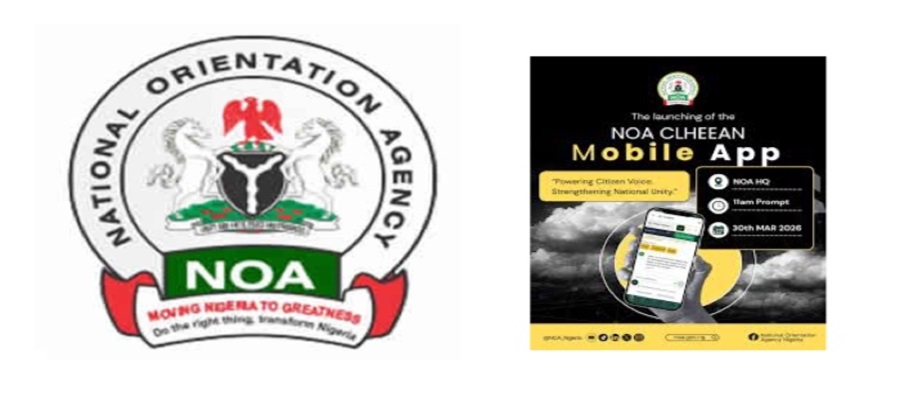
Federal government has announced the launch of CLHEEAN, an artificial intelligence-powered mobile application designed to improve interactions between citizens and public institutions.

It is also a civic education and community engagement app.
Developed under the National Orientation Agency (NOA), the platform functions as a virtual assistant accessible via mobile devices.
It allows users to access information on public policies, ask questions, and interact directly with government services.
The app includes features such as instant messaging, voice recognition, and multilingual support, including several local languages, to reach a wider audience.
With CLHEEAN, users can also submit feedback, report concerns, and take part in discussions on public policies. The approach is intended to strengthen citizen participation and improve communication between the government and the public.
Lanre Issa-Onilu, director general of the NOA, said the initiative addresses a long-standing gap between citizens seeking to be heard and systems that do not always respond effectively, adding that the platform marks a step toward closing that gap.
The launch comes as Nigeria continues to face challenges in citizen engagement and the dissemination of public information.
By leveraging artificial intelligence, authorities aim to make public services more accessible while improving transparency and responsiveness.
The initiative also reflects a broader trend across Africa, where governments are increasingly exploring the use of AI to modernize public services and strengthen ties with citizens.

How Recycled SIM Card Linked to N50m Kidnapping Nearly Landed me in Jail – Businesswoman

Senate Gives Tinubu Nod to Borrow Fresh $6Bn

FG Earmarks $2Bn to Launch 2 Satellites in 2028, 2029

CBN Directs Banks, Fintechs to Complete Cybersecurity Audit Tool

FG Launches CLHEEAN to Streamline Access to Government Services

Spotify’s Loud & Clear Report Reveals Over ₦60Bn Revenue for Nigerian Artists in 2025

Madonna University Taps Tech Guru Adote for Strategic Board Role

China Threatens to Shut Nigeria’s Satellite Over $11.44m Unpaid Debt

Jumia Tech Week 2026 Begins with Tech Deals on Smartphones, Electronics, and Everyday Technology

FCCPC Bans Lagos ‘No Refund’ Policy, Vows Fines and Shutdowns for Traders




 E-Financial2 days ago
CBN bars large‑ticket loan defaulters from banking services in tough new crackdown

 General News2 days ago
ARN Rejects Medical Bill over Attempt to ‘Scrap’ Profession

 Telecom2 days ago
NIGCOMSAT Supports Startups Growth with the Launch of Accelerator 3.0

 News2 days ago
Meningitis Kills a Quarter Million People a Year -Study

 Telecom2 days ago
FG Unveils Digital Economy Research Fund Scheme

 News2 days ago
Stakeholder says AI is Crucial to Nigerian Data Centres Amid Persistent Grid Collapse
- General News2 days ago
Nigeria Advances Digital Governance as NITDA takes over NGEA Portal

 General News2 days ago
Zarttech Reflects on Its Role in Changing Global Perceptions of Africa