

General News
Taxing, Borrowing the Future Without Building: What Has Nigeria’s Fiscal Authority Done for the Real Sector?


By Blaise Udunze
In today’s Nigeria, one uncomfortable truth has become glaring that the fiscal authority collects, but it does not build. It borrows, but it does not produce. It taxes, but it does not empower. For years, the Nigerian government has pursued fiscal policies more obsessed with revenue than with results.

The removal of fuel subsidy in 2023 was supposed to mark a new dawn. It was sold to Nigerians as a path to fiscal freedom as a step that would redirect over $10 billion annually from consumption subsidies to capital investment, infrastructure, health care, education and job creation. Two years later, that promise has vanished into a fog of political spending and bureaucratic complacency.
The question now is not how much the government has collected, but what it has done with it. What tangible impact have these revenues from taxations and borrowings had on the real sector which is the part of the economy that actually produces goods, creates jobs, and drives development?
A Fiscal Authority Fixated on Taxation, Not Production

Nigeria’s fiscal policy in recent years has tilted dangerously toward aggressive revenue collection. Under immense pressure to grow non-oil income, the Federal Inland Revenue Service (FIRS) has expanded its reach to virtually every corner of the economy. From VAT on electricity and telecommunications (data usage) to call credits, bank transactions to stamp duties on bank transfers, to levies on postal deliveries for online purchases, almost nothing escapes the government’s tax net.
The average Nigerian entrepreneur now faces a labyrinth of taxes such as company income tax, education tax, signage fees, land use charges, and a myriad of local levies. Yet the same entrepreneur operates in an environment defined by power shortages, failing infrastructure, forex volatility, and regulatory uncertainty. These are not conditions for business growth; they are conditions for extinction.
Taxation, in principle, should be a partnership between the state and the productive class as a social contract that trades compliance for development. But in Nigeria, taxation has become punishment, not partnership. The fiscal authority appears to be taxing poverty to sustain bureaucracy. It has forgotten that the strength of any economy lies not in how much it extracts, but in how much it enables.
Taxing Without Building
For a government that collects billions of naira daily from taxes, surcharges, levies, and newly designed revenue streams, it is difficult to find any visible reflection of these revenues in the productive base of the economy.
Based on FIRS and government releases, tax collections amounted to about N34 trillion in 2023-2024, and non-oil receipts reached around N20.6 trillion in January to August 2025, indicating total government collections of at least N50-N55 trillion since mid-2023, depending on how partial-year and FAAC items are aggregated and without double counting.
The contradiction is glaring that Nigeria’s fiscal managers have become more efficient at collecting taxes but less effective at building the economy that sustains those taxes.
The reality is sobering. SMEs that stand as the true backbone of national productivity are closing shop in droves. The cost of diesel, transportation, and rent have tripled, while the naira’s freefall continues to eat away at margins. Rather than offer relief, fiscal agencies have tightened the noose with new charges and penalties. The result is a climate of exhaustion and economic fatigue.
Borrowing Without Building
If taxation is squeezing businesses dry, borrowing is suffocating the nation’s future. As if taxes were not enough, Nigeria’s fiscal authorities have doubled down on borrowing, amassing debts at an unprecedented rate. These have resulted to spiral of loans justified in the name of development but rarely seen in tangible outcomes.
As of mid-2025, Nigeria’s total public debt has ballooned to N152.4 trillion, a staggering 348.6 percent increase since President Bola Tinubu assumed office in June 2023, when the figure stood at N33.3 trillion. For a country already struggling to meet basic obligations, this is unsustainable.
Reflecting on the wider African context, the picture is equally alarming. The continent’s external debt now exceeds $1.3 trillion, with debt servicing costs hitting $89 billion this year alone. Nigeria is one of the hardest hits, not merely by the size of its debt, but by its lack of productive return.
Even as businesses groan under the weight of multiple taxation, the Federal Government has kept its foot firmly on the borrowing pedal. Between July and October 2025, Nigeria’s fiscal authorities secured over $24.79 billion (plus €4 billion, ¥15 billion, N757 billion, $500 million in Sukuk) in new borrowings and facilities, the bulk of which were justified as “development financing.” Yet the real sector still awaits to feel the promised impact.
Over 25 percent of Nigeria’s annual revenue now goes into debt servicing, leaving little fiscal space for investment in health, education, or industry. Experts warn that when over 90 percent of government revenue is consumed by old debts, governance becomes survival, not progress.
Uche Uwaleke, professor of finance and capital markets at Nasarawa State University, said the high cost of debt repayment continues to undermine the country’s economic potential.
“Nigeria’s debt service ratio is inimical to economic development, chiefly because what could have been used to build infrastructure and invest in human capital is used to service debt,” Uwaleke told BusinessDay. “The opportunity cost for the country is high. To ensure debt sustainability, the government should tie future borrowings to self-liquidating projects that can generate revenue to repay the loans.”
At the 2025 IMF and World Bank Annual Meetings in Washington D.C., global leaders again pledged to tackle developing countries’ debt burdens. But as Nigeria’s borrowing continues unchecked through Eurobonds, sukuk, and bilateral loans. The question Nigerians should be asking is simple, who benefits from all this borrowing?
What is more troubling is the government’s pattern of borrowing to service past debts and fund recurrent expenditures. Instead of financing projects that create value, loans are spent plugging budget holes. The chain of debt grows longer, and the productive economy remains static.
We are witnessing a fiscal irony as in a nation borrowing to survive, not to thrive.
The Missed Opportunity of Subsidy Savings
The removal of fuel subsidy was supposed to free up capital for productive investments. Instead, it has freed up more money for recurrent consumption. Subsidy funds are now shared monthly among the three tiers of government, with no visible developmental footprint.
Nigerians were told that the subsidy windfall would improve power supply, roads, and transport infrastructure. But more than a year later, there is little to show.
In one of the world’s largest oil producing nations, fuel prices quintupled, increasing more than 514 percent from N175 in May 2023 to N900. Across the country, small businesses are closing down; transport fares remain unbearable; and electricity supply remains erratic. The fiscal authority appears to have replaced subsidy waste with revenue waste.
Instead of using subsidy savings to ignite productivity, the funds have been channeled into the same unsustainable cycle of political spending, salary payments, and administrative overheads. This is not reform, it’s redistribution without responsibility.
Where Is the Fiscal Policy Coordination?
The disconnect between Nigeria’s fiscal and monetary authorities has become a fundamental barrier to progress. While the Central Bank of Nigeria (CBN) tightens liquidity to control inflation, the fiscal authority simultaneously floods the economy with new taxes and levies, inflating business costs and undermining the same stability the CBN is trying to achieve.
The contradictions are endless. The CBN preaches financial inclusion, yet fiscal agencies impose bank transfer duties that discourage banking usage. The CBN claims to promote SME credit schemes, yet fiscal authorities drain disposable income with new taxes.
This absence of policy synergy sends mixed signals to investors and citizens alike. Businesses cannot plan, investors cannot forecast, and even the government’s own intervention funds lose impact. Nigeria’s economic management, as it stands, resembles an orchestra without a conductor.
State Governments as the Silent Beneficiaries
While the federal government collects the bulk of taxes, state governments have become silent beneficiaries of the subsidy savings. Each month, they receive billions from FAAC allocations swollen by oil receipts, VAT, and subsidy removals.
Based on data from NEITI and OAGF/NBS monthly communiqués, the conservative FAAC disbursement total from June 2023 to June 2025 stands at approximately N25.65 trillion, covering only months with publicly available and verifiable reports.
Yet, few states have anything to show for it. Industries are dying, roads are deteriorating, and capital budgets are chronically underfunded. In many states, governance has been reduced to salary payments and political campaigns, not development.
Nigeria’s fiscal success cannot be measured by how much Abuja collects but by what states deliver. Development is a chain, if one link is weak, the entire system collapses. Yet, most states continue to depend on federal allocations as a feeding bottle rather than a development engine.
The federal fiscal authority cannot claim progress while sub-national governments squander shared revenues without accountability. Until FAAC allocations are tied to measurable developmental outcomes, Nigeria will keep sharing poverty, not prosperity.
The Real Sector being Neglected and Starved
Nigeria’s real sector, particularly SMEs continues to suffer neglect. Despite contributing about 48 percent of GDP, accounting for over 90 percent of businesses and employing over 80 percent of the workforce, SMEs receive less than 5 percent of total bank credit. Fiscal policy has done little to change that.
Rather than providing targeted tax reliefs, infrastructure subsidies, or credit guarantees, government policies have worsened the cost of doing business. The manufacturing sector’s growth rate remains sluggish, and capacity utilisation in many factories has dropped below 50 percent.
Manufacturers grapple with power cuts, forex scarcity, and multiple taxation. Many are forced to rely on expensive diesel generators, further eroding competitiveness. Import duties remain high, ports are congested, and logistics costs keep rising.
Ajayi Kadiri, Director-General of the Manufacturers Association of Nigeria (MAN), recently captured this frustration bluntly:
“We can’t plan under fiscal chaos. Manufacturing in my village is extremely expensive. Multiple levies, some without a legal basis, are suffocating businesses. You can wake up one day and see a 50 percent increase in port charges without prior consultation. That’s not policy that’s chaos.”
Kadiri’s statement is more than an industry complaint; it is a mirror of national dysfunction. When manufacturers cannot plan, the economy cannot grow. When fiscal policy becomes unpredictable, investment flees. The result is a landscape of abandoned factories, unemployed youth, and shrinking export potential.
In effect, the fiscal authority is extracting value without creating it. Government has become an expert in revenue collection but a failure in economic coordination.
The Human Cost of Fiscal Mismanagement
Behind the numbers lies a painful reality. Every percentage increase in tax or tariff translates into higher prices, lower wages, and fewer jobs. The removal of subsidy without a viable safety net pushed millions deeper into poverty. Despite the inflation claimed to have eased to 18.02 percent from 20.12 is still eroding purchasing power and diminished consumer demand, which is the lifeblood of production.
The market woman who pays for electricity she rarely gets, the manufacturer laying off workers due to diesel costs, the young entrepreneur crushed by levies, as these are not statistics. They are the casualties of a fiscal system that prioritises collection over compassion.
Instead of designing targeted support, energy rebates, SME tax credits, or rural infrastructure programs the fiscal authority has chosen the easier path by taking more from those already struggling. This short-term approach sacrifices long-term productivity for instant revenue gratification.
Need for Building, Not Just Taxing
To rescue the economy, Nigeria’s fiscal managers must adopt a production-first mindset. A nation cannot tax or borrow its way to prosperity. It must produce, build, and export its way there.
Rebalance fiscal priorities.
– Channel subsidy savings into infrastructure, agro-industrial hubs, and SME credit facilities not recurrent spending.
– Reward production, not compliance. Offer tax breaks for local manufacturers, exporters, and innovators.
– Enforce fiscal transparency. Every borrowed dollar should be tied to measurable outcomes, with clear public reporting.
– Align fiscal and monetary policy. End the contradiction between tax expansion and credit tightening.
– Demand state-level accountability. States must show what they are doing with FAAC allocations through verifiable projects, not political slogans.
The Urgency of a Fiscal Rethink
Nigeria’s fiscal policy has lost its moral and developmental compass. It has become a machine that extracts without empowering as a structure more focused on sustaining government than building an economy.
Taxation should create an environment where businesses thrive. Borrowing should build the future, not mortgage it. And subsidy savings should become the foundation of national renewal, not political redistribution.
Until Nigeria’s fiscal authorities understand that revenue collection is not development, and that loans are not progress, the economy will remain trapped in a vicious cycle of taxing without building, borrowing without producing, and spending without transforming.
Blaise, a journalist and PR professional writes from Lagos, can be reached via: [email protected]


Nigerian Upstream Petroleum Regulatory Commission (NUPRC) has cautioned the public against fake recruitment offers and fraudulent employment letters circulating in the agency’s name.

Eniola Akinkuotu, head of Media and Corporate Communications of the Commission, stated that NUPRC has received reports of counterfeit and AI-generated appointment letters bearing names not known to the regulator.
The Commission also said fraudsters have been extorting money from jobseekers by promising placement within the agency.
NUPRC has reported the incidents to law enforcement and said investigations are underway.
The regulator reiterated that there is no ongoing recruitment exercise and warned members of the public not to make any payments for supposed job offers.
“Whenever the Commission decides to recruit, the process will be conducted strictly in accordance with extant laws and government regulations,” the statement said.
The Commission urged jobseekers to verify any purported offer and to rely only on official NUPRC communications for recruitment information.
The warning follows growing concerns about the misuse of digital tools, including artificial intelligence, to fabricate apparently authentic documents that can deceive the public.
General News
Africa50 Secures Fresh Capital, Strategic Partnerships to Accelerate African Infrastructure


Africa50, the pan-African infrastructure investment platform, has secured new investment commitments and strategic partnerships with international investors and Tanzanian institutions aimed at mobilising capital for infrastructure development across Africa.

The agreements, announced at the 2026 Infra for Africa Forum in Dar es Salaam, include a US$20 million commitment from British International Investment (BII) to Africa50’s Infrastructure Acceleration Fund (IAF), as well as partnerships covering natural gas, electricity transmission and healthcare infrastructure in Tanzania.
The latest commitments bring the IAF’s total capital commitments to approximately US$330 million.
Under one of the major agreements, Africa50, Tanzania Petroleum Development Corporation (TPDC) and TAQA Arabia will develop the first phase of a small-scale liquefied natural gas (LNG) project designed to distribute domestic natural gas to industrial and transportation customers across Tanzania.
Africa50 is partnering with TAQA Arabia and TPDC on the project, providing project development, investment and financial structuring expertise to develop a bankable model that could be replicated in Tanzania and other markets.
Mussa M. Makame, Managing Director of TPDC, said the partnership demonstrated Tanzania’s commitment to leveraging its natural gas resources to support national development.
“As a gas supplier to this project, TPDC will work with the project partners to broaden domestic access to cleaner, reliable energy and create greater value for the Tanzanian economy,” he said.
Pakinam Kafafi, CEO of TAQA Arabia subsidiary Rosetta Energy Solutions, said the LNG project would convert Tanzania’s gas resources into reliable energy for industry, communities and transportation.
“This project will turn Tanzania’s abundant gas resources into reliable energy for industry, communities and transport, strengthening energy security and accelerating industrialization,” she said.
Africa50 also signed a Memorandum of Understanding (MoU) with Tanzania Electricity Supply Company (TANESCO) to collaborate on electricity transmission Public-Private Partnerships (PPPs).
The partnership is expected to facilitate Tanzania’s first Independent Power Transmission (IPT) project, drawing on Africa50’s experience with its IPT project in Kenya.
Engineer Timoth Mgaya, Acting Managing Director of TANESCO, said the partnership would help Tanzania attract private capital and strengthen its transmission infrastructure.
“Partnering with Africa50 provides Tanzania with strategic project-development and financing expertise as we unlock private capital for Africa’s transmission infrastructure,” he said.
The agreement, he added, would contribute to the development of East Africa’s power market while supporting industrialisation, economic integration and inclusive growth.
In the healthcare sector, Africa50 and Tanzania’s Ministry of Health signed an MoU to expand access to renal care and dialysis services for patients suffering from kidney diseases.
The partnership is expected to provide healthcare infrastructure, reliable medical equipment, experienced operators and long-term investment to strengthen the country’s capacity to deliver life-saving renal services.
Meanwhile, BII’s US$20 million investment in the IAF makes the UK development finance institution the latest Limited Partner in the fund.
BII and Africa50 also signed an MoU to deepen cooperation and identify opportunities for co-investment and further mobilisation of capital into African infrastructure.
The IAF invests in equity and quasi-equity opportunities across power, transport and logistics, water and sanitation, digital infrastructure and social infrastructure.
The fund leverages Africa50’s relationships with African governments, corporates and project developers to deploy capital into infrastructure projects with strong commercial and development potential.
Leslie Maasdorp, Chief Executive Officer of BII, said the partnership would help mobilise additional capital into sustainable infrastructure across Africa.
“Africa’s infrastructure needs are significant, but so are the opportunities,” Maasdorp said. “By combining our expertise, networks and capital, we can help unlock investment that drives growth, creates jobs and improves lives.”
Alain Ebobissé, Group CEO of Africa50, said the new partnerships reflected the organisation’s evolution from a project development institution into a major infrastructure investment platform.
“Africa50 was created to develop bankable projects, mobilize finance for investments in Africa’s infrastructure and accelerate delivery,” he said.
According to Ebobissé, the organisation is now positioned to scale up infrastructure investment by translating the vision of African leaders into commercially viable projects capable of attracting capital from both African and international investors.
The agreements were announced as Africa50 marked its 10th anniversary under the theme, “A Decade of Economic Impact: From Vision to Delivery.”
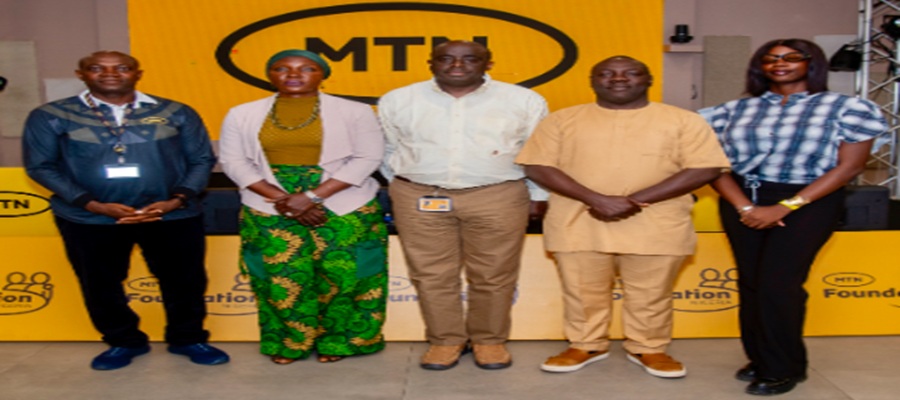
MTN Nigeria, leading technology company, recently hosted undergraduates from the University of Lagos (UNILAG) and Yaba College of Technology (YABATECH) for an immersive career engagement session, at the MTN Rooftop Plaza, Ikoyi, Lagos.

MTN
The event exposed students to career opportunities across cybersecurity, finance, internal audit and forensic investigations while providing practical insights into the skills required to succeed in today’s workplace.
The session was designed to bridge the gap between academia and industry by helping students better understand the diverse career paths available within the telecommunications and technology sector.
The engagement brought together students studying Economics, Banking and Finance, Cybersecurity and Accounting, providing an opportunity to interact directly with professionals from various business functions.
Through presentations and discussions, participants gained a deeper understanding of the competencies, experiences and continuous learning required to build successful careers in a rapidly evolving business environment.
The engagement comes at a time when technology-related roles, including cybersecurity specialists, are among the world’s fastest-growing occupations, according to the World Economic Forum’s Future of Jobs Report 2025.
During the visit, the students met with senior cybersecurity and forensic professionals who shared insights into their respective fields and discussed emerging trends shaping the future of work.
The sessions also highlighted the wide range of career opportunities available across different fields, demonstrating that success in the industry is not limited to any particular course of study.
Undergraduates were also introduced to the evolving nature of the audit profession, as data analytics, artificial intelligence and cybersecurity are becoming increasingly important areas of focus for internal auditors.
During a session on building a meaningful career in Internal Auditing, undergraduates were encouraged to approach their professional journeys with purpose, continuous learning and a commitment to personal growth.
The session emphasised that career success extends beyond securing employment and involves developing relevant skills, understanding one’s strengths and intentionally pursuing opportunities that align with personal values and long-term goals.
Speaking during the engagement, Chief Internal Audit and Forensic Services Officer, Ibe Kalu Etea, represented by the General Manager, Internal Audit and Forensics, Wasiu Ibrahim, encouraged the undergraduates to remain open to opportunities beyond their academic backgrounds and focus on developing transferable skills. “Students can take any career path they want to. You can upskill and transition into a different career, even if it is not what you studied in school.
“Do not let your course of study determine your career path. Focus on building relevant skills, staying curious and continuously learning because opportunities exist across many fields,” he said.
The Undergraduates also participated in an interactive question-and-answer session, where they sought guidance on career development, workplace expectations and professional growth.
The initiative reflects MTN Nigeria’s commitment to nurturing future talent by connecting young people with industry leaders and equipping them with the knowledge, exposure and confidence needed to navigate their career journeys.

NUPRC Warns of Counterfeit, AI-Generated Appointment Letters

KudiWave Asks for Clarification over N750m Transfer from PalmPay Account

NCC Reports over 5,000 Fibre Cuts in 6 Months

PalmPay Reinforces Commitment to Youth Empowerment on International Youth Day

ipNX Joins Calls for Innovation-Friendly Ecosystem and Stronger Local Opportunities at Regenesys AI Summit

EFCC Busts NIS Visa Overstay Racket, Uncovers N700m in an Account

Fact-Check: Elon Musk’s “Tesla Pi Phone” is Internet Rumor

NBC Tasks Broadcasting Stations over 2028 DSO Global Deadline

NBC Scraps Annual Digital Access Fee on DSO

Glo Sponsored African Voices to Feature Netflix’s “The Polygamist” Stars




 E-Business2 days ago
X Replaces Revenue Sharing wit New Creator Rewards Programme

 Telecom2 days ago
MTN Alerts Subscribers over Fake 25GB Anniversary MTN Data Giveaway

 E-Financial2 days ago
Interswitch, Temenos Commit to Advancing Nigeria’s Digital Banking Technology

 E-Financial2 days ago
FG Spent N3.1 Trillion on Domestic Debt Servicing in Q1- DMO

 General News2 days ago
Fake Agency: ICPC Indicts NITDA, Others over Inadequate Due Diligence

 General News2 days ago
UNESCO Taps Oguamanam,Nigerian Scholar to Advisory Body on Science, Tech Ethics

 General News2 days ago
Tax Reform Built on Taxing Prosperity, Not Poverty– Adedeji

 Telecom1 day ago
MTN Nigeria Clocks 25, Connects over 90m People