

E-Business
TechDev Summit Holds in Enugu, City Seated On Wealth

In the annals of Nigeria’s history, Enugu, a city that its topography is festooned by at least four hills, is rated high.
The name was derived from one of the 10 villages that make up the Ngwo community. Interestingly, the first set of “gold-seekers,” or call them, the colonial masters, settled at a place called Enugwu- Ngwo village.
Till date, Enugwu-Ngwo remains a part of the Ngwo community, and the only village of the 10 that belongs to another local government area, namely Enugu North Local Government, while the rest are under the Udi Local Government. Not just that, other hills like Milken, Awgu, Nsukka and Udi respectively, adorned her.
The city was first brought into limelight, fame and fortune, not because of the hills, but on discovery of mineral resources enveloped inside the womb of the earth.
The providence; an astounding quantity of coal, led to the founding of Enugu 111 years ago, when in 1905 some wandering and adventurous foreigners found an outcrop of coal ridges in the hills of Ngwo, Nike, Udi, Akegbe, Awkunanaw and Ogui, in the heartland of the most rocky topography of Igboland.
That is the karma of railroad drawn there, a century ago, from Port Harcourt in 1916. Infact, the importance of its hydrocarbon deposits could be found in this slogan: Coal City. Therefore, welcome to Enugu, Nigeria’s Coal City.
The City:
The story of this place is more like the Biblical account where Joseph, a man of destiny, grew up to lead his elder brothers.
The municipality is such that came to the scene last, only to surpass others that existed years before it. Enugu is undeniably the pride and joy of the South East region – the old Eastern region and the old East Central State.
It has a wide-spread settlement in such that the nucleus, Independence Layout (the State capital) links nearby towns like Abakpa Nike, Ngwo, Ozalla, Awkunanaw, Agbani etc, while Nsukka (region) is a city within the city.
Meanwhile, the microcosms, who lived independently, later amalgamated and turned the vast farmland into a mega metropolis, the city spread its arms later to embrace them. Enugu is like an abnormal child whose father answers his name instead of the other way. Presently, the children could not answer any other name but that of their father, hence all of them are called Enugu.
History has it that pre and post-days of the discovery of the coal ridges on the hills of Ngwo, there were no settlers, however, as was coal was found, the need to spigot it called for employees.
This need gave birth to the first settler called Afred Inoma, the sole reason the place is christened Ugwu Alfred (Alfred’s hill). He was from Neni, a town in Anambra State today, according to the story.
Outside the coal factor, the next factor of the growth of Enugu was the shrewd and weird ingenuity of Inoma.
His house which stands as a relic on the hill in dilapidation today still has a picture reference at the Enugu Museum as the first house owned by a stranger in Enugu and maybe the first in the city. Climbing one of the numerous hills near Asata Mine, Ngeneve or Udi-Siding at the Coal Camp area of the city gives you a better platform to admire the city and its spread.
When we talk of major tourist spots in Nigeria, Enugu State may not come to mind, however, is enormously endowed with tourist resources, facilities and potentials than most parts of the country.
The multifaceted natural features likes, caves, waterfalls, springs and hills, as well as man-made features like hotels, telecommunication and transportation outfits, galleries, and monumental or archeological collections, among countless attractions waiting to be savoured. The University of Nigeria (UNN) and Onuiyi Haven, both in Nsukka, are among the state’s other functional tourist stops. Onuiyi Haven is the country home of the Nigeria’s first indigenous Governor-General late Dr. Nnamdi Azikiwe.
Exciting spots
A visit to Enugu pays a lot. Why? Have you been to or felt a waterfall believed to possess cleansing powers? A trip to Awhum Waterfall will clear your doubts. It stands over 30 meters high.
The ruralites say it could be used to keep satanic forces at bay, wherever sprinkled. Apart from that Nyaba, Attakwu and Nkanu, are the leading sand beaches in Enugu and the best of destinations for divers and water ‘rats’.
Counting about 10 lakes, eight of which are still untapped, Enugu most likely, holds the highest number of lakes in Nigeria. They include: Nike Lake, located within the heart of the metropolis, and managed by Protea Hotels and Opi in Opi-Agu near Nsukka are the two most popular.
The rest eight lakes that yawning for attention are: Obinofia Ndiuno Lakes within Ezeagu Area. Others are Ngebe Lakes, Attakwu Lake and Obanukwu Lake all around Nkanu; as well as Odoro Lake in the Oji-River area and Iheneke Lake. And that is not all: Amagunze Akpawfu Lake Complex consists of nine lakes within the same district, not to talk of the Opi Lake Complex, which boasts eight lakes within a district.
Meanwhile, the Ngene-Ani Lake in Amigbo Ozalla has elevated to a zoo, as is crocodile-infested. According to the locals, “these reptiles respond to our voices.” What a wonder!
Enugu is relatively a giver. The serenity, bliss and pleasures inherent in its collection of caves earn the state, seated on wealth, a catchphrase of a tourism haven.
The Obinofia Ndiuno Caves located in the Ezeagu Area, cover a diameter of roughly 3km and are said to be about three millennia (3, 000 years) old. Aside the rambling Obinofia Ndiuno Caves, Ezeagu Area boasts at least four other caves. Roll call: Ugwu Cave, Ogba Agana Cave, Ogba Umuogubi Cave and Ogbo Gwoo Gwoo Cave. In the same vein, Nkanu area holds Ogba Ihunekweagu and Akpugo Caves, while Udi and Awgu Areas have Inyi Chine Cave and Isu Awaa Cave respectively. Not to be left out, Oji-River Area boasts Odoro Caves. The father of all is the Ngwo cave. Let’s have a journey to Ngwo.
The cave, hidden away in the pocket of a deep canyon notched on the slopes of Miliken Hill; do you remember where the hill is located? First of all, the amazing views will envelope your sight.
Although there are intimidating slopes, but the beauty and aura that await tourists there, the chilling guests of wind will cheer you up. No doubt. After plotting a course through the large collect of trees at the Ngwo Pine Forest, there you are, before sharp twists and turns along the stone-paved track, especially as the itinerary slants downward.
Get ready, in about twenty minutes you will hit the valley floor, tiled by a gently flowing spring waters.
Then, off your shoes and begin to walk upstream in the water; after all, there is no gain without a pain! The stretch of the stream leads into a dark cleft at the end of the valley. A narrow but high opening leads into the crack.
You know what? A heavy downpour of raging sparkler clear water greets you. The cave is naturally sculpted in marble and decorated by captivating waterfall dropping down from a small opening at the roof of the cave.
Behind the big throng of rock in which the cave is emplaced is splitter of caves carefully laid into the rock; you password to access nature.
Business
Aside being a hub of Nigeria’s road network and a major railway junction, Enugu is also an important business and manufacturing centre. For instance, Enugu is(was) site of the Mercedes Benz assembly plant a.k.a Anammco.
The city’s industry also throws up huge volumes of textiles; shoes, furniture, ceramics, cement and asbestos, gases and steel products.
Sadly, a different story is being told today about these industries. Aside Innoson motors, hardly can you see a company that employees up to 3000 staff in Enugu. Suffice to say, government is the highest employer of labour; and we know what it implies in today’s economy. It is high time a different story be told!
TechDev Summit 2016
At this juncture, it is important to ponder on Enugu’s relevance in today’s technology agenda/ movement in Nigeria. Do we have a place?
To me, I feel that Enugu deserves more attention than it is getting with regards to the fact technology calls the tune of development in any part of the world today! That is why I enjoy every well meaning Enugu indigene to answer the clarion call to help the citizens adopt technology for our collective gains.
Enugu, the pride of the East is to host the maiden edition of TechDev Summit, the epic gathering of all principal stakeholders to brainstorm and seek solutions that would benefit Nigeria.
The mega summit with the theme: ICT: Innovate, Transform, Connect will hold from December 6 to 7 at the prestigious Golden Royal Event Centre, along Independence Layout, Enugu.
Organised by Communication Week Media Limited, publishers of Nigeria CommunicationsWeek and Techsmart Trend, the summit would a gathering of experts, academia, intellectuals and major stakeholders in the ICT, finance as well as government; in strategic and high-level sessions, to address issues, generate new ideas and approaches as well as chart a road map for Nigeria’s ICT space.
Ken Nwogbo, CEO, Communication Week Media, said that the event will provide unique platforms for over 1,000 leading ICT professionals and managers to mobilise smart implementation strategies aimed at improving operations at the citizenry and enterprise levels.
The summit will be chaired by Engr. Ernest Ndukwe, former EVC of the Nigerian Communications Commission (NCC) while other speakers such as Leo-Stan Ekeh, Chairman, Zinox Group; Tunde Coker, CEO, Rack Centre; amongst others that have been lined up to make the summit truly impactful and revolutionary.
The choice of Enugu is strategic and stems from the fact that the city plays hosts to one the nation’s ivy league institutions- the University of Nigeria, Nsukka and Enugu campuses and the world famous Institute of Management and Technology (IMT).
Along with a number of other higher institutions in the state, the city underlines the importance of academia and resources around there to technology development as has been proved by the Silicon Valley model.
Ultimately, the Technology Development summit will deepen conservation and offer practical insights for our national technology development.
This is a welcome development hence it will also be keen on giving young innovators platforms aimed at promoting innovation and entrepreneurship. There will also co-located events at the forum including mentorship forum; and tech demo day. Prepare to be there!


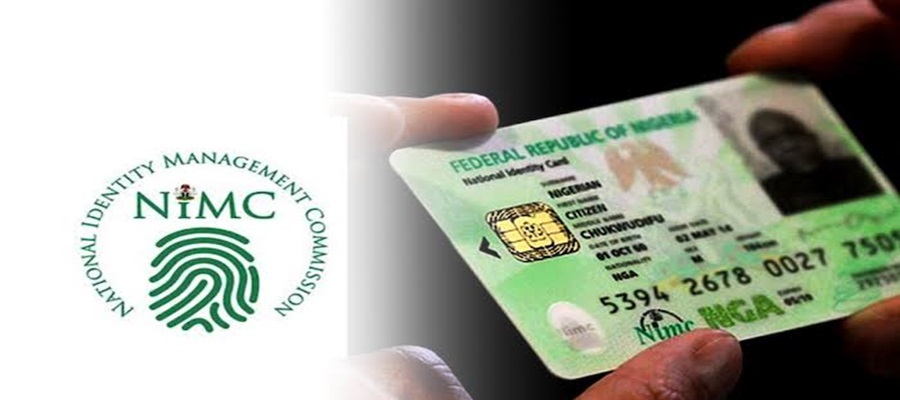
National Identity Management Commission (NIMC) has said thet more than 136 million Nigerians and legal residents have been enrolled in the National Identity Database (NIDB).

In a statement on Tuesday, Kayode Adegoke, head of corporate communications, NIMC, said Abisoye Coker-Odusote, chief executive officer (CEO) of the commission, announced the milestone during a courtesy visit to the ministry of budget and economic planning.
In April 2025, NIMC said over 117.36 million Nigerians had been enrolled as of February 28, 2025.
The visit was part of the commission’s ongoing stakeholder engagements with ministries, departments and agencies (MDAs) on the implementation of the NIMC Act 2026.
Presenting the new Act, Coker-Odusote said the legislation repeals and replaces the 2007 NIMC Act, modernising Nigeria’s digital identity ecosystem by positioning the national identification number (NIN) as the country’s foundational identity under the “one person, one identity” policy.
She said the law also establishes NIMC as the root certificate authority for the national digital infrastructure and introduces stronger data protection and cybersecurity measures, as well as digital credentials.
“The Federal Government remains committed to enrolling and issuing NINs to all Nigerians and legal residents within the shortest possible time,” Coker-Odusote said.
She added that NIMC is ready to collaborate with the ministry of budget and economic planning to leverage the NIN for economic planning and national development initiatives.
Speaking during the visit, Abubakar Atiku Bagudu, the minister of budget and economic planning, reaffirmed the federal government’s commitment to the implementation of the NIMC Act 2026.
Bagudu described the legislation as “a transformative milestone” that would strengthen Nigeria’s digital identity ecosystem and accelerate national planning and development.
He commended the NIMC director-general and the commission’s leadership for their efforts in securing the passage of the legislation, noting that it provides “a solid legal foundation for a trusted, secure, and inclusive national identity management system”.
The minister, however, said the true measure of the Act’s success would lie in its implementation and the benefits it delivers to Nigerians.
“The true measure of the Act’s success will lie in its effective implementation and the tangible benefits delivered to citizens,” he said.
Bagudu also called for stronger collaboration across the federal, state and local governments to build public confidence in the national identity system and eliminate the duplication of identity databases across government institutions.
He said the NIN should serve as Nigeria’s single, universally accepted identity standard, supporting efficient service delivery and good governance.
On June 26, President Bola Tinubu signed the NIMC Act 2026 into law, repealing the commission’s 2007 establishing Act.
At the time, Olubunmi Tunji-Ojo, minister of interior, said the legislation would strengthen Nigeria’s legal framework for digital identity management, cybersecurity and secure digital authentication, while reinforcing the NIN as the country’s foundational identity credential under the “one person, one identity” principle.

Plateau State Public Complaints Commission (PCC), an agency of the state established to investigate complaints of abuse of office, administrative injustice and other forms of official misconduct is allegedly collecting personal information from members of the public through its website with no privacy policy.

According to investigation by Foundation for Investigative Journalism (FIJ), PCC is falling short of a key transparency requirement under Nigeria’s data protection laws.
FIJ found on Tuesday that PCC collects personal information from members of the public through its website despite providing no privacy policy explaining how that information is collected, processed, stored or protected.
The commission serves as the state’s ombudsman, receiving complaints free of charge against public institutions and private organisations on issues including wrongful dismissal, victimisation and administrative negligence.
Yet, while its online complaint portal requests personal information such as names, phone numbers, email addresses, subject lines and complaint details, visitors are given no privacy notice explaining what becomes of that information after it is submitted.
The omission means visitors are not told why their information is being collected, how long it will be retained, the legal basis for processing it or the rights available to them as data subjects.
WHAT IS THE POSITION OF THE LAW?
The guidelines issued by the National Information Technology Development Agency (NITDA) are explicit: every government website is required to have a privacy policy.
Section 10.4 (i, ii) of the NITDA guidelines mandates all government websites to exercise diligence when collecting personal details or information about visitors on their websites.
The requirement is intended to ensure transparency and accountability in the handling of personal information, allowing visitors to understand why their data is collected, how it will be used and the safeguards in place to protect it.
Similarly, the Nigeria Data Protection Act (NDPA) 2023 requires data controllers to provide privacy notices to individuals before, or at the point of, collecting their personal information.
Such notices are expected to disclose, among other things, the purpose for collecting the data, the legal basis for processing it, the period for which it will be retained and the rights available to data subjects.
Section 27 of the NDPA states:
(1) Before a data controller collects personal data directly from a data subject, the data controller shall inform the data subject of the – (a) identity, residence or place of business of, and means of communication with the data controller and its representatives, where necessary;
(b) specific lawful basis of processing under section 25(1) or 30(1) of this Act, and the purposes of the processing for which the personal data are intended;
(c) recipients or categories of recipients of the personal data, if any;
(d) existence of the rights of the data subject under Part VI;
(e) retention period for the personal data;
(f) right to lodge a complaint with the Commission in accordance with section 46 (1) of this Act; and
(g) existence of automated decision-making, including profiling, the significance and envisaged consequences of such processing for the data subject, and the right to object to and challenge such processing.
Without a privacy policy, visitors have no way of knowing the commission’s data-handling practices or the safeguards, if any, in place to protect the personal information they submit through the website.
At press time, the Plateau State Public Complaints Commission’s website had no privacy policy.

Federal government has directed key digital regulators to suspend the implementation of new rules affecting internet platforms and online intermediaries while it develops a unified national regulatory framework.

Dr Bosun Tijani, minister of Communications, Innovation and Digital Economy
The directive was issued on Tuesday by Dr Bosun Tijani, minister of Communications, Innovation and Digital Economy, after chairing a strategic meeting with the leadership of the Nigerian Communications Commission (NCC), the National Information Technology Development Agency (NITDA), and the Nigeria Data Protection Commission (NDPC).
The minister in a statement, said that the rapid growth of the digital economy has created areas where the responsibilities of the three regulators increasingly overlap, particularly in artificial intelligence, online safety, and data protection.
He said that a coordinated approach is needed to provide regulatory clarity, protect investor confidence, and support innovation.
Dr Tijani noted that as part of the directive, the agencies will temporarily halt the implementation of recently introduced guidelines in these overlapping areas.
However, the Minister said that they will continue to carry out their statutory responsibilities within their respective legal mandates.
Dr Tijani said that a Joint Technical Coordination Committee will now be established to work with industry players, academics, and civil society on a single, coherent regulatory framework.
The minister added that the move is designed to improve coordination across government, create a more predictable business environment, and strengthen Nigeria’s position as a leading destination for digital investment in Africa.

Court Declares ARCON’s N60Bn Fine against Facebook Nigeria Illegal

NIN Enrollment Hits over 136m as New ID Law Takes Effect

NRC, Ponzi Scheme Collapses Resulting Loss of Billions of Naira

Plateau PCC Collects Nigerians’ Data without Privacy Policy – FIJ

FG Suspends New Internet Regulations to Prevent Overlapping Rules

Mobile Internet Gender Gap Widest in Africa – GSMA

NASENI Moves to Digitize CCB’s 5m Assets Declaration and Operations

Nigeria Launches FreeTV Nationwide

CANAL+ Partners Samsung to Pre-Load DStv Stream on New Samsung TVs In Nigeria, Other African Countries

UK, Nigeria Launch £15m Growth Programme to Accelerate Economic Transformation




 E-Financial2 days ago
Tokenization, Blockchain Technology will Transform Financial Institutions – IMF

 General News2 days ago
NIS Deploys Advanced Surveillance Masts, other Critical Infrastructure to Boost Border Security

 Broadcasting2 days ago
Obi, NDC Presidential Candidate Faces N50Bn Defamation Claim over Alleged Podcast Remark

 E-Business2 days ago
Weebly Websites to Shut Down for Nigeria, 66 Other Countries from September

 E-Financial2 days ago
FG Denies N8 Trillion ‘Shadow Budget’, Says IMF Quoted out of Context

 Telecom2 days ago
No Plans for Fresh Tariff Hike – MTN

 General News1 day ago
IHS Nigeria, FCT-HSES Concludes Clean Cooking Energy Campaign “Project Breathe Clean Air” in Abuja

 News2 days ago
World Bank Sounds Alarm: Low Revenue, Not Debt, Is Nigeria’s Biggest Fiscal Threat