

Broadcasting
Technology Will Support, Complement Teachers’ Efforts-Toyosi Akerele-Ogunsiji

By chukwuemeka fred agbata
Massive open online courses have made it easy for people to gain access to quality education materials and training designed for international audiences. Thankfully, a few Startups in the Edutech space, are creating similar platforms, targeted at Primary and Secondary school students. Recently, I was with Toyosi Akerele-Ogunsiji, Founder, Passnownow.com and we had a discussion on the provision of quality education, through technology.
Toyosi stated that she is worried about the poor state of education that is currently persisting in the country. This, according to her, is the because, we are looking for people to effectively and conscientiously run our private sector as well as take the reign of the public sector. “We are not raising children that have any form of qualitative advantage with their colleagues in other parts of the world”, she, however, observed.
She is not also happy wit on the part of the government and even on the part of the private sector players, as regards elevating the quality of education, especially, the teachers. “I will like to be in a country where teachers are highly paid, given equal remuneration, equal respect and regards as much as bankers, lawyers and other prestigious professionals are”, she maintained.
Toyosi observed that most people who opt to become teachers in Nigeria, are usually those who have searched for other jobs, but did not succeed, as well as many unqualified teachers, who are, in some cases, not as good as the students they are teaching.

She also stated that many of the teachers are not motivated and they do not feel like stakeholders in a process where they are supposed to be the most primary people to be consulted by the government, parents and the private sector. “You think about all these issues and then, you wonder about the quality of the schools. You think about the children that are learning and sitting on the floor in very terrible environment, where no form of unwholesome learning can happen in those places”, she observed.
Those children, she reiterated, cannot, therefore, be put side by side with children from Ghana, UK, Finland, Canada and the USA, and other countries that are prioritizing education. She gave the example of what is currently happening in Rwanda, where private schools are shutting down because parents are now taking their children to public schools because of the high quality of education currently obtained in public schools. Toyosi observed that, Nigeria cannot claim to be the giant of Africa, with the current poor state of its education.
In her opinion, Toyosi is of the view that, technology be a very potent tool in the transformation of the educational sector in Nigeria. The first thing she wants Nigeria to look at, is the democratization of access to quality education content for children, especially, children from low income earning parents and rural communities. She noted that the schools that we currently have, are inadequate to cater for the needs of Nigerian children.
“We should also be thinking of how technology will enable children to have personalized learning, so that, children are able to learn at their own pace, read ahead and prepare ahead of classes”, Toyosi opined. She stated that we should also be thinking of the concept of disruptive innovation, to note how technology has impacted on various sectors, like Finance, Payments, Ecommerce, etc.
Toyosi is also of the view that, contrary to the popular thinking that, utilizing technology in education is expensive, it is, in fact, not expensive. She stated that, it is cheaper to build a huge technological framework that provides an open source, where children can learn basic technology, basic science, social science and English, as well as all the subjects provided in the Nigerian educational curriculum, from Primary school to the University level. “You cannot use yesterday’s knowledge to face today’s challenges and the kind of education that Nigerian children are getting does not prepare them for the future at al”, she observed.
According to Toyosi, teachers and students have to be carried along by State governments, in a bid to making the children embrace technology. This is because, most States focus only on the children and at the end of the day, they fail, just because they did not carry the teachers, who were going to teach the children along.”The teachers who are going to teach these children have to be tech-savvy”, she opined.
Toyosi does not believe that, technology will, forever, support and complement the efforts of teachers, in response to the notion that technology might, one day replace the teachers in schools. “I think that, in Nigeria, the government and the parents need to prioritize teachers as much as possible”, she concluded.


Enugu State Government has approved an increase in the minimum wage for workers of the Enugu State University of Science and Technology (ESUT) from N32,000 to N82,000 monthly, effective Sept. 1, 2026.

The approval was contained in a letter dated Aug. 11, 2026, signed by the Secretary to the Enugu State Government, Prof. Chidiebere Onyia, and addressed to the Accountant-General of the state.
According to the letter, the decision followed a report submitted by the Joint Action Committee on Trade Union (JACTU) at ESUT on issues surrounding a one-month strike ultimatum issued by the university’s unions.
The state government also approved an across-the-board salary increase of N50,000 for all other categories of staff at the university.
Onyia directed the Accountant-General to fully implement the approval of Gov. Peter Ndubuisi Mbah.
The directive referenced an earlier Government House letter dated Aug. 7, 2026.
A copy of the approval was also forwarded to the Vice-Chancellor of ESUT, Prof. Aloysius-Michaels Okolie, for information and necessary action.
Speaking on the development at the 278th Regular Meeting of the University Senate on Wednesday, Okolie said the university was continuing discussions with the state government to secure improved welfare for its workforce.
He disclosed that governors in the South-East had agreed to provide at least a 20 per cent salary increase for workers in state-owned universities across the region.
The vice-chancellor, however, noted that individual governors could approve salary increases above the regional benchmark.
Okolie thanked Gov. Mbah for implementing the N80,000 minimum wage and for his interventions in infrastructure and academic development at the university.
He also appealed to union leaders to allow the university management to conclude its ongoing negotiations with the state government on staff welfare.
The vice-chancellor said continued engagement between the university management, government and labour unions remained important to resolving outstanding welfare issues and sustaining industrial harmony at ESUT.

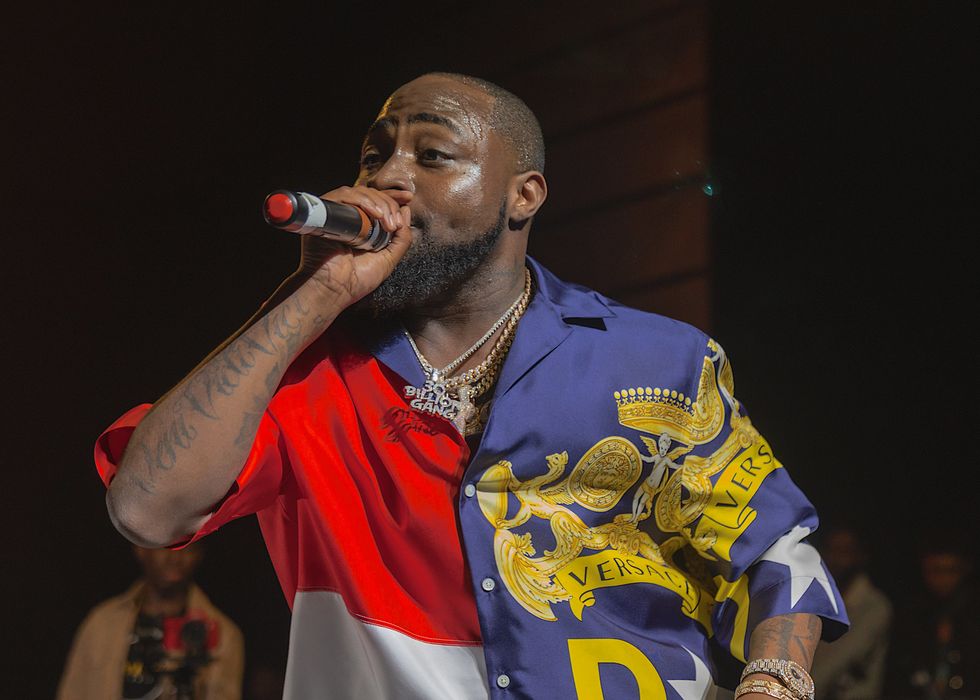
David Adeleke, popularly known as Davido, has declared that no Nigerian artiste has more hit songs than him, challenging his peers to a hit-for-hit contest with $1 million at stake.

The Afrobeats superstar, made the declaration during a recent online interaction with streamer Davrel, where he expressed confidence in the strength of his music catalogue.
Key Highlights:
- Davido says he is ready to stake $1 million in a hit-for-hit battle.
- The singer claims no Nigerian artiste has more hit songs than him.
- His challenge could reignite comparisons with Wizkid, Burna Boy and Olamide.
- No major artiste mentioned in the debate had accepted the challenge as of the time of filing.
“I will put up a $1M on the table. I will do it versus anybody. A million dollars cash, nobody has more hits than me,” Davido said.
The declaration is likely to renew the long-running debate among Afrobeats fans over which Nigerian artiste has the strongest catalogue of commercially successful songs.
Davido, whose career spans more than a decade, has recorded several commercially successful songs, including Fall, If, FIA, Risky, Blow My Mind, Unavailable, Assurance and Feel.
His claim could set up a potential catalogue battle with some of Nigeria’s biggest music stars, including Wizkid, Burna Boy, Olamide, Runtown and Tekno.
The statement also recalls the hit-for-hit debate involving Burna Boy during the COVID-19 lockdown in 2020.
Burna Boy had called for a competitive song battle, while former Mavin Records artiste Reekado Banks reportedly expressed interest. Burna Boy, however, rejected him as an opponent.
Six years later, Davido’s $1 million challenge has brought the idea back into the spotlight.
As of the time of filing, none of the major artistes indirectly referenced by Davido had publicly accepted the challenge.
Whether the proposed contest becomes reality remains uncertain.
For now, Davido has made his position clear and is willing to attach $1 million to his claim that no contemporary Nigerian artiste has a stronger catalogue of hit songs.
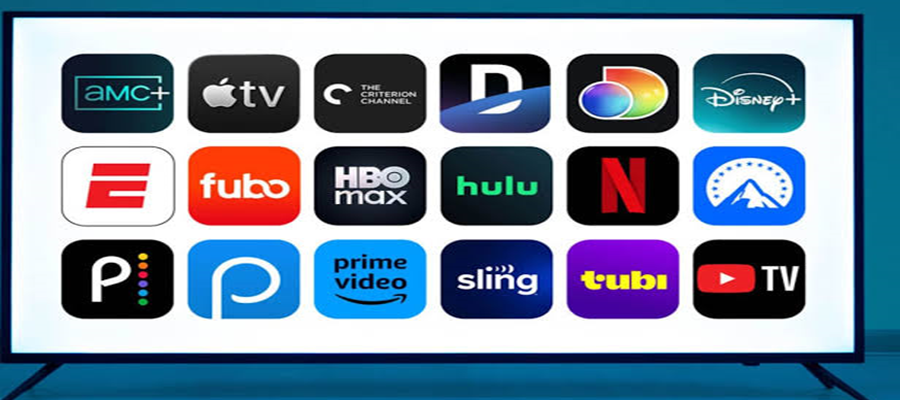
Nigeria’s pay-TV industry is facing one of its toughest periods in years as consumers increasingly migrate from conventional antenna and decoder-based television services to cheaper, more flexible and on-demand streaming platforms

The shift is putting pressure on established operators, such as MultiChoice, owners of DStv and GOtv; StarTimes and other traditional pay-TV providers, whose business models have long depended on recurring monthly subscriptions as per report by Business Hallmark.
According to Business Hallmark, the changing consumer behaviour is being driven by a combination of factors, including demographic transition, rising subscription costs, declining household purchasing power, improved internet access and the growing popularity of streaming services that allow viewers to pay for specific content or watch programmes at their convenience.
Streaming platforms are steadily expanding their appeal, offering consumers access to movies, sports (especially football matches and wrestling bouts), local content and international programs through smartphones, smart televisions and other internet-enabled devices.
Also, the proliferation of affordable data packages and connected devices has lowered the barrier to entry, allowing consumers to bypass traditional decoders altogether and consume content directly online.
Three of the major factors behind the changing behaviour of Nigerian television consumers are growing internet access, economic squeeze and changing demography.
Pay-TV subscriptions, once regarded by many households as a relatively affordable source of entertainment, are now competing with several other demands on disposable income.
For instance, entertainment spending are increasingly being subjected to tougher scrutiny with household budgets under pressure from food, tuition, transportation, electricity, housing and other essential costs.
Business Hallmark checks revealed that frequent price reviews by MultiChoice Nigeria’s have pushed the firm’s products beyond the reach of many Nigerians.
One of its products, GOtv, initially designed for average Nigerians, has six packages, namely GOtv Supa Plus, GOtv Supa, Gotv Max, GOtv Jolli, GOtv Jinja and GOtv Smallie.
GOtv Supa Plus with over 85+ channels currently goes for a monthly subscription fee of N16,800; GOtv Supa N11,400; Gotv Max N8,500; GOtv Jolli N5,800; GOtv Jinja N3,900, while GOtv Smallie subscribers choose between the N1,900/monthly, N5,100/quarterly and N15,000/annually options.
Similarly, following multiple tariff reviews, DStv Premium currently goes for N44,500 monthly; DStv Compact Plus N30,000; DStv Compact N19,000; DStv Confam N11,000; DStv Yanga N6,000 and DStv Padi N4,400.
On the other hand, StarTimes, which serves its customers through antenna signal transmission and satellite transmission, has only three bouquets, Nova, Basic, and Classic.
While Classic, the most expensive bouquet on the StarTimes’ shelf currently cost N6,000 monthly, Basic costs N4,000, while Nova costs N2,100.
While speaking to our correspondent on the major shift, some consumers explained that the choice is no longer between different pay-TV providers but between maintaining a television subscription and cancelling it altogether.
Eighty-two Nigerians, representing 68% of the 120 Pay-TV subscribers, who participated in an online survey conducted by Business Hallmark, said they opted for less expensive and more flexible alternatives, including YouTube and a growing range of streaming platforms, using smartphones, laptops, smart televisions and other internet-enabled devices to access entertainment.Geographic Reference
According to the respondents, the shift towards streaming lies partly in its flexibility. Instead of waiting for a program to be broadcast at a scheduled time, viewers now search for specific films, series, sporting events or other contents, which can be watched immediately, or downloaded to be watched or listened to later.
“I now watch contents when I want, across multiple devices, without necessarily being tied to the traditional channel and time-based television experience”, said Tolu Olamiti, an accountant in an audit firm in Lagos.
Another factor that is fueling the exodus from pay-TV model is the growing youth population. Checks revealed that online streaming is particularly attractive to phone-savvy younger viewers, whose television consumption habits are markedly different from those of previous generations.
While underage children watch cartoons and educational programs mostly from their parents or older siblings internet-enabled gadgets, teenagers and adults now watch news, sports programs and films through live streaming or download preferred programs to be watched later.
“With N200 data, I can download several new films to be watched at my convenience, instead of the old films, which providers always repeat on their channels. I also listen to music through out the day without worrying about electricity as my phone can go 2 days after full charge”, said Chukwuemeka Ibe, a student of Lagos State University (LASU).
In the same vein, access to fast and cheap internet plans is helping to drive the streaming surge. For instance, a subscriber can get a daily 1G data plan on the MTN Nigeria platform for just N200. This data plan can be used to download up to 1,000MB movies, or for streaming several hours of music online.
According to official statistics from the Nigerian Communications Commission (NCC), internet consumption in Nigeria reached 13.2 million terabytes in 2025, representing a 35 per cent increase from 2024, while average monthly data usage per active subscriber increased from 3.3 gigabytes in January 2023 to 7.4 gigabytes by May 2025.Geographic Reference
The NCC data indicates growing reliance on mobile internet services and digital platforms across the country with active internet subscriptions rising from 169.3 million in January 2025 to 182.2 million by January 2026.
Also, active internet subscriptions also surpassed 142 million.
Before the advent of internet, traditional pay-TV operators had ruled the television viewing industry largely through channel packages, exclusive content and decoder penetration. However, the rise of streaming has fundamentally altered the competitive landscape of Nigeria’s entertainment industry.
Fueled by the spread of smart devices and improved internet connectivity, streaming companies have been able to compete with traditional TV and radio providers through original programming, on-demand access, convenient timing and increased personalized viewing experiences.
A subscriber, who previously needed a satellite dish or digital terrestrial television decoder to access premium entertainment, can now use a smartphone or smart television and an internet connection.
The proliferation of affordable smartphones has further accelerated the process. Mobile phones have become entertainment devices for millions of Nigerians, particularly younger consumers, who spend more time watching short-form videos, movies and online programs than conventional television.
Also, social media platforms have become important competitors for consumers’ limited attention. YouTube, Facebook, Instagram, TikTok and other digital platforms provide enormous volumes of free or relatively inexpensive video content, forcing traditional broadcasters to compete not only for subscribers but also for viewers’ time.
Several pay-TV subscribers, who spoke to our correspondent on the matter, said providers can no longer justify the traditional model of paying a fixed monthly fee for hundreds of channels they rarely watch.

FG Seeks to Half Burkina Faso’s Internet Cost while Nigerians Pay more

Cyberthreat: New Malware, Turns Phones into Tools for Card Fraud- Report

SEC Clears Blockchain for Accelerated Regulatory Incubation Programme

Union Bank Secures Global Payment Data Security Certification

NLNG, NCDMB Boost Engineering Research with Innovation Centre

EFCC Busts NIS Visa Overstay Racket, Uncovers N700m in an Account

Fact-Check: Elon Musk’s “Tesla Pi Phone” is Internet Rumor

NBC Tasks Broadcasting Stations over 2028 DSO Global Deadline

Glo Sponsored African Voices to Feature Netflix’s “The Polygamist” Stars

Access Bank Debunks Shutdown Report, Vows Action against Perpetrators




 Telecom2 days ago
Airtel Nigeria Adds Over 1,000Cell Sites in Nationwide Expansion to Surpasses 17,000

 E-Financial2 days ago
Mastercard, TeamApt Collaborate to Expand Digital Payments Across Africa

 E-Business2 days ago
MacOS Users Report More Cyber Threats than Windows Users – Survey Reveals

 News2 days ago
Access Holdings Sets New Benchmark in Nigeria’s Finance Talent Pipeline

 Telecom2 days ago
Nigerian Startup Act: NITDA Calls for Stronger Inter-Agency Collaboration

 E-Financial2 days ago
SEC Orders Immediate Freeze of Assets Linked to Six Terrorism Financiers, Three Entities

 General News2 days ago
Anambra Seeks Digital Inclusion in Rural Communities

 Broadcasting2 days ago
ESUT Workers Get N82,000 Minimum Wage as Enugu Approves Fresh Salary Increase