

Telecom
Telcos to Disconnect Banks’ USSD Service over N120Bn Debt

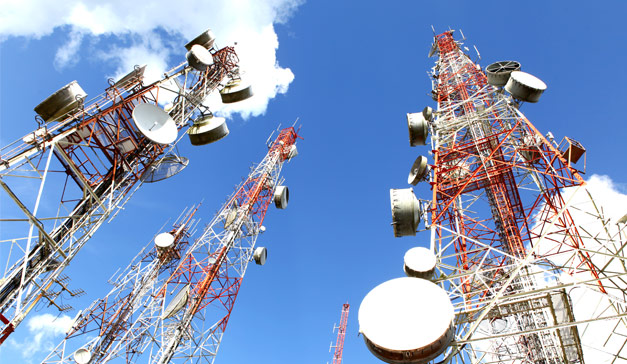
Association of Licensed Telecommunications Operators of Nigeria (ALTON) has directed its Mobile Network Operators (MNOs) members to disconnect Deposit Money Banks (DMBs) if they fail to pay the debt owed to Operators for Unstructured Supplementary Service Data (USSD) services which amounts to over N120 Billion. This is sequel to an approval from the Nigerian Communications Commission (NCC) to execute the action of disconnecting DMBs.

The approval by NCC was granted because despite multiparty stakeholder efforts to resolve the situation and prevent any impact on services, led by the Hon. Minister of Communication and Digital Economy, Prof. Isa Ali Ibrahim (Pantami) and including the Nigerian Communications Commission, the Central Bank of Nigeria, along with MNOs and DMBs.
In a statement signed by Engr. Gbenga Adebayo, chairman of ALTON, it stated that the DMBs have continued to incur greater and greater debt, without making the commensurate payments.
“Every time some progress is made, the DMBs come up with reasons to take stakeholders several steps back, in this matter.”
ALTON noted that MNOs and DMBs have had protracted disagreements concerning the appropriate USSD pricing model for financial transactions, transparency of charges, mode of collection and liability for payment of the outstanding and continuous service fees due to the MNOs (which currently stands at over N120 Billion).
ALTON recalled that: “Due to the inability of MNOs and DMBs to reach an agreement on the issues, MNOs in 2021 sought to disconnect DMBs due to the unpaid debts which stood at N42 Billion as at that time.
“However, the Hon. Minister of Communication and Digital Economy, Prof. Isa Ali Ibrahim (Pantami) intervened and asked the MNOs not to disconnect DMBs as the action will negatively impact on the Digital and Financial Inclusion policy of the Federal Government.
“The Nigerian Communications Commission (NCC), Association of Licensed Telecoms Operators of Nigeria (ALTON), Association of Telecommunications Companies of Nigeria (ATCON) and Deposit Money Banks (DMB) represented by the Chairman, Body of Bank CEOs subsequently met on 15 March 2021 to discuss indebtedness of DMBs to MNOs for USSD services. Further to the meeting, CBN and NCC issued a joint press statement on the agreement reached by all stakeholders.
According to the statement, “the Honourable Minister of Communications and Digital Economy and the Nigerian Communications Commission (NCC) have made several efforts to get the banks to show good faith and sign an agreement, in the national interest, based on the resolutions reached at that meeting.
“Unfortunately, the patriotic intervention of the Hon. Minister and the NCC have been taken for granted by the DMBs, as two years after, the banks have failed to sign a final agreement.
“It is pertinent to note that the contract between MNOs and DMBs on the use of USSDs for banking transactions is strictly commercial and MNOs are at liberty to withdraw the services if it is established that the transaction is unprofitable to them. MNOs have invested billions of naira in expanding their systems to accommodate the USSD needs of DMBs over the years.
“This has resulted in more Nigerians having access to banking services in addition to enabling banks to trim down costs by requiring less branches to service their growing customers. Unfortunately, MNOs are not getting paid for their services and the debt that stood at N42 Billion in 2021 has now risen to over N120 Billion.
“It is obvious that the level of debt is unsustainable given the time/value huge cost of the continuous upgrade and operation of the systems and infrastructure dedicated to supporting USSD transactions of DMBs.
“In view of the foregoing, unless DBMs meet their debt obligations, MNOs will disconnect all banks indebted to them for USSD services rendered”.



Telecommunications operators in Nigeria are waxing worriedly over the increasing activities of vandals and thieves who are cutting fiber optic cable, stealing generators and batteries.

According to the operators, the activities of the vandals and thieves have led to degrading quality of service (QoS)- prolonged network downtimes, high rates of dropped calls, and slow internet speeds.
It also directly lead to poor voice quality, interrupted data services, and failures in critical, time-sensitive applications like banking.
According to figures by the Nigerian Communications Commission (NCC), the losses run into billions of naira as more than 650 power-related assets were stolen in 2025.
These include; stolen generators, batteries, and other power equipment essential to the operation of base stations across the country, where unreliable electricity supply makes off-grid power systems central to network stability.
Association of Telecommunications Companies of Nigeria (ATCON) said that the scale of theft has shifted the challenge from operational disruption to what it described as an existential threat to the sector.
Tony Emoekpere, president, ATCON, told Punch that operators are now responding largely in a defensive mode, combining physical security upgrades with technological monitoring and redesigning how sites are powered and secured.
“Operators are responding, but largely in a defensive mode,” he said.
“What you’re seeing now is a combination of increased physical security, technology deployment, and changes to how sites are designed and powered.”
Measures include increased deployment of site security guards, collaboration with local vigilante groups, reinforced base station enclosures, and wider use of remote monitoring systems that allow operators to detect tampering in real time.
Operators are also shifting away from easily removable components, such as standalone batteries, toward more integrated and hybrid power systems.
However, ATCON said even solar and hybrid infrastructure is now being targeted by thieves.
“We are spending more to protect infrastructure than we should, and that is not sustainable,” Emoekpere said.
The impact of the theft is already being felt across Nigeria’s telecom network, with operators reporting site shutdowns that translate directly into service deterioration.
“When you lose generators and batteries at that scale, what it means in practical terms is that sites go down,” Emoekpere said.
“And when sites go down, you immediately see increased call drops, poorer voice quality, and slower or completely unavailable data services.”
ATCON said subscribers are already bearing the brunt of the disruption, even if they are unaware of its underlying cause.
The association warned that the financial impact runs into billions of naira annually, with operators currently absorbing much of the cost.
However, it said the losses are increasingly feeding into broader industry economics.
“These losses run into billions of naira annually. While operators are absorbing a lot of it for now, it inevitably feeds into the overall cost structure of the industry,” Emoekpere said.

Amazon is in advanced negotiations for a blockbuster $9 billion acquisition deal of satellite communications firm Globalstar. The multi-billion-dollar strategic move is aimed at fast-tracking its low-Earth orbit ambitions and directly challenging Elon Musk’s Starlink dominance, especially in fast-growing African connectivity markets.

The talks, which remain fluid, are understood to be focused on structuring the deal around spectrum rights and Globalstar’s existing satellite infrastructure.
However, the Financial Times of India reports that a deal is imminent, although negotiations are “complex and not yet finalised.”
The one major sticking point is Apple’s 20% stake in Globalstar, which adds a layer of corporate tension to the deal.
If completed, the acquisition would significantly accelerate Amazon’s satellite internet rollout under its Project Kuiper, now branded Leo, initiative, which was formally expanded in Africa 11 months ago as part of its push to connect underserved regions with high-speed broadband.
Amazon has already begun launching Kuiper satellites, but with just over 180 in orbit, it remains far behind Starlink’s more than 7 000 operational satellites.
A Globalstar executive, speaking on background, said the company “does not comment on speculation,” while Amazon has also declined to confirm the talks.
Starlink, operated by SpaceX, already has an expanding footprint across Africa, with services active in countries including Nigeria, Kenya, Rwanda, Mozambique, and parts of Southern Africa.
Its low-latency broadband has become critical for remote schools, mining operations, and rural fintech infrastructure.
But despite its rapid rollout, Starlink still faces regulatory delays and licensing hurdles in several African markets, giving rivals a window of opportunity to grab a chunk of the lucrative sector across the continent.
Amazon’s potential acquisition of Globalstar would immediately strengthen its African positioning.
Globalstar already holds spectrum authorisations and partnerships in markets such as South Africa, Rwanda, Mozambique, and Gabon, where it has focused on enterprise connectivity, conservation tracking, and industrial IoT solutions.
This existing footprint could give Amazon a regulatory shortcut into markets where Starlink has spent years negotiating approvals.


Tosin Eniolorunda, Group CEO of Moniepoint Inc., has delivered on a commitment that demonstrates his fidelity to deepen financial literacy among women business owners in Nigeria.

Tosin Eniolorunda
In partnership with ALX, Eniolorunda hosted a four-hour virtual Entrepreneurship Masterclass bringing together 100 female business owners for a hands-on session designed to move them from petty trading to building valuable enterprises.
The masterclass was structured around three practical modules: The Model, The Money, and The Plan with each session facilitated by a subject matter expert and anchored in live, guided exercises rather than passive instruction.
Participants also completed a one-page Lean Canvas draft, worked through
Tosin Eniolorunda, ALX Host Entrepreneurship Masterclass for 100 Female Business Owners
Tosin Eniolorunda, Group CEO of Moniepoint Inc., has reinforced his commitment to advancing financial literacy among women entrepreneurs in Nigeria through a strategic partnership with ALX.
The collaboration culminated in a four-hour virtual Entrepreneurship Masterclass that brought together 100 female business owners for an intensive, hands-on learning experience aimed at transitioning participants from small-scale trading to building sustainable, high-value enterprises.
The masterclass was structured around three practical modules—The Model, The Money, and The Plan—each facilitated by subject matter experts and delivered through live, guided exercises rather than traditional lecture formats.
Participants developed a one-page Lean Canvas, worked through pricing and profit calculators to determine break-even points and profitability drivers, and concluded the session by drafting a 30-60-90 day execution roadmap with defined weekly actions and measurable KPIs.
At the end of the programme, each participant received a comprehensive resource pack to support continued application of the tools and frameworks introduced during the training.
A key module focused on building scalable business models, guiding participants through customer segmentation, problem identification, value proposition design, and distribution channels. Additional sessions addressed pricing strategies and financial fundamentals, equipping attendees with practical knowledge to better understand their finances and make informed growth decisions.
Iwalola Sobowale, Director of Customer Experience and Market Research at Moniepoint, led a dedicated product session, showcasing the company’s suite of business tools spanning payments, banking, and operations management. Particular emphasis was placed on Moniebook, designed to enable smarter and more efficient business operations.
The initiative aligns with Eniolorunda’s long-held view that financial inclusion must go beyond access to financial services. Speaking at the International Financial Inclusion Conference 2024 organised by the Central Bank of Nigeria, he stressed that financial inclusion for women should not be treated as a mere buzzword or checklist, but must be grounded in data-driven economic participation.
Research continues to highlight that women-owned businesses often demonstrate stronger repayment behaviour and higher financial engagement when provided with appropriate tools, reinforcing the economic and social case for investing in female entrepreneurship.
Speaking on the initiative, Eniolorunda said: “We’re at a point where technology can significantly accelerate business growth, but access alone isn’t enough. What matters is giving entrepreneurs the knowledge and confidence to use these tools effectively. This masterclass is about equipping women with insights they can apply immediately to grow their businesses.”
ALX, a pan-African technology and professional skills training platform, continues to play a key role in developing the next generation of African leaders through practical, industry-relevant programmes.
The initiative also supports United Nations Sustainable Development Goal 5 on Gender Equality, particularly targets focused on enhancing women’s participation in economic life and expanding access to financial services and quality education.
It further builds on Eniolorunda’s broader interventions in the space, including programmes by the Tosin Eniolorunda Foundation aimed at improving financial literacy among female STEM students at Obafemi Awolowo University—reflecting his belief that sustainable financial inclusion is anchored on strong financial literacy.
h a pricing and profit calculator to identify their break-even points and profitability levers, and closed the session by drafting a personal 30-60-90 day execution roadmap with weekly actions and measurable KPIs. Every participant left with a resource pack to continue applying the tools after the session.
One of the modules involved guiding participants through the fundamentals of building a scalable business model with a focus on customer definition, problem articulation, value proposition, and channels while others focused on pricing and financial fundamentals, equipping participants with the confidence to understand their numbers and make informed decisions about growth.
Iwalola Sobowale, Director of Customer Experience and Market Research at Moniepoint, addressed participants during a dedicated product session, walking them through how Moniepoint’s suite of tools which span payments, business banking, and operations management with a particular focus on Moniebook to support smarter, more efficient business growth.
This Masterclass reflects Eniolorunda’s long-standing position that the work of inclusion does not end at access. At the 2024 International Financial Inclusion Conference convened by the Central Bank of Nigeria, he argued that financial inclusion for women “must no longer be treated as a buzzword, charitable social activity or a checklist to be marked, averring that it must be rooted in economic and business activities that are well underlined by data.”
Research consistently shows that women-owned businesses demonstrate stronger repayment discipline and higher financial engagement when given access to the right tools, making investment in women entrepreneurs both a moral and economic imperative. “It is actually more profitable to serve women,” Eniolorunda has said.
Speaking on the imperative of the initiative, he noted: “We’re at a point where technology can significantly accelerate business growth, but access alone isn’t enough.
“What matters is giving entrepreneurs the knowledge and confidence to use these tools effectively. This masterclass is about equipping women with insights they can apply immediately to grow their businesses.”
ALX, the project partner is a pan-African technology and professional skills training platform committed to developing the next generation of African leaders through world-class, practically grounded programmes.
The initiative sits within the United Nations Sustainable Development Goal 5 on Gender Equality, specifically its targets around women’s full and effective participation in economic life and expanding access to financial services and quality education for women entrepreneurs.
It builds on Eniolorunda’s broader record in this space, including the Tosin Eniolorunda Foundation’s financial literacy programme for female STEM students at Obafemi Awolowo University which has its root in his belief that “there can be no sustainable financial inclusion without financial literacy as its cornerstone.”

Lagos Targets Vulnerable Residents in Expanded Social Register

CBN Proposes 30-Member Mediation Panel for Loan Disputes

CAC Urges Users to Secure Accounts after Cyberattack Scare

NCDC Predicts Cholera Outbreak in 10 States as Heavy Rains Loom

NDIC Seeks Court Nods to Liquidate 89 Failed Banks

Kuda MFB Increases Kuda for Her Business Grants to ₦10 Million

Canal+ to Cut Jobs as Part Sweeping Restructuring

Nigeria tops global rankings for USDT, USDC ownership

NBC Boss Urges Content Ceators to Participate in DSO

NITDA Takes Over National Digital Architecture System




 E-Financial3 days ago
Fidelity Surges Ahead in Recapitalisation Drive with ₦564bn Capital

 General News2 days ago
Guinness Nigeria Surpasses ₦1Trillion Market Capitalisation, Signalling Strong Investor Confidence and Sustained Value Creation

 Telecom3 days ago
AfDB Grants Project BRIDGE $200m Facility for Nationwide Internet Access

 Telecom3 days ago
Qualcomm Unveils Startup Selection for Qualcomm Make in Africa 2026

 E-Financial3 days ago
Digital “Pickpockets” Compromise Over a Million Banking Accounts – Kaspersky

 Telecom3 days ago
Nigeria Seeks Stronger Digital Sovereignty, National Software Infrastructure

 E-Financial3 days ago
EFCC Warns Banks against Loans without Credible Collateral

 E-Business3 days ago
Nigeria Needs Some 480,000 Local DPOs for Data Protection