

Telecom
Telecom Operators’ Call Centres and Subscribers’ Issues

The adoption of Business Process Outsourcing (BPO) model by Global System for Mobile communications (GSM) in the management of their call centres has helped to a large extent in easing difficulties subscribers faces in accessing call centres.
Before the adoption of outsourcing model in the call centre operations, subscribers who have issues with their service hardly speak to humans for resolving such issues rather they where meant to follow interactive voice response system, in most cases does not resolve such issues.
But, with outsourcing, the chances of subscribers that put call to call centres to speak with humans have increased.
However, the greatest challenge facing outsourcing of call centres to the ‘so’ called experts is training.
Most of the attendants at almost all the GSM operators call centres are not knowledgeable in the products and services offered by the operators.
There have been situations where different attendants offer different explanations to a particular issue of a subscriber.
What this suggests is that the attendants are not properly trained in the products and services of operators they represent, rather emphases are concentrated on politeness of attendants to subscribers calling the centres as against training on services of the operator they interface with their subscribers.
Recently, this writer had issue with the service of transferring airtime to a subscriber which was not delivered while the airtime was deducted.
However, the writer put several calls to the call centre of the operators all the three attendants he spoke with could not offer explanation on what happened and how to revert the airtime that was deducted.
A call centre is operated by a company to administer incoming product support or information inquiries from telemarketing, clientele, product services, and debt collection are also made.
In addition to a call centre, collective handling of letters, faxes, live chat, and e-mail at one location is known as a contact centre.
A call centre is often operated through an extensive open workspace for call centre agents, with work stations that include a computer for each agent, a telephone set/headset connected to a telecom switch, and one more supervisor stations.
It can be independently operated or network with additional centres, often linked to a corporate computer network, including mainframes, microcomputers and LANs.
What this means is that a telephone or internet service provider that is based in Lagos with its major transmission equipment installed in Lagos can give service to a location such as Abuja or Uyo by simply installing another transmission equipment and trans-receiver station that will transmit calls from the sundry location to the major switch at Lagos.
Subscribers to the service in Abuja or Uyo as the case may be will enjoy the service without having to see the people rendering the service but agents not directly employed by the service provider as well as their equipment.
The question that arises is how can this subscriber reach out to the service provider when he or she has issues with the service? Such issues as recharging of phones, where recharge card numbers have been scratched off, SIM card issues among others.
These issues are addressed through contact to the service providers’ call centre located mostly at major towns or at the operational base of the operator depending on the coverage of the operator as well as the technology in use especially for internet service providers.
Subscribers of GSM networks in the country in the past 10 years have not had it smooth reaching call centres of their network to address issues.
There has been tells of woes as subscribers often time spend 60 minutes waiting to talk to call centre agent while others don’t ever talk to human beings but machine in the name Interactive Voice Response (IVR).
Interactive voice response (IVR), is a technology that allows a computer to detect voice and keypad to detect voice and keypad inputs, IVR technology is used extensively in telecommunications, but is also being introduced into Automobile system for handsfree operation. IVR System can respond with pre-recorded or dynamically generated audio to further direct users on how to proceed.
IVR systems can be used to control almost any function where the interface can be broken down into a series of simple menu choices.
In telecommunications IVR systems generally scale well to handle large call volumes.
More so, the claim by operators that their call centre service is 24 hours has been found deceitful as none of the operators’ call centres could be reached between 8pm and 7am.
Efforts by Operators
As the industry gets matured operators have begun to adopt different strategies to manage their call centres for effective service delivery. MTN has expanded its call centres to accommodate large number of agents to be able to attend to many subscribers at the same time. The telecommunications giant has also refocused its management by outsourcing it to a more competent company for the management of its call centres for an improved service delivery.
Airtel on its part having identified call centre outsourcing as the way forward to addressing the inefficiency of management of its call centres have signed an agreement with Spanco to operate and manage its call centres.
Kapil Puri, Chairman & Managing Director, Spanco, said: “Bharti Airtel was the pioneer of adopting the BPO model across all its areas of operations in India. The experience and success that it achieved created a whole new sector in the country that is now regarded as the global centre of excellence for outsourcing.
Currently over 4,000 people are employed in Africa supporting Bharti Airtel’s customer service operations. Going forward the number of people employed in managing Bharti Airtel’s customer service functions will increase as Bharti Airtel expands its network and customer base.
It is the expectations of subscribers that as these initiatives and more take root, operators should intensify effort on training their call centres attendants on the products and services the offer for better understanding as well as improvement in their ability to resolving issues.


As part of efforts to strengthen Nigeria’s digital infrastructure and accelerate the country’s push towards a $1 trillion digital economy, the Nigerian Communications Commission (NCC) has unveiled a new Spectrum Roadmap for 2026–2030, alongside draft guidelines for opening the lower 6GHz and 60GHz bands.

Stakeholders in the telecommunications sector on Monday converged in Abuja for the Consultative Forum on the Spectrum Roadmap 2026–2030 and the Guidelines for Opening the Lower 6GHz and 60GHz Bands, where the Commission presented the proposed policy frameworks and sought industry input.
Speaking at the Forum, the Executive Vice Chairman (EVC) and Chief Executive Officer of the NCC, Dr Aminu Maida, described spectrum as an invisible but indispensable national resource that powers mobile communications, broadband networks, satellite services, financial platforms and smart technologies across the country.
Represented by the Head of Spectrum Administration, Engr Atiku Lawal, the EVC said rising demand driven by data-intensive applications, cloud services, artificial intelligence and the Internet of Things has made forward-looking spectrum planning inevitable.
“The Spectrum Roadmap 2026–2030 is about creating a transparent, predictable and enabling regulatory environment that supports investment, encourages innovation, expands access and improves service quality for all Nigerians,” Maida said.
He explained that the roadmap is designed to give industry players confidence to invest and the flexibility to innovate, while ensuring that Nigeria’s digital growth remains inclusive, sustainable and aligned with national development priorities.
On the draft guidelines, Maida said the proposed opening of the lower 6GHz band for Wi-Fi 6 and the 60GHz licence-exempt band for multi-gigabit wireless systems marks a bold step towards expanding spectrum available for unlicensed use.
“These bands will significantly expand the spectrum available for high-speed, affordable and reliable connectivity, enabling faster Wi-Fi and innovative services across homes, schools, businesses, healthcare facilities and public spaces,” he noted.
The EVC added that with Wi-Fi carrying a large share of global internet traffic, opening the new bands would help Nigeria prepare for future data demands, not only on mobile networks but also across campuses, enterprises and public infrastructure.
Linking the initiative to national policy, he said the roadmap and guidelines support the Federal Government’s Renewed Hope Agenda and President Bola Ahmed Tinubu’s ambition of building a $1 trillion digital economy by 2030.
In a keynote address delivered by the Executive Commissioner, Technical Services, Engr Abraham Oshadami, he said the engagement reaffirmed the Commission’s commitment to ensuring that spectrum resources benefit every community.
Represented by the Head of Fixed Networks and Converged Services at the NCC, Engr Gidado Maigana, Oshadami described spectrum as the backbone of Nigeria’s digital economy and a scarce national asset that must be managed with transparency, prudence and collaboration.
“The way we plan, assign and regulate spectrum will determine our ability to achieve national targets, stimulate innovation and strengthen global competitiveness,” Oshadami stated.
While acknowledging progress in mobile broadband penetration, 5G deployment and quality of service, he warned that rising data demand from fixed wireless access, real-time applications and emerging technologies requires deliberate and forward-looking planning.
He said the Spectrum Roadmap 2026–2030 provides clarity, predictability and transparency, while aligning spectrum management with national priorities such as bridging the digital divide, enhancing quality of experience, promoting innovation and encouraging market-driven investment.
On the opening of the lower 6GHz and 60GHz bands, Oshadami said the move would help ease congestion on existing Wi-Fi bands, with the lower 6GHz offering wider channels and higher data rates, and the 60GHz band enabling multi-gigabit wireless connectivity for advanced use cases.
According to him, the draft guidelines clearly outline deployment scenarios, power limits, interference mitigation measures and compliance frameworks to ensure efficient and safe use of the bands.
Both speakers stressed that the success of the proposed frameworks would depend on sustained collaboration with industry stakeholders, noting that feedback from the consultative process would shape the final policies.
“The decisions we make today will shape Nigeria’s digital trajectory for years to come,” Oshadami remarked.

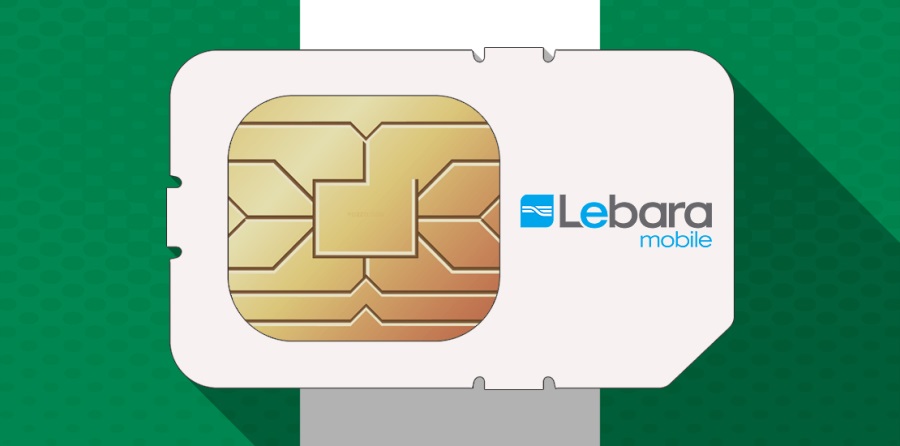
Lebara Nigeria has launched the Agent Registration Portal (ARP), a new digital onboarding platform designed to accelerate the expansion of its retail and point-of-sale (POS) network nationwide.

Through the Agent Registration Portal, Lebara aims to create awareness, build trust and credibility within the retail channel, create opportunities for Nigerians to register and become Lebara partners, and position the brand as a modern, digitally driven, and opportunity – focused telecom operator.
With the introduction of the Agent Registration Portal, alongside its earlier customer-focused digital tools, Lebara Nigeria is designed to empower SMEs, independent distributors, SIM sellers, and retailers nationwide by removing traditional barriers to entry and enabling compliant, digital-first onboarding at scale.
Also, positioning itself as a digitally driven telecom entrant, focused on speed, compliance, and nationwide reach as it prepares for full-scale operations across the country.
The rollout comes as part of a national onboarding campaign running from January to March, 2026, targeting both low-scale retail agents and high-scale distributors.
Through the portal, Lebara aims to rapidly grow its digital and physical presence across Nigeria while ensuring all partners meet required compliance and verification standards
The Agent Registration Portal is accessible via the Lebara Nigeria website and allows prospective agents and distributors to complete the entire onboarding process online.
Once approved, partner locations are activated as Lebara POS outlets, trained and authorized to sell Lebara starter packs, data bundles, vouchers and other Lebara Nigeria products and services.
The launch builds on Lebara Nigeria’s earlier digital initiatives ahead of its full market entry.
Prior to the Agent Registration Portal rollout, the company introduced a Number Registration Portal, enabling prospective customers to select and reserve preferred phone numbers before the network goes live.
The service allows users to secure personalised numbers such as memorable dates, culturally significant digits, or easy-to-recall patterns through a simple online process, giving customers early control over their mobile identity.
The Agent Registration Portal onboarding process follows a structured flow from account creation and document upload to compliance checks, verification, approval, and activation. Applicants are required to submit details such as National Identification Number (NIN), valid government-issued ID, Tax Identification Number (TIN), and address information. Where all documentation is complete, onboarding can be completed within 30 minutes, after which applicants receive email confirmation and next steps.
Commenting on the launch, Mary O. Akin-Adesokan, Chief Operating Officer of Lebara Nigeria, said the portal is central to the company’s operational and growth strategy in the country.
“The Agent Registration Portal is a key part of our strategy to scale Lebara’s retail presence nationwide. It allows us to onboard partners faster, ensure full compliance, and provide both small retailers and large distributors with a transparent and reliable way to do business with Lebara.
“Together with our earlier Number Reservation Portal, it demonstrates our commitment to using digital innovation to simplify access, empower partners, and enhance the overall telecom experience,” she said.


MTN Nigeria CEO Karl Toriola has declared that the era of outsiders telling Africa’s story is over, positioning the continent as a global powerhouse of authors, architects, and innovators.

MTN Nigeria
Toriola made the remarks while accepting the ‘CEO of the Year’ award at the 2025 Most Influential People of African Descent (MIPAD) Recognition Ceremony in Lagos.
“For decades, stories about Africa were told about us, but rarely by us,” he said, rejecting outdated narratives of conflict and need. “We are no longer the subjects of the story; we are the authors. Africa’s time is now.”
He spotlighted African talent now leading global organisations, alongside Afrobeats and art reshaping world culture, drawing the Diaspora home with investments, not just emotions.
Toriola anchored his vision in MTN Nigeria’s journey, recalling a time when Nigeria’s 120 million people shared fewer than 500,000 telephone lines. “When MTN entered in 2001, analysts said Nigerians were too poor for mobile phones. They were wrong. They underestimated the Nigerian spirit,” he said.
From that first call in May 2001, MTN has connected over 84 million subscribers, building Nigeria’s “digital nervous system.”
He described Nigeria as uniquely investable due to its resilience and scalability, dedicating the award to MTN’s “real heroes”—engineers scaling masts and frontline customer service staff.
As MTN marks 25 years in 2026, Toriola pledged: “We are going nowhere. We are rooted in the soil of Nigeria and Africa.” He urged global elites to become the continent’s “Most Impactful Builders.”

Cybersecurity Firm Detects a Wave of Crypto Phishing Following BlockFi Bankruptcy

NCC Unveils Spectrum Roadmap to Power Nigeria’s $1tr Digital Economy

Universal Insurance to Raise N15bn to Meet Capital Rules

New Horizons Invests N50m to Empower Almajiris with Skills

IMF Upgrades Nigeria’s 2026 Growth Projection to 4.4%

Banks quietly move to enforce new ₦50 transfer levy from Jan. 1

FIRS says NIN, CAC Numbers to Serve as Tax IDs from 2026

FIRS Declares NIN, CAC Numbers as Tax IDs from 2026

US Begins Partial Visa Ban on Nigerians January 1

Galaxy Backbone Tops FG’s Website Performance Ranking




 E-Financial1 day ago
Here Are Nigerian Banks That Have Secured Their Licences

 E-Financial1 day ago
Zenith Bank Top Nigerian Bank Pick Ahead of GTCO, AccessCorp

 Telecom1 day ago
MTN CEO Toriola Hails Nigeria’s Telecom Transformation at MIPAD

 News1 day ago
ICPC Charges Ozekhome with Forgery, Corruption Over London Property

 E-Financial1 day ago
Nigeria Processed $92.1Bn Crypto Transactions in 12 Months — PwC

 Telecom1 day ago
Lebara Launches Agent Registration Portal

 E-Financial1 day ago
How Crypto Criminals Stole $700m from People – often Using Age-Old Tricks

 E-Business1 day ago
Elon Musk Seeks $134Bn from OpenAI, Microsoft for ‘Wrongful Gains’