

General News
The Missed Opportunities of the Nigerian Election 2023: A Metaphorical Analysis

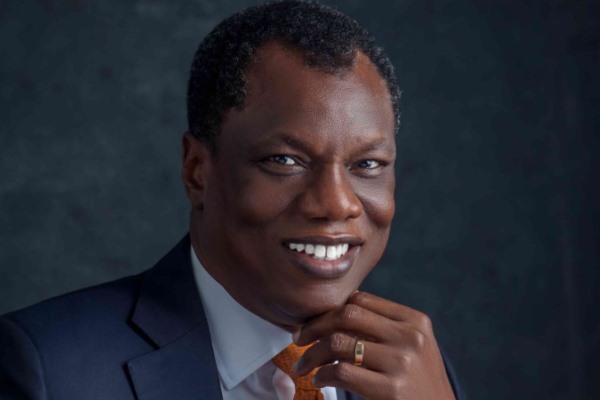
By Austin Okere
Following the turbulence of #NigeriaDecides2023, and with a calmer state of mind after the emotionally charged aftermath of the election, now may be an appropriate time to reflect and evaluate.

The opinions expressed here are solely my own and do not represent any institution to which I have direct or indirect ties. Given the highly charged and divisive nature of the overall discourse, it is essential to provide an impartial context.
I feel it’s relevant to disclose that I have a mixed heritage, being part Igbo, part Yoruba, and part Ghanaian. My paternal grandfather hails from Owerri in Imo State, while my paternal grandmother is from Offa in Kwara State, and my mother is Ghanaian. With that said, we can now delve into a metaphorical analysis of the missed opportunities presented by this significant election.
I believe that the history of a nation with enormous potential but lacking significant achievement is riddled with missed opportunities. Nigeria, a country that has been blessed by nature with abundant resources, including human, material, and commodities, has had tremendous opportunities to excel on the global stage.
One of the most conspicuous examples of wasted opportunities is in the Oil and Gas industry. Despite being Africa’s largest oil producer for decades, Nigeria’s output has been hindered by theft and sabotage in recent years. As a result, according to OPEC reports, the country has fallen to the fourth-largest oil producer in Africa.
Our persistent mistake is the failure to utilize the opportunities presented by oil windfalls to propel Nigeria forward as a nation, similar to contemporary countries like Saudi Arabia and Qatar. Since joining the Organisation of Petroleum Exporting Countries (OPEC) in 1971, Nigeria has had numerous boom opportunities.
For instance, oil prices increased by 400% in just six months following the Yom Kippur War, triggered by the Arab Oil Embargo. In 1981, the price of crude oil doubled from $14 to $35 per barrel after the Iran/Iraq war. Additionally, the uncertainties associated with the Iraqi invasion of Kuwait and the ensuing Gulf War in 1990 led to a spike in crude oil prices, known as the ‘Gulf War windfall’ during the reign of Head of State Ibrahim Babangida.
The most recent windfall occurred in 2022 due to the Russia-Ukraine war, with the five largest Oil and Gas companies in the West earning over $134b in excess profits, according to Global Witness.
However, this event barely caused a ripple on Nigeria’s economic landscape, as life in the country has become increasingly challenging, leading to an acute brain drain referred to as “JAPA” – the local term for emigration. This stands in stark contrast to Nigeria’s peak economic growth in 2014, when the country had a GDP of $569b, making it the largest economy in Africa. South Africa, with a GDP of $381b, was a distant second.
On a positive note, Nigeria has made major strides in the past two decades, particularly in the technology sector. The most successful GSM auction, led by Dr. Ernest Ndukwe, who was then the Executive Vice Chairman of the Nigerian Communications Commission, set the foundation for the dynamic and innovative growth of the telecoms and Fintech industries.
This has led to the emergence of unicorns and aspiring unicorns like MTN Nigeria, Airtel, Paystack, Interswitch, Flutterwave, and FifthLab by CWG Plc.
Another sector that has been greatly exploited is the creative industry, where Nigerian artists are considered one of the most remarkable inventions since sliced bread. Tems, 2Face, Burna Boy, Wizkid, Kunle Afolayan, and Stan Nze, among others, have not only won international awards but also regularly fill concert halls and stadiums worldwide.
Looking at the other side of the ledger we must examine the rued opportunities and see what we can learn from them. The most recent significant opportunities include, the eNaira (a bold attempt at digitizing the currency), the Naira redesign policy which according to the Central Bank of Nigeria, will enable her to take control of the naira in circulation, manage inflation, combat counterfeiting and ransom payment. Noble as these initiatives were, sloppy implementations have robbed us of the momentum trust into a new and better life.
The mother of all lost opportunities is the Nigerian election 2023. Here was an opportunity to outdo ourselves against the June 12, 1992 election, which has generally been adjudged as the most free, fair and credible election in the land.
A lot of work had gone into bringing this aspiration into reality; a key electoral act had been passed that ensured that election process would eliminate unnecessary manual steps that provide room for manipulation thereby aiding a free, fair and credible election process.
The Independent Electoral Commission had gone to great lengths to revamp the technology base for the election; the INEC Voter Enrollment Device (IVED), the Bimodal Voter Accreditation System (BVAS) to help reduce the cases of manual manipulation of figures, and the INEC Election Result Viewing Portal (IREV) that will enable seamless transmission and display of election results in almost real time, so that results could be verified with what was declared and signed onto by all representatives at the polling units. The system had been successfully tested in the 2022 governorship elections in three states in the South West and South Eastern Regions.
INEC had a budget of N40b annually but was able to secure an additional N305b to conduct the 2023 elections. Despite the significant amount of money allocated and spent on the process, Nigerians saw it as a valuable investment in ending electoral manipulation and allowing the electorate to choose their leaders. This led to increased youth engagement, with many advocating for voter registration and participation. However, on election day, there were significant issues with the use of BVAS and the promised IREV portal was not utilized, leading to the announcement of results that many believed did not reflect the votes cast. This broke the trust that is necessary for an electoral process to be successful. Elder statesmen, including former President Chief Olusegun Obasanjo, called for the cancellation of elections in areas where BVAS was not used. This was a missed opportunity to take a significant step forward for Nigeria’s future and will be remembered as the most controversial election in the country’s history. Electoral hopes were supremely raised and woefully dashed. It is important to understand what went wrong and why, in order to prevent future failures.
Failure is not something to be proud of, but in Nigeria, it seems to be the norm. The INEC has stubbornly refused to offer any apologies or explanations to those who are dissatisfied with the election results, instead directing them to seek redress in court. While going to court may expose the flaws in the process and ultimately strengthen it, it is only a part of the healing and improvement process.
This election had the potential to be a turning point for Nigeria, and the country could have been celebrated as a trailblazer for modern elections in Africa, which could have put an end to the endless conflicts and losses that come with electoral disputes. However, it seems that we are choosing to ignore the truth while at the same time hoping for a just and peaceful outcome. It feels like we are in a bus careening towards a ditch.
In my opinion, any action we take now will be too little, too late. Even if INEC ultimately declares either Peter Obi of the Labour Party or Abubakar Atiku of the Peoples Democratic Party the winner following court proceedings, the process has already been tainted, and trust has already been lost. Whoever takes office on May 29th, 2023, will lack popular legitimacy, a burden they will carry throughout their tenure.
But we are Nigerians, a people of unparalleled resilience. We will keep pushing forward and try again in four years. May God save our country.
Austin Okere is a thought leader, and business mentor. Currently an Entrepreneur-in-Residence at Columbia Business School, New York, Austin has also facilitated at the United States International University in Kenya and has been appointed to the Advisory Board of the Global Business School Network in Washington in recognition of his contribution to the development of business education and knowledge transfer in Africa.


National Identity Management Commission (NIMC) has warned Nigerians to disregard a viral online flyer claiming that a free portal has been opened for the correction of National Identification Number (NIN) data.

In a statement posted on its official X (formerly Twitter) handle, the commission described the flyer as fake and cautioned the public against using any links associated with it.
“The public is hereby advised not to use the above for modifying their NIN data. All modifications should only be done via the official channel,” NIMC stated, directing users to its authorised self-service portal.
The misleading flyer, which has circulated widely on social media, carries the logos of NIMC and the federal government, falsely claiming that authorities had launched a special correction portal in response to a “high level of complain.”
It lists services such as name, gender, and date of birth corrections, and provides links redirecting users to a suspicious “gvly.xyz” domain—an address the commission says is not affiliated with any government platform.
NIMC noted that the flyer has since been marked “FAKE” in red, indicating it is being recirculated as part of efforts to debunk the misinformation.
The Commission reiterated that all NIN data modifications can only be carried out through its official self-service platform, urging Nigerians to remain vigilant and avoid falling victim to online scams.


Moniepoint Inc. (“Moniepoint” or the “Company”), Africa’s all-in-one financial ecosystem platform for individuals, businesses and their customers, today announced the acquisition of Orda Africa (“Orda”), a leading cloud-based restaurant management platform operating in Nigeria.

Moniepoint
Under the terms of this acquisition, Orda will become part of the Moniebook platform, Moniepoint’s all-in-one Point-of-Sale (POS) and business management platform. Since launching its business management tools product in 2025, Moniebook has rapidly become the go-to platform for thousands of African businesses seeking integrated financial and operational tools, seamlessly unifying payments and bookkeeping in one platform.
With Orda, restaurant owners can now gain access to this proven ecosystem that creates unprecedented opportunities to scale operations, optimize performance, and access credit, as well as the extensive reach of Moniepoint which has powered growth for millions of African businesses.
The acquisition comes as Africa’s food service industry experiences unprecedented growth, with the sector valued at $50 billion and Nigeria’s market alone projected to reach $19.31 billion by 2030, growing at 11.73% annually. With Orda’s restaurant-focused capabilities now part of the Moniepoint ecosystem, the platform is well-positioned to capture this opportunity.
Founded in 2015 by Tosin Eniolorunda and Felix Ike, today Moniepoint has grown into one of Nigeria’s leading distributors of financial services as well as a trusted platform for many of the country’s MSMEs especially in the informal sector.
The company has considerably expanded its offerings to include digital payments, business and personal banking, credit, cross-border payments, and business management tools with a customer base exceeding 20 million active businesses and personal banking customers and processes over US$250 billion in digital payments transaction value annually.
Tosin Eniolorunda, Co-Founder and Group CEO of Moniepoint Inc., said: “The food industry isn’t just about feeding people, it’s a major source of jobs and daily survival for many Africans. It highlights how vital the informal sector is, not just for the economy, but for everyday life across the continent.
Data has shown us that Africa’s restaurant sector is one of the continent’s most dynamic economic engines, yet the majority of food businesses still operate with manual processes and fragmented tools. By bringing Orda into Moniepoint, we are giving restaurant owners what they deserve: one simple platform that handles everything from managing their kitchen to growing their business. Our goal remains to create financial happiness for Africans, giving them the tools to reach their full potential and that’s exactly what we’ve built here.”
Founded in 2020, Orda was built to give Africa’s small and independent restaurants the tools they need to run more efficiently, providing a purpose-built software to businesses that had long operated without it.
Guy Futi, CEO of Orda, reassured existing customers: “Orda has found the perfect home in Moniepoint. We have spent years building deep expertise in restaurant operations, but we have always known that to truly transform the industry, we needed to connect that expertise with comprehensive financial infrastructure.
“That’s exactly what this integration delivers. For our customers, we are assuring a smooth transition with no disruption to the platform and retained access to the support you are used to. What changes is your access to opportunities.
“Over the coming weeks, being part of Moniepoint means you’ll have more tools, more reach, and more ways to grow your business than ever before”
Combining their respective strengths, Moniepoint and Orda deliver a purpose-built solution that empowers food businesses at every scale to manage orders, track inventory, pay suppliers, and access working capital, all in one seamless experience.
This move represents a demonstrated commitment to building a dedicated financial infrastructure designed around the unique complexity of Africa’s food economy.
For the millions of food entrepreneurs across the continent, from the everyday buka owner to the high-end restaurateur, this acquisition means less time managing multiple tools or carrying out arduous manual work and more time doing what they do best – feeding Africa.

More than 45,000 jobs have been cut across the global technology sector in the first few months of 2026, according to data from RationalFX, signalling that the industry is still adjusting after a period of aggressive hiring rather than returning to a full growth phase.

“In 2025, automation, artificial intelligence, and sustained cost-discipline measures drove much of the downsizing, with entire departments restructured or eliminated in favour of leaner, AI-assisted workflows. This trend has continued full steam into 2026,” said Alan Cohen, analyst at RationalFX.
According to the report, if the current rate of redundancies is sustained, total layoffs in 2026 could surpass the 245,000 recorded in 2025.
The majority of these layoffs have been concentrated in the United States, with major companies continuing to trim their workforce despite stable core operations.
Amazon has announced approximately 16,000 job cuts this year, while Block has also reduced thousands of roles as it tightens operations and shifts focus towards artificial intelligence.
There are indications that further reductions may follow.
Meta is reportedly considering additional layoffs as it increases investment in AI infrastructure, while PayPal and Klarna are reassessing spending and hiring strategies amid ongoing uncertainty.
Established technology firms are also undergoing restructuring. Dell has reduced its workforce by around 11,000 over the past year as part of a broader reorganisation, while Salesforce has cut approximately 1,000 roles in 2026 while aligning its teams more closely with AI-driven products.
Outside the United States, layoffs have been smaller in scale but more geographically dispersed.
Australia has reported around 2,650 job cuts so far this year, followed by Sweden with roughly 1,923 and Netherlands with about 1,700.
Other markets have also been affected. Israel and India have recorded approximately 1,539 and 1,520 layoffs respectively, with Israel’s startup ecosystem particularly sensitive to tighter funding conditions, while in India, both startups and larger IT firms have reduced headcount as global client spending slows.
In Singapore, around 1,016 layoffs have been reported, reflecting a softer hiring environment across Asia’s major technology hubs, where companies are adopting a more cautious approach amid uneven demand.
Across Europe, job cuts have been comparatively limited but still noticeable.
The United Kingdom has recorded around 1,000 layoffs, while Czech Republic and Germany have seen smaller reductions.
The broader trend suggests that technology companies are shifting towards leaner operations and more defined priorities following years of expansion. Increasing investment in automation and artificial intelligence is also reshaping the types of roles in demand.
For employees, the impact is becoming increasingly visible, with hiring slowing and becoming more selective. While opportunities remain, companies are taking a more measured approach to recruitment compared to the rapid expansion seen in previous years.
Further credit… .storyboard18.com

Nigeria Spends $470m on AI-powered Surveillance Devices- Report

Metaverse Collapses, Horizon Worlds Shuts Down on Quest

FG Plans New HIV Prevention Injection in 8 States, FCT

SEC Issues Six-Week Ultimatum to Market Operators to Submit Recapitalisation Plan

NIMC Disowns Fake NIN Portal

Kaspersky Discovers New Phishing Campaign Exploiting Google Tasks Notifications to Steal Corporate Credentials

esentry 2025 Report Shows Healthcare, Financial Services and Telecoms as Staging Grounds for Increased Cyberattacks in Africa

AfDB, UNDP Launch $10Bn AI Initiative for Africa

MultiChoice Suspends Yearly DStv Price Hike as Canal+ Pushes Growth

MTN Nigeria Posts Record N1.70 Trillion Pre‑Tax Profit, Declares N20 Dividend for 2025




 General News1 day ago
Tech Firms Sack over 45,000 so Far in 2026

 E-Financial1 day ago
CBN Wins Central Bank of the Year Title @13th Global Awards

 Telecom1 day ago
FG Taps Quest Merchant Bank for Advisory on 90,000km Fibre Project

 General News1 day ago
Rockefeller, Global Energy Alliance Cross $100 million Mark in Africa Electrification Push

 General News1 day ago
Jury Finds Elon Musk Liable for Misleading Twitter Investors

 News1 day ago
Dr Krishnan Ranganath to Lead UniCloud Africa in Continental Digital Infrastructure Push

 News1 day ago
Morney Launches in Nigeria as E-invoicing Drives Finance Digitisation

 General News1 day ago
SEC, NYSC Partner to Combat Ponzi Schemes