

E-Business
The Workplace of the Future – Emergence of a New Culture


By Austin Okere
As the workplace is becoming more millennial, a new cultural trend is emerging that challenges the traditional ethos that have held sway since the days of Adam Smith.
The Enterprise as we have hitherto known, is defined by her purpose, values, culture and vision. These are essentially the reason d’être and form the basis of the tradition of the company.
As the company is not able to direct her own affairs, this function is entrusted by the promoters of the business, being the Shareholders to Custodians, being Directors, who in turn appoint Managers to run the daily affairs of the company. Let us call this group the CUSTODIANS of the business. Typically, they know no other work, pledging their full working time and allegiance to the enterprise by whom they are employed and paid. They are your typical company man.
As more millennials are becoming working age adults, we are beginning to see a strong shift in this trend, that threatens to fundamentally change the structure of the enterprise as we know it today. To start with, Millennials are not wont to seeking employment in a company, preferring rather to become entrepreneurs in charge of their own affairs, notwithstanding that they may not have the mechanism and full complement of resources that we would have deemed necessary to embark on such a venture yesteryears.
They are typically a one-man enterprise selling slices of time and talent; or a few friends coming together to offer their skills to anyone who wants them for a project, and moving onto other projects, possibly with other companies. They do not want to be an integrated part of any company, nor be bound by any restrictions of time and space.
They typically work from home, parents garage or coffee shop. They tend to be very good at their niche, aided by the ubiquity of technology and their deep command of it. They do not want to clock hours at work but rather to be paid on the outcome of their deliverables. Let us call these the ENABLERS.
Today’s workplace is beginning to divide into CUSTODIANS; typically, Baby Boomers and ENABLERS; typically, millennials. A recent survey shows that I conducted on LinkedIn shows that even within the custodian’s there is a growing tension about whether they have a right embark on their own side businesses (if it does not conflict with that of the company); the argument being that it enhances creativity and entrepreneurial acumen.
They also claim that it is very widespread, albeit undercover, and that it is about time it came out into the open within an appropriate governance structure.
There is also the question of whether they need to commute all the way in traffic to the workplaces and face the same traffic going home; or they could work from home and deliver the output of their jobs much the same way as the millennials tend to do.
There is also a growing tension about the intrusion into their free time, upsetting their work-life balance, by technology enabled mechanisms which keep them always “switched on”, such as Emails, Text Messages, and even Calls on their mobile phones, consistently beeping even during the weekends and holidays.
This was not a problem during the days of the landlines and fax machines. They argue that even if they are not required to respond immediately, it changes their entire mood during their free time with their families and thereby accelerate their burnout rate.
Technology has always had a double-edged sword in organizational relationships. Technology could be a bridge or a barrier, depending on how it is used in the Firm.
Technology enables connections but does not necessarily enhance relationships. Relationship is key, because relationship is influence, and influence is leadership. A recent study on social media showed that of 130 Facebook Friends, a millennial could only rely on three. It is troubling that our millennials, who are used to breaking up relationships with a mere text message, are going to be the workforce of tomorrow.
The impact is that while they may think they have connections, what they really have are weak relationships; especially if each is working from his own space outside the office. This could inadvertently accentuate the undesired “silo-effect” in organizations.
One face to face encounter is often better and more effective than 100 emails, especially when the issue at hand is delicate. It is very difficult to feel connected to a sense of purpose or to our colleagues, or indeed feel a part of the organization if we over-rely on technology for communication.
The bigger challenge is whether we will have enough CUSTODIANS in the future to uphold the sustainability of the Enterprise, or whether the future of the company as we know it today is in peril. I believe we should be more deliberate about engaging and shaping these trends, than bury our heads in the sand, hoping it will all blow away somehow.
It will be interesting to share your thoughts.
Austin Okere is the Founder of CWG Plc, the largest ICT Company on the Nigerian Stock Exchange & Entrepreneur in Residence at CBS, New York. Austin also serves on the Advisory Board of the Global Business School Network, and on the World Economic Forum Global Agenda Council on Innovation and Intrapreneurship. Austin now runs the Ausso Leadership Academy focused on Business and Entrepreneurial Mentorship


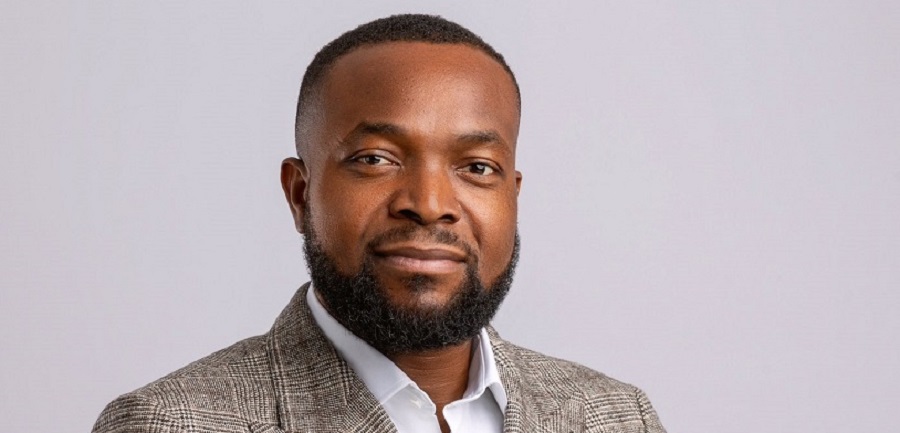
Bosun Tijani, minister of Communications, Innovation and Digital Economy, has said the government is shifting focus from expanding access to ensuring “meaningful connectivity” that drives economic growth and inclusion.

Bosun Tijani, minister of Communications, Innovation and Digital Economy
The minister made the statement on Friday while addressing stakeholders at the inauguration of board members of the Universal Service Provision Fund (USPF) in Abuja.
He said that although Nigeria had made significant progress since the introduction of GSM services, millions of people, particularly in rural and underserved communities, remain either unconnected or unable to fully benefit from digital services.
Dr Tijani highlighted ongoing investments in digital infrastructure, including plans to deploy 90,000 kilometres of fibre optic network and nearly 4,000 telecom towers nationwide.
He said initiatives under the USPF had improved access through projects such as rural connectivity and digital facilities in schools but stressed that the next phase must prioritise effective usage.
“It is not enough to connect a community. We must ensure that schools can teach with digital tools and that small businesses can access market opportunities,” he said, citing a pilot project in the Kura community where connectivity has enhanced access to communication, education and healthcare.
Aminu Maida, executive vice chairman, Nigerian Communications Commission (NCC) also called for a shift towards meaningful connectivity, noting that while data usage had grown significantly, it remained concentrated in urban areas.
According to him, recent data shows that telecom usage has increased by about 160% over the past two years, largely driven by urban demand.
“When we drill down, we see that a lot of that growth is actually in urban centres. So, the gap between those who are not connected or not meaningfully connected is growing,” he said.
Dr Maida added that the trend underscored the need for the USPF board to intensify efforts to bridge both access and usage gaps across the country.
Both officials emphasised the importance of collaboration, sustainable investment models and improved digital literacy to ensure that connectivity translates into real economic benefits for Nigerians.

A jury in Los Angeles has found technology companies, Meta and Google liable for contributing to a young woman’s social media addiction, in a case being described as a landmark ruling.

The 20-year-old woman, identified only as Kaley, argued that she became addicted to Google’s YouTube and Meta’s Instagram from an early age due to their attention-driven design features.
According to her testimony, she began using YouTube at the age of six after downloading the app on her iPod Touch to watch videos about lip gloss and online games.
Kaley told the court that she joined Instagram at nine, bypassing parental restrictions put in place by her mother, and spent extended periods on social media.
The trial, which lasted about a month, with arguments and evidence from both sides.
Jurors also heard testimony from Mark Zuckerberg, chief executive, Meta and Adam Mosseri, Instagram head.
However, Neal Mohan, YouTube chief executive, did not testify.
The jury found that the companies were negligent in the design of their platforms and failed to adequately warn users about potential harms. Meta and Google were ordered to pay the woman $3 million in damages.
Jurors also recommended additional punitive damages, including $900,000 against YouTube and $2.1 million against Meta, according to company spokespersons.
The jury apportioned 70 per cent of the responsibility to Meta and 30 per cent to YouTube.
Kaley was present in the courtroom when the verdict was delivered, alongside parents of other teenagers who say they were harmed by social media use. Both companies said they plan to appeal the decision.
“We respectfully disagree with the verdict and will appeal. Teen mental health is profoundly complex and cannot be linked to a single app. We will continue to defend ourselves vigorously as every case is different, and we remain confident in our record of protecting teens online”, a Meta spokesperson said.
José Castañeda, Google spokesperson, said the case misunderstands YouTube, which is a responsibly built streaming platform, not a social media site.

Nigeria and Finland have signed a Memorandum of Understanding (MoU) on digitalisation and innovation, prioritising stronger cybersecurity cooperation amid a surge in cyberattacks targeting Nigerian institutions.

The agreement was formalised in Abuja on Monday between Dr Bosun Tijani, Nigeria’s minister of communications, innovation and digital economy, and Jarno Syrjälä, Finland’s under-secretary of state for international trade.
The MoU focuses on cooperation in digital governance, technology infrastructure, and cybersecurity to drive economic growth and improve public services, says a statement issued on Monday by Isime Esene, special assistant to the minister.
The agreement is a significant step in strengthening bilateral relations and advancing Nigeria’s digital economy agenda, says Tijani.
He notes the MoU builds on engagements in Helsinki in February, which centred on Nigeria’s Data Exchange Platform and Finnish participation in Project BRIDGE (Building Resilient Infrastructure for Digital Growth and Empowerment).
The talks also involved key Finnish finance institutions, including Finnvera and Finnfund.
The partnership is expected to unlock new opportunities for innovation and investment, positioning digital technology as a catalyst for shared prosperity, says Tijani.
Finland is committed to supporting the development of resilient, secure, and human-centric digital systems in Nigeria, says Syrjälä. He adds that digitalisation should enhance public trust and empower citizens, noting that Nigeria remains a strategic partner for Finland in Africa.
The agreement complements Finland’s lead role in a €23 million Team Europe Initiative aimed at strengthening Nigeria’s digital public services.
This programme is implemented by Finland’s development agency, HAUS, in collaboration with Estonia’s ESTDEV, and supports the 3 Million Technical Talent (3MTT) programme.
The deal comes as Nigerian organisations record the highest number of cyberattacks in Africa. In January 2026, organisations experienced an average of 4 701 attacks per week, a 12% year-on-year increase, according to Check Point Research.
In response, authorities are developing the 2026 National Cybersecurity Policy and Strategy update.
Expected later this year, the framework will mandate minimum cybersecurity investment requirements for organisations operating critical national information infrastructure, notes the ministry.

NDIC Insures 99 Percent of Bank Customers

FG Shifting Focus to “Meaningful Connectivity” to Drive Inclusion – Minister

CBN Bars Chronic Loan Defaulters from Accessing Loans

Google Rolls Out Search Live AI to 200+ Countries, Including Nigeria

Breaking…..Kuda Lays Off Many Employees in Broad Restructuring

Kaspersky Discovers New Phishing Campaign Exploiting Google Tasks Notifications to Steal Corporate Credentials

Spotify’s Loud & Clear Report Reveals Over ₦60Bn Revenue for Nigerian Artists in 2025

China Threatens to Shut Nigeria’s Satellite Over $11.44m Unpaid Debt

MTN Nigeria Posts Record N1.70 Trillion Pre‑Tax Profit, Declares N20 Dividend for 2025

Madonna University Taps Tech Guru Adote for Strategic Board Role




 News2 days ago
EU Pumps €290m into Nigeria’s Digital, Health, Agri Sectors

 Telecom2 days ago
US Jury Finds Meta, Google Liable in Landmark Social Media Addiction Case

 E-Business2 days ago
5 Wealth-Building Strategies for Nigerian Women-led Businesses

 News2 days ago
Firm Shares Tips for Updating Your Digital Habits for an AI-driven World

 Telecom2 days ago
Mobile Money Transactions Accounted for $2 trillion in 2025

 E-Business2 days ago
Nigeria, Finland Sign Cybersecurity Pact

 E-Financial2 days ago
MoneyMaster Enhances App, Rewards Users with Data and Airtime Bonuses

 News1 day ago
Francis Okafor Stuns China, Emerges Second-Place Winner @ Tencent OpenClaw Hackathon