

E-Business
The Workplace of the Future – Emergence of a New Culture


By Austin Okere
As the workplace is becoming more millennial, a new cultural trend is emerging that challenges the traditional ethos that have held sway since the days of Adam Smith.
The Enterprise as we have hitherto known, is defined by her purpose, values, culture and vision. These are essentially the reason d’être and form the basis of the tradition of the company.
As the company is not able to direct her own affairs, this function is entrusted by the promoters of the business, being the Shareholders to Custodians, being Directors, who in turn appoint Managers to run the daily affairs of the company. Let us call this group the CUSTODIANS of the business. Typically, they know no other work, pledging their full working time and allegiance to the enterprise by whom they are employed and paid. They are your typical company man.
As more millennials are becoming working age adults, we are beginning to see a strong shift in this trend, that threatens to fundamentally change the structure of the enterprise as we know it today. To start with, Millennials are not wont to seeking employment in a company, preferring rather to become entrepreneurs in charge of their own affairs, notwithstanding that they may not have the mechanism and full complement of resources that we would have deemed necessary to embark on such a venture yesteryears.
They are typically a one-man enterprise selling slices of time and talent; or a few friends coming together to offer their skills to anyone who wants them for a project, and moving onto other projects, possibly with other companies. They do not want to be an integrated part of any company, nor be bound by any restrictions of time and space.
They typically work from home, parents garage or coffee shop. They tend to be very good at their niche, aided by the ubiquity of technology and their deep command of it. They do not want to clock hours at work but rather to be paid on the outcome of their deliverables. Let us call these the ENABLERS.
Today’s workplace is beginning to divide into CUSTODIANS; typically, Baby Boomers and ENABLERS; typically, millennials. A recent survey shows that I conducted on LinkedIn shows that even within the custodian’s there is a growing tension about whether they have a right embark on their own side businesses (if it does not conflict with that of the company); the argument being that it enhances creativity and entrepreneurial acumen.
They also claim that it is very widespread, albeit undercover, and that it is about time it came out into the open within an appropriate governance structure.
There is also the question of whether they need to commute all the way in traffic to the workplaces and face the same traffic going home; or they could work from home and deliver the output of their jobs much the same way as the millennials tend to do.
There is also a growing tension about the intrusion into their free time, upsetting their work-life balance, by technology enabled mechanisms which keep them always “switched on”, such as Emails, Text Messages, and even Calls on their mobile phones, consistently beeping even during the weekends and holidays.
This was not a problem during the days of the landlines and fax machines. They argue that even if they are not required to respond immediately, it changes their entire mood during their free time with their families and thereby accelerate their burnout rate.
Technology has always had a double-edged sword in organizational relationships. Technology could be a bridge or a barrier, depending on how it is used in the Firm.
Technology enables connections but does not necessarily enhance relationships. Relationship is key, because relationship is influence, and influence is leadership. A recent study on social media showed that of 130 Facebook Friends, a millennial could only rely on three. It is troubling that our millennials, who are used to breaking up relationships with a mere text message, are going to be the workforce of tomorrow.
The impact is that while they may think they have connections, what they really have are weak relationships; especially if each is working from his own space outside the office. This could inadvertently accentuate the undesired “silo-effect” in organizations.
One face to face encounter is often better and more effective than 100 emails, especially when the issue at hand is delicate. It is very difficult to feel connected to a sense of purpose or to our colleagues, or indeed feel a part of the organization if we over-rely on technology for communication.
The bigger challenge is whether we will have enough CUSTODIANS in the future to uphold the sustainability of the Enterprise, or whether the future of the company as we know it today is in peril. I believe we should be more deliberate about engaging and shaping these trends, than bury our heads in the sand, hoping it will all blow away somehow.
It will be interesting to share your thoughts.
Austin Okere is the Founder of CWG Plc, the largest ICT Company on the Nigerian Stock Exchange & Entrepreneur in Residence at CBS, New York. Austin also serves on the Advisory Board of the Global Business School Network, and on the World Economic Forum Global Agenda Council on Innovation and Intrapreneurship. Austin now runs the Ausso Leadership Academy focused on Business and Entrepreneurial Mentorship


E-Business
Kaspersky Reveals Malware Attacks on SMBs Disguised as AI Services Surged by Five Times in 2026

From January to April 2026, Kaspersky security solutions detected more than 33,300 attacks on small and medium-sized businesses (SMBs), in which malicious or unwanted software for PCs were disguised as popular artificial intelligence (AI) services. This number has surged by almost five times when compared to the same period in 2025.

A new Kaspersky report reveals threat analysis and mitigation strategies to help SMBs protect themselves against the evolving threat landscape.
Kaspersky experts explored the extent to which threat actors target small and medium-sized businesses with malware disguised as legitimate AI services, considering the growing popularity of such tools for the business workflow. At the beginning of 2026 the most common lures in cyberattacks involved malware posing as ChatGPT (42%), Claude (24%), and DeepSeek (20%).
Among unique malicious files detected in the SMB sector and masqueraded as AI services, Kaspersky experts observed mainly different Trojware (Trojans and Trojan-like malware), including those capable of downloading and running other malware on compromised devices.
Trojware disguises itself as harmless files to trick users into installing them. Their functionality may vary depending on the type of the malware. It may include stealing, deleting, blocking, modifying or copying users’ data, as well as other malicious capabilities. Given this, Trojware represents a highly dangerous cyberthreat to entrepreneurs and businesses.
However, in 2026 Kaspersky telemetry detected even more attacks on SMBs, in which malicious or unwanted software for PCs were disguised as messenger apps and video conferencing software: Telegram, WhatsApp, Zoom and Microsoft Teams. From January to April Kaspersky solutions blocked almost 415,000 such attacks.
The number of attacks changed marginally compared to the previous year’s figures. Thus, Kaspersky experts note that the lure of fake communication apps remains a widespread cyberthreat.
“The threat landscape is evolving with new lures constantly appearing. For example, for the first four months of this year our solutions for small and medium-sized businesses detected hundreds of attacks, in which malicious or unwanted software were disguised as OpenClaw – an AI tool that rapidly gains popularity in 2026.
Corporate employees are increasingly using various AI services and other tools in their workflows, including those that are publicly available. Thus, to be on the safe side, SMB employees – as well as all users – should exercise caution when looking for software on the Internet. Always check the correct spelling of the website and links in suspicious emails, and use robust security solutions,” says Vasily Kolesnikov, security expert at Kaspersky.
“As adversaries constantly refine their methods to exploit human error, the need for up-to-date security awareness training for businesses of all kinds and sizes is undeniable. However, the reality is that micro-organisations often struggle to allocate time and budget to regularly update their staff on the latest threats and malicious trends.
“We believe this issue can be largely addressed through solutions tailored for small businesses which deliver robust core protection while also providing accessible security education,” adds Rodion Pyanov, product manager, Kaspersky Small Office Security.
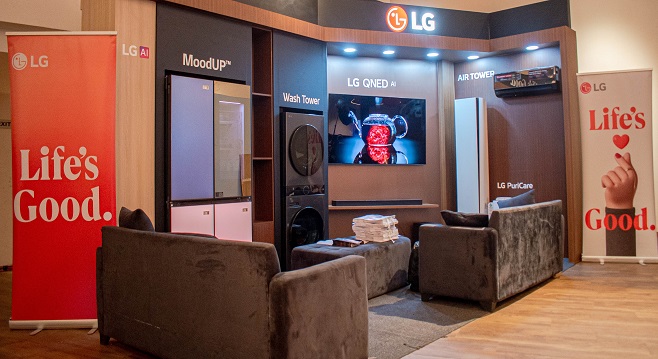
LG Electronics has reaffirmed its commitment to advancing innovation and smart living across Africa by participating as a supporting sponsor at the Africa Technology Expo (ATE) 2026, where the company is showcasing its latest portfolio of premium consumer electronics and home appliance innovations.

The two-day expo, themed around strengthening Africa’s enterprise technology ecosystem through collaboration and innovation, has brought together industry leaders, technology innovators, multinational companies, policymakers, and entrepreneurs to explore opportunities for cross-border partnerships and digital transformation across the continent.
As one of the supporting sponsors of this year’s event, LG’s interactive exhibition booth has become a major attraction, offering visitors firsthand experience of the company’s latest AI-powered technologies designed to enhance everyday life while delivering greater comfort, convenience, energy efficiency, and connectivity.
Among the innovations on display are the latest LG QNED TV, delivering exceptional picture quality and immersive entertainment; the iconic MoodUP™️ Refrigerator, which combines intelligent cooling with customizable LED door panels; the innovative LG WashTower™️, an all-in-one premium laundry solution that maximizes space and efficiency; the energy-efficient LG ARTCOOL Air Conditioner and LG Air Tower, designed to provide smarter climate control; alongside LG’s advanced Dehumidifier and other intelligent home solutions.
Speaking on LG’s participation, Mr. H.S. ji, Managing Director, LG Electronics West Africa, said: “Africa Technology Expo provides an excellent platform to engage with innovators, businesses, and consumers who are shaping the future of technology across the continent. At LG, innovation goes beyond creating advanced products, it is about developing meaningful solutions that improve everyday life.
“Our participation reflects our commitment to supporting Africa’s digital transformation while introducing intelligent technologies that make homes and workplaces smarter, healthier, and more energy-efficient.”
The Africa Technology Expo was established to foster stronger collaboration among African businesses, emerging enterprises, and multinational organisations. During the opening ceremony, the organisers emphasized the need for deeper continental collaboration to unlock Africa’s innovation and economic potential, noting that previous editions of the expo have facilitated approximately $192 million in business deals among participating companies.
LG’s presence at the event aligns with this vision by demonstrating how cutting-edge consumer technology can support economic growth, digital inclusion, and sustainable development across Africa.
Visitors to the LG booth are participating in live product demonstrations, interactive experiences, and expert consultations, gaining valuable insights into how LG’s AI-powered ecosystem seamlessly connects home appliances and entertainment products to deliver a smarter lifestyle.
As technology continues to reshape industries and everyday living, LG remains committed to driving innovation that empowers consumers, supports enterprise growth, and contributes to Africa’s evolving digital economy.


Small and Medium Enterprises Development Agency of Nigeria (SMEDAN) has secured a 12 million-dollar commitment from the South Korean Government to establish a Skills Acquisition Centre in Abuja to boost entrepreneurship and strengthen Nigeria’s Micro, Small and Medium Enterprises (MSMEs).

SMEDAN
The Director-General of SMEDAN, Mr Charles Odii, disclosed this in a statement on Sunday to commemorate the 2026 World MSME Day with the theme: “Empowering MSMEs through Innovation and Sustainable Industrial Development.”
Odii said the proposed centre would provide vocational and entrepreneurial training for thousands of young Nigerians and improve the productive capacity of small businesses across the country.
He said the agency was awaiting the allocation of land by the Federal Capital Territory Administration (FCTA) to commence the project.
According to him, SMEDAN is determined not to allow Nigeria to lose the opportunity presented by the South Korean Government’s intervention.
“We need land in the FCT to build the Skills Acquisition Centre. If the FCT Administration is unable to provide one, we will use our office premises in Idu, Abuja, because we do not want Nigeria to miss this 12 million-dollar commitment and opportunity offered by the Korean Government to support skills and vocational training,” he said.
Odii described MSMEs as the backbone of Nigeria’s economy, noting that the agency’s interventions were aimed at empowering small businesses to drive employment and economic growth.
“Small businesses are the heartbeat of Nigeria’s economy. They contribute significantly to employment generation and economic growth.
“By providing infrastructure, skills and financing, we are creating an enabling environment for them to grow, thrive and contribute meaningfully to national development,” he said.
The SMEDAN boss also announced the launch of a N500 million zero-interest Grow Fund to improve access to affordable finance for MSMEs.
He said the facility would be disbursed through cooperative societies, trade associations and business membership organisations under a revolving loan arrangement.
Odii explained that the association-based lending model was designed to improve accountability, ensure effective monitoring and guarantee that funds reached genuine entrepreneurs.
“We visited traders at the market because it is not enough to sit in offices and formulate policies without understanding the realities of the people we are meant to serve.
“We met with butchers, pepper sellers, vegetable traders, provision store owners and market leaders, and they all said one thing: they need access to affordable finance.
“That was why we immediately decided to launch the N500 million Grow Fund. We are not giving the money directly to individuals. We are giving it to associations that know their members and can monitor how the funds are used,” he said.
According to him, beneficiaries will access loans ranging from N250,000 to N500,000, depending on their business needs, without paying interest.
“The funding is meant to support and improve businesses. It should be used for working capital, workspaces, tools and other productive business needs.
“It is a revolving fund. When one beneficiary repays, another entrepreneur can access the same money. This way, the impact of the intervention continues to expand and more small businesses can benefit,” he added.
Odii said the agency planned to expand the fund through partnerships with state governments, development partners and financial institutions willing to provide matching funds.
He also disclosed that SMEDAN had commenced consultations on a new National MSME Policy, expected to be relaunched in November, to strengthen the policy framework for the sector.
He reaffirmed the agency’s commitment to supporting small businesses through skills development, access to finance and policies that would enhance their competitiveness and contribution to Nigeria’s economic development.

NDIC Says 281m Depositors Protected against Bank Failure

Wema Bank Suspends Telegram Operations over Scams

Akara Business Can Pay More than Bank Jobs – Governor Aide

OPay Unveils Emergency Lock, Safety PIN to Boost Customer Protection

FG Captures 32m Students DNEMIS ahead July 1 Rollout

Mobile Internet Gender Gap Widest in Africa – GSMA

London Strengthens Global Investment Ties with Africa @ First Ever London-Africa Business Summit

FG Targets Alleged N3tn Capital Flight, Opens Airtime Credit Market to Nigerian Fintechs

Japan, UNESCO Boost Digital Learning in 15 CoEs with Donation of ICT Equipment

Good News for DStv Users: Watch over 160 Channels Without Paying Extra




 E-Business1 day ago
LG Showcases AI-Powered Smart Living Innovations @ Africa Technology Expo 2026

 E-Financial1 day ago
UBA mobilises employees across Africa for environmental clean-up, wellness campaign

 Telecom1 day ago
OADC Reaffirms Abundant Capacity in Data Centres in Nigeria to Host Financial Data

 General News1 day ago
LASTMA Launches 3367 Toll-Free Hotline for Emergency Response, Traffic Management

 E-Financial1 day ago
PalmPay Calls for Trust, Infrastructure and Responsible AI to Drive Payment Ecosystem Innovation

 Telecom1 day ago
ALTON Backs NCC’s Local Smartphone Manufacturing Drive to Widen Digital Access

 E-Business1 day ago
Want a Business Loan Without Interest? SMEDAN Launches N500m Fund

 E-Financial1 day ago
ngCERT Raises Alarm over Surge in Banks’ ATM Cyberattacks