

E-Business
Three Decades After First Domain Registration AU Launches Dot Africa

The African Union (AU) has launched the. africa domain name, enabling African businesses, companies and individuals to champion their continent in the cybersphere.
The development is coming more than three decades after the first domain name was registered, and over 25 years after the World Wide Web launched, Africa has its own internet domain.
“With .africa, I would say Africa has finally got its digital identity,” said Nkosazana Dlamini-Zuma, the outgoing chair of the AU Commission, AFP reported. Chad’s Foreign Minister Moussa Faki Mahamat will replace Dlamini-Zuma at the AU next week.
Internet penetration is far lower in Africa than in other parts of the world. Only 10.7 percent of households in Africa are connected to the internet; by comparison, 82.1 percent of households in Europe are online, according to the International Telecommunication Union, a United Nations agency that monitors global broadband usage.
There are more than 300 million domain names in use; the most popular, .com, has 125.8 million registered domains, according to the Council of European National Top-Level Domain Registries (CENTR), a European body monitoring domain names.
African countries already have their own individual domains—from .ng from Nigeria, .ao for Angola to .zw for Zimbabwe—and the new .africa domain will provide an option for continental-wide sites, akin to the .eu domain in Europe.
The AU has prioritized increasing broadband penetration across the continent, setting a target of boosting it by 10 percent by 2018, according to its Agenda 2063 policy document.
But an occasional tactic among some African leaders has been to cut internet access at times of civil unrest.
The .africa domain will be rolled out by South Africa-based company ZA Central Registry. The company’s chief executive, Lucky Masilela, said that the new domain would provide a cut-price way for Africans to register their websites: .africa addresses will be available for $18 to anyone living in Africa, a fraction of the current cost of registering, which can be up to $250. “.africa is going to be a market disruptor and will assist in lowering the cost of domain names,” said Masilela, according to AFP.
The .africa domain is due to become publicly available in July.


Nigeria Data Protection Commission (NDPC) has issued a regulatory advisory to data controllers and processors across the country following what it described as escalating threats to Nigeria’s data security architecture.

NDPC
In a statement signed by Babatunde Bamigboye, lead of Legal, Enforcement and Regulations, the commission said its technical assessment revealed that some shadowy threat actors were engaged in coordinated operations targeting financial systems and critical digital infrastructure in Nigeria.
The commission urged public institutions to comply with the presidential directive of Bola Ahmed Tinubu, which emphasises the strategic importance of data in national development.
According to the NDPC, the President had declared that “data is the new oil,” stressing the need for Ministries, Departments and Agencies (MDAs) to rigorously capture and safeguard information in line with the Nigeria Data Protection Act, 2023.
The commission therefore advised all data controllers and processors to urgently strengthen their technical and organisational measures to protect personal data and ensure compliance with the law.
It listed key measures to include the appointment of trained and certified Data Protection Officers, implementation of comprehensive privacy policies and information security standards, as well as conducting Data Privacy Impact Assessments.
Other measures recommended by the NDPC include deployment of robust identity and access controls such as Multi-Factor Authentication, adoption of zero-trust security architecture, prompt remediation of system vulnerabilities, and continuous patch management.
The commission also emphasised the need to secure cloud infrastructure, application programming interfaces (APIs), databases and access credentials, alongside real-time monitoring, logging and threat detection systems.
Further recommendations include encryption and secure credential handling, regular vulnerability assessment and penetration testing of critical systems, as well as routine backup and resilience testing.
The NDPC warned that organisations that fail to implement appropriate data protection measures in accordance with the Nigeria Data Protection Act, 2023 risk legal liabilities.
It reiterated its commitment to providing regulatory support to organisations while ensuring the protection of personal data and strengthening institutional resilience across all sectors.
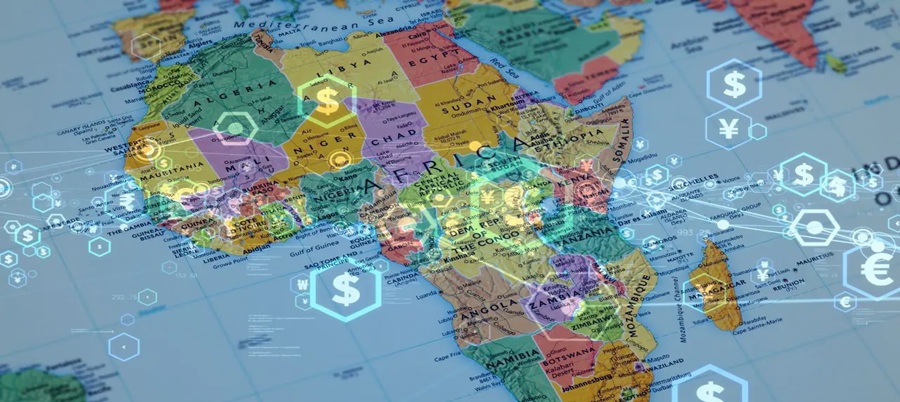
The forex market across Africa is witnessing more participants and more regulatory attention than it did just a few years ago. This growth is part of a bigger picture: Sub-Saharan Africa is expected to expand by 4.3% in 2026, while global forex turnover already hit an estimated $9.6 trillion daily in April 2025. However, there’s more to it than macroeconomic figures.

The trends reshaping the market are happening from within. Here are six worth paying close attention to.
1. Trading Has Moved to the Phone
The number of people accessing the market via mobile phones exceeds those accessing it via traditional bank systems. GSMA states that in Sub-Saharan Africa alone, there are more than 1.1 billion registered mobile money accounts.
The International Monetary Fund states that digitalisation and increased usage of the internet are changing payment systems in the Sub-Saharan Africa region.
Mobile access changes traders’ behavior. It lowers the barrier to entry and speeds up deposits and withdrawals. Therefore, brokers who can provide a quality mobile trading experience will have a huge advantage.
2. Regulators Are Watching
The market is becoming more structured and more transparent. In South Africa, the FSCA regulates market conduct for financial institutions. In Kenya, the Capital Markets Authority regulates capital markets and maintains a licensing system that includes online forex brokers.
Nigeria’s SEC has publicly warned that online retail forex trading can be subject to abuse when unregulated. It also provides tools for investors to check operators’ registrations.
As a result, in 2026, more traders are likely to favour brokers that can show clear licensing, transparent operations, and stronger investor safeguards.
3. Volatility Varies by Country
A common mistake is perceiving the African market as one entity. In reality, according to RegTech Afrika, there are 21 countries out of a total of 54 that have a chance of seeing their currencies depreciate in 2025, with some of them losing value by as much as 6% or more.
A trader watching the rand, naira, shilling, or cedi, regional headlines needs more than regional headlines. Country-level macro data, central bank moves, and the US dollar will still play a major role.
4. Cross-Border Payment Infrastructure Is Quietly Improving
Platforms like PAPSS are helping make payments across African countries faster and easier to complete in local currencies. According to official announcements of PAPSS, it has become operational in 18 countries across Africa, with its latest launch in Algeria in 2025. It has also become operational in Kenya through a partnership with KCB Group, as well as in Rwanda through a partnership with Bank of Kigali.
Step by step, Africa is becoming a more financially connected continent.
5. Execution Quality Is the New Standard
Data from the BIS shows that in April 2025, three-quarters of FX trades were intermediated by the global centers of the United Kingdom, the United States, Singapore, and Hong Kong. Therefore, the best liquidity and best prices are still linked to global conditions.
For local markets, this raises the bar. Forex traders are becoming increasingly aware that tight spreads, while important, mean little without reliable prices and execution. Brokers like JustMarkets that can bring all of these elements together are in a much stronger position than competitors.
6. Education as a Necessity
Regulatory disclosures from major global brokers illustrate how tough it is to trade without proper knowledge. According to publicly available disclosures, between 70% and 80% of retail investor accounts lose money when trading CFDs.
Forex traders who understand risk management and which financial news to follow have a better chance of surviving the market. Brokers who invest in education are more likely to be seen by traders as valuable partners rather than mere facilitators.
The Market Rewards the Prepared
Africa’s forex market in 2026 is shaped by volatility, stricter rules, and mobile-first trading. The traders who combine market knowledge with the right tools and the right broker will find real opportunity here, while those who don’t adapt will find the market increasingly unforgiving.


Corporate Affairs Commission (CAC) has raised alarm over a cybersecurity incident involving unauthorised access to parts of its information systems, urging users to update their login credentials as a precaution.

In a public notice yesterday, CAC, informed stakeholders that the Commission is currently reviewing the breach and assessing its potential impact.
According to the Commission, response protocols have been activated, with containment measures already in place to safeguard affected systems.
The CAC stated that it is working closely with the National Information Technology Development Agency (NITDA) and other relevant government agencies and partners to determine the scope of the incident and prevent further compromise.
“Appropriate containment measures have been implemented, and additional safeguards are in place,” the Commission stated, while advising users to monitor activities on the CAC portal and remain cautious of unsolicited communications that may arise from the breach.
Reports online claim that as many as 25 million documents may have been exfiltrated from the Commission’s infrastructure.
The claims, attributed to a cybercrime-tracking account, have not been independently verified, and the CAC has not confirmed the figures or identified any perpetrators.
The development has raised fresh concerns over the security of Nigeria’s corporate registry, particularly given the Commission’s increasing reliance on digital systems.
In February 2026, the CAC disclosed that it processes up to 10,000 business registration requests daily, following the deployment of artificial intelligence across its service delivery platforms.
It also handles an average of 5,000 customer enquiries each day via emails and call centres.
Despite the breach, the Commission reaffirmed its commitment to maintaining the integrity and security of its systems, assuring stakeholders that updates will be provided as investigations progress.

MTN Suspends Data, Airtime Borrowing Service over New FCCPC Lending Rules

Nigeria Customs Deploys AI to Cover Revenue Leaks

Top 7 Reliable Virtual Cards for Running Ads in Nigeria

Nokia, Orange Partner on AI-native 6G Networks

NDPC Issues Critical Advisory as Hackers Target Nigeria’s Key Digital Systems

Kuda MFB Increases Kuda for Her Business Grants to ₦10 Million

Canal+ to Cut Jobs as Part Sweeping Restructuring

Nigeria tops global rankings for USDT, USDC ownership

NBC Boss Urges Content Ceators to Participate in DSO

NITDA Takes Over National Digital Architecture System




 General News2 days ago
Guinness Nigeria Surpasses ₦1Trillion Market Capitalisation, Signalling Strong Investor Confidence and Sustained Value Creation

 News2 days ago
CISA Asks NDPC, Police to Act on Alleged Data Breach by NIPSS

 Telecom2 days ago
Amazon Satellite to Challenge Starlink in Africa with Globalstar Acquisition

 E-Financial2 days ago
FG Investigates ‘Sharp Sharp’ Loan Operators over Alleged Privacy Violations

 E-Financial2 days ago
Ecobank Delivers Strong Results, Posts $801m in Pre-Tax Profit for 2025

 Broadcasting2 days ago
Fela Makes History as First African to be Inducted into Rock and Roll Hall of Fame

 News2 days ago
Kaspersky Reports Online Scam Exposure Remains Widespread Despite High Levels of Self-assurance

 News2 days ago
Tinubu Tasks NRS to Restore Public Trust Amid Fiscal Changes