

E-Financial
Tinubu’s 15% Fuel Duty: Taxing Pain in a Broken Economy

By Blaise Udunze
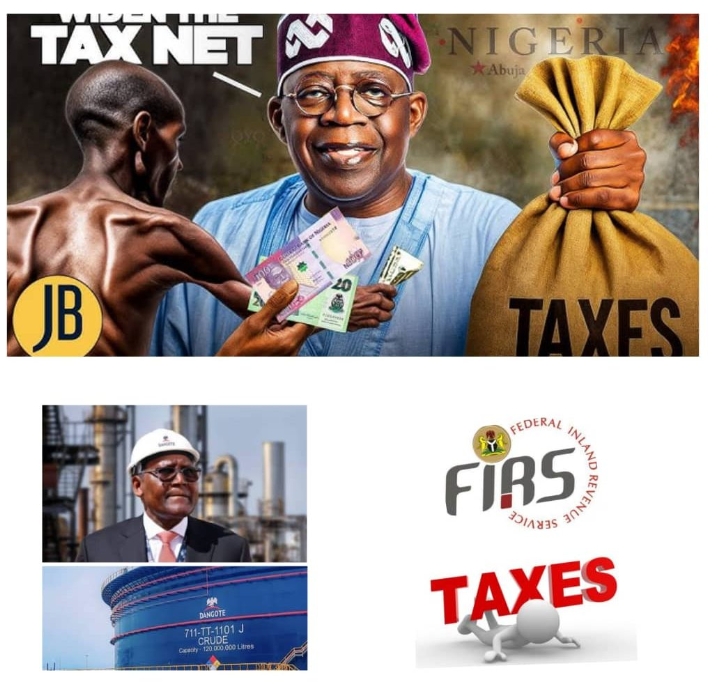
When a nation is bleeding economically, with inflation at historic highs and citizens gasping for survival, one expects government policy to offer relief, not suffocation. Yet, President Bola Ahmed Tinubu’s approval of a 15 per cent import duty on petrol and diesel does the exact opposite for it taxing pain in a broken economy.

According to a presidential letter dated October 21, 2025, and addressed to the Federal Inland Revenue Service (FIRS) and the Nigerian Midstream and Downstream Petroleum Regulatory Authority (NMDPRA), Tinubu directed the immediate implementation of the new import tariff as part of what the government described as a “market responsive import tariff framework.”
Signed by his Private Secretary, Damilotun Aderemi, the memo followed a proposal by the Executive Chairman of the FIRS, Zacch Adedeji, who claimed the measure was part of “ongoing reforms to boost local refining, ensure price stability, and strengthen the naira-based oil economy” in line with the so-called Renewed Hope Agenda.
In theory, it sounds noble with the aim to protect local refineries, promote energy security, and build a self-sustaining oil economy. But in practice, this policy is another dagger in the heart of Nigerians already crushed by the triple burden of fuel inflation, currency collapse, and dwindling purchasing power.

Because let’s face it, you cannot tax your way out of poverty when the people are already too poor to pay for survival.
The New Tariff: A Policy with Pain Written All Over It
Under the directive, importers will now pay a 15 per cent ad-valorem duty on the cost, insurance, and freight (CIF) value of imported petrol and diesel. The government argues that this will “align import costs with domestic market realities” and “protect local producers from unfair pricing.”
But industry data reveal what this truly means at current CIF levels, the new tariff will raise the landing cost of petrol by about N99.72 per litre. In other words, the already painful pump price hovering around N920 per litre in many parts of Nigeria could easily surpass N1,000 per litre within weeks.
This isn’t speculation, it is arithmetic. Depot operators have already sounded the alarm.
“As it is, the price of fuel may go above N1,000 per litre. I don’t know why the government will be adding more to people’s suffering,” one operator lamented in an interview.
Another industry source added, “Some of the importers are working in alignment with Dangote, which is why the last price increase was general. All players raised their prices at once. Without a clear framework to stabilise market forces, this import duty will worsen the hardship faced by consumers.”
So, while the government insists the duty “won’t choke supply or inflate prices beyond sustainable thresholds,” market realities tell a different story. The moment you tax importation of essential energy products in a country that barely refines any petrol domestically, you are effectively taxing the daily lives of millions who depend on that fuel to move, work, and eat.
An Economy Already in Free Fall
Nigeria’s economy today stands on the brink. The naira has lost nearly half its value since mid-2023, driving annual inflation above 34 percent, while food inflation hovers at 40 percent, according to the National Bureau of Statistics (NBS). In one of the world’s largest oil producing nations, fuel prices quintupled, increasing more than 514 percent from N175 in May 2023 to N900, transportation costs have skyrocketed with the “agbuero” extortion compounding issues, small businesses are collapsing, and households are cutting meals to survive.
When fuel prices rise, everything else follows, from food to transportation, rent, and the cost of living. The import duty therefore becomes a multiplier of misery, cascading through the economy in ways the government either underestimates or deliberately ignores.
Manufacturers who depend on diesel to power their factories will pass the extra cost to consumers. Transporters will raise fares. Traders will hike prices. Schools, hospitals, and logistics companies will all adjust their rates upward.
Within a few months, the 15 percent duty will translate into another round of inflationary spiral, deepening poverty and eroding the value of wages even further.
According to the National Bureau of Statistics, over 133 million Nigerians already live-in multidimensional poverty. While the World Bank’s 139 million estimate translates to roughly six in 10 Nigerians living below poverty line. This new tax could easily push millions more into deeper deprivation.
Protecting Local Refineries or Creating a Monopoly?
The government justifies this new tariff as a way to “protect local refineries.” But this explanation exposes the deeper structural danger that Nigeria may be walking straight into a private monopoly in the petroleum sector with Dangote Refinery as the ultimate winner.
While protecting local industry is a legitimate policy goal, doing so without ensuring fair competition is economic suicide. The reality today is that Dangote Refinery dominates the refining landscape both in size and political influence.
Most of the smaller modular refineries in the Niger Delta are struggling to start production due to lack of crude supply, high financing costs, and regulatory uncertainty. The government’s import duty, therefore, does not create a level playing field; it simply tilts the market decisively in favour of Dangote.
If importers are taxed heavily while one giant refinery backed by political access and incentives controls the supply chain, the result is a monopoly, not a free market. And when one player dominates fuel production and pricing in a country of over 200 million people, the economy is at his mercy.
Dangote could dictate wholesale prices, influence market supply, and quietly shape government policy, all under the banner of “local protection.” Already, marketers allege that the last round of price increases was coordinated across the board, hinting at a shadow monopoly forming in plain sight.
This is dangerous for any economy, but for Nigeria where corruption and patronage distort every policy, it is catastrophic.
Energy Security Built on Fragile Foundations
The FIRS memo to the President claimed that the new tariff aims to “strengthen local refining capacity and ensure affordable supply.” But local refining remains largely aspirational.
As of today, Nigeria still imports nearly all its petrol, despite having four state owned refineries that are perpetually moribund. The Dangote Refinery, although a technical marvel, is still struggling to achieve full-scale petrol output and relies on imported crude for much of its operations.
The modular refineries, which were supposed to fill the gap, are barely surviving. Without access to crude oil feedstock often monopolised by larger operators, they cannot compete.
So, who exactly is being protected by this policy?
Certainly not the small modular refineries in Edo, Bayelsa, or Rivers. Not the ordinary Nigerian who will now pay N1,000 for a litre of fuel. Not even the struggling logistics sector, already crippled by high energy costs.
The only entity that benefits is a dominant private player who can withstand the short-term shock and then profit massively once competitors are priced out.
Policy Contradictions and Economic Disconnect
The tragedy of this decision lies not only in its cruelty but in its confusion. The same administration that preaches “ease of doing business” and “market freedom” is imposing tariffs that stifle competition and hurt consumers.
When President Tinubu removed fuel subsidy in May 2023, he promised that “subsidy is gone” and that market forces would drive fair pricing. But over a year later, Nigerians have learned that what replaced subsidy is not a free market but it is a managed monopoly, backed by selective protectionism and opaque pricing.
The contradiction is stark. You cannot remove subsidies on one hand and then impose punitive tariffs on the other. You cannot preach deregulation while protecting a single dominant player.
This isn’t market reform; it is economic confusion disguised as policy innovation.
The Human Cost: Everyday Nigerians Paying the Price
For the ordinary Nigerians, the macroeconomics of import tariffs mean little. What matters is survival.
A family man who spends N2,000 daily on transport now faces N3,000. A small business owner running a diesel generator must now budget twice as much for power. Food vendors, farmers, delivery riders, all are trapped in a cycle of rising costs and shrinking incomes.
Each increase in fuel price is another wound to the working class. And when government justifies it with lofty phrases like “energy security” and “local capacity protection,” it insults the intelligence of citizens who know that their suffering funds elite comfort.
The average Nigerian no longer trusts policy announcements because they have learned that every “reform” means more hardship.
Inflationary Tsunami Ahead
Economic experts have already warned that this new import duty could ignite a fresh wave of inflation. Since transportation is a key cost component in nearly every sector, a 15 percent increase in fuel import costs will ripple through the entire economy.
Analysts at SBM Intelligence estimate that transport fares could rise by another 25–30 percent, while food inflation could easily cross 45 percent by early 2026 if the policy is not reversed.
This isn’t mere speculation. We have been here before. After subsidy removal in 2023, inflation jumped from 22 percent to 34 percent within months. The difference now is that citizens have exhausted their coping mechanisms.
When people can no longer eat, they revolt. The Nigerian state risks pushing its citizens to that breaking point.
Killing Local Competition Before It is Born
Ironically, while the government claims to be “protecting local refining,” this policy will likely kill smaller refineries before they gain traction.
Most modular refineries were financed by private capital at high interest rates. They need steady cash flow and competitive margins to survive. But when the government grants one mega-refinery privileged protection and imposes heavy duties on imports, it destroys the business case for smaller players.
No investor will finance modular refineries if the regulatory environment favours one company. And when competition dies, innovation dies with it.
Nigeria could have built a diversified refining ecosystem, with multiple regional players supplying local markets and driving down costs. Instead, it is creating a single industrial empire whose influence will dwarf even that of the Nigerian National Petroleum Company (NNPC).
That is not industrial policy. It is economic feudalism.
A Mirage of Regional Price Comparisons
The government argues that even with the new tariff, Nigeria’s pump prices would remain below regional averages: N964 per litre compared to Senegal’s $1.76, Côte d’Ivoire’s $1.52, and Ghana’s $1.37.
But this comparison is disingenuous. Those countries have stable power grids, working public transportation, and better social safety nets. Nigerians don’t.
In a nation where fuel directly powers homes, businesses, and schools due to epileptic electricity supply, any increase in fuel price hits far harder. Comparing Nigeria to Senegal or Ghana ignores the structural poverty and infrastructure decay that amplify every price shock.
It is like comparing a man who walks barefoot to another who drives a car and both are on the road, but one feels every stone.
Taxing Misery in the Name of Reform
Policies like this expose the moral blindness of governance in Nigeria. They treat citizens as economic statistics, not human beings.
The government sees fuel as a fiscal problem to be taxed, not a lifeline that millions depend on. It assumes that raising revenue justifies raising suffering.
But no reform can succeed if it crushes the very people it is meant to uplift.
Even from a fiscal standpoint, this duty will not deliver the revenue the government expects. Higher pump prices will reduce demand, encourage smuggling, and fuel black-market trading. The result will be less revenue, more inflation, and higher corruption.
Policy Alternatives That Make Sense
If the goal is truly to strengthen local refining and energy security, there are better, smarter paths to take.
- Provide access to crude oil for modular refineries under transparent, fair terms.
- Offer tax incentives for local refiners, not punitive import tariffs that hurt consumers.
- Encourage competition through regulatory equity, not protectionism.
- Invest in energy infrastructure, including pipelines, storage, and distribution to reduce logistics costs.
- Reform the power sector so that industries are not forced to rely on diesel for survival.
Nigeria doesn’t need more taxes; it needs intelligent policies that balance protection with affordability.
The Politics of Pain
Let’s be clear, this 15 percent duty is as political as it is economic. It serves powerful business interests cloaked in nationalist rhetoric.
Tinubu’s government has consistently framed hardship as “sacrifice” for a better future. But when sacrifice becomes perpetual, it ceases to be patriotic, it becomes exploitation.
The political cost of this decision could be severe. Nigerians who tolerated subsidy removal with the promise of reform may not tolerate another shock that pushes them into darkness.
Already, discontent is growing. Labour unions are preparing for protests, civil society groups are calling for reversal, and the opposition is mobilising public anger.
If unchecked, this could become the defining crisis of the Tinubu presidency as a symbol of reform gone wrong.
The Road Not Taken
There was an opportunity to rebuild Nigeria’s energy sector through inclusive, transparent reforms. The government could have used the subsidy savings to fix refineries, support modular operators, and invest in renewables.
Instead, it has chosen the easy route by taxing more, explaining less, and hoping for miracles.
But the laws of economics are unforgiving. You cannot squeeze revenue from an economy that is shrinking. You cannot build energy security on policies that destroy purchasing power. You cannot claim to protect the poor by enriching monopolies.
A Nation at the Crossroads
President Tinubu’s 15 percent fuel import duty is not just a fiscal measure, it is a moral test of governance.
It asks whether the Nigerian state still sees its people as citizens or merely as consumers to be taxed. Whether “Renewed Hope” means renewed hardship. Whether government policy can still reflect empathy, not elitism.
As petrol edges beyond N1,000 per litre and diesel costs strangle businesses, Nigerians are once again left to bear the consequences of decisions they did not make and cannot afford.
History will judge this administration not by its slogans, but by how it handled the suffering of its people.
And if the story of this fuel duty becomes the story of another failed reform of monopolies masquerading as markets, and citizens sacrificed for profit, then “Renewed Hope” will be remembered not as a promise, but as a warning.
Blaise, a journalist and PR professional writes from Lagos, can be reached via: [email protected]


When people and businesses gain genuine access to financial services, they gain the ability to transact securely, build savings, and access credit. That access creates the conditions for progress: more stable revenues, better business decisions, and the capacity to grow. Progress, sustained over time, is what produces financial happiness. This framework is how Moniepoint measures its impact.

According to Moniepoint 2025 Impact Report, titled creating financial happiness; “Financial happiness is the feeling of confidence and ease that comes with financial freedom and well-being. It is a condition that develops over time and requires a specific set of enablers to take hold.
For millions of people and businesses across Nigeria, those enablers, like tools and solutions to manage their finances, have historically been out of reach. Moniepoint was built to change that, and this change, for us, begins with inclusion”.
Across the world, access to digital tools is a key driver of financial inclusion. The World Bank’s Global Findex 2025 report finds that more than 60% of adults in low- and middle income economies now make or receive digital payments. In Nigeria, this figure is around 54%. Moniepoint has been a key driver in expanding this access with its POS terminals. “Our terminals also drive financial inclusion for individuals.
The report stated that, in 2025, Moniepoint enabled 100 million people to make payments via their POS terminals across the country. For customers in communities where bank branches are scarce or non-existent, a Moniepoint terminal at their local shop, market stall, or fuel station provides reliable access to digital financial services.
They can make purchases, withdraw cash, and manage their money without travelling long distances or depending solely on physical currency. Critically, customers without cards can complete transactions through direct bank transfers to the terminal’s account.
Beyond practical benefits, Moniepoint terminals have also introduced a new layer of trust to everyday commerce. “When network issues make it unclear if a payment went through, the Moniepoint terminal’s loud beep provides instant confirmation for everyone, building trust in digital payments with every transaction”.
Moniepoint POS terminals operate across all 774 local governments in Nigeria, ensuring that small sellers and large stores can accept payments reliably, regardless of location.
In 2025, millions of Nigerians, businesses and individuals alike, accessed Moniepoint services through its mobile app. Top among them are groups like women and low-income earners, who have historically been excluded from formal banking. Inclusion of women is particularly important, as they typically manage household spending and informal savings but are frequently left out of structured financial systems. “Through our app, they are gaining financial independence and greater control over their economic decisions,” the report added.
For millions of Nigerians, debit cards represent a move away from the limits of cash transactions. They enable safer, more reliable everyday payments, particularly as more local businesses begin to accept digital payments.
Moniepoint debit cards are designed to meet this need. In 2025, Moniepoint customers completed over 300 million card transactions at physical locations, largely driven by essential, food-related purchases. Most of this spending took place at neighbourhood provision shops where households buy everyday items such as rice, cooking oil, and soap.
“We’ve made access to our cards intentionally simple. Customers can get a Moniepoint debit card by requesting it within their mobile app or from neighbourhood agents, without lengthy paperwork or waiting periods. By lowering these barriers, more people are able to access financial tools and participate in the formal financial system.
“Our cards also safeguard our customers’ financial information. They don’t carry special markings or any identifiers that could expose our customers or put their financial security at risk. In the event of loss, this reduces the likelihood of targeted fraud or misuse.
“When people can pay with their debit cards at their neighbourhood stores, they can manage their spending, reduce cash handling, and transact more securely. Merchants also benefit, recording higher transaction volumes and more consistent customer activity.
“Moniepoint helps millions of businesses and individuals across Nigeria access seamless payments and banking, every day. The widespread adoption of our tools and services, as highlighted, demonstrates our critical role in expanding financial access, supporting everyday commerce, and enabling more Nigerians to participate safely and consistently in the digital economy,” the report noted.

ChatPay has launched Africa’s conversational banking platform, enabling individuals and businesses to access financial services through WhatsApp.

The Lagos-based fintech startup, is in controlled rollout, connecting WhatsApp to linked-bank management, airtime and supported electricity payments through simple conversations.
The company said the platform is designed to enable users to send money, pay bills, buy airtime and manage business transactions within WhatsApp conversations, subject to the completion of regulatory approvals and integration with licensed banking partners.
According to ChatPay, the platform is operated by CP Technology Limited and is currently undergoing a phased rollout ahead of its planned public launch.
The company said the initiative is intended to simplify access to financial services by leveraging WhatsApp, which it estimates is used by more than 50 million Nigerians monthly.
Speaking on the idea behind the platform, Adeoluwasubomi Odebunmi, product lead and co-founder, said the concept emerged while she was studying Software Engineering at Babcock University.
“I saw the gap while I was still in school—how much friction there was just to move money. I didn’t want to just study the problem. I wanted to help fix it,” she said.
Odebunmi said she had previously worked on software solutions spanning e-commerce, real estate management, school administration and artificial intelligence applications before co-founding ChatPay.
Aseoluwa Siyanbola, growth lead and co-founder, said his experience managing Nigerian bank accounts while studying abroad highlighted some of the challenges users face with digital banking services.
According to him, difficulties such as one-time password (OTP) failures and inconsistent banking applications inspired the team to explore conversational banking solutions.
“We each encountered similar challenges and came together to build a solution that simplifies everyday financial transactions,” he said.
cAbraham William, tech lead and co-founder, said the company is focused on improving access to financial services through a platform that many Nigerians already use daily.
“We want to make financial services easier to access by allowing people to carry out transactions through a familiar messaging platform,” he said.
William said he oversees the company’s engineering, technology strategy and system architecture.
ChatPay said its services will be introduced in phases as regulatory requirements are met and integrations with banking partners are completed.
The company added that its newly launched “Founding 2,500” programme will enable selected early users to test features, provide feedback and participate in product development before the platform’s wider rollout.
According to the company, interested users can register for the waitlist and the Founding 2,500 programme through its website.
Founded by Odebunmi, Siyanbola and William, ChatPay said its long-term goal is to expand conversational banking services beyond Nigeria into other African markets after its domestic rollout.

United Bank for Africa (UBA) Plc has been named Nigeria’s Best Bank for Retail Banking and Best Bank for Sustainability Leadership (ESG) at the 2026 Euromoney Awards for Excellence, reinforcing its position as one of Africa’s leading financial institutions.

The awards were presented on July 17 at The Peninsula London in the United Kingdom, recognising financial institutions that have demonstrated outstanding performance, innovation, customer impact and sustainable banking practices.
The double recognition highlights UBA’s growing influence in retail banking and its commitment to advancing environmental, social and governance (ESG) principles across its operations.
According to Euromoney, UBA distinguished itself through a series of sustainability initiatives, including the introduction of a Green Financing Facility designed to support households and businesses transitioning to renewable energy.
The publication also cited the bank’s ₦5 billion financing programme, implemented in partnership with the Bank of Industry (BOI), to provide funding for women-owned businesses.
Euromoney further recognised UBA’s commitment to achieving net-zero carbon emissions by 2050, describing it as a demonstration of the bank’s long-term sustainability strategy.
The publication also highlighted the bank’s efforts to integrate sustainability into its operations through the deployment of solar-powered energy solutions across 50 branches and comprehensive ESG capacity-building programmes that have trained more than 16,000 employees across the UBA Group.
In the retail banking category, Euromoney noted that UBA continued to consolidate its position as one of Africa’s largest retail banking institutions.
According to the publication, the bank expanded its customer base to more than 37 million by the end of 2025, while retail banking revenue increased more than fourfold to ₦429.5 billion.
The awards also recognised UBA’s continued investment in digital banking innovation, particularly enhancements to its artificial intelligence-powered chatbot, LEO.
Euromoney noted that LEO became Africa’s first AI-powered banking platform to facilitate cross-border money transfers in local currencies through the Pan-African Payment and Settlement System (PAPSS).
Commenting on the awards, UBA’s Group Managing Director and Chief Executive Officer, Mr Oliver Alawuba, described the recognition as a validation of the bank’s commitment to delivering value to customers while promoting sustainable development across Africa.
“To be recognised as Nigeria’s Best Bank for both ESG and Retail Banking in the same year sends a powerful message that sustainable banking and commercial success are mutually reinforcing.
“At UBA, we are committed to financing Africa’s future, supporting businesses and communities, promoting financial inclusion, and delivering innovative banking solutions that improve lives.
“These awards belong to our customers for their confidence in us and to every member of the UBA family whose dedication continues to make our vision a reality,” he said.
Also speaking, UBA’s Group Head, Marketing, Brand and Corporate Communications, Mrs Alero Ladipo, said the awards reflected the bank’s unwavering commitment to putting customers at the centre of its operations.
According to her, every innovation, investment and banking solution introduced by UBA is aimed at creating exceptional value for customers while expanding access to financial services.
“These awards are a powerful affirmation of our Customer First philosophy.
“Whether it is supporting entrepreneurs with access to finance, enabling seamless digital payments, advancing clean energy financing or expanding financial inclusion across Africa, UBA remains focused on delivering meaningful impact.
“We are honoured that one of the world’s most respected financial publications has recognised these efforts,” she said.
UBA currently operates in 20 African countries, as well as the United Kingdom, United States, France and the United Arab Emirates, serving more than 45 million customers through a combination of digital banking platforms and physical branch networks.
The bank said it remains committed to strengthening financial inclusion, driving innovation and supporting sustainable economic development across Africa and beyond.

HURIWA, CLO Protests Bill Asking Social Media Firms’ to Open Shops Nigeria

Anambra Govt Bans Graduation Ceremonies in Anambra Schools

Airtel Secures Another 10-year Spectrum Renewal in Nigeria

Moniepoint as a Key Driver in Expanding Financial Access for Businesses in Nigeria

Nigeria, Israel Strengthen Research, Technology Collaboration

NRC, Ponzi Scheme Collapses Resulting Loss of Billions of Naira

NASENI Moves to Digitize CCB’s 5m Assets Declaration and Operations

Tokenization, Blockchain Technology will Transform Financial Institutions – IMF

EFCC Busts NIS Visa Overstay Racket, Uncovers N700m in an Account

From Scarcity to Scale: What Africa Can Learn from India’s Agricultural Transformation




 Telecom2 days ago
Court Dismisses Pan African Towers’ Bid to Halt Ex-CEO’s Suit, Awards ₦500,000 Costs

 E-Financial2 days ago
FG Says Rumours, Fear, Can Crash Banks

 E-Business2 days ago
Kaspersky Warns of a Phishing Campaign Abusing Microsoft Authentication Mechanism

 Telecom2 days ago
Telcos Seek Clear Regulatory Framework on Airtime Credit Services

 Telecom2 days ago
MTN Nigeria Announces 2026 mPulse Spelling Bee, Opens Entries for Students Nationwide

 Telecom2 days ago
MTN Warns Customers against Fake Promo

 News2 days ago
IMF Sees 4% AI Growth Boost for Africa

 E-Financial2 days ago
EU Debunks Fake Compensation Scheme Targeting West African Bank Customers