

Telecom
Tizeti Rolls Out High-Speed 4G LTE in Edo with N4000/m Broadband Service

Tizeti, West Africa’s pioneer solar-based internet service provider is rolling out its 4G LTE network in Edo State, with monthly fixed broadband costs pegged at four thousand Naira ($8).

This is part As part of its commitment to ensuring access to affordable broadband connectivity in Africa’s underserved populations.
With this move, millions of people in Edo State previously outside the broadband envelope can now take advantage of high-speed broadband internet from Tizeti.
Announcing the rollout of its new low-cost unlimited 4G services in Edo, Kendall Ananyi, chief executive officer of Tizeti, said that this 4G broadband internet will empower more Nigerians in Edo State, stimulate economic activities and provide unlimited access to affordable and reliable broadband services as well as complement the Edo State Government’s efforts in driving investment promotion and building a robust technology ecosystem in the state.
“Rolling out 4G LTE broadband internet in Edo at the cheapest fixed broadband prices in Nigeria, and possibly Africa, is a strategic decision for us. We have been building brand-new, solar-powered, 4G-capable towers in Edo, starting with Benin City, which leverages Edo State’s expansive fiber-network built by some of our partners, MainOne and Facebook. Edo State has a large population of vibrant, young people and a high number of higher institutions, which provides a foundation for a robust and thriving ecosystem to enable digital leadership. And the Edo State Governor, Mr. Godwin Obaseki, is implementing reforms in investment promotion and determination to build a robust technology ecosystem in the state, with an agenda that prioritizes Information Communication Technology (ICT)-compliant pedagogy in primary schools, improves digital skills for students and graduates and revamps technical education to increase productivity. This has created a perfect environment for us to roll out our low-cost broadband service, starting in Edo State, but with plans to expand across the country over the next few months”, Ananyi said.
Corroborating Ananyi, Ifeanyi Okonkwo, Tizeti’s chief operating officer, states, “The launch in Edo State is personal to us as founders of Tizeti because we are alumni of the University of Benin. At 4,000 Naira monthly costs with a one-off installation cost of 4,000 Naira, we believe the plan is affordable, especially to undergraduate students. This provides a huge opportunity for people in Edo to benefit from unlimited broadband internet for use in online learning, eCommerce and entertainment, especially interactive games, video consumption, and music”.
Interested users in Edo State can pre-sign up at https://WiFi.com.ng/EdoState/; installations are expected to commence in Benin City on April 1st, 2021.
For many countries in Africa, there is still a huge digital divide. This boundary between connected and unconnected translates into clear consequences for employment, education, family and social life, and access to information. According to the World Wide Web Foundation, ensuring fast internet in Africa will enable billions more to come online, and to take advantage of the life-changing socio-economic opportunities that access to the Internet provides. Companies like Tizeti are playing a significant role in addressing the digital infrastructure deficits in Africa with innovative technology and capabilities, to improve development outcomes for millions of people.
Tizeti currently has 1.7 million unique users, with broadband services which include a new Skype-like personal and business enterprise communications service — WiFiCall.ng, and access to video streaming sites and services.


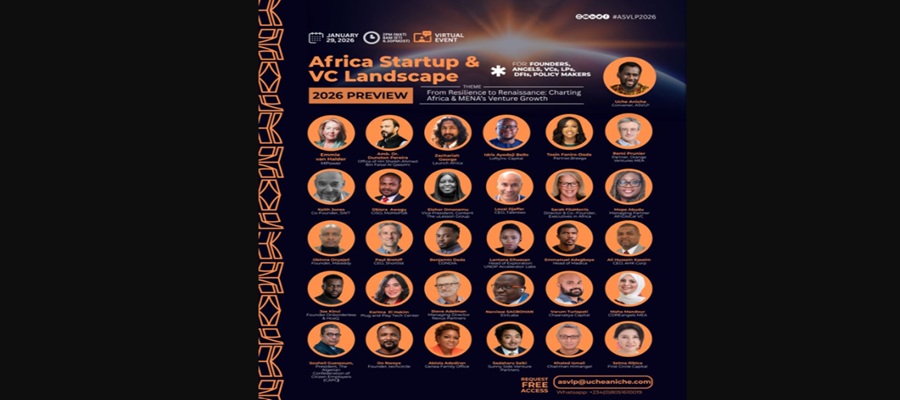
As Africa and MENA’s startup ecosystems transition from post-correction resilience into a new phase of disciplined growth, the Africa Startup & VC Landscape Preview (ASVLP 2026) will convene leading founders, investors, policymakers, and ecosystem builders on January 29, 2026, for its second annual, agenda-setting virtual forum.

Following a challenging global venture cycle, 2025 marked a notable rebound across the African ecosystem, with startups raising an estimated $3.2–$3.3 billion over the full year.
The recovery was accompanied by significant structural shifts: Kenya emerged as the leading destination among Africa’s “Big Four” markets for the first time, while Nigeria recorded a year-on-year funding decline, reflecting changing investor preferences, macroeconomic pressures, and a broader recalibration toward capital efficiency and sustainability.
Sectorally, fintech remained the most funded vertical, while climate & energy, AI-enabled solutions, healthtech, and infrastructure-adjacent businesses gained increasing attention. Across Africa and MENA, development finance institutions (DFIs) and family offices played a more pronounced role in anchoring funds, deploying catalytic capital, and supporting blended-finance structures, reshaping how early-stage and growth capital is mobilized.
ASVLP 2026 is designed to translate these data points into forward-looking strategy.
The forum will bring together venture capitalists, angel investors, LPs, DFIs, family offices, founders, corporate leaders, and regulators from Africa, MENA, Europe, and North America to assess 2025 outcomes and chart priorities for 2026.
The program will feature keynotes, fireside chats, panels, and deep-dive roundtables, including discussions on:
· The 2026 Africa & MENA FinTech Landscape, focusing on security, profitability, regulation, and growth frontiers
· Emerging Fund Managers, capital formation, and LP alignment
· Talent, operator depth, and institutional capacity as constraints to scale
· Regulatory evolution and cross-border market integration
A major highlight of ASVLP 2026 will be the Final DealRoom Pitch Session, where a curated group of high-potential startups will present to an experienced panel of investors.
• Founders can apply to pitch via: bit.ly/ASVLP-DR-Founders
• Investors seeking DealRoom access can request entry via: bit.ly/ASVLP-DR-Investors
Confirmed speakers for ASVLP 2026 include Khaled Ismail (HIMangel), Idris Ayodeji Bello (LoftyInc Capital), Zachariah George (Launch Africa), Tosin Faniro-Dada (Breega), Selma Ribica (FirstCircle Capital), Maha Mandour (COREangels MEA), Joe Kinvi (Borderless), Remi Prunier (Orange Ventures MEA), Karima El Hakim (Plug and Play Tech Center), Souheil Guessoum (President, The Confederation of Citizen Employers – Algeria (CAPC)), Remi Prunier (Partner, Orange Ventures, MEA), Maha Mandour (COREAngels MEA), Ali Hussein (President, Kenyan FinTech Association), Patrick Okebu (CIO, Interswitch Group) among other leading voices shaping capital, policy, and innovation across the region.
“The conversation has shifted,” said Uche Aniche, Convener of ASVLP. “It’s no longer about whether capital will return to Africa and MENA, but what kind of capital, deployed with what discipline, and in service of which long-term outcomes. ASVLP exists to help the ecosystem make sense of that transition.”
Participation in ASVLP 2026 is free but strictly by invitation.
Interested participants are encouraged to repost the official announcement on LinkedIn and comment #ASVLP2026 to receive a private registration link. They could also email [email protected] and request invite.

Major social media giants Meta Platforms, TikTok and Alphabet’s YouTube will face a landmark jury trial this week in Los Angeles County Superior Court over allegations that their addictive designs have fuelled a youth mental health crisis, marking the first such case to reach this stage.

Social Media
The pivotal personal injury lawsuit centres on a 19-year-old Californian woman identified as K.G.M., who claims her childhood immersion in Instagram, Facebook, YouTube and TikTok—engineered with endless scrolls, autoplay videos, notifications and algorithms—sparked severe anxiety, depression and suicidal thoughts.
Dozens of similar suits have surged since 2022 from families, schools and states, accusing the firms of burying internal research on teen harms while prioritising ad revenue through youth-targeted engagement hooks, despite Section 230 protections for user content.
Plaintiffs seek damages and design overhauls, arguing platforms bypassed parents and preyed on vulnerable kids; defendants counter there’s no clinical “social media addiction” diagnosis, no proven causation—kids with issues often use less—and they’ve added safeguards like parental controls and time limits.
Echoing Australia’s under-16 bans, the trial will scrutinise thousands of internal documents, expert testimonies and K.G.M.’s story, potentially expanding tech liability amid debates where studies show complex links, not direct causation, between screen time and disorders like eating issues or self-harm.
A win could mandate warning labels, age gates or algorithm tweaks, reshaping global platforms as U.S. Surgeon General advisories and global scrutiny intensify pressure on Big Tech to prioritise child safety over profits.

Meta is gearing up to trial paid subscription services on Instagram, Facebook, and WhatsApp, aiming to diversify revenue streams beyond advertising while maintaining free core access for all users.

Meta
The subscriptions will offer enhanced tools tailored for everyday users, creators, and businesses, including advanced content creation, sharing, and workflow features distinct from the existing Meta Verified verification program. Unlike a uniform rollout, Meta plans varied testing formats per app to match diverse audiences, experimenting with feature bundles based on user feedback to refine the model.
A key element involves integrating Manus, the autonomous agent firm Meta acquired for $2 billion in December, into these apps alongside its enterprise sales. Manus enables complex task automation with minimal input, with early signs like Instagram shortcuts already spotted by reverse engineer Alessandro Paluzzi.
Video tools feature prominently: Meta’s Vibes short-form video generator in the Meta AI app shifts to freemium, where paid tiers unlock higher monthly creation limits beyond the free baseline. On Instagram, subscriptions could enable unlimited audience lists, non-follower tracking, and anonymous Story views, though specifics for Facebook and WhatsApp remain under wraps.
Drawing from Meta Verified’s 2023 launch—which provides badges, support, and protection mainly for creators—these broader plans target wider appeal amid industry shifts. Ad growth slows against TikTok competition, while Snapchat+ boasts 16 million subscribers at $3.99 monthly, proving demand for value-driven paid perks despite subscription fatigue risks from streaming and storage fees.
Meta will phase tests gradually, prioritizing feedback to shape long-term viability without alienating free users.

NITDA, NBC Explore Strategic Collaboration on Digital Transformation, Media Regulation

NDIC Seeks EFCC’s Support to Trace, Recover Assets of Failed Banks

Interpol Arrests over 570 Cybercriminals across Africa

NIGCOMSAT Adopts Government’s Performance System

ASVLP 2026: Africa, MENA VCs Gear Up as Tech Funding Hits $4.1bn Rebound

19 Nigerian Banks Meet CBN Recapitalization Targets Ahead of March Deadline

Jumia CEO says Black Friday Signals Nigeria’s E-Commerce Maturity

Galaxy Backbone Celebrates the Federal Government’s Paperless Civil Service Milestone

DStv Offers Instant Package Upgrade for Customers from January to February

Banks to Impose N50 Stamp Duty on Transfers of N10,000 and Above from January 1




 News3 days ago
LIRS to Invoke NTAA to Recover Unpaid Taxes from Bank Accounts, Others

 News3 days ago
Anambra Cuts Monday Pay to Kill Sit-at-Home

 E-Financial3 days ago
First Asset Management Receives Upgraded Ratings from Agusto &Co and DataPro

 E-Financial3 days ago
NIBSS, Others Flag 13,417 Nigerian Fraudsters on Person of Interest Portal

 General News3 days ago
Nigeria Treats Religious Violence as Attack on State – NSA Ribadu

 E-Financial3 days ago
CBN Prepares Fresh Debit Card Rules to Improve ATM Services

 E-Financial2 days ago
CBN Upgrades Licences of Opay, Moniepoint, Kuda, Palmpay, Paga to National Status

 News2 days ago
Tech Executives Double Down on AI, Talent and Adaptive Strategies to Lead in the Intelligence Age