

News
Tony Elumelu to Deliver Keynote Address at TICAD Africa Development Conference in Japan

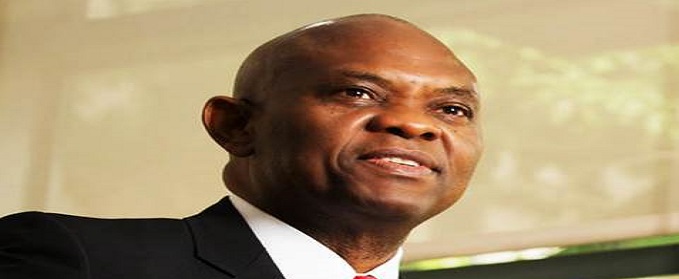
Tony O. Elumelu, founder of the Tony Elumelu Foundation and chairman of the United Bank for Africa (UBA), will speak at the Seventh Tokyo International Conference on African Development (TICAD), taking place in Yokohama, Japan from August 28 – 30, 2019.
As the leading champion of entrepreneurship in Africa, Mr. Elumelu will ensure that the voice of a new generation of African entrepreneurs, capable of transforming the continent, is heard at the highest level.
Elumelu will speak alongside global and African political and business leaders, including Prime Minister Shinzō Abe of Japan; H.E. Mr. Muhammadu Buhari, President of Nigeria; H.E. Mr. Abdel-Fattah El-Sisi, President of Egypt and Chair of the African Union (AU); H.E. Mr. Cyril Ramaphosa, President of South Africa; and H.E. Mr. Paul Kigame, President of Rwanda.
Mr Elumelu will deliver a keynote speech at the Plenary Public-Private Business Dialogue, the core session, that brings together Japanese and African public and private sector leaders at TICAD.
At this event, Elumelu will promote his philosophy, Africapitalism, which posits entrepreneurship being the key to unlocking economic transformation in Africa as he highlights the urgent need to empower young entrepreneurs and how critical it is for governments and other policy makers to create the enabling environment that ensures entrepreneurial led growth.
Following a welcome address by the Japanese Prime Minister, Mr Shinzo Abe, Mr. Elumelu will deliver the keynote address at the official Business Forum, hosted by the Japan External Trade Organisation (JETRO).
The Conference provides a unique platform for key decision makers from Japan and Africa, both in business and politics, to identify opportunities for investment and knowledge exchange.
At a time when international governments and agencies are increasingly recognising that the route to Africa’s transformation is through African-led solutions and private sector growth, Mr. Elumelu’s track record of success, founding UBA, now one of Africa’s leading financial services groups, with presence in twenty African countries, New York, Paris and London as well as his multi-sector proprietary investment holding company, Heirs Holdings, employing over 30,000 Africans, typifies a new generation of African business dynamism.
Mr. Elumelu during his visit to Japan, will join H.E. Paul Kagame, President of Rwanda and Co-Chair of the Leaders’ Group of Generation Unlimited (Gen-U), and UNICEF Executive Director, Henrietta Fore, to co-chair a UNICEF [and Africa Union] breakfast meeting focused on catalysing investment in African youths and developing a specific vision for job creation in Africa.
The event will seek specific commitments from African leaders for the implementation of a business plan for digital connectivity in Africa such as the Tony Elumelu Foundation’s TEF Connect, the largest digital network for African entrepreneurs.
Through the Tony Elumelu Foundation, Mr. Elumelu is forging the new narrative for Africa. In the first five years of the Foundation’s flagship Entrepreneurship Programme, 7,521 African entrepreneurs from all 54 African countries have benefitted from Elumelu’s personal commitment of $100m seed capital funding, mentorship, and training. Six of the beneficiaries of the Programme have been sponsored to attend TICAD conference, sponsored by the UNDP.
Mr. Elumelu will be accompanied by a delegation from the United Bank for Africa and the Tony Elumelu Foundation, including Ifeyinwa Ugochukwu, CEO, Tony Elumelu Foundation; Dupe Olusola, Group Head, Marketing, UBA, and Muyiwa Akinyemi, Group Head Corporate Banking, UBA.
Organised by the Japanese Government, TICAD is a three yearly forum for advancing Africa’s development through people, technology and innovation, bringing together government, business leaders, companies and other stakeholders.



The Nigeria Customs Service (NCS) has rolled out an artificial intelligence (AI) driven capacity-building programme to improve revenue generation and reconciliation across its operations.

The initiative, unveiled during a three-day training event in Abuja, aims to transition the agency toward data-driven administration as Nigeria seeks to boost non-oil revenue.
The adoption of AI will enable the service to better manage complex trade systems, detect anomalies and reduce revenue leakages, says Bashir Adewale Adeniyi, comptroller-general of the NCS.
AI-powered tools are already being integrated into risk management and cargo scanning systems to allow for real-time analysis of trade patterns.
The technology marks a transition from manual, reactive processes to predictive and automated decision-making, Adeniyi adds.
The programme also reflects a shift in the relationship between the NCS and the National Assembly toward a collaborative framework focused on transparency and efficiency.
The training is a strategic intervention to address persistent gaps in revenue management, says Kikelomo Adeola, deputy comptroller-general of the NCS.
AI applications, ranging from automated data analysis to predictive intelligence, will significantly enhance the integrity of public financial systems, she says.
The initiative aligns with broader efforts to modernise governance and improve compliance across revenue-generating agencies, says Bamidele Salam, chairman of the House Public Accounts Committee.
Lawmakers and fiscal authorities at the event underscored the urgency of adopting advanced technologies amid rising budgetary pressures.
This move comes as the federal government increases scrutiny over revenue leakages and audit discrepancies.
The partnership between the NCS and the legislature is critical to strengthening fiscal discipline and ensuring all revenue due to the federation is accurately captured, Adeniyi concludes.


Lagos State Government has intensified efforts to strengthen its social protection framework with a fresh push to update the state’s Single Social Register.

Babajide Sanwo-Olu, Governor, Lagos
This was contained in a press statement on the government’s Facebook page on Wednesday.
The initiative, led by the Lagos State Ministry of Economic Planning and Budget, formed the focus of a strategic engagement held on Monday with Community-Based Targeting teams, local government coordinators and field enumerators across the state’s 57 Local Government Areas and Local Council Development Areas.
The meeting, themed “Closing the Gap: Accelerating Lagos State Single Social Register Update,” took place at the Radio Lagos Multipurpose Hall in Agidingbi, Ikeja.
Officials said the exercise is aimed at improving the accuracy and reach of the register, which serves as a critical tool for planning and delivering targeted social interventions, including financial support, healthcare and education services.
Speaking at the session, Ope George, commissioner for Economic Planning and Budget, commended field workers for their commitment while urging them to scale up their efforts.
He called on participants to be “more intentional by intensifying their commitment,” reaffirming the government’s resolve to “continuously strengthen and refine the Register to reflect evolving realities.”
Also speaking, Olayinka Ojo, permanent secretary in the ministry, described the register as central to effective governance and service delivery.
She said “it remains a cornerstone for effective planning and delivery of social intervention programmes,” adding that the ongoing update is designed to “further enhance data reliability, coordination, and service delivery outcomes.”
Ojo noted that sensitisation efforts would be expanded across all councils to ensure wider inclusion of residents, stating that “the advocacy and sensitisation will scale throughout the 57 LGAs and LCDA to give more to Lagos residents.”
According to the government, the updated register is expected to expand access to social protection programmes and improve the targeting of interventions for the most vulnerable populations.
The engagement also provided a platform for stakeholders to strengthen collaboration, improve data quality and reinforce transparency in grassroots data collection.
The state government reiterated its commitment to leveraging accurate data and partnerships to drive inclusive development, reduce vulnerability and improve living standards across Lagos.

A new study by Bayero University, Kano, has found that 38 per cent of women in Northern Nigeria do not have access to financial services.

The study, carried out by the Aminu Kano Centre for Democratic Studies of the university, was supported by the Gates Foundation. It examined how social norms and behavioural factors influence financial inclusion across the 19 Northern states.
The report, titled “Understanding Influence and Behaviour in Northern Nigeria” and unveiled in Abuja on Wednesday, stated that while 52 per cent of women are financially served, only 45 per cent access formal financial services through deposit money banks, merchant banks, interest-free banks and microfinance institutions.
It stated that “38 per cent of women across the region lack access to financial services. “52 per cent of women are financially served, while 45 per cent access formal financial services through Deposit Money Banks, merchant banks, interest-free banks and microfinance institutions. An additional seven per cent utilise other formal non-bank financial products, including insurance services. ”
Speaking at the unveiling, the Director of Academic Planning at Bayero University, Prof. Yusuf Garba, who represented the Vice Chancellor, Prof. Haurna Musa said the research was designed to uncover why the region lags in financial access.
“This study, which started in 2024, aims to examine how social norms influence attitudes and behaviour of various groups across Northern Nigeria, particularly to find out why states in the region fall behind in access and use of financial services,” he said.
Garba explained that the research, conducted over 18 months, produced two volumes detailing how influence structures, trust hierarchies, gender norms, and religious considerations shape decisions around finance, health and education.
He added, “The report is structured into volumes to provide a unified explanation of how social norms, authority structure, and trust shape financial behaviour across Northern Nigeria.”
On the findings, the Principal Investigator, Prof. Ismael Zango, said the data aligns with figures from the National Bureau of Statistics, particularly on poverty and unemployment.
According to him, “unemployment in the region stands at about 37 per cent,” while “poverty levels average about 80 per cent across Northern Nigeria, with Sokoto State recording the highest rate at over 80 per cent.”
Zango stressed that addressing financial exclusion requires more than temporary interventions.
“Economic empowerment must go beyond token financial support,” he said, adding that “sustainable development requires equipping women and youths with relevant, market-driven skills.”
He cited women-led initiatives such as groundnut processing groups in Kebbi State and the Women in Agriculture programme in Kano State as practical models.
“These initiatives should be scaled up to bring more people into productive economic activities and reduce poverty,” he said.
In her remarks, the Chief Executive Officer of Enhancing Financial Inclusion and Advancement, Mrs. Foyinsolami Akinjayeju, described financial inclusion as both an ethical and economic imperative.
Akinjayeju called for stronger collaboration among stakeholders, including government, financial institutions and development partners, as well as policy reforms to address existing gaps.
“Everyone has a role to play, but commitment must come from the top,” she said.
The findings come amid growing concerns over low financial inclusion rates in Northern Nigeria, driven by poverty, unemployment, and entrenched social norms that limit women’s economic participation.

MTN Suspends Data, Airtime Borrowing Service over New FCCPC Lending Rules

Nigeria Customs Deploys AI to Cover Revenue Leaks

Top 7 Reliable Virtual Cards for Running Ads in Nigeria

Nokia, Orange Partner on AI-native 6G Networks

NDPC Issues Critical Advisory as Hackers Target Nigeria’s Key Digital Systems

Kuda MFB Increases Kuda for Her Business Grants to ₦10 Million

Canal+ to Cut Jobs as Part Sweeping Restructuring

Nigeria tops global rankings for USDT, USDC ownership

NBC Boss Urges Content Ceators to Participate in DSO

NITDA Takes Over National Digital Architecture System




 General News2 days ago
Guinness Nigeria Surpasses ₦1Trillion Market Capitalisation, Signalling Strong Investor Confidence and Sustained Value Creation

 News2 days ago
CISA Asks NDPC, Police to Act on Alleged Data Breach by NIPSS

 Telecom2 days ago
Amazon Satellite to Challenge Starlink in Africa with Globalstar Acquisition

 E-Financial2 days ago
FG Investigates ‘Sharp Sharp’ Loan Operators over Alleged Privacy Violations

 Broadcasting2 days ago
Fela Makes History as First African to be Inducted into Rock and Roll Hall of Fame

 E-Financial2 days ago
Ecobank Delivers Strong Results, Posts $801m in Pre-Tax Profit for 2025

 News2 days ago
Kaspersky Reports Online Scam Exposure Remains Widespread Despite High Levels of Self-assurance

 News2 days ago
Tinubu Tasks NRS to Restore Public Trust Amid Fiscal Changes