

E-Business
TOSSE 2017: Nigeria Cannot Make Progress Beyond Her Teachers- Ogunde

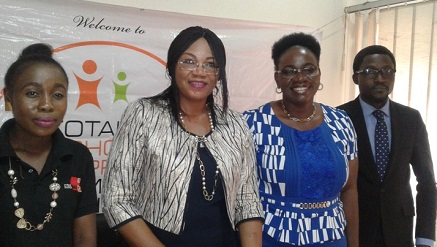
Educator and technology developers will at Total School Support Seminar and Exhibition 2017 (TOSSE) parley the government on way forward for education sector in Nigeria.
Similarly, Mrs. Yinka Ogunde, principal consultant, Edumark Consult, and Convener of TOSSE, has warned that Nigeria’s efforts to meet up with the 21st Century economy, are dependent on the progress of teachers who as purveyors of knowledge.
Mrs. Ogunde made the remark during a press Conference to announce Edumark’s readiness ready to host the 9th edition of the Total School Support Seminar and Exhibition (TOSSE).
She said that the educational transformation event that started about nine years ago with just about 30 exhibitors and about 500 educators, has broaden in its scope, attracting educators in thousands from over 20 states in Nigeria and “we have welcomed delegates/exhibitors from the USA, the UK, Middle East, Asia and Africa. As we speak, delegates from Cameroun and Ghana have confirmed their participation for TOSSE 2017. That just shows you that Nigeria has the potential to become the hub of development in education and through education in Africa.
“We have remained committed to making every edition of TOSSE bigger than the last and this has paid off in gradually actualising our vision for the education sector.
TOSSE being an intensive project to run usually draws questions; people ask why we invest this much energy, time and financial resources in putting the project together and I believe now is a good time to answer those questions. The major reason is our commitment to the development of human resources in the education sector”.
The Convener of TOSSE, however, said that no nation can become greater than its teachers. “Just look around the world; some of the most developed countries invest heavily in the education sector and they try to synchronise the academia and industry. The strength of globally-acclaimed Silicon Valley and her relationship with nearby Stanford University is a typical example. The interdependency between Silicon Valley and the university is a beautiful one to observe. It is clear that when teachers are well-equipped with up-to-date knowledge on methods, models, metrics and modern tools of their art, their delivery in the classroom will improve; their relationship with students will improve and we will record more positive learning outcomes. Then, teachers will share relevant knowledge and a functional education that goes beyond rote learning”.
On why TOSSE is relevant in today’s education system in Nigeria and Africa in general, she said, “This is why since inception, seminars by seasoned education professionals have ALWAYS been a major highlight of TOSSE. We’ve never missed it. This year, we are running 18 FREE seminars. The way it is, a teacher is only as good as his last training, which in the education space is called CPD- Continuous Professional Development. That’s why we carefully plan TOSSE seminars to cover a wide range of academic/social/emotional topics for educators. It is our own way of contribution to ‘Training the Trainer’. The seminar topics are chosen based on the current pulse of the sector.
“They are carefully selected to provide solutions to pressing or imminent challenges so that even if a school or an educator cannot afford the cost of workshops and seminars elsewhere, by simply bringing all the members of staff to TOSSE once a year, the teachers can be up-to-par on improved and revolutionised ways of delivering quality education. For example, Praise Fowowe, a well-known sexuality education expert will be speaking at TOSSE to help equip participants at the event for the sake of our children.
“With safety becoming a critical issue, Taiwo Akinlami is also expected at TOSSE. We also expect personalities such as Mrs Lai Koiki, the phenomenal founder of Greensprings School and a host of other veterans”.
Mrs. Ogunde enumerated some of the topics to be learnt at TOSSE 2017 as Quality Assurance in Education: Models, Methods and Metrics that Work; Strategies for Innovative Curriculum Delivery; Better than Google: The Art of Being a Brilliant Teacher; Maximising the Early Years for a Successful Future; Creating Processes for (Sexual) Abuse Prevention; Understanding Taxation for Private Schools in Nigeria; and Learning Through Travel: Enhancing Students’ Learning Experience.
“Also, every year, we hold special sessions to show teachers what’s new in the world of education. This year, we are extending the “What’s New?” segment to one full hour. During this period, educators can learn about new strides, methods and technologies that have worked elsewhere which we can adapt to our own unique system.
“This year, we are bringing in the whole tripod: educators, parents and students. We have concentrated on educators for a while, but increasingly, there is an obvious gap in parent education which we believe that some of the sessions at TOSSE will help resolve.
Beyond that, we are expecting over 100 credible exhibitors of innovative educational products at TOSSE.
These are organisations that have simplified solutions and processes for the sector and packaged them into products. The thought behind this is if you plan to start a great school from scratch or you see that your school needs to be reformed (and many schools fall in this category), you can walk into TOSSE and get everything you need from books to computers, laboratory equipment, learning aids, special education solutions and equipment, curriculum, uniforms, stationery and every other thing”.
Education and Technology
She also said that technology will be getting well-deserved huge attention at TOSSE 2017 and the reason is obvious.
“By now, if anyone was ever in doubt, I’m confident we can all agree that technology is not going away. It has not only changed the way we live, learn and do business, it will continue to do so. This means that we (educators and parents) would be the ones to change if we want to survive the wave, as it is commonly said, “It is not the strongest of the species that survives, nor the most intelligent that survives. It is the one that is most adaptable to change.”
It is also said that ‘You can’t do today’s job with yesterday’s tools if you want to be in business tomorrow.’ I take that to mean you can’t teach today’s children with yesterday’s methods and expect them to thrive tomorrow.
Mrs. Toyin Idowu, executive director, Gloryville School, Ebute-Meta, also aligned with TOSSE Convener, that the ability of children, who are the end products of the nation’s education system to survive and thrive in the dynamic, completely unpredictable world of the future, depends on the quality of educators or teachers to prepare them for that future.
“The future world of work is one that my generation and yours can neither comprehend nor predict. With talks of artificial intelligence and other leaps in the technology, one cannot predict which profession will be extinct and which will thrive. But we can safely predict that children with above average technology skills will have more competitive advantage than those without. Knowing this, we will be doing our children unforgiveable disservice if we do not expose them to the highest level of tech knowhow. And who will teach them if we don’t help the teachers learn first?”
“As a matter of fact, with the gravity of the impact of technology on education, we will be holding the very first edition of TOSSE Tech in the first quarter of 2018. We must do our best to help our children get it right. We cannot still be teaching “parts of a computer” when children their age build robots for leisure. Like I said earlier, it will be an unforgiveable disservice”, she added.
TOSSE 2017 also promises to be a highly rewarding social networking platform for all participants as the event promises to mark a phenomenal turn for good in Nigeria’s education space.


E-Business
Kaspersky Discovers New Phishing Campaign Exploiting Google Tasks Notifications to Steal Corporate Credentials


Kaspersky has uncovered a new phishing scheme that abuses legitimate Google Tasks notifications to trick corporate users into revealing corporate login credentials.

By leveraging Google’s trusted @google.com email domain and notification system, attackers bypass traditional email security filters and exploit users’ trust in familiar services.
In this campaign, victims receive an authentic-looking notification from Google Tasks with the subject line “You have a new task.” The message creates the illusion that the recipient’s company has adopted Google’s task management tool, pressuring them to act quickly. The notification often includes elements of urgency, such as a high-priority flag and a tight deadline, to prompt the victim’s immediate response.
Upon clicking the embedded link, users are directed to a fraudulent form disguised as an “employee verification” page, where they are asked to enter their corporate credentials under the pretense of confirming their status. These stolen credentials can then be used for unauthorised access to company systems, data theft, or further attacks.
“Google’s vast ecosystem of services gets exploited by scammers. The scheme with Google Tasks is part of a broader trend observed before and continuing into 2026, where cybercriminals misuse legitimate platforms to distribute scams and phishing.
Notifications originating from legitimate domains naturally evade many spam and phishing filters, while the social engineering aspect – making it seem like an internal company process – lowers the victim’s guard,” comments Roman Dedenok, Anti-Spam Expert at Kaspersky.
E-Business
esentry 2025 Report Shows Healthcare, Financial Services and Telecoms as Staging Grounds for Increased Cyberattacks in Africa

Cyber adversaries targeting African organisations are increasingly shifting away from opportunistic attacks toward deliberate, sector-specific campaigns aimed at the continent’s most critical digital infrastructures, according to the esentry 2025 Annual Report released by esentry, Lagos-based Africa’s leading indigenous Managed Security Service Provider (MSSP).

The report identifies healthcare, financial services, and telecommunications as the primary staging grounds for high-velocity cyberattacks, reflecting a growing focus on sectors that underpin economic stability, public welfare, and digital connectivity across Africa.
The findings are drawn from one of the largest cybersecurity datasets analysed in the region. Over the course of 2025, esentry processed more than 31 billion security events, generating 3.5 million alerts and successfully blocking over 15,000 malicious attempts. This monitoring scale shows that, while traditional financial institutions remain a core target, the threat landscape has expanded to include digital lending platforms, healthcare systems that store sensitive personal data, and telecom operators responsible for national and regional connectivity.
Within the healthcare sector, the report highlights ransomware as the most acute risk, with attackers frequently exploiting exposed Remote Desktop Protocol (RDP) services to compromise patient data and disrupt essential medical operations. In financial services, organisations are facing a surge in credential abuse, insider-related threats, and info-stealer malware designed to enable fraud and unauthorised access. Telecommunications providers are increasingly targeted by highly tailored phishing campaigns and attacks on exposed web services, which aim to harvest credentials and compromise customer data.
Commenting on the findings, Gbolabo Awelewa, Chief Business Officer at esentry, said the nature of cyber threats across Africa has evolved significantly. “The threats we are seeing today are deliberate, informed, and carefully tailored to local enterprises. Attackers are exploiting trusted access and moving quietly within networks, which makes early detection critical. Our coordinated cybersecurity model, spanning Defence, Intelligence, Offence, and Security Engineering, allows us to combine scale, speed, and deep contextual insight to detect and neutralise threats before they escalate,” Awelewa said.
A defining trend identified in the report is the shift from overt system exploitation to the abuse of legitimate access. By leveraging compromised credentials and ‘living-off-the-land’ techniques, attackers can blend into routine enterprise operations and significantly delay detection. This approach has compressed the attack lifecycle, enabling adversaries to move from initial access to full operational impact in fewer than 15 days.
To counter this acceleration, the report emphasises the importance of early detection and automated response. esentry says it currently contains low-complexity incidents in under 90 seconds, using a combination of structured threat hunting and centralised telemetry to anticipate and absorb attacker pressure rather than reacting after damage has occurred.
As African organisations continue to digitise, the esentry 2025 Annual Report positions itself as a critical reference point for understanding the continent’s evolving cyber threat environment. The report concludes that protecting Africa’s digital trust will require a shift away from fragmented security tools toward disciplined, coordinated defence frameworks, what esentry describes as a unified Phalanx formation.

The African Development Bank Group (AfDB) and the United Nations Development Programme (UNDP) have launched an ambitious $10 billion project to support the adoption of Artificial Intelligence (AI) across the continent.

The 10 Billion Initiative intends to accelerate ethical AI adoption and inclusive digital economic growth in Africa.
The initiative follows the Nairobi AI Forum, which took place earlier this month in Kenya and brought together governments, private sector leaders, development partners, and tech innovators to define pathways for impactful AI adoption.
According to the organisations, the strategy is a co-designed collaboration between the Bank Group, UNDP, and commercial partners that aims to raise up to $10 billion by 2035.
The resources will be used to create up to 40 million new jobs across the continent by 2035, through targeted investments that provide the groundwork for AI and accelerate widespread adoption in everything from entrepreneurship and regional data infrastructure to policy frameworks and skill development.
Nicholas Williams, AfDB Group ICT operations division manager, commented: “As a leading multilateral development institution, the bank is leveraging its comparative advantage to ensure Africa is not left behind in the AI era.
“The AI 10 Billion Initiative paves the way for expanded partnerships and sustained investments that will accelerate AI entrepreneurship, strengthen data and infrastructure ecosystems, and support inclusive growth across the continent.”

Galaxy Backbone Confirms Over 150,000 Active Official Government Email Accounts, Clarifies Status of GOVMAIL

More 14m Farmers to Benefit from AfDB-backed Initiative

Dimension Data Nigeria Secures ₦20Billion Funding to Strengthen Digital Infrastructure

Newmark Webinar Explores How AI Could Transform Healthcare in Africa

Alerzo Liquidates Delivery Fleet as N4.38bn Moniepoint Loan Row Deepens

Kaspersky Launches OT Calculator to Align Cybersecurity Investments with Business Goals

Accidental Billionaire Opts for Jail Instead of Returning Money Credited Him by Mistake

New Horizons Nigeria Breaks Ground: First to Fuse Mandarin into ICT Curriculum

Kaspersky Brings more Transparency to Threat Detection with New Hunt Hub

NDPC Commits to Balancing Data Privacy, Protection Information




 News2 days ago
NITDA Equips Federal Character Commission with Data Tools to Drive Public Sector Reform

 Telecom2 days ago
Telecom Giant MTN Injects N1.0 Trillion CAPEX into Network Expansion

 E-Financial2 days ago
History is Watching: Tinubu’s Moment to Rescue Nigeria’s Stolen Future

 E-Business2 days ago
Kaspersky Discovers New Phishing Campaign Exploiting Google Tasks Notifications to Steal Corporate Credentials

 Telecom2 days ago
Samsung Unveils Galaxy S26 Series, Powered by Smarter, Background AI

 E-Financial2 days ago
Union Bank Assures Safety of Deposits Post-Cardoso MPC Remarks
- Telecom1 day ago
MTN Nigeria Posts Record N1.70 Trillion Pre‑Tax Profit, Declares N20 Dividend for 2025
 Telecom1 day ago
Dimension Data Nigeria Secures ₦20Billion Funding to Strengthen Digital Infrastructure