

/home/kenneth/web/nigeriacommunicationsweek.com.ng/public_html/wp-content/themes/zox-news/parts/post-single.php on line 153
">
Warning: Undefined array key 0 in /home/kenneth/web/nigeriacommunicationsweek.com.ng/public_html/wp-content/themes/zox-news/parts/post-single.php on line 153
Warning: Attempt to read property "cat_name" on null in /home/kenneth/web/nigeriacommunicationsweek.com.ng/public_html/wp-content/themes/zox-news/parts/post-single.php on line 153
Tradeways Express to Recapitalize for Seamless Operations- Chinekezi

Tradeways Express is a courier and logistics company that has distinguished itself as one of the largest and well managed indigenous courier firms in the country. Recently, it held its 6th Annual General Meeting where the chairman of the company, Mr. Obinna Ezeuko intimated that the company would expand its operations into international freight and nationwide cargo services having considered the huge potentials in the two growth areas. He emphasized that services in these areas would include international export and import, customs clearing and forwarding, warehousing, haulage, bulk cargo, consolidation and delivery nationwide.
Mr. Larry Chinekezi, managing director / chief executive officer of the firm in an interview with Nigeria Communications Week said the company was planning to raise fund through its shareholders in line with what was agreed upon at the AGM; to inject more fund into the business which he said would come as soon as possible. Chinekezi said that as a result of the very bad nature of our roads, which makes it difficult for people to move their cargo from one place to another, his company considered investing most of the funds into that particular area to have the right equipment and fleet that can withstand the strength of the road.
Chinekezi said further that they had faced some challenges especially with the nation’s economy being unpredictable and hinted that they were embarking on the reforms in his courier company to ensure that the company absorbed shocks arising from negative turn around in the economy even as he pointed out that the weak infrastructural base of the economy ; which reflects in bad roads, insufficient air transport support and almost nonexistent electricity power supply had all culminated in cutting the profit margin of most courier houses. He said that the company had looked in that direction and would ensure seamless operation after their transformation
He informed that the company initially focused on courier but as their business began to grow, they felt the need to invest more into cargo and international freight even as he said that the growth necessitated increase in the number of cars and professionals coming on board the company and emphasized the need for regular training for his growing work force for them to be up- to- date with what they are doing.

Chinekezi has been eloquent on the crusade to liberalize the postal and courier sector and had at different fora in the past talked about the need to have an independent regulator for the postal and courier sector extrapolating that one cannot be a player in a match he is officiating. He said that so much had been done in the campaign to have an independent regulator for the industry in the last three years and informed that the courier operators under the aegis of Association of Nigerian Courier Operators (Anco) and the Nigerian International Air Couriers Association (Niaca) had presented papers and met with the minister of Information and Communications and other stakeholders including members of the National Assembly on the issue. According to him, Bureau of Public Enterprise (BPE) had in few occasions called for stakeholders’ meeting where the issue was discussed and the papers presented were harmonized. He also clarified that the issue at present is in the domain of the National Assembly. "I do know as I speak that the matter is in the National Assembly now. It is left for them to go on with their legislative function. We have been expecting that the public forum would have been called by now by the National Assembly so that people can defend their proposals and have the opportunity to say their minds. I can tell you right now that all the stakeholders have agreed that it is desirable but when it will actualize, I cannot tell", Chinekezi said about the matter.


Warning: Undefined array key 0 in /home/kenneth/web/nigeriacommunicationsweek.com.ng/public_html/wp-content/themes/zox-news/parts/post-single.php on line 493
Warning: Attempt to read property "cat_ID" on null in /home/kenneth/web/nigeriacommunicationsweek.com.ng/public_html/wp-content/themes/zox-news/parts/post-single.php on line 493

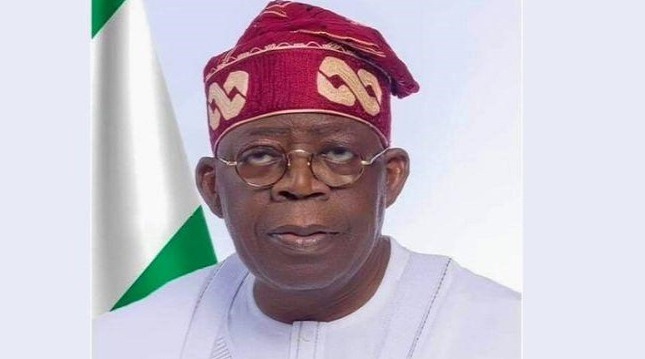
United States Government has said that Nigeria is not making significant progress in fiscal transparency, referencing gaps in the country’s budget disclosure, expenditure reporting, public procurement transparency and audit processes.

The assessment is contained in a report by the United States Department of State, which reviewed Nigeria’s fiscal transparency practices in its 2026 fiscal transparency report for countries published on Tuesday.
The report noted that the US government stated that Nigeria made some key fiscal documents available to the public, significant shortcomings remained in the disclosure of budgetary information and the management of public finances.
The report noted that “the government made its enacted budget and end-of-year report widely and easily accessible to the public, including online, but did not publish its executive budget proposal within a reasonable period.”
It also stated that while the Nigerian government had made information concerning the country’s debt obligations publicly available, its budget documents failed to provide a comprehensive picture of government revenues and expenditures.
“The government made information on debt obligations, including major state-owned enterprise debt, publicly available, but budget documents did not provide a substantially complete picture of the government’s revenues and expenditures, or break down expenditures to support executive offices in the budget,” the report stated.
The US government further raised concerns about discrepancies between Nigeria’s approved budget and the actual revenues and expenditures recorded during implementation.
It said, “Actual revenues and expenditures did not reasonably correspond to those in the enacted budget.”
The report also criticised the country’s supreme audit institution, stating that it did not meet international standards of independence and did not publish substantive reports, although it had access to the entire executed budget.
“The supreme audit institution did not meet international standards of independence or publish substantive reports but did have access to the entire executed budget,” it stated.
The assessment, however, acknowledged that Nigeria’s sovereign wealth fund had an adequate legal framework and disclosed information about its funding and the general approach to withdrawals.History
“The sovereign wealth fund had a sound legal framework and disclosed its source of funding and general approach to withdrawals,” the US government said.

Nigeria Civil Aviation Authority (NCAA) has announced plans to introduce Radio Frequency Identification (RFID) baggage tracking technology across domestic and international airport terminals to tackle the growing problem of delayed, misrouted and missing luggages

Michael Achimugu, director, Public Affairs and Consumer Protection, NCAA, disclosed this at a stakeholder engagement forum in Lagos.
Achimugu said the RFID-enabled system would replace the traditional barcode-based baggage tracking framework and provide airlines and passengers with real-time visibility of checked luggage from check-in to final collection.
According to him, the technology would improve baggage traceability, reduce mishandling and strengthen accountability across the baggage-handling chain.
Unlike conventional barcode systems, RFID technology allows baggage to be automatically scanned at multiple points without requiring direct line of sight, enabling real-time tracking of luggage throughout its journey.
Achimugu said issues involving short-landed, missing, lost or damaged baggage had remained among the major complaints from air travellers, alongside flight delays.
He said the introduction of RFID technology was therefore aimed at improving baggage-handling standards and restoring passenger confidence in the aviation sector.
The NCAA said the initiative also aligns with IATA Resolution 753, which requires airlines to track baggage at key points during the passenger journey.
The authority expects the technology to provide more accurate information on the location of luggage, facilitate quicker resolution of baggage-related complaints and improve the overall passenger experience.
The NCAA said the initiative would also strengthen accountability among airlines and other stakeholders involved in baggage handling at Nigerian airports.

Securities and Exchange Commission (SEC) has issued an urgent directive requiring all capital market-regulated entities (CMREs) to immediately subscribe to Nigeria’s Sanctions (NigSac) Alerts system.

Effective immediately, failure to comply with this, or other AML/CFT regulations, may result in severe fines, suspension of operations, or revocation of registration.
This follows fresh designations by both local and international authorities of individuals and Bureau de Change operators for alleged direct involvement in terrorism financing and material support to the Islamic State West Africa Province (ISWAP).
The directive, according to three circulars issued by the apex capital market regulator, requires a mandatory compliance measure with threats of fines, operational suspension, or outright registration revocation for non-compliance.
The directive, pursuant to the implementation of Financial Action Task Force (FATF) statements on high-risk jurisdictions, signals an escalation in Nigeria’s anti-money laundering and counter-terrorism financing regime.
The SEC’s broader circular implementing FATF high-risk jurisdiction statements reflects Nigeria’s heightened exposure to international scrutiny. SEC, in line with directives from Central Bank of Nigeria (CBN), now requires CMREs to terminate all correspondent banking relationships with listed high-risk jurisdictions, business entities and individuals.
“In line with the provisions of the Terrorism Prevention and Prohibition Act (TPPA), 2022, the Nigeria Sanctions Committee (NSC) has designated six (6) Individuals and three (3) Entities as terrorist financiers and subsequently added them to the Nigeria Sanctions List,” SEC stated in circular to all market operators.
The circular mandated all capital market regulated entities and individuals to do the following:
“Immediately, identify and freeze, without prior notice, all funds, assets, and any other economic resources belonging to the designated persons and entities in their possession and report same to the Secretariat of the Nigeria Sanctions Committee;
“Report to the Secretariat of the Nigeria Sanctions Committee any assets frozen or actions taken in compliance with the designation, including attempted transactions;
“Immediately file a suspicious transactions report to the Nigerian Financial Intelligence Unit (NFIU) for further analysis on the financial activities;
“Report as a suspicious transactions report to the NFIU, all cases of name matching in financial transactions prior to or after receipt of this Sanctions List;
“Subsequently prohibit dealings with the designated persons and entities; and continue to check for transactions relating to the designated persons and entities and report findings to the Nigeria Sanctions Committee through [email protected]”, SEC stated.
“Take Note that at all times, any unusual or suspicious transactions shall be promptly reported to the NFIU,” SEC warned.
According to the capital market apex regulator, the circular takes immediate effect and failure to comply with the directives constitutes a violation of the Investments and Securities Act, 2025, and the SEC AML/CFT Rules and Regulations and such failure would attract appropriate regulatory sanctions, including fines, suspension of operations, or revocation of registration.
The directive implies that capital market operators should immediately audit their AML/CFT technology stacks to ensure NigSac Alerts subscription and automated flagging capability.
CMREs are required to file suspicious transactions reports with the Nigerian Financial Intelligence Unit (NFIU) for any name matching with designated individuals and entities, whether such matches occur pre- or post-transaction.
The obligation extends to reporting all funds frozen and actions taken in compliance with designations to the NSC Secretariat via [email protected].
The designations also create secondary compliance obligations: CMREs must now maintain watchlists that incorporate designations from both the NSC and US Treasury, as regulatory expectations implicitly track international sanctions coordination.
For institutional investors and fund managers, this translates to enhanced due diligence on counterparty relationships, particularly where transactions flow through informal financial infrastructure or jurisdictions flagged under FATF increased monitoring status.

Nigeria Not Making Progress in Fiscal Transparency –US

NCAA to Introduce RFID Technology to Tackle Missing Luggages

SEC Directs Operators to Subscribe to NigSac Alerts, Freeze Terrorists-Linked Funds

Davido Bets $1m in Hit-for-Hit Battle with Colleagues

GSMA Industry Services Unveils Circularity Services to Help Operators Reduce E-Waste and Unlock Value

EFCC Busts NIS Visa Overstay Racket, Uncovers N700m in an Account

Fact-Check: Elon Musk’s “Tesla Pi Phone” is Internet Rumor

NBC Tasks Broadcasting Stations over 2028 DSO Global Deadline

NBC Scraps Annual Digital Access Fee on DSO

Glo Sponsored African Voices to Feature Netflix’s “The Polygamist” Stars




 News3 days ago
Moove Achieves Unicorn Status With $250m Funding

 Telecom3 days ago
MTN Nigeria Clocks 25, Connects over 90m People

 E-Financial3 days ago
FG Suspends NAICOM’s N680m Insurance Recapitalisation Fees

 E-Business3 days ago
Microsoft to Unveil Next-generation AI Chip in September

 Broadcasting3 days ago
Affordable, Flexible Streaming Platforms May Kill PAYtv – Report

 Telecom3 days ago
Subscribers to Seek Legal Redress if Poor Quality of Service Continue in September

 E-Financial3 days ago
SEC Moves to Recover Unclaimed Dividends, Inherited Investments Nationwide

 Telecom3 days ago
ipNX Collaborates with ICT Stakeholders on the Future of Fibre-to-the-Home in Nigeria @ ATCON Forum