

News
Turkish Airlines Launches New Commercial at the Super Bowl LIV

Turkish Airlines has launched a new commercial which explores the humanity’s spirit of exploration, inspired by the world-changing Moon landing in 1969. Titled, “Step on Earth”, the commercial brings back the sense of wonder and adventure felt as 600 million people around the world watched the humanity land on the Moon.
The 30-second commercial was viewed in the third quarter of the Super Bowl LIV held this year in Miami, and resulted in the victory of Kansas City Chiefs by the score of 31-20, defeating San Francisco 49ers.
Flying to more countries than any other airline, Turkish Airlines challenges the statistic that over a billion people globally have never travelled outside of their country.
The Star Alliance member airline gave the opportunity to three people, who had never travelled abroad, to discover the world beyond the borders of their home country for the first time.
The new commercial features Russ, Mariha and Karlos exploring countries they had never visited and discovering for themselves the adventure of stepping foot in a new country. The commercial captures the power and emotion of the journeys to novel landscapes and horizons around the globe and encourages us to explore our own planet. The adventure starts with one small step on Earth.
In the commercial itself, the viewer is shown archive footage from a 1969 newspaper heading and preparations leading up to the Apollo 11 countdown and take off. Meanwhile in 2019, Russ, Mariha and Karlos prepare for the flight, approaching a Turkish Airlines plane waiting for them on the apron.
Each first time traveller is destined for a different landscape for an unforgettable experience: exploring deep caves and waterfalls amongst lush tropical forest, trekking through deep snow and riding a group of wild horses in the desert.
Turkish Airlines Chairman of the Board and the Executive Committee, M. İlker Aycı, commented; “This film celebrates the spirit of discovery and adventure that permeates all of us, from first time travelers to lifelong adventurers.
We look up at the sky for every new adventure as our planet has countless wonders and moments waiting to be discovered.
“As Turkish Airlines, the airline that flies to more countries than any other, we are delighted to keep you encouraged to ‘Widen Your World’ to discover the rich variety of cultures and landscapes here on Earth.”
This is the brand’s fifth consecutive big game ad featured at the Super Bowl, one of the most watched sports tournaments around the world, alongside a line up of some of the world’s most recognisable brands. ‘Step on Earth’ will be aired in 20 countries around the world and follows on from a number of high profile commercials that Turkish Airlines have aired at the Super Bowl till now.
In 2016 Turkish Airlines debuted the “Batman v Superman” campaign, the 2017 “Widen Your World” where Morgan Freeman invited us to explore the wide route network, and the “Five Senses” campaign in 2018 starring Dr. Oz, who experienced the wonders of the world through five senses.
Ridley Scott directed the 2019 Super Bowl commercial ‘The Journey’, a cinematic and thrilling chase through the stunning sights of Istanbul and the new Istanbul Airport.
Flying to more countries than any other airline, Turkish Airlines currently connects 318 destinations in 126 countries, with exciting new destinations to be introduced in 2020.


Socio-Economic Rights and Accountability Project (SERAP) has dragged the Independent National Electoral Commission (INEC) to court over the alleged failure to account for ₦55.9 billion reportedly meant for the procurement of election materials for the 2019 general elections.

The grave allegations are documented in the latest annual report published by the Auditor-General on 9 September 2025.
In the suit number FHC/ABJ/CS/38/2026 filed last Friday at the Federal High Court in Abuja, SERAP is seeking: “an order of mandamus to direct and compel INEC to account for the missing or diverted N55.9 billion meant to buy smart card readers, ballot papers, and other election materials for the 2019 general elections.”
SERAP is also seeking: “an order of mandamus to direct and compel INEC to disclose the names of all contractors paid the N55.9 billion for the procurement of smart card readers, ballot papers, result sheets, and other election materials for the 2019 general elections, including the names of their directors and shareholders.”
In the suit, SERAP is arguing that: “INEC must operate without corruption if the commission is to ensure free and fair elections in the country and uphold Nigerians’ right to participation.”
SERAP is also arguing that, “INEC cannot ensure impartial administration of future elections if these allegations are not satisfactorily addressed, perpetrators including the contractors involved are not prosecuted and the proceeds of corruption are not fully recovered.”
According to SERAP, “INEC cannot properly carry out its constitutional and statutory responsibilities to conduct free and fair elections in the country if it continues to fail to uphold the basic principles of transparency, accountability and the rule of law.”
SERAP is also arguing that, “These allegations also constitute abuse of public office and show the urgent need by INEC to commit to transparency, accountability, clean governance and the rule of law.”
SERAP also said, “Allegations of corruption in the supply of smart card readers, ballot papers, result sheets and other election materials directly undermine Nigerians’ right to participate in elections that are free, fair, transparent, and credible.”
The lawsuit filed on behalf of SERAP by its lawyers, Kolawole Oluwadare, Kehinde Oyewumi, and Andrew Nwankwo, read in part: “These grim allegations by the Auditor-General suggest a grave violation of the public trust, the Nigerian Constitution 1999 [as amended] and international anticorruption standards.”
“According to the recently published 2022 audited report by the Auditor General of the Federation (AGF), the Independent National Electoral Commission (INEC) ‘irregularly paid’ over N5.3 billion [N5,312,238,499.39] ‘to a contractor for the supply of Smart Card Readers for the 2019 general elections’.
“The contract was awarded without prior approval from the Bureau of Public Procurement (BPP) and the Federal Executive Council. The payment was also ‘made without any document. There was no evidence of supplies to the commission.’”
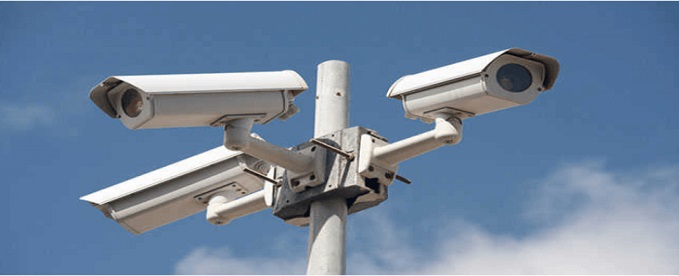
Federal government has inaugurated a ₦40 billion closed-circuit television (CCTV) control centre for the Third Mainland Bridge in Lagos.

Speaking at the inauguration on Sunday, David Umahi, minister of Works, said the project followed extensive rehabilitation works carried out on the bridge after the current administration took office in 2023.
“When we came on board in 2023, we met a very terrible Third Mainland Bridge,” Umahi said, adding that the structure, along with Carter and Iddo bridges, required comprehensive re-evaluation and repairs both above and below water level.
He said President Bola Tinubu approved the total rehabilitation of the bridge, including replacement of expansion joints, noting that the completed work had improved driving conditions and extended the bridge’s lifespan.
Umahi said the CCTV system, first announced in 2025, was designed to curb dangerous driving, prevent suicide attempts and strengthen security.
He added that security personnel would monitor live footage from the control centre and enforce speed limits on the bridge.
The minister commended the China Civil Engineering Construction Corporation (CCECC), which executed the project, for what he described as high-quality delivery. He said the contract also included a surveillance boat and two Hilux vans, which would be handed over to the police to support monitoring and rapid response.
“The idea is that we can see everything that is happening on the bridge,” Umahi said, expressing concern over excessive speeding and urging motorists to comply with traffic regulations.
Earlier, Olufemi Dare, federal controller of works in Lagos, said the facility was the first of its kind on any bridge in Nigeria.
He said the system allows real-time monitoring of activities on the bridge and surrounding waters.
Dare said the project includes 240 solar panels, 10 inverters, a 300 KVA transformer, a standby generator, multiple monitoring screens and full air-conditioning for the control centre.
He added that the contract also covers 1,268 solar-powered street lights and a borehole facility.
According to Dare, the project was awarded at a cost of ₦40.17 billion, with about ₦36 billion paid so far to the contractor. He said the current inauguration marked the first phase, with additional commissioning planned once work on the bridge’s extension is completed.
He thanked the president for approving the project and praised Umahi for ensuring due process during its execution.

As Africa stands at the threshold of a digital revolution, Carbon AI has officially announced the AI in Action 2026 conference, scheduled for January 22, 2026, at the Lagos Oriental Hotel.

In a statement in Lagos, Debola Ibiyode, Convener of AI in Action 2026 and CEO of Carbon AI, disclosed that the AI in Action 2026 conference aims to move beyond the typical industry hype to focus on practical, homegrown innovation under the theme: “Driving Productivity, Innovation, and Sustainability—Building the Future in AI Together.”
“AI in Action 2026 is designed as a high-impact platform where deep-tech innovation meets real-world application. The conference will specifically explore how Large Language Models (LLMs), Agentic AI Frameworks, and Generative AI can be harnessed to power Africa’s transformation,” she noted in the statement.
Debola also emphasizes that the time for mere discussion has passed, stressing that AI in Action 2026 is for people who want to do more than just talk about AI; it’s for those ready to build, apply, and lead.
“We aren’t chasing hype or funding; we are chasing real impact. Our mission is to empower budding founders to turn ideas into deployable solutions while championing responsible AI adoption that creates measurable social and economic change across the continent,” she added.
The statement explains that the conference features a curated experience designed to foster genuine collaboration. It includes keynote speeches and panels that offer deep dives into Generative AI, Agentic Frameworks, and their intersection with global sustainability.
Attendees can participate in practical workshops with hands-on sessions focused on building, deploying, and scaling AI tools. The event also features a startup and product showcase that highlights cutting-edge, African-built AI solutions.
Additionally, dedicated mentorship and networking sessions will connect early-stage founders with seasoned practitioners and industry leaders.
The event is a call to action for a diverse cross-section of the ecosystem, including Software and AI Engineers, Data Scientists, Business Leaders, Educators, Policymakers, Students, and ICT Infrastructure companies, enabling AI deployment, including datacenter providers. By bringing these groups together, the conference seeks to ensure the AI revolution is inclusive, ethical, and sustainable.
AI in Action 2026 Now offers tiered sponsorship packages for organizations looking to position themselves at the forefront of Africa’s technological future. Sponsors will gain direct access to a unique demographic of decision-makers and the next generation of AI talent.
“Africa’s digital revolution must be homegrown. Whether you’re building solutions, shaping policy, or mentoring young innovators, this is your platform. Together, we’re not just discussing the future, we’re building it,” she concluded.

SERAP Sues INEC Over Alleged ₦55.9Bn Election Funds Diversion

NDIC Declares Second Liquidation Dividend for Heritage Bank Depositors

FG Inaugurates N40Bn CCTV Control Centre for Third Mainland Bridge

Ministry of Finance Leads FG-Backed Deal to Deliver Quality Homes and Boost Agriculture in Niger State

FG Plans to Invest $460m World Bank Loan in Fibre Infrastructure

Banks quietly move to enforce new ₦50 transfer levy from Jan. 1

FIRS says NIN, CAC Numbers to Serve as Tax IDs from 2026

Nigeria Takes the Lead in the Global WSIS+20 Digital Agenda

PalmPay Launches N400 Million World Travel Carnival, Rewarding Users with Free Global Trips

Check Point Reveals Nigeria as Second Most Targeted African Country for Cyberattacks in November




 E-Financial2 days ago
19 Nigerian Banks Meet CBN Recapitalization Targets Ahead of March Deadline

 E-Financial2 days ago
KPMG Identifies ‘Flaws, Inconsistencies, and Omission’ in New Tax Law

 Telecom2 days ago
Nigeria, Egypt to Lead Africa’s Data Center Boom

 General News2 days ago
FG to Empower Artisans for Global Value

 General News2 days ago
Bill Gates Pays Ex-Wife $8Bn Charity Payout in Divorce Settlement

 Telecom2 days ago
Court Dismisses N1Bn Suit against MTN, Awards N3m Costs

 General News2 days ago
FG Introduces Reusable Textbooks, Uniform School Calendar to Cut Education Costs

 General News2 days ago
CBN Projects Petrol to Hover around N905/Litre this Year