

E-Business
Twitter Ban: Nigeria’s Once Booming Tech Community Now in Shock


The government’s sudden ban of Twitter could jeopardise one of the country’s most promising industries, according to Mail & Guardian.

Africa’s biggest startup story in 2020 was the acquisition, by US company Stripe, of Paystack — an electronic payments processor that was founded in Lagos in 2015.
Valued at about $200-million, it was a landmark deal for Nigeria’s booming tech community.
A hunt for more Paystacks has ensued among local and international investors. They are worried about missing out.
With broadband penetration rising from less than 20% five years ago to more than 40% since May 2020, Nigeria’s information and communications technology sector is the fastest growing in the country, rising 6.31% in the first quarter of 2021.
The importance of this sector is only increasing, given the negative economic effects of the Covid-19 pandemic on Africa’s largest economy, and the pressing need to diversify away from oil revenues.
Such metrics, including the fact that 81% of Nigerian adults own cellphones, encourage investors to part with even more unprecedented million-dollar checks, like the $10-million raised by digital bank Kuda at seed stage last November.
The appetite and tolerance for tech enterprise in Africa’s most-populous country has never been so high.
But this burst of energy and innovation is facing a familiar foe: the Nigerian government.
Last week, the federal government banned Twitter — one of the biggest social-media platforms in the world. The ban came after Twitter deleted a tweet issued from President Muhammadu Buhari’s account, saying that it amounted to a threat of violence. Businesses and media organisations in Nigeria have been instructed to delete their Twitter accounts, and ordinary citizens risk arrest for using the app.
The Twitter ban comes just six months after another major shock to the local tech industry, when the Central Bank of Nigeria ordered banks to stop enabling cryptocurrency transactions.
Suddenly, Nigeria is losing its appeal for tech investors.
“The truth is that regulatory risk has been the chief concern for us investors for a while,” Tokunboh Ishmael, a former board chair at the Africa Venture Capital Association, told The Continent.
Through Alitheia Capital, an investment firm, she has helped to fund Nigerian startups, including Paga, MAX and Lidya. In each case, “regulatory risk has factored high in our risk matrix”.
For Nigerian startups, this means that they need to offer investors a higher return on their investment than in more stable markets, Ishmael said.
Tayo Oviosu, who founded Paga in 2009, says a handful of investors have mentioned regulatory risk as their reason for not investing in the mobile-payments company, but such occasions have been rare in the past.
“That said, all investors consider the macroeconomic situation of any country they invest in, particularly if investing in a regulated sector.”
Operating costs
The Twitter ban will not only make it hard for Nigerian tech companies to raise money; for some of them, it will also make it difficult to operate. With its estimated two million users in Nigeria, Twitter is an important platform for businesses.
Eloho Omame, founding chief executive of Endeavor Nigeria and co-founder of a new firm aiming to fund female-focused startups with $25 000 seed money, said Twitter has been “essential as a touchpoint” with the founders and startups it serves.
Her firm, FirstCheck Africa, is essentially a startup in need of a platform to tell its story and gain traction with the women who could found Africa’s next big thing. “A not-insignificant part of our investment pipeline relies on outreach on Twitter and a lot of our hiring is done via Twitter. The ban has disrupted all of that. None of the alternatives are as efficient.”
Twitter has become a customer-service-management platform for new startups looking to be lean and nimble. Part of the success of Piggyvest, a popular savings app, is that it went from zero to 450 users in a year with next to nothing spent on marketing, relying on Twitter for customer acquisition.
With the ban, startups have pushed notifications explaining that Twitter support is now deactivated.
An email from Fairmoney, a digital bank, offered a phone number, an email and a Facebook page as alternative customer-service channels. Risevest, a stock-trading app, included Instagram among its alternatives. Henry Mascot, founder of Curacel — which provides fraud-detection technology for insurance companies — says the company has had to hire a new team outside Nigeria to manage its Twitter feed. That means more spending.
Staying hopeful
Mascot says it’s too early to know how bad the effect of the ban will be. His investors, who helped Curacel raise $450 000 this March, are in for the long run, but he is concerned about the message to the broader ecosystem of investors.
Oviosu, the Paga chief executive, is optimistic and says investors will observe the Twitter ban as an isolated issue and won’t be deterred from the market. Victor Basta, managing partner of Magister Advisors, which has advised on multimillion-dollar deals in Africa, sees the negatives of a social-media ban but doesn’t expect spillovers to fundraising work. “We have multiple deals ongoing with Nigerian companies and we see no backlash from this step.”
But in the present, founders and investors agree that a continued pattern of arbitrary regulatory changes is sending the wrong signal to people considering Nigerian startups as a destination for their capital.
“A government that’s consistently hostile to technology sends a message that its economy is less credible as a destination for important future-focused investments of time and money,” Omame says. “We’re competing for talent and capital with ecosystems all over the world and we’re even further on the back foot.”


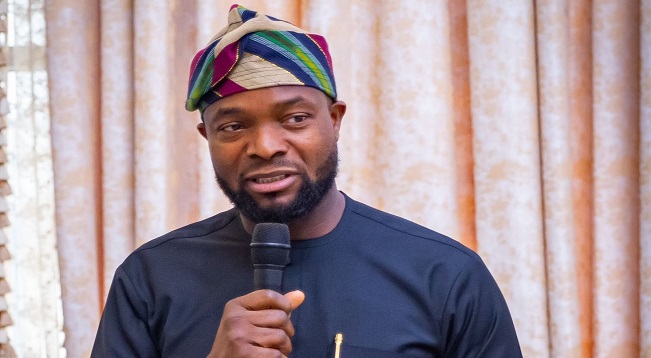
Federal Government has unveiled plans to establish a National Cybersecurity Coordination Council, signaling a shift toward a more unified, intelligence-driven approach to defending the country’s rapidly expanding digital economy.

Conceived as a non-statutory, multi-stakeholder body, the proposed Council will enhance coordination, enable trusted information sharing, and guide government strategy on cybersecurity, risk management, and national response amid increasingly complex cyber threats.
The initiative, championed by Bosun Tijani, minister of communications, innovation and digital economy, is designed to bring together government institutions, private sector players and technical experts into a single collaborative platform to strengthen the country’s cyber resilience.
Tijani noted that this initiative comes in response to a wave of recent cyber incidents that have disrupted operations across key private institutions and public sector.
In recent times, Nigeria’s financial system has faced mounting cyber pressure, reflecting global trends as cybercrime is projected to cost the world over $10.5 trillion annually, according to Cybersecurity Ventures.
Analysts say these attacks are increasingly coordinated and sophisticated, prompting the government to recognise that fragmented, institution-specific approaches can no longer manage systemic cyber risks effectively.
Under the new framework, the government aims to promote a “collective defence” model, an approach widely adopted in advanced digital economies where threat intelligence is shared in real time across institutions.
The Council is expected to include chief information security officers, cybersecurity associations, the Nigerian Computer Society, global technology providers, researchers, law enforcement agencies and civil society groups, ensuring a broad-based and technically grounded response architecture.
Key priorities will include developing national threat intelligence-sharing systems, harmonised cyber defence protocols, and coordinated incident response, while strengthening capacity to close Nigeria’s cybersecurity talent gap.


Oracle, US-based technology giant, has initiated a sweeping round of layoffs affecting thousands of employees globally, with India among the worst-hit regions, according to multiple reports.

The job cuts, which began on March 31, are part of a broader restructuring exercise that could impact between 20,000 and 30,000 employees worldwide, making it one of the largest workforce reductions in the company’s history.
While the exact number remains unconfirmed, multiple reports suggest that around 12,000 employees in India have been affected,
Employees across several geographies, including India, the United States, Canada, and Mexico, reported receiving termination emails early in the morning, informing them that their roles had been eliminated with immediate effect.
“Today is your last working day,” the email stated, citing “organisational change” as the reason for the decision. Access to company systems, including email and internal platforms, was revoked shortly thereafter.
The communication, according to Business Insider, described the move as part of a broader “reduction in force and other terminations,” and said affected employees would be eligible for severance benefits subject to company policy.
The email also instructed employees to share personal contact details to receive separation documents.
In India, impacted employees have reportedly been offered severance packages that include 15 days’ salary for each completed year of service, notice period pay, leave encashment, gratuity where applicable, and an additional two-month salary top-up in cases of voluntary separation.
The layoffs are linked to Oracle’s strategic shift towards artificial intelligence (AI) and cloud infrastructure.
The company has announced plans to invest approximately USD 50 billion in AI infrastructure and has reportedly raised an equivalent amount in debt to fund its expansion.
In a recent regulatory filing, Oracle said it expects restructuring costs for fiscal 2026 to reach up to USD 2.1 billion, largely driven by severance payouts and related expenses.
The move comes as Oracle looks to strengthen its position against global cloud competitors such as Amazon and Alphabet.
Uncertainty continues to loom over employees, with reports indicating that another round of layoffs could follow in the coming weeks. Employees who were affected described the layoffs as abrupt, with little prior indication.
Some former staff members have taken to social media to share their experiences.
Tricia S Marsh, a former Senior Principal at Oracle, said the layoffs marked the end of an important chapter in her career while urging affected colleagues to remain hopeful.
As of May 2025, Oracle had around 162,000 full-time employees globally.

Kaspersky Global Research & Analysis Team (GReAT) has uncovered an active malicious campaign distributing a previously undocumented RAT with a very broad feature set. Beyond the standard remote access trojan functionality, it combines stealer, keylogger, clipper, and spyware capabilities.

Cybercriminals are selling it to third parties as MaaS (malware-as-a-service) promoting it on YouTube and Telegram, increasing the likelihood of its use across a wider range of actors, including less-skilled operators.
Due to its stealer functionality, the malware can collect a wide range of data about its victim: it gathers system information, extracts credentials for Steam, Discord and Telegram, and also harvests data from web browsers. It also poses a threat to cryptocurrency users, as it includes a browser-based clipper that replaces crypto wallet addresses.
Beyond data theft, CrystalX RAT is capable of full-scale surveillance, with the ability to take screenshots, record audio from the microphone, and capture video from both the webcam and the victim’s screen.
Particularly notable is the CrystalX RAT “playful” Prankware feature set, which is actively promoted by the developers. These capabilities allow operators to visibly interfere with the victim’s system by shaking the mouse cursor, setting wallpapers on the victim’s screen, changing screen orientation, hiding desktop icons, forcing system shut downs, and even delivering real-time pop-up notifications and messages to the victim.
While seemingly trivial, these features introduce a disruptive and psychological dimension to the attack, making the attack both visible and distressing for the victim.
Kaspersky reports attacks targeting users in Russia, but the trojan has the potential to spread to other countries due to its sales and distribution model.
“Such a diverse feature set effectively enables a 360-degree compromise of the victim and a complete loss of privacy. Beyond gaining access to account credentials, the stolen data could potentially be used for blackmail.
“At the moment, the initial infection vector is not precisely known, but it is already affecting dozens of victims. Our telemetry is already detecting new versions of the implants, indicating that this malware is still actively developed and maintained.
“We expect the number of victims to grow significantly and its geographic spread to expand in the near future,” says Leonid Bezvershenko, senior security researcher at Kaspersky GReAT.

FG, Others Say Nigeria Wastes 38m Tonnes of Food Annually

Ecobank Assures of Seamless Easter Banking Services

Anchor Gets Nigerian, Canadian Licences as Transactions Crosses $2.5Bn

CycleFlow, IFC Launch Supply Chain Finance Platform in Nigeria

NITDA Strengthens Collaboration with NIPSS to Drive Digital Innovation, Orange Economy Growth

Spotify’s Loud & Clear Report Reveals Over ₦60Bn Revenue for Nigerian Artists in 2025

Madonna University Taps Tech Guru Adote for Strategic Board Role

China Threatens to Shut Nigeria’s Satellite Over $11.44m Unpaid Debt

FCCPC Bans Lagos ‘No Refund’ Policy, Vows Fines and Shutdowns for Traders

Healthcare Under Attack: Why Cybersecurity is Now Critical Care




 E-Financial2 days ago
CBN Says 33 Banks Raise Fresh N4.65 Trillion in Recapitalisation Exercise

 Telecom2 days ago
NCC Insists Telcos Must Compensate Subscribers for Poor Quality of Service

 Telecom2 days ago
NITDA Urges Joint Action to Drive Nigeria’s Digital Innovation

 E-Business2 days ago
Cybersecurity Firm Uncovers CrystalX RAT which Steals Data, Mocks its Victims

 E-Business2 days ago
Oracle Sacks 12,000 in India, Begins Shift to AI

 Telecom2 days ago
Oracle Corporation Axes 30,000 Workers in Brutal AI Shake-Up

 E-Financial2 days ago
Nigeria, Others Lose $88bn Yearly to Illicit Flows —Edun

 General News2 days ago
DBI Unveils Nigeria Digital Economy Outlook 2026: Q1 Report Highlights Strategic Trends, Risks