

News
Two Nigerian Fintech Companies Among Finalists in the Ecobank Fintech Challenge 2022

The six finalists were chosen following extremely strong competition from over 700 fintechs from 59 countries; Grand Finale to be held on 28 October at the Ecobank Group Pan African Centre in Lomé, Togo; Finalists will compete for the top price of $50,000 and admission to the ‘Ecobank Fintech Challenge Fellowship’ program.

Ecobank Group, the leading private pan-African banking group, has announced the six finalists for the fifth edition of the Ecobank Fintech Challenge. The finalists come from the Democratic Republic of Congo, Nigeria, Senegal, South Africa and Togo.
The six fintechs stood out from a highly competitive pool of over 700 applicants from 59 countries in and outside Africa. The six finalists will compete for the top price of $50,000 at the Grand Finale, which is being held at the Ecobank Pan African Centre in Lomé, Togo, on Friday 28 October 2022.
The finalists for the 2022 edition, in alphabetical order, are:
Cauri Money, Senegal
DizzitUp, Togo
MaishaPay, Democratic Republic of Congo
Moni Africa, Nigeria
Paycode, South Africa
Touchand Pay, Nigeria
This 5th edition of the Ecobank Fintech Challenge, which is sponsored by Arise, will allow all finalists to benefit from Ecobank’s Fintech Mentoring Programme. During this programme, Ecobank will help them to explore opportunities including:
– Rolling out their products on a pan-African scale: an opportunity to further integrate with Ecobank and potentially launch their products or services in all or part of Ecobank’s 33-country pan-African ecosystem.
– Access to the Group’s pan-African Banking Sandbox to test and develop their products in the pan-African market.
– Priority access to Ecobank’s venture capital partners to explore funding opportunities.
Tomisin Fashina, Ecobank Group Executive, Operations and Technology, said: “I am impressed by the growing number of applications for the Ecobank Fintech Challenge. Applications have grown from about 412 applications in 2018 to over 700 in 2022.
“This demonstrates a definite paradigm shift within the African continent, with Africans’ desire to transform technological innovation into a real lever for socio-economic development. We thank all applicants for their participation and applaud the highly impressive quality of their entries.
“We look forward to partnering with them for their groundbreaking digital financial solutions to our continent’s unique challenges and to help promoting financial inclusion on the continent.”
Gavin Tipper, CEO of Arise, partner and co-sponsor of the Ecobank Fintech Challenge 2022 competition, said: “Fintechs play a central role in creating innovative digital solutions that improve customer experience, deliver value propositions and reduce costs.
“Our investments in fintechs are based on collaborative partnerships that advance financial inclusion on the continent and offer opportunities for mutual synergies with our balanced investment portfolio.”
The Ecobank Fintech Challenge is designed to identify innovative fintechs that are ready to grow, that we can partner with, mentor and give access to Ecobank’s 33 African markets, so that they can realise their potential and become pan-African success stories.
This competition is in line with Ecobank’s Fintech strategy of building partnerships with African fintechs to help transform digital finance and banking.
The Ecobank Fintech Challenge is organised in collaboration with partners across Africa and the world, including Arise, gold sponsor of the 2022 edition, Global Finder, TechCabal, Africa Fintech Network and Konfidants.


Nigeria and other Sub-Saharan Africa countries rank ninth out of nine global regions as Egypt has emerged as Africa’s leading country in artificial intelligence readiness, ranking first on the continent and 51st globally in the 2025 Government AI Readiness Index published by Oxford Insights.

The impressive ranking has been lauded as underscoring North Africa’s growing influence in the global AI race.
According to Egypt’s Ministry of Communications and Information Technology (MCIT), the country scored 57.5 points out of 100, climbing 14 places from 65th in 2024.
The Nile nation also ranked fourth in the Middle East and North Africa (MENA) region, behind Saudi Arabia, Israel and the United Arab Emirates.
The Oxford Insights index assesses 195 governments using 69 indicators across six pillars, including policy capacity, governance, AI infrastructure, public sector adoption, development and diffusion, and resilience.
Egypt topped the Policy Capacity pillar globally with a perfect score of 100, tying with the UK, Serbia and Australia, an indicator of strong national AI policymaking and institutional readiness.
Oxford Insights noted that countries such as Egypt are “expanding the use of AI across national priorities while shaping policies to strengthen domestic AI ecosystems,” although gaps in infrastructure and talent development remain in some contexts.
MCIT minister Amr Talaat attributed Egypt’s strong performance to deliberate government action.
“This achievement reflects our efforts to integrate artificial intelligence into public services and accelerate digital transformation through Egypt’s second National AI Strategy. We are positioning Egypt as a regional AI hub while ensuring AI delivers real economic and social value,” he said.
Launched for 2025–2030, Egypt’s National AI Strategy targets sectors such as healthcare, justice and public administration, while aiming to train 30 000 AI specialists by 2030 and raise AI’s contribution to GDP to 7.7%.
Talaat also highlighted Egypt’s cybersecurity credentials when he highlighted that the country ranked among the top 12 globally in the ITU’s Global Cyber security Index.
Regionally, the results expose sharp contrasts across Africa. Sub-Saharan Africa ranks ninth out of nine global regions, with an average score of 28.04, reflecting persistent gaps in AI infrastructure and public sector adoption.
However, countries such as Kenya, South Africa, Mauritius and Nigeria lead the sub-region, while Rwanda and Ethiopia are gaining momentum through innovation hubs and policy reforms.
In contrast, the MENA region ranks fifth globally, buoyed by significant investment in AI infrastructure and policy capacity, particularly in Gulf states.


Socio-Economic Rights and Accountability Project (SERAP) has dragged the Independent National Electoral Commission (INEC) to court over the alleged failure to account for ₦55.9 billion reportedly meant for the procurement of election materials for the 2019 general elections.

The grave allegations are documented in the latest annual report published by the Auditor-General on 9 September 2025.
In the suit number FHC/ABJ/CS/38/2026 filed last Friday at the Federal High Court in Abuja, SERAP is seeking: “an order of mandamus to direct and compel INEC to account for the missing or diverted N55.9 billion meant to buy smart card readers, ballot papers, and other election materials for the 2019 general elections.”
SERAP is also seeking: “an order of mandamus to direct and compel INEC to disclose the names of all contractors paid the N55.9 billion for the procurement of smart card readers, ballot papers, result sheets, and other election materials for the 2019 general elections, including the names of their directors and shareholders.”
In the suit, SERAP is arguing that: “INEC must operate without corruption if the commission is to ensure free and fair elections in the country and uphold Nigerians’ right to participation.”
SERAP is also arguing that, “INEC cannot ensure impartial administration of future elections if these allegations are not satisfactorily addressed, perpetrators including the contractors involved are not prosecuted and the proceeds of corruption are not fully recovered.”
According to SERAP, “INEC cannot properly carry out its constitutional and statutory responsibilities to conduct free and fair elections in the country if it continues to fail to uphold the basic principles of transparency, accountability and the rule of law.”
SERAP is also arguing that, “These allegations also constitute abuse of public office and show the urgent need by INEC to commit to transparency, accountability, clean governance and the rule of law.”
SERAP also said, “Allegations of corruption in the supply of smart card readers, ballot papers, result sheets and other election materials directly undermine Nigerians’ right to participate in elections that are free, fair, transparent, and credible.”
The lawsuit filed on behalf of SERAP by its lawyers, Kolawole Oluwadare, Kehinde Oyewumi, and Andrew Nwankwo, read in part: “These grim allegations by the Auditor-General suggest a grave violation of the public trust, the Nigerian Constitution 1999 [as amended] and international anticorruption standards.”
“According to the recently published 2022 audited report by the Auditor General of the Federation (AGF), the Independent National Electoral Commission (INEC) ‘irregularly paid’ over N5.3 billion [N5,312,238,499.39] ‘to a contractor for the supply of Smart Card Readers for the 2019 general elections’.
“The contract was awarded without prior approval from the Bureau of Public Procurement (BPP) and the Federal Executive Council. The payment was also ‘made without any document. There was no evidence of supplies to the commission.’”
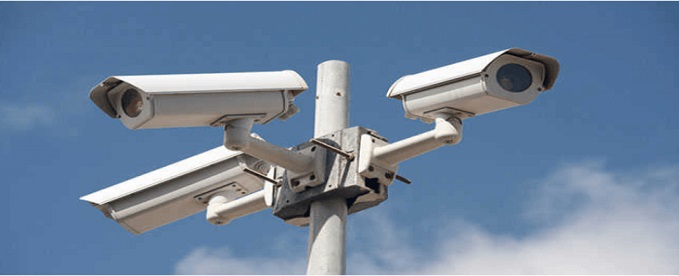
Federal government has inaugurated a ₦40 billion closed-circuit television (CCTV) control centre for the Third Mainland Bridge in Lagos.

Speaking at the inauguration on Sunday, David Umahi, minister of Works, said the project followed extensive rehabilitation works carried out on the bridge after the current administration took office in 2023.
“When we came on board in 2023, we met a very terrible Third Mainland Bridge,” Umahi said, adding that the structure, along with Carter and Iddo bridges, required comprehensive re-evaluation and repairs both above and below water level.
He said President Bola Tinubu approved the total rehabilitation of the bridge, including replacement of expansion joints, noting that the completed work had improved driving conditions and extended the bridge’s lifespan.
Umahi said the CCTV system, first announced in 2025, was designed to curb dangerous driving, prevent suicide attempts and strengthen security.
He added that security personnel would monitor live footage from the control centre and enforce speed limits on the bridge.
The minister commended the China Civil Engineering Construction Corporation (CCECC), which executed the project, for what he described as high-quality delivery. He said the contract also included a surveillance boat and two Hilux vans, which would be handed over to the police to support monitoring and rapid response.
“The idea is that we can see everything that is happening on the bridge,” Umahi said, expressing concern over excessive speeding and urging motorists to comply with traffic regulations.
Earlier, Olufemi Dare, federal controller of works in Lagos, said the facility was the first of its kind on any bridge in Nigeria.
He said the system allows real-time monitoring of activities on the bridge and surrounding waters.
Dare said the project includes 240 solar panels, 10 inverters, a 300 KVA transformer, a standby generator, multiple monitoring screens and full air-conditioning for the control centre.
He added that the contract also covers 1,268 solar-powered street lights and a borehole facility.
According to Dare, the project was awarded at a cost of ₦40.17 billion, with about ₦36 billion paid so far to the contractor. He said the current inauguration marked the first phase, with additional commissioning planned once work on the bridge’s extension is completed.
He thanked the president for approving the project and praised Umahi for ensuring due process during its execution.

Nigeria, Others Lag Behind as Egypt Tops Africa in AI Readiness

Wema Bank Upgrades ALAT Banking App

Firm Launches AI-powered Platform to Simplify New Tax Laws

Study Reveals 88.5% of Phishing Attacks Focus on Stealing Account Credentials

X Suspends Twitter Account for Rules Violation

Banks quietly move to enforce new ₦50 transfer levy from Jan. 1

FIRS says NIN, CAC Numbers to Serve as Tax IDs from 2026

Nigeria Takes the Lead in the Global WSIS+20 Digital Agenda

PalmPay Launches N400 Million World Travel Carnival, Rewarding Users with Free Global Trips

Check Point Reveals Nigeria as Second Most Targeted African Country for Cyberattacks in November




 General News2 days ago
Ministry of Finance Leads FG-Backed Deal to Deliver Quality Homes and Boost Agriculture in Niger State

 News2 days ago
SERAP Sues INEC Over Alleged ₦55.9Bn Election Funds Diversion

 Telecom2 days ago
FG Plans to Invest $460m World Bank Loan in Fibre Infrastructure

 News2 days ago
AI Founders and Developers to Converge in Lagos for AI in Action 2026 conference

 E-Financial2 days ago
NDIC Declares Second Liquidation Dividend for Heritage Bank Depositors

 News2 days ago
FG Inaugurates N40Bn CCTV Control Centre for Third Mainland Bridge

 General News2 days ago
Tax Reforms Panel Rejects KPMG’s Critique of New Laws

 General News2 days ago
Indonesia Blocks Elon Musk’s Grok Over Deepfake Concerns