

E-Financial
UBA Delights Shareholders; Distributes N27.2bn in Dividends

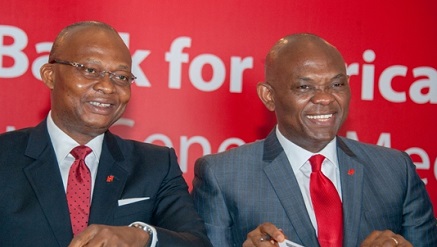
Shareholders of the pan-African financial institution, the United Bank for Africa (UBA) Plc applauded the Board, Management and Staff at the 55th Annual General Meeting of the Bank, held in Lagos.
UBA shareholders approved the payment of N19.9 billion as final dividend for the financial year ended 31st December 2016, in addition to N7.3 billion interim dividend paid after the audit of its 2016 Half Year Results.
The shareholders, who unanimously approved the N0.55/share final dividend on every ordinary share of N0.50 each were particularly impressed by Mr. Kennedy Uzoka, new group managing director/CEO, who delivered unprecedented results to shareholders at his inaugural AGM.
UBA had earlier paid an interim dividend of N0.20/share to shareholders, bringing the total dividend for the 2016 financial year to N0.75kobo, an impressive 25% growth over the total dividend of N0.60/share paid for the 2015 financial year.
Furthermore, the total dividend of N0.75/share translates to an unparalleled yield of 14.3% when put in the perspective of UBA’s share price of N5.26 on the Nigerian Stock Exchange, as at the close of market on Friday, April 07, 2017.
The Shareholders were excited at the sterling performance of the Group, an impressive 22% year-on-year growth in gross earnings and an outstanding 32% year-on-year growth in profit to N91 billion, in what analysts described as an attestation to UBA’s resilience and enhanced productivity.
Worthy of note to the shareholders is the contribution from the Group’s African subsidiaries, emphasizing its earnings diversification, across geographies which reduces the Group’s vulnerability to macroeconomic pressures in any single market. The Group’s ex-Nigeria subsidiaries contributed 32% of the Group’s profit in 2016, compared to a quarter of profit contribution in the 2015 financial year.
Notwithstanding the challenging operating environment, the Group recorded an impressive 22% growth in gross earnings to N384 billion in 2016, from N315 billion in the 2015 financial year, illustrating the Bank’s resilience and tenacity to generate earnings even in periods of economic slowdown.
The Group further achieved a significant 32 percent growth in profit before tax to N91 billion, compared to N68 billion profit recorded over the same period of 2015. UBA’s profit after tax grew by 22 percent to N72 billion, from N60 billion recorded the previous year.
Alhaji Farouk Umar, president of the Association for the Advancement of the Rights of Nigerian Shareholders, said at the AGM, “It is obvious from the faces of shareholders that all of us are happy with the performance of the bank. We did not expect anything less because we know that that our chairman is an achiever not only locally but also internationally. We have seen the African expansion and its contribution to our earnings and I believe this is also commendable.”
Mr. Tony Elumelu, group chairman, UBA Plc gave credit to the chairpersons of UBA subsidiary Boards across Africa saying ‘these hard working men and women, who chair the Boards across our businesses in Africa, have helped contribute a third of the overall profit of the Group. I believe they deserve commendation. They are strengthening UBA brand across Africa, in line with our aspiration.” He was particularly pleased with the Bank’s new CEO, Kennedy Uzoka.
‘At the Board level, we are extremely pleased by the financial performance that Kennedy and his team delivered in 2016. Kennedy and his team prioritize the Customer and they are diligently executing the Customer First project, which the Board believes will sustainably enhance the performance of the Group’ said Elumelu.
“Our results show the tenacity and enterprise of our Management team and Staff. More importantly is our ability to proactively meet customers’ need. I am pleased that UBA maintains some of the best prudential ratios in the industry, as our capital adequacy ratio of 20% and 39% liquidity ratio are well above the 15% and 30% regulatory requirement respectively. We will be prudent in lending to critical growth sectors of the African economies, as we remain upbeat on the huge banking opportunities in Africa’, he added.
He also used the occasion to commend the Federal Government of Nigeria and Central Bank of Nigeria on their concerted policy actions aimed at reflating the Nigerian economy. ‘I will like to encourage them to continue along this path, which I believe will stimulate the country’s economy in the shortest possible time’.
Kennedy Uzoka, group CEO, assured the shareholders of a better 2017. “As we further our Customer First Philosophy, we are approaching 2017 with stronger optimism, especially as the outlook remains positive in most of our markets. We are not unaware of the macro economic challenges, competition and constantly changing customer preferences. Rather, we believe we are well equipped to win in the market. We will further sweat our unique Pan- African platform to improve productivity, extract efficiency gains and grow our share of customers’ wallet across all business lines and markets. We will continue to build on our strong governance culture, zero-tolerance for infractions and transparency in furthering our frontiers of leadership in the African market.
United Bank for Africa Plc (UBA) is a leading pan-African financial services group with presence in 19 African countries, as well as the United Kingdom, the United States of America and France.
UBA was incorporated in Nigeria as a limited liability company after taking over the assets of the British and French Bank Limited who had been operating in Nigeria since 1949.
The United Bank for Africa merged with Standard Trust Bank in 2005 and from a single country operation founded in 1949 in Nigeria – Africa’s largest economy – UBA has become one of the top providers of banking and other financial services on the African continent. The bank provides services to about 14 million customers globally, through one of the most diverse service channels in sub-Saharan Africa with over 1,000 branches and customer touch points and a robust online and mobile banking platform.
UBA was the first Nigerian bank to make an Initial Public Offering (IPO), following its listing on the NSE in1970. It was also the first Nigerian bank to issue Global Depository Receipts (GDRs).
The shares of UBA are publicly traded on the Nigerian Stock Exchange (NSE) and the bank has a well-diversified shareholder base which includes foreign and local institutional investors, as well as individual shareholders.



Kayode Egbetokun, inspector-general of Police (IGP), has declared Nigeria’s banking industry a strategic national asset, ordering an immediate intelligence-led crackdown on cybercriminal networks, insider facilitators, and transnational financial crime syndicates threatening the stability of the financial system.

Kayode Egbetokun, inspector-general of Police (IGP),
Speaking at a strategic meeting with the Chartered Institute of Bankers of Nigeria (CIBN) and the Body of Bank Chief Executive Officers in Lagos, where he said the Nigeria Police Force was shifting from reactive policing to proactive dismantling of organised criminal structures targeting banks.
According to him, the financial sector remains central to national stability.
He said: “The Nigerian banking industry is not merely a driver of economic activity; it is a core component of our national stability architecture. The integrity, continuity, and resilience of the financial system are directly linked to public confidence, investor perception, and the credibility of Nigeria’s economic governance.”
In a major policy shift, Egbetokun announced that regular police officers would no longer be deployed for routine cash-in-transit escorts or non-essential VIP protective duties within the private sector.
He explained that the decision aligned with national policy direction and manpower optimisation within the Force, adding that the traditional model of conventional police deployment for banking sector protection was being reviewed and progressively restructured.
“This policy adjustment is not designed to diminish the security framework supporting the banking industry. Rather, it reflects a deliberate transition towards a more sustainable, professional, and institutionally governed model of security support,” he said.
Egbetokun warned that conventional risks such as armed robbery and cash-in-transit vulnerabilities, though still present, have been overtaken by more complex and technologically sophisticated threats.
“These threats are adaptive, technologically sophisticated, and often coordinated across borders. They include cyber-enabled fraud, identity compromise, insider facilitation, organised financial crime, and illicit financial flows,” he told the bankers.
The IGP stressed that disruptions to banking operations now carry international reputational consequences, citing global compliance standards set by the Financial Action Task Force FATF and Anti-Money Laundering/Combating the Financing of Terrorism (AML/CFT) obligations.
He said: “In an era shaped by FATF standards, AML/CFT obligations, and heightened scrutiny of financial flows, the strength of a nation’s enforcement and security architecture is now directly relevant to investor confidence and market stability.”
The police noted that: “The speed and sophistication of cyber-enabled fraud illustrate the urgency of integration. Delayed reporting windows can render enforcement ineffective, while rapid escalation, evidence preservation, and coordinated response can significantly improve disruption, recovery, and prosecution outcomes.
“Modern financial crime operates at a pace that requires equally modern security coordination.”
Egbetokun disclosed that the Force had already intensified covert operations targeting kidnapping syndicates, illegal arms networks, and organised criminal enterprises whose activities threaten commercial stability.
He added that the Police were strengthening coordination with the Economic and Financial Crimes Commission (EFCC), the Nigeria Financial Intelligence Unit (NFIU), and the Central Bank of Nigeria (CBN) to ensure that criminal enterprises do not exploit gaps between enforcement, compliance, and oversight.
The IGP told the bankers that sustainable security cannot be achieved through episodic contact or fragmented interventions, calling for structured cooperation between law enforcement and financial institutions.
“Security is not merely the absence of crime; it is the presence of stability that enables productivity, investment, and growth. A secure banking environment supports savings mobilisation, credit expansion, financial inclusion, and the confidence of both domestic and international investors.
“When citizens trust financial institutions, participation in the formal economy increases. When investors perceive a stable internal security environment supported by credible enforcement, Nigeria becomes more bankable, more investable, and more competitive.
“The outcome of this meeting should not be limited to dialogue. It should produce structured liaison mechanisms between law enforcement and the banking sector, clear operational protocols for high-risk areas, joint capacity building, and lawful information-sharing.
“The Nigeria Police Force stands ready to work with the banking sector not merely as an enforcement institution, but as a strategic partner in safeguarding the integrity, stability, and international credibility of Nigeria’s financial architecture,” he said.
Earlier in his remarks, Oliver Alawuba, chairman of the Body of Bank Chief Executive Officers, who acknowledged the Police boss for measures put in place to tackle insecurity in the country, highlighted the banking industry’s past support.
He said: “The Bankers’ Committee was responsible for the renovation of over 42 police stations that were destroyed during the EndSARS protests. We stepped in when police infrastructure was in ruins. Today, we expect that same urgency when our own infrastructure is under digital siege.”
Professor Pius Olarenwaju, president, CIBN, on his part, painted a grim picture of an industry under silent assault, warning that the velocity of cyberattacks now outstrips the response capacity of traditional law enforcement.
“The banking sector plays a pivotal role in Nigeria’s economic development, and our critical functions can only flourish in a secure and stable environment. But we are fighting a war where the enemy no longer carries guns , they carry laptops and exploit system vulnerabilities in milliseconds,” he told the IGP.
Olarenwaju further stressed that the rapid digital transformation of financial services has created a security paradox.
“As we deepen financial inclusion and expand digital channels, we also expand the attack surface for cybercriminals. The same technology that empowers the unbanked also empowers fraudsters operating from jurisdictions where Nigerian law enforcement has no reach. This is the new reality, and we need the police to evolve with it,” he said.
Present at the occasion were Managing Directors and Chief Executive Officers of banks such as Union Bank, Signature Bank, Parallex Bank, Standard Chartered Bank, Keystone Bank, Coronation Merchant Bank, Guaranty Trust Bank, United Bank for Africa, among others.
E-Financial
Rashidat Adebisi Unveils Strategic Roadmap for Nigeria’s Insurance Sector under NIIRA 2025


Following a landmark 21-year career in institutional finance, Rashidat Adebisi, the former Executive Director at AXA Mansard, has officially launched “The Re-Architecture Project.”

This strategic pivot aims to align Nigeria’s insurance and financial infrastructure with the federal government’s ambitious $1 trillion economy goal, positioning the sector as a critical driver of macro-economic stability.
As Nigeria navigates the complexities of the Nigeria Insurance Industry Reform Act (NIIRA 2025), Adebisi identifies this moment as a “watershed” for the industry.
She argues that the path to a trillion-dollar economy requires more than just capital, it demands a total re-architecture of how financial systems interact with the informal economy, which currently accounts for over 60% of employment in Africa.
Macro-Economic Resilience as a National Imperative
The Re-Architecture Project reframes insurance from a transactional product into the “secret sauce” of a resilient economy.
Adebisi asserts that for Nigeria to achieve its macro-economic targets, the insurance industry must bridge the massive “protection gap,” as penetration currently remains below 3% across many African markets.
Insurance as an Economic Safety Net: “Insurance is the net that allows a nation to jump higher,” Adebisi stated.
She emphasizes that every decimal point in a financial model represents a business stabilized and a future secured, providing the essential foundation for macro-economic growth.
Infrastructure Beyond Capital: The project posits that Nigeria is not lacking capital but “invisible infrastructure”, specifically Trust, Access, and Regulatory Clarity.
NIIRA 2025: From Compliance to Competitive Advantage
Adebisi describes NIIRA 2025 as a vital structural reinforcement rather than regulatory friction. The Act’s focus on Capital Recalibration, Stronger Governance, and Consumer Protection is essential for building the institutional rigour required to support a $1 trillion GDP.
Recalibrating Foundations: The reform represents a necessary recalibration of the industry’s foundations while accelerating digital transformation.
Strategic Policy Fluency: “Those who view compliance as a burden will struggle; those who see it as a competitive advantage will thrive,” Adebisi noted, identifying policy fluency as a core leadership competency for the next decade.
Economic Visibility: Integrating the Informal Sector
A central pillar of the project is “Engineering Inclusive Ecosystems,” exemplified by the FileAm App. This initiative reimagines tax compliance as a digital utility for SMEs and informal entrepreneurs, moving them from economic invisibility into formal digital tax rails, insurance coverage, and credit ecosystems.
The Wealth Pipeline: By building digital identity and verifiable credentials, the project aims to turn compliance into credit history, and credit history into the capital access required for intergenerational wealth creation.
As a Financial Systems Architect, Adebisi’s blueprint for the next decade is governed by a singular core rule: Data-aware. Policy-conscious. Africa-focused.. The project calls on industry leaders and policymakers to move beyond incremental adoption toward designing interoperable ecosystems that can sustain the Africa of tomorrow.
“The future of finance in Africa will not be inherited. It will be architected,” Adebisi concluded. “It is our turn to build.”.

The National Insurance Commission (NAICOM) has unveiled a far-reaching reform agenda aimed at strengthening industry stability, improving consumer confidence, and positioning the sector to play more strategic role in national economic growth.

Speaking at the 2026 management retreat in Uyo, Olusegun Ayo Omosehin, commissioner for Insurance/CEO, NAICOM, described the initiative as a defining moment for the industry, stressing that the transformation drive is designed to modernise regulatory oversight, deepen market penetration, and build a more resilient and globally competitive insurance industry.
The renewed policy direction was unveiled at the Commission’s 2026 Management Retreat held in Uyo, Akwa Ibom State, under the theme “Insurance Regulation: Reset, Reimagine, Refocus.”
Omosehin, described the retreat as a watershed moment in the Commission’s 29-year evolution, declaring that the regulator is embarking on a decisive transformation phase anchored on integrity, professionalism, accountability, and institutional unity.
He stressed that the reform agenda represents a deliberate shift away from outdated regulatory practices towards a modern, proactive, and impact-driven supervisory framework capable of strengthening market confidence and driving sustainable industry growth.
Omosehin explained that the retreat’s theme reflects a strategic call to action designed to reset legacy regulatory approaches, reimagine the untapped potential of Nigeria’s insurance market, and refocus regulatory strategies to deliver measurable economic value.
He further underscored the Commission’s strategic role in supporting the economic expansion blueprint of president Bola Ahmed Tinubu, noting that achieving Nigeria’s ambitious $1 trillion economic target requires a resilient, well-capitalized, and shock-resistant insurance sector capable of underwriting major risks, attracting investment inflows, and supporting long-term national development.
Central to the reform drive is NAICOM’s ongoing recapitalization programme, which the commissioner described as one of the most far-reaching regulatory interventions in the history of Nigeria’s insurance industry.
He clarified that the initiative goes far beyond capital injection, stressing that it is designed to strengthen insurers’ financial stability, enhance consumer protection, deepen insurance penetration across underserved segments, reinforce the industry’s capacity to withstand economic shocks, and rebuild public trust in insurance as a credible financial safety net.
He emphasized that the credibility of the exercise will be measured by its transparency, fairness, and professional execution, warning that the Commission will tolerate no ambiguity, compromise, or preferential treatment in the process.
Addressing management staff, Omosehin delivered a firm directive for internal discipline and cohesion, urging leaders within the Commission to uphold integrity as a guiding principle, professionalism as an operational compass, and transparency as a non-negotiable regulatory standard.
He stressed that NAICOM’s effectiveness depends on institutional collaboration, warning that departmental silos and bureaucratic rivalries undermine regulatory efficiency.
In a symbolic demonstration of commitment, management staff collectively pledged to uphold fairness, accountability, and global best practices in executing the recapitalization roadmap and safeguarding the future of the insurance sector.
The Commissioner also outlined key strategic priorities expected to reposition the industry, including strengthening regulatory oversight, ensuring disciplined execution of the recapitalization framework, deepening stakeholder engagement, expanding institutional capacity in risk-based supervision and data analytics, driving market development through digital innovation, strengthening organizational culture, and reinforcing policyholder protection mechanisms.
Omosehin also invoked an African proverb to emphasize the importance of unity and collective resolve, noting that sustainable transformation of the insurance sector can only be achieved through shared commitment among regulators, operators, and stakeholders.
He reaffirmed NAICOM’s determination to build an insurance industry that is resilient, globally competitive, trusted by policyholders, and fully aligned with Nigeria’s long-term economic transformation agenda.

IGP Designates Banks National Security Asset, Orders Crackdown on Cyber Frauds

NCC Orders Telcos Inform Subscribers of Data Breach within 48 Hours

Cybersecurity Firm Warns Against Gift Card Scams @ Saint Valentine’s Day

Globacom Promotes Valentine Gifting with Huge Discounts on Smartphones

Rashidat Adebisi Unveils Strategic Roadmap for Nigeria’s Insurance Sector under NIIRA 2025

Firm Detected a Fivefold Surge in QR Code Phishing Attacks in the Second Half of 2025
Nigeria’s 9 Top FinTech Firms Valued at $10.6Bn in January 2026

DG NCC Tasks University Dons on Research Commercialization, IP Management to Build Global Competitive Ecosystems

Firm Detected a Scam Exploiting OpenAI’s Teamwork Features

Kaspersky Launches OT Calculator to Align Cybersecurity Investments with Business Goals




 E-Financial3 days ago
Billions in Nigeria’s Reserves, But Where is the Growth?

 Telecom3 days ago
QNET unveils ‘Energize Everyday’ theme, intensifies consumer protection, media partnership in 2026

 News2 days ago
NITDA Explores Partnership with Trust Stamp on Digital Trust and Innovation

 E-Financial2 days ago
NAICOM Targets Resilient, Global Competition Market in Insurance Sector Consolidation

 E-Financial3 days ago
Adedeji, NRS Boss says Technology is Crucial to Tax Reform’s Success
 E-Business3 days ago
Kaspersky Reports 15% Growth in Malicious email Attacks in 2025

 News3 days ago
NDIC Moves to Boost Customers’ Confidence in Nigerian Banks

 General News3 days ago
Russia Blocks WhatsApp, Pushes State App Max as Alternative Amid Telegram Clampdown