

E-Financial
UBA Introduces Leo, Chat Banking Personality on Social Media Platforms


United Bank for Africa (UBA), Pan-African financial institution, has changed the face of e-banking with the introduction of Leo, the UBA Chat Banker who enables customers make use of their social media accounts to carry out key banking transactions.
At the official launch of Leo, UBA’s Chat Banker, which took place in Lagos on Thursday, customers of the bank were given a step by step demonstration on the novel way of delivering lifestyle and quality banking through the Facebook Messenger chat platform.
This is the first time that a financial institution in Africa has come up with this manner of solution to simplify the way customers transact. Something that has become necessary in today’s fast-paced world with demands for quick-time transactions and response.
With the launch of the Chat Banking, customers will be able to open new accounts, receive instant transaction notifications, check their balances on the go, transfer funds and airtime top up. They will also be able to confirm cheques, pay bills apply for loans, freeze accounts, request for mini statements, amongst other things.
At the occasion, Mr. Kennedy Uzoka, group managing director, UBA, said that the launch of Leo is part of initiatives aimed at putting the bank’s customers first with UBA continuously developing strategies aimed at easing transactions for the bank’s numerous users, while ensuring utmost safety of their transactions.
Mr. Uzoka said, “The formulation of this product, is consistent with the bank’s customer 1st philosophy, where we are doing things not the way we like, but focusing on what the customers want, where they want it, and in the exact platform they want it.’
“At UBA, we have been working with technology giants that have the global capacity to ensure not only seamless but also effortless banking for millions of our customers across Africa. We at UBA, have collaborated with Facebook to come up with this innovation that is capable of revolutionising the way banking is done in Africa,” he said. Uzoka noted that Leo will in the nearest future, show up on other social platforms and added that all it takes to enjoy the services is simply to have a Facebook account.
As he unveiled the character of Leo, Uzoka stated: “Leo being an intelligent personality will give you feedback instantaneously as you transact your business on the platform. A solution that is from the customer’s standpoint and is easy to use by anyone’
Also speaking at the launch of Leo, Mr. Austine Abolusoro, group head of Online Banking at UBA, who conducted a step by step demonstration on the working of Leo, reitirated that Leo is not just a chat machine, but an artificial intelligence personality meant to address any type of banking concerns raised by customers.
“Leo is ready and waiting to help with most transactions and to deliver any form of banking services. Leo is operating a lifestyle banking platform on facebook messenger to assist with your transactions while chatting with your friends and business partners. The security with this platform is that for every transaction, an OTP (One Time Password) is generated to the phone number that is registered on your account.”
He explained that with Leo your banking needs become easy and simple. As simple as chatting.
UBA was incorporated in Nigeria as a limited liability company after taking over the assets of the British and French Bank Limited who had been operating in Nigeria since 1949.
The United Bank for Africa (UBA) Plc merged with Standard Trust Bank in 2005 and from a single country operation founded in 1949 in Nigeria – Africa’s largest economy – UBA has become one of the leading providers of banking and other financial services on the African continent.
The Bank provides services to over 14 million customers globally, through one of the most diverse service channels in sub-Saharan Africa, with over 1,000 branches and customer touch points and robust online and mobile banking platforms.
UBA was the first Nigerian bank to make an Initial Public Offering, following its listing on the NSE in1970.
It was also the first Nigerian bank to issue Global Depository Receipts. The shares of UBA are publicly traded on the Nigerian Stock Exchange and the Bank has a well-diversified shareholder base, which includes foreign and local institutional investors, as well as individual shareholders.


Commercial banks in Nigeria will begin charging a N50 stamp duty on electronic transfers of N10,000 and above starting January 1, 2026, in line with the newly enacted Tax Act.

CBN
The Electronic Money Transfer Levy (EMTL), now rebranded as stamp duty, applies as a one-off fee on any electronic receipt or transfer into accounts at commercial banks or financial institutions for amounts reaching or exceeding N10,000—or its equivalent in other currencies.
United Bank for Africa (UBA) notified customers via email on Tuesday, confirming the shift where senders, rather than recipients, will now bear the charge. Salary payments and intra-bank self-transfers remain exempt.
“Stamp Duty applies to transactions of N10,000 and above,” the email stated, emphasising transparency in the change from previous deductions borne by beneficiaries.
This levy forms part of broader tax reforms pushed by President Bola Tinubu’s administration, aimed at fiscal restructuring despite public pushback.
UBA reaffirmed its commitment to keeping customers informed amid evolving banking regulations.
By Blaise Udunze
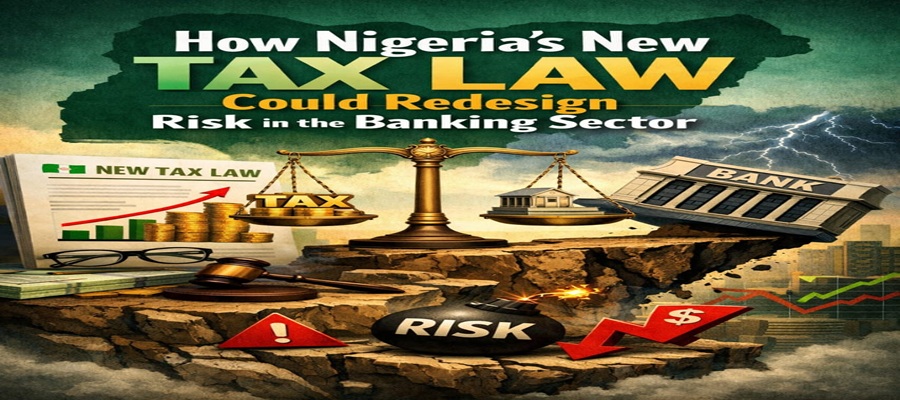
Nigeria’s new tax identification portal goes live nationwide tomorrow, Monday, January 1, 2026, marking a pivotal moment in the country’s fiscal and financial governance. Designed to modernise tax administration and strengthen taxpayer identification, the reform reflects a decisive shift in economic strategy by a government grappling with shrinking oil revenues, rising public debt, and widening fiscal deficits.

New Tax Law
At the centre of this shift is a deeper integration of identity systems, banking data, and tax administration, most notably the adoption of the National Identification Number (NIN) as a tax identification mechanism for operating bank accounts. In parallel, banks will also begin charging a N50 stamp duty on electronic transfers of N10,000 and above, following the implementation of the Tax Act.
Individually, these measures may appear modest, even reasonable. Collectively, however, they signal a fundamental reordering of the relationship between the state, banks, and citizens with far-reaching implications for banking business, customer trust, financial inclusion, and credit creation.
Banks at the Centre of Fiscal Enforcement
Under the new tax framework, Nigerian banks are no longer merely financial intermediaries or corporate taxpayers. They are increasingly positioned as collection agents, reporting hubs, and frontline enforcement points for government revenue policy.
The linkage of NIN to tax compliance, combined with transaction-based stamp duties, reinforces a stark reality that the banking system has become the most visible and accessible channel through which the state now extracts revenue from citizens.
This expanded role exposes banks to a new layer of risk not just financial or operational, but social, reputational, and political risks that extend far beyond balance sheets.
A Structural Shift in the Banking, Tax Relationship
Historically, banks played a facilitative role in tax compliance, primarily through payment processing and remittance support. The use of NIN as a tax identifier marks a structural departure from this model.
Bank accounts are no longer merely financial tools; they are becoming gateways to tax visibility.
This shift fundamentally alters the risk profile of the banking business. Banks are now exposed not only to credit, market, and operational risks, but also to heightened social backlash, reputational damage, and political sensitivity, arising from their expanded enforcement role.
Account Friction and Slower Customer Onboarding
One of the earliest and most visible consequences of NIN-based tax identification is increased friction in account opening and maintenance.
Consequently, in a real sense, millions of Nigerians will continue to face challenges with the NIN system, including delays in enrolment and correction, biometric mismatches as well as inconsistencies between NIN, BVN, and bank records.
For banks, this translates into slower onboarding processes, higher rates of account restriction or rejection, and increased congestion across branches and digital platforms.
What should be a growth engine for deposit mobilisation instead becomes a bottleneck, resulting in lost customers, fewer transactions, and weakened scale advantages in an increasingly competitive banking environment.
Banks as the Face of an Unpopular Tax Regime
Perhaps the most underappreciated consequence of the new tax regime is the escalation of customer hostility toward banks.
When accounts are flagged, restricted, or subjected to enhanced scrutiny, customers rarely direct their frustration at tax authorities or policymakers. Instead, they confront the most visible institution in the chain, their bank.
Banks are increasingly blamed for account freezes, accused of colluding with government, and perceived as punitive rather than service-oriented institutions. This hostility is particularly pronounced among informal sector operators, small traders, artisans, and self-employed professionals with irregular income streams.
In a low-trust economy such as Nigeria’s, perception often outweighs regulation. Banks risk becoming the public face of coercive taxation, absorbing reputational damage for policies they neither designed nor control.
Erosion of Trust in the Banking Relationship
Banking fundamentally depends on trust that deposits are safe, transactions are private, and institutions act in customers’ best interests.
When NIN becomes a tax enforcement gateway, that trust begins to fray. Banks are no longer seen primarily as custodians of savings, enablers of enterprise, or neutral financial intermediaries. Instead, they are increasingly perceived as extensions of tax authorities, surveillance nodes, and compliance police.
Once trust erodes, customer behaviour adjust often in ways that undermine the formal financial system itself.
The Hidden Impact of the N50 Stamp Duty
The introduction of a N50 stamp duty on electronic transfers of N10,000 and above may appear trivial. In practice, it carries outsized implications.
For many Nigerians, especially low- and middle-income earners, electronic transfers are not discretionary transactions. They are salary payments, family support remittances, SME operating expenses, and routine commercial settlements.
Customers rarely distinguish between government levies and bank charges. The stamp duty will therefore be perceived as yet another bank fee, deepening resentment toward institutions already accused of excessive charges.
Behaviourally, customers may respond by breaking transactions into smaller amounts, increasing cash usage, or migrating to informal transfer channels, distorting transaction patterns and weakening the efficiency of the digital payments ecosystem.
Although banks merely collect the duty on behalf of the government, they will once again bear the reputational cost.
Threat to Deposit Mobilisation and Liquidity
Fear of tax exposure is a powerful behavioural driver. As NIN becomes closely associated with tax scrutiny and transaction charges mount, many customers are likely to reduce account balances, avoid lump-sum deposits, split transactions to stay below thresholds, or move funds outside the banking system entirely.
For banks, the consequences are clear, as these will result in slower deposit growth, volatile liquidity positions, and reduced capacity to fund loans.
Deposit mobilisation is the lifeblood of banking. Any policy that discourages formal savings weakens banks’ intermediation role and, by extension, the broader economy.
Reversal of Financial Inclusion Gains
Nigeria has invested more than a decade in expanding financial inclusion through agent banking, digital wallets, and tiered KYC frameworks. The use of NIN as a tax trigger threatens to reverse these gains.
Many newly banked individuals, particularly those at the base of the economic pyramid, may abandon formal accounts, revert to cash-based transactions, or rely on informal savings mechanisms.
The irony is stark as an identifier designed to formalise the economy may inadvertently push activity back into informality.
Rising Compliance, Legal, and Technology Costs
Operationally, integrating NIN as a tax identifier significantly increases banks’ compliance burden. However, institutions are expected to synchronise multiple databases, resolve inconsistencies at scale, implement continuous monitoring systems while also managing customer disputes arising from mismatches or wrongful flags.
The challenges inherent in these demands require heavy investment in IT infrastructure, expanded compliance teams and enhanced cybersecurity. The costs either erode profitability or are passed on to customers, further fuelling public resentment.
Credit Creation and Economic Growth at Risk
Reduced deposits, higher compliance costs, reputational strain, and customer attrition converge on a single outcome that mainly constrained lending capacity.
There is no two ways about this, banks under sustained pressure will tighten credit standards, reduce SME and consumer lending, and favour low-risk government securities. The ripple effects include slower job creation, constrained entrepreneurship, and, on a dangerous level, it leads to weaker economic growth, ultimately undermining the very revenue base the tax reform seeks to expand.
Revenue Without Ruin
No doubt, linking NIN to tax identification and expanding transaction-based levies may enhance government visibility over economic activity, but in reality they carry significant unintended consequences for banking business.
They risk weakening customer trust, undermining deposit mobilisation, reversing financial inclusion gains, increasing operational and reputational risks, and constraining credit growth.
Banks do not oppose taxation. What they caution against is turning financial inclusion infrastructure into a blunt instrument of tax enforcement without adequate safeguards.
For the policy to succeed without damaging the banking system, regulators must ensure clear thresholds and exemptions, strong data protection guarantees, phased implementation and ensure sustained public education to redirect hostility away from banks.
Ultimately, the critical question is not legislative readiness but execution, especially coordination across institutions, technological preparedness and the capacity to prevent unintended disruption to businesses and citizens alike. The authorities must understand that when revenue meets risk, wisdom lies in balance.
Blaise, a journalist and PR professional, writes from Lagos and can be reached via: [email protected]

Guaranty Trust Holding Company Plc (“GTCO) has obtained the approvals of both the Central Bank of Nigeria (CBN) and the Securities and Exchange Commission (SEC) to undertake a private placement of its ordinary shares, subject to the fulfilment of the applicable conditions precedent and regulatory requirements.

The Financial Holding Company had earlier on August 29, 2025 announced that its banking subsidiary (Guaranty Trust Bank Limited) had satisfied and surpassed the new CBN minimum capital requirement for commercial banks with international authorisation, having already increased its capital to N504.037 billion.
The Company has entered into an arrangement, in connection with a best efforts private placement for gross proceeds of up to N10 billion from the sale of up to 125,000,000 of the ordinary shares of the Company at N80 per share”.
This private placement in the sum of N10billion is being raised pursuant to Section 7.1 of the Guidelines for Licensing and Regulation of Financial Holding Companies (FHCs) in Nigeria regarding the computation of the capital of FHCs.
According to a statement signed by the company’s Group General Counsel/Company Secretary, Erhi Obebeduo, the proposed private placement is being undertaken pursuant to the company’s shareholders’ resolution passed at its Annual General Meeting held on 9 May 2024 which authorised the Board to establish a capital raising programme of up to $750,000,000 or its equivalent through the issuance of ordinary shares, preference shares, convertible and/or non-convertible bonds or any other instruments, whether by way of a public offering, private placement, rights issue, book building process or any other method or combination of methods in such tranches, and at such dates and upon terms and conditions as may be determined by the Board.
The statement further read that, “As a result of this, the Board has authorised the Company to embark on a private placement to raise N10,000,000,000.00 (Ten Billion Naira only), by the allotment of 125,000,000 (one hundred and twenty-five million) ordinary shares of 50 Kobo each (the “Private Placement”).
The Offering is scheduled to close on December 31, 2025 (the Closing Date) and is subject to certain conditions, including, but not limited to, receipt of all necessary approvals.

Banks to Impose N50 Stamp Duty on Transfers of N10,000 and Above from January 1

How to Use the Correlation of Gold with Other Trading Assets in the Forex Market

How Nigeria’s New Tax Law Could Redefine Risk in the Banking Sector

NDIC Reinforces Full Oversight Compliance to Safeguard Depositors

GTCO Secures Regulatory Approvals to Raise N10bn in Private Placement

Nigeria Records Highest Weekly Cyberattacks in Africa — Report

Financial Sector Faced AI, Blockchain and Organised Crime Threats in 2025 – Report

Cyber Tsunami Hits Nigeria as Breaches Surge 1,047%, esentry Q3 Report Reveals

Report Reveals Half of 2025’s Compromised Passwords were Already Leaked

Minister Claims Bandits Exploit Poor Network, Bounce Calls Off Multiple Towers




 E-Financial2 days ago
Nigeria’s N58.18trn Budget and Rising Cost of Deficit Governance

 Telecom2 days ago
Nnaemeka Ani – The Architect of ‘Code and Courage’

 Telecom2 days ago
MTN Nigeria Appreciates Partners, Customers at Lagos Prestige Experience

 Telecom1 day ago
T2 Faces NCC Probe in Benue Over Major Service Outage in 9 LGAs

 Telecom1 day ago
NCC Grants 45 Days for Telecoms Firms to Fix Unapproved Shareholding Changes

 Telecom1 day ago
NCC Unveils Draft 5-Year Spectrum Roadmap, 60 GHz License-Exempt Guidelines to Boost Broadband, Innovation

 Telecom1 day ago
MTN Nigeria Crowns Ayo Benzi Winner of Next Afrobeats Star

 E-Business23 hours ago
Jumia CEO says Black Friday Signals Nigeria’s E-Commerce Maturity