

E-Financial
UBA Makes 20 More Customers Millionaires, Doles Out N30m in 3rd Draw of UBA Wise Savers Promo

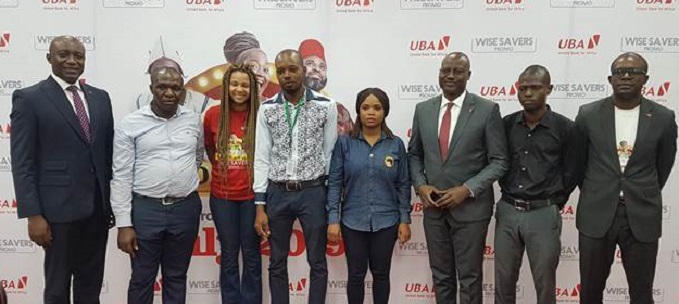
United Bank for Africa (UBA) Plc, Pan African financial institution, has again rewarded another 20 customers who have emerged winners in the third quarterly draw of the UBA Wise Savers Promo winning N1.5 million each, bringing the total amount won so far by 60 customers to N90 million.
The electronic raffle draw, which was held at the UBA Head Office in Lagos on Wednesday, July 31st, was witnessed by the relevant regulatory bodies including the National Lottery Regulatory Commission, Lagos State Lottery Board and Consumer Protection Council.
Lucky customers who emerged winners in the latest draw cut across all regions of the country.
They are Yusuf Muhammed; Adebakin Anuoluwapo Elizabeth; Babatunde Temidayo Ruth; Christian Emetole; Nwabuife Ikeagu; Omoye Amiengheme; Ogechukwukanma Okoh; Akinyemi Abidemi Betty; Okoro Chukwuma and Chukwu, Patricia Nnenna.
Others are Adejoke Olarinoye; Fatoki Hassan; Nwokocha Ikechukwu Emmanuel; Owolanke kole Emmanuel; Ferreira Adesola Afolatomi; Emmanuel Omoigui; Uzoigwe Anthonia; Elesin Titilayo Oluwabunmi; James Suleiman Umar and Lawan David Nahinokan.
The ongoing promo, which commenced in September last year, is expected to run till September 30, 2019 and will see a final 20 customers from across Nigeria become millionaires, winning N30 million in the last quarter of this year.
At the end of the fourth promo, a total of N120 million will have been won by 80 customers.
Speaking during the event, Mr. Jude Anele, UBA’s Group head, Consumer & Retail Banking, said that since the promo began late last year, the bank has been impressed at the level of response by its customers and the general public across the country, adding that the purpose of the campaign is to reward loyal customers while encouraging the savings culture.
He noted that there has been a remarkable increase in the number of participants in this edition compared to the previous one, adding that the bank’s objective of helping customers’ save for the rainy day is being achieved.
He said: “It is very easy to spend money but to save is a habit all must imbibe. Our key objective is to encourage our customers to save regularly. We are here to support our customers and to encourage them to save as well.”
Anele urged other customers to take advantage of the subsequent opportunities the last quarterly draw will offer.
Sampson Aneke, group head, Transaction and Electronic Banking, who also spoke at the event said, “There is no better time to give back and delight customers than this challenging economic period where people need all the support they can get to make life more meaningful. With this in mind we decided to prioritise our customers as we always do at UBA by giving them plenty to cheer about and that is the reason why another 20 customers have been made millionaires today.
Aneke noted that the promo is consistent with the bank’s novel initiatives in prioritizing customers, and said it was necessitated by the invaluable belief the Bank has in its customers.
“We will continue to listen and give them nothing short of the best that they deserve. UBA will not relent, because we are impressed with the impact this has made so far and will continue to touch the lives of our loyal customers positively,” he explained.
The criteria for qualifying for the draw is to save at least N30,000 in a UBA savings account or in instalments of N10,000 each for a period of three months. Those yet to be UBA customers can open a savings account on any of the numerous bank channels, including Magic Banking (*919*20#) and LEO, or in any of the UBA branches across the country, and start saving to stand a chance of winning.
United Bank for Africa Plc is a leading pan-African financial services group, operating in 20 African countries, as well as the United Kingdom, the United States of America and with presence in France.
UBA was incorporated in Nigeria as a limited liability company after taking over the assets of the British and French Bank Limited who had been operating in Nigeria since 1949.
The United Bank for Africa merged with Standard Trust Bank in 2005 and from a single country operation founded in 1949 in Nigeria – Africa’s largest economy – UBA has become one of the leading providers of banking and other financial services on the African continent.
The Bank which was awarded the Best Digital Bank in Africa by the Euromoney awards in 2018, provides services to over 17 million customers globally, through one of the most diverse service channels in sub-Saharan Africa, with over 1,000 branches and customer touch points and robust online and mobile banking platforms.
The shares of UBA are publicly traded on the Nigerian Stock Exchange and the Bank has a well-diversified shareholder base, which includes foreign and local institutional investors, as well as individual shareholders.



There’s something uniquely agonising about having your cryptocurrency stolen. All transactions are recorded in a digital ledger, known as a blockchain, so even if someone takes your money and puts it in their own crypto wallet, it remains visible online.

“You can see your money there on the public blockchain, but there’s nothing you can do to get it back,” says Helen, who lost around $315,000 (£250,000) to thieves.
She likens it to watching a burglar pile up your prized possessions on the other side of an impassable chasm.
For seven years, Helen and her husband Richard (not his real name), both UK residents, had been buying and stacking up crypto coins called Cardano.
They liked the idea of investing in a digital asset that had the potential to rise dramatically in value, unlike funds saved in more conventional ways. They knew it was riskier, but they were careful to keep their digital keys safe.
But somehow hackers got into their cloud storage account, where they kept information about their crypto wallets and how to access them.
In February 2024, after a small test transfer, the criminals swiftly and silently transferred all the couple’s coins to their own digital wallets.
The couple then watched for months as their money was moved from one wallet to another, powerless to do anything. (The inherent contradiction with cryptocurrency is that all transactions are publicly trackable, but users can be publicly untraceable if they choose.)
Helen and Richard are not wealthy. She is a personal assistant, he is a composer, and they had high hopes for their Cardano investments.
“We’d been buying these coins for so long… We used every scrap of money we could find to buy more,” says Richard. “Aside from my parents’ deaths, this theft is the worst thing to happen to me.”
Ever since, Helen has been on a mission to recover their money. She obtained detailed reports from various police forces and the Cardano developers. Now, even though she has the criminals’ wallet addresses, there is nothing anyone can do to unmask them.
Their plan is to save up enough to engage private investigators to try to trace the hackers.
“It leaves you with a feeling of helplessness,” she says, “but I am going to keep trying.
An explosion in crypto crime
A survey carried out for the Financial Conduct Authority (FCA) in August 2024, suggested that approximately 12% of British adults owned crypto-assets – equivalent to about seven million people.
Globally, it has been estimated that 560 million people are now crypto owners. But as ownership rose, so did theft. The pandemic ushered in a surge in the value of crypto coins and, with it, an explosion in attacks on the industry.
And 2025 was another bumper year for crypto criminals, with total thefts standing at more than $3.4bn (£2.5bn), according to investigators at blockchain analysis firm Chainalysis. The annual figure has remained in the same ballpark since 2020.
Most of the money is being stolen through massive cyberattacks on crypto companies. For example, North Korean hackers swiped $1.5bn (£1.1bn) from crypto exchange Bybit in February 2025.
The losses in this case and the vast majority of others are covered by the deep-pocketed crypto firms, with little impact on individuals. But 2025 also saw an increase in the number of attacks on individual crypto investors.
Chainalysis research says these individual attacks rose from 40,000 in 2022 to 80,000 last year.
Hacking, scamming or coercing of individuals accounted for an estimated 20% of all crypto value stolen – estimated at $713m (£532m).
But the company adds that the number could be far higher, as not all victims will choose to report thefts publicly. When this happens, you could be left on your own.
Many thefts or scams in traditional finance are covered by banks or card companies. In the UK, you can complain to the Financial Ombudsman Service and may be compensated by the Financial Services Compensation Scheme.
“Crypto remains largely unregulated in the UK and high-risk,” says the FCA. “If something goes wrong, it is unlikely you will be protected so you should be prepared to lose all your money.”
A stark reminder of this comes if you search online for “Binance account hacked” – Binance is the world’s largest crypto exchange with a reported 1.4m UK users – but the page on its website offering advice to victims of theft is blocked in the UK.
The company has not been accepting new UK clients since 2023 because it is not authorised by the FCA to operate. Yet criminals don’t care where victims are, and people are being targeted all over the world indiscriminately.
Chainalysis has described these attacks on individuals as the “under-documented frontier for crypto crime”.
They put the volume of crimes down to the number of people entering the crypto world as investors, as the value of coins has risen, and argue that improved security practices at major services could have pushed “attackers toward individuals perceived as easier targets”.
Then there is the fact that the more crypto you hold and the more public you are about it, the more likely you are to be targeted – small-time holders (or hodlers, as the community calls them) are far less likely to be affected.
Burglaries, muggings and ‘wrench attacks’
As for the thieves, they could be anywhere.
In October, blockchain researchers from Elliptic, a crypto analysis company, warned that North Korean state-sponsored hackers are increasingly targeting wealthy cryptocurrency owners. There are plenty of young scammers and hackers from other countries, too.
In December in the US, 22-year-old Evan Tangeman pleaded guilty to being part of a group of crypto thieves calling themselves the Social Engineering Enterprise, who are accused of stealing more than $260m (£194m) between October 2023 and May 2025.
Prosecutors allege they targeted the crypto-rich using hacked databases, tricking victims into thinking they were cryptocurrency exchanges, and persuading them to transfer coins.
Members of the gang, who were all young men mostly in the US, are said to have spent the stolen coins on private jets, expensive cars and luxury handbags that they would give away at nightclubs.
In some cases, prosecutors say, the gang organised home break-ins to steal hardware containing the keys to crypto stashes.
Burglaries and muggings have become so common that there is now a term for them in the crypto community – “wrench attacks” – so called because criminals have been known to threaten victims with spanners.
Last April, crypto criminals in Spain tried to force a man and woman to part with their cryptocurrency.
Spanish police said the man was shot in the leg and he, along with his partner, were held captive for several hours while the criminals tried to access their crypto wallets. Eventually, the woman was released, but her partner remained missing, with his body later found in woodland.
Five people were arrested in Spain in connection with the case, while four others in Denmark were charged.
There have been several similar cases in France, including one when an attempted kidnap was captured on video.
Source.. BBC

Despite lingering regulatory uncertainty, Nigeria processed an estimated $92.1 billion in cryptocurrency transactions between July 2024 and June 2025, reaffirming its position as Sub-Saharan Africa’s largest crypto market, according to PricewaterhouseCoopers (PwC).

The figure, published in PwC’s Nigeria Economic Outlook 2026 titled “Turning Macroeconomic Stability into Sustainable Growth”, shows that Nigeria received nearly three times the crypto transaction value recorded in South Africa over the same period.
PwC attributed Nigeria’s dominance to its large population, youthful and digitally savvy users, persistent inflation, and continued foreign exchange (FX) access constraints, which have pushed many individuals and businesses toward crypto and stablecoins as alternative financial channels.
The report noted that crypto adoption in Nigeria reflects both economic necessity and structural transformation in financial behaviour.
PwC said Bitcoin continues to dominate fiat-to-crypto purchases in Sub-Saharan Africa, accounting for 89 per cent of transactions in Nigeria and 74 per cent in South Africa, underscoring its role as a default hedge and entry asset in volatile or constrained financial environments.
It added that stablecoin usage is structurally higher in Nigeria, signalling reliance on crypto rails as an informal FX market and dollar-substitute channel.
However, PwC cautioned that the data reflects only centralised exchange activity and excludes peer-to-peer transactions and informal flows, suggesting that actual volumes may be significantly higher.
PwC projected that Nigeria is likely to retain its position as the region’s largest crypto market in 2026, driven by FX access challenges, inflation sensitivity, and sustained demand for stablecoins as a store of value and settlement mechanism.
The firm also noted that Nigeria had earlier processed about $59 billion in crypto transactions, largely driven by young, tech-savvy users, highlighting deepening adoption momentum.
“The rising usage of crypto, especially among Nigeria’s youth, underscores the urgent need to accelerate regulatory cohesion in the near term,” the report stated.
PwC identified several key issues that will shape Nigeria’s crypto landscape in 2026, including industry adoption and compliance challenges, licensing and regulatory frameworks, a structural shift in crypto taxation, capital flow management, and market surveillance.
On licensing and regulation, PwC observed that progress remains slow, with only two exchanges granted provisional approval so far.
This, it said, highlights capacity and sequencing challenges within the regulatory framework. The firm warned that the planned rollout of crypto-asset taxation could outpace supervisory readiness, raising concerns about effective enforcement without a fully operational licensing regime.
In terms of taxation, PwC disclosed that the new Tax and Tax Administration Acts, effective from 2026, will treat crypto profits as income taxed up to 25 per cent, replacing the previous 10 per cent capital gains tax.
This represents a significant increase in tax burden and complexity for crypto users. It also noted that Virtual Asset Service Providers (VASPs) will face higher compliance and reporting obligations, raising operating costs for licensed platforms and potentially pushing more activity into informal or offshore channels
Dr. John C. Nwabueze, tax ombudsman/CEO, has stated that Nigerian taxpayers can now save on the cost of arbitration while still obtaining justice by resolving their tax complaints through the Office.

Dr. Nwabueze in a statement described the Office as a fair and efficient mediator between tax authorities and taxpayers.
Speaking after a strategic meeting with Taiwo Oyedele, chairman of the Presidential Fiscal Policy and Tax Reforms Committee (PFPTRC), Nwabueze emphasized that the Office of the Tax Ombud serves as a mediation safety net for small and medium enterprises as well as multinational companies.
He said the Office receives and resolves issues related to taxes, levies, charges, customs duties, and other related matters, adding that it is partnering to enhance taxpayers’ trust and compliance through transparent mediation and accountability.
Commenting on the partnership, Oyedele noted that the meeting was part of ongoing efforts to support the effective implementation of tax reforms.
He explained that the Office of the Tax Ombud is an independent and impartial body established under the new tax laws to protect taxpayer rights, resolve complaints quickly and fairly, and build trust in the tax system through mediation and advocacy.
“Our engagement focused on collaboration with the Tax Ombud, given his critical role in ensuring that the reforms deliver not just better tax systems, but a fairer and more responsive tax administration for taxpayers.”

How Crypto Criminals Stole $700m from People – often Using Age-Old Tricks

Lebara Launches Agent Registration Portal

Nigeria Processed $92.1Bn Crypto Transactions in 12 Months — PwC

Tax Ombudsman will Save Nigerians Money, Time – CEO

Elon Musk Seeks $134Bn from OpenAI, Microsoft for ‘Wrongful Gains’

Banks quietly move to enforce new ₦50 transfer levy from Jan. 1

FIRS says NIN, CAC Numbers to Serve as Tax IDs from 2026

FIRS Declares NIN, CAC Numbers as Tax IDs from 2026

US Begins Partial Visa Ban on Nigerians January 1

Galaxy Backbone Tops FG’s Website Performance Ranking




 E-Financial3 days ago
SEC Hikes Minimum Capital Requirements for Market Operators After a Decade

 Telecom3 days ago
Study Shows Blocks in Telegram are Pushing the Underground Out

 News3 days ago
Nigeria Off EU High-Risk Money Laundering List in Major Financial Win

 News3 days ago
NGX Unveils Net-Zero Plan for Greener Capital Market

 Telecom3 days ago
Galaxy Backbone Marks Two Decades of Powering Nigeria’s Digital Evolution

 Telecom3 days ago
Vodacom Crowned Africa’s Top Employer 3rd Year Running on Innovation, Ethical AI

 Telecom3 days ago
Galaxy Backbone Marks 20 Years, Tops FG Website Scorecard

 E-Financial18 hours ago
Here Are Nigerian Banks That Have Secured Their Licences