

E-Financial
UBA Plans to Raise N239.4Bn via Rights Issue

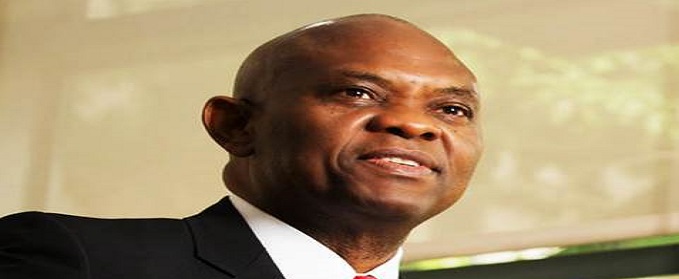
United Bank for Africa (UBA) Plc, Africa’s Global Bank will raise N239.4 billion through a Rights Issue of 6,839,884,274 ordinary shares of 50 kobo each at N35.00 per share.

The Rights Issue, which opened on Friday, November 15, 2024, gives existing shareholders the opportunity to purchase additional shares in proportion to their current holdings and is being offered based on one new ordinary share for every five existing ordinary shares held by shareholders, as of November 05, 2024.
In his letter to the shareholders informing them, Tony Elumelu, group chairman of United Bank for Africa, noted that following the resolution of the Group’s shareholders at the Annual General Meeting held in May 2024, authorising the establishment of the N400 billion Equity Shelf Programme, UBA will embark on a Rights Issue, as the first step in its broader capital raising programme.
“UBA’s Rights Issue aims to raise N239.4 billion, through the issuance of new Ordinary Shares to our shareholders. The primary objective of this Rights Issue is to further strengthen our capacity to take advantage of growth opportunities and sustain our leadership in the banking industry,” Elumelu said.
Explaining the use of proceeds, the Group Chairman noted that, beyond regulatory compliance, the funds will expand the Group’s lending capacity, investment in digital infrastructure, support sustainable business practices and expanding the Group’s African operations.
Elumelu also highlighted how UBA is driving economic growth across Africa. “Our historic partnership with the Africa Continental Free Trade Area (AfCFTA) Secretariat, where UBA pledged up to US$6 billion in financing over the next three years to support eligible SMEs across Africa underscores our commitment to fostering economic development”.
The issuance is in compliance with the revised minimum capital requirements for Nigerian commercial banks announced by the apex banking regulator in Nigeria – the Central Bank of Nigeria (CBN) earlier this year.
UBA has consistently demonstrated growth and resilience, evidenced by the Group’s strong financial performance and recent recognition within the industry. UBA’s progressive dividend policy, which has seen an increase by 14.8% annualised dividend yield has demonstrated the Group’s ability to reward shareholders consistently.
In 2023/2024, UBA won “Bank of the Year” Awards in eight of its subsidiaries – Cameroon, Chad, Ghana, Cote d’Ivoire, Mozambique, Republic of Congo; Sierra Leone; Tanzania, as well as the Regional Award for Africa and in 2024 has won World Best Frontier Markets Bank and Best SME Bank Africa.
Application for the provisional allotment of the Rights to the new ordinary Shares will be made exclusively through the NGX e-offer portal during the offer period, while existing shareholders may also apply for additional shares above their provisional allotment as described in the Provisional Allotment Letter.
Shareholders who are customers of the Bank are also encouraged to access their Rights through UBA’s internet banking and mobile banking channels.
United Bank for Africa Plc is a leading Pan-African financial institution, offering banking services to more than forty-five million customers, across 1,000 business offices and customer touch points in 20 African countries. With a unique international presence in New York, London, Paris and Dubai, UBA is connecting people and businesses across Africa and globally, through retail, commercial, corporate and institutional banking, innovative cross-border payments and remittances, trade finance and related banking services.


The Federal Inland Revenue Service (FIRS) has clarified that the Memorandum of Understanding (MoU) recently signed with France’s Direction Générale des Finances Publiques (DGFiP) is a strictly technical assistance and capacity-building framework.

The clarification comes after talks of concerns that the MOU is a means for foreign interests to gain control over Nigeria’s sovereign tax data.
On Thursday, the Federal Inland Revenue Service (FIRS) signed an MoU with France’s Direction Générale des Finances Publiques (DGFiP).
“At no point does it grant France access to Nigerian tax data, digital infrastructure, or operational control of our systems. All Nigerian laws regarding data protection, sovereignty, and cybersecurity remain fully in force, and the MoU includes robust confidentiality and data protection provisions,” Umar Ahmed, director, Intergovernmental Affairs, Federal Inland Revenue Service, said in a recent release.
The DGFiP is one of the world’s most sophisticated tax administrations, with over 100 years of institutional experience, a workforce exceeding 90,000 professionals, and globally recognised expertise in digital tax systems, institutional governance, taxpayer services, and public finance management.
Ahmed said that the partnership is advisory, non-intrusive, and mutually beneficial, designed to strengthen FIRS’ institutional capacity as it transitions into the Nigerian Revenue Service (NRS).
“The collaboration provides Nigeria with a unique opportunity to learn from international best practices in workforce management, digital transformation, tax policy development, and regional cooperation, while ensuring that Nigeria retains full control over its tax administration and data,” he said.
Ahmed said that local technology providers are not being sidelined; FIRS continues to engage and collaborate with Nigerian innovators, including NIBSS, Interswitch, PayStack, and Flutterwave.
“The MoU is not intended to deliver technical services, but rather to provide capacity-building, advisory support, and knowledge sharing based on DGFiP’s extensive institutional experience. The collaboration focuses on institutional strengthening, workforce development, digital transformation guidance, taxpayer education, policy modernisation, and regional integration—all fully aligned with Nigeria’s sovereignty and national interests,” he said.
The director said that the service is far from compromising national control. This agreement represents a strategic initiative to modernise Nigeria’s tax administration, enhance institutional capacity, and strengthen the country’s long-term economic resilience.
“Nigeria remains fully in command of its tax systems, data, and policy direction. FIRS remains steadfast in its commitment to transparency, professionalism, and collaboration in the pursuit of national development,” Ahmed said.

House of Representatives yesterday passed second reading a bill seeking to introduce a single, non-renewable six-year tenure for the Governor and Deputy Governors of the Central Bank of Nigeria (CBN), challenging the current CBN Act 2007 that allows an initial five-year term with reappointment option.

CBN
The legislation, jointly sponsored by Jesse Okey Joe Onuakalusi (Oshodi/Isolo Federal Constituency) and Majority Leader Julius Ihonvbere, proposes sweeping reforms to modernise the apex bank’s governance, unify the exchange rate system, ban foreign currencies for domestic transactions except via authorised channels, and align operations with international best practices.
Key provisions include separating the roles of CBN Governor and Board Chairman to curb power concentration, capping Ways and Means advances at 10 per cent of the previous year’s actual revenue to check inflationary financing, mandating 90 days’ notice with impact assessment and National Assembly briefing for currency redesign, and enhancing the Monetary Policy Committee with independent external experts plus macro-prudential tools and stress testing.
Onuakalusi, opening the debate, described the changes as “structural and forward-looking reforms” to protect the economy, restore monetary policy confidence, and bar the CBN Governor and deputies from partisan politics, stressing that the current Act no longer suits today’s realities amid past controversies like Godwin Emefiele’s tenure and the disruptive naira redesign.
He said: “The Central Bank of Nigeria is too critical an institution to operate under a framework that no longer reflects Nigeria’s economic realities or international best practices.
“This bill is not targeted at any individual or administration. It is a structural reform for economic stability, transparency, accountability, and sustainable governance.”
Deputy Speaker Benjamin Kalu put the bill to a voice vote, with lawmakers unanimously endorsing its passage at second reading. A similar Senate bill for a single six-year tenure had passed second reading in February 2024.
E-Financial
Sterling Bank, Pan-Atlantic University Partner to Certify Non-Oil Export Academy Graduates

Sterling Bank Limited has signed a Memorandum of Understanding (MoU) with Enterprise Development Centre (EDC) of Pan-Atlantic University (PAU) to certify graduates of its Non-Oil Export Academy.

L-R: Kola Oluyemi, Group Head, Sterling Academy; Dr. Nneka Okekearu, Director, Enterprise Development Centre (EDC), Pan Atlantic University (PAU); Abubakar Suleiman, MD/CEO, Sterling Bank; Dr. Nnenna Ugwu, Head, Alumni Engagement and Support Services, EDC at PAU; and Akporee Idenedo, Divisional Head, Commercial Banking, Sterling Bank at the recent MoU signing to certify graduates of Sterling Bank’s Non-Oil Export Academy.
This strategic partnership underscores the Bank’s commitment to diversifying Nigeria’s economy by supporting non-oil export growth.
This landmark agreement follows the recent launch of the Sterling Bank Non-Oil Export Academy, designed to position Nigerian exporters for global competitiveness.
The launch was preceded by a series of nationwide training programs in Lagos, Ondo, and Kano states, culminating in a grand finale themed “Excel in Non-Oil Export.”
The initiative aims to equip exporters with practical tools to thrive in international markets, thereby reducing Nigeria’s reliance on oil revenues.
Speaking at the signing ceremony in Lagos, Sterling Bank’s Managing Director and CEO, Mr. Abubakar Suleiman, affirmed that the Bank is intentional about creating an ecosystem where non-oil exporters are well-informed and equipped to advance national interests.
“We are not just training people to understand how to export; we want to train them to be competitive exporters of non-oil products,” Suleiman said.
“Our goal is to build a community of knowledgeable, certified, and confident exporters who can collaborate to solve challenges beyond their immediate capacity. Our North Star is to reach a point where hundreds of people have completed this programme and are ready to compete on a global scale.”
Dr. Nneka Okekearu, Director of the Enterprise Development Centre (EDC), expressed enthusiasm for the collaboration. “Having spent the last twenty-three years deepening the competencies of entrepreneurs, we thoroughly understand what is needed and are excited to be part of this initiative,” she noted.
Dr. Okekearu emphasized that the export market has been neglected for too long. “With the right structure, standards, and mindset in place, entrepreneurs passing through this programme will help create not only a better Nigeria but more sustainable communities,” she added, noting that she looks forward to the case studies that will emerge from the programme’s participants.
Beyond sectoral outcomes, the initiative reinforces Sterling Bank’s commitment to support the development of human capital that positively shapes and impacts the wider economy. The Academy will run four cohorts within the year, commencing in 2026.
With this partnership, Sterling Bank and the Enterprise Development Centre are laying the foundation for a new generation of globally competitive Nigerian exporters, professionals equipped not only with knowledge, but with the certification, confidence, and networks needed to scale.
As both institutions align their expertise to strengthen non-oil export capacity, this collaboration signals a bold step toward a more resilient, inclusive, and diversified economy.
The Non-Oil Export Academy therefore serves as a catalyst for national transformation, empowering businesses and communities to unlock Nigeria’s full potential on the world stage.

NCC Blocks Piracy Sites as Nollywood Faces Rising Digital Theft

Minister Claims Bandits Exploit Poor Network, Bounce Calls Off Multiple Towers

FIRS says MOU with DGFIP Won’t Compromise Nigeria Tax Data Sovereignty

Top Nigerian Startups Secure Funding Boost @ iHatch Demo Day Awards

Four Must-Watch African Films Debut Free on Glo TV

Kaspersky Introduces Cyber Pathways to Support Career Development in Cybersecurity

Firm Urges Organizations to Check Protection of their Websites Amid Search Engine Optimisation Attack Schemes

FCCPC Sets Deadline for Digital Lending Regulatory Compliance

Hackers Breach Phones of Dangote and Otedola, Demand Ransom

Nigeria Records Highest Weekly Cyberattacks in Africa — Report




 Telecom3 days ago
Airtel Africa Foundation Opens Undergraduate Scholarship Portal in Nigeria

 E-Financial3 days ago
Ecobank Nigeria to Fully Repay $300m Eurobond Ahead of Schedule

 Broadcasting3 days ago
CKay’s “Love Nwantiti” Crosses Billion-Stream Mark on Spotify

 Telecom3 days ago
YouTube Nigeria Unveils 2025’s Top Lists and Launches New YouTube Recap Feature

 E-Financial3 days ago
Reps Give Banks Four-Day Ultimatum on Tax Deductions, Charges

 General News3 days ago
PalmPay MD Seeks Deeper Financial Inclusion @ CeBIH Annual Conference 2025

 Telecom2 days ago
MTN Nigeria Launches Unlimited 5G Broadband Plans to Boost Digital Inclusion

 General News3 days ago
AI-Powered Fraud Drives Global Race for Deepfake Defenses