

E-Financial
UBA Reinforces its Customer Focus, Honours Staff Integrity

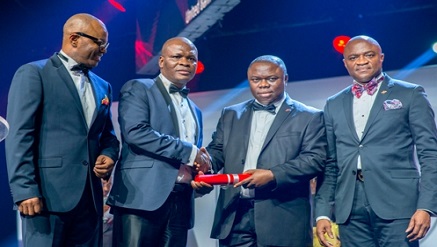
United Bank for Africa Plc (UBA) once again demonstrated its commitment to excellence in customer service, by celebrating staff who have strived to implement the Bank’s core values of Enterprise, Excellence and Execution.
At the event held at the Eko Hotel Expo Centre, Lagos, Nigeria, UBA gathered customers, captains of industry, dignitaries from politics and diplomacy, staff and Board members from its 19 African country network, to witness the 2017 UBA CEO Awards.
The prestigious annual event was first established in 2008 to celebrate outstanding performance within the UBA Pan-African family, showcasing excellence, significant innovation and service in key areas of the Group’s business.
UBA’s industry-leading recent promotion of 3000 staff members illustrated the Bank’s appreciation of their contributions and their service delivery to customers.
Amongst a distinguished audience, the Bank and senior management on Saturday night again celebrated its staff at the CEO Awards Ceremony, in UBA’s inimitable style – bringing together Lions and Lionesses from across Nigeria and Africa.

Over 10 Awards were given. Of each award category, the GMD, Kennedy Uzoka said “We recognise and appreciate that there are so many staff members who have demonstrated aspects of each of our core values, but we have had to single out the very best. We celebrate our Lions and Lionesses who used their ingenuity and creativity, as well as their industry experience and passion, to work tirelessly to deliver excellent service to our customers and to continue to achieve exceptional results within the Group’.
There were winners who had excelled in innovation and execution across Africa. There were also those who were rewarded for their entrepreneurial abilities.
Mrs Abiola Bawuah, CEO of UBA Ghana, was chosen in the special award category of “Business Leader who defied all odds and opened up new opportunities for the Bank”. Mrs Bawuah was described by the GMD as ‘a relentless CEO who breaks barriers, extends the horizon and motivates, inspires and encourages others.’
The Award which stole the show went to Ibrahim Ogbanagbo, the UBA security staff at the UBA Oba Akran branch in Lagos, who found $10,000 cash belonging to a customer and returned it to the customer.
Ogbanagbo talked about how the $10,000 could have changed his life and how he could have taken it, but how his upbringing, as well as UBA’s value and focus on Integrity would never have allowed him to do so.
He was given the Excellence Award for his display of honesty and integrity.
Tony Elumelu, group chairman, went on stage to congratulate Ogbonagbo personally.
Elumelu said that Ogbanagbo exemplified someone who is committed to the hallmarks of Excellence in the execution of his duties.
“This is an example to us all. How anyone, no matter their position in our Group can distinguish themselves and set an example. Today, we stand here to celebrate a junior UBA staff member, who returned money that was misplaced and who through this action, gained much more than he could ever have imagined. As a leading pan-African bank, this is what we stand for and we commend Ibrahim Ogbonagbo for living the principle of integrity.”
Mr Ogbonagbo was not only recognized and awarded the 2017 CEO Excellence Award, but he warmed the hearts and minds of many. He received a standing ovation, as well as rewards from dignitaries in the audience who came on stage to acknowledge him.
The Governor of Adamawa State in Nigeria, Alhaji Bindo Jibralla pledged the sum of $5,000 and he also received a personal commitment of $10,000 from the Governor of Bauchi state, Alhaji Mohammed Abdullahi Abubakar.
The Deputy Senate president, present at the event, Senator Ekweremadu said that Ogbanagbo’s name will be announced at the floor of the Senate (on Tuesday) during plenary and will be given the sum of N5,000,000 by the Senate.
The theme for the night was “the Journey of UBA”, brought to life by an African entertainment concept, crisscrossing the length and breadth of Africa and highlighting UBA’S Pan-African vision, starting with its oldest region, West Africa and showcasing East and Southern Africa, as well as the significant presence of an African Bank in New York, London and Paris. There was dance and prose, rhythm and theatre .
There were also loved artistes including Dare Art-Alade who opened the show with a terrific rendition of the Nigerian National Anthem, Adekunle Gold, Dr. Sid, Flavor N’abania, P-Square, Awilo Longomba from the Congo and the undisputed King of Juju music, King Sunny Ade. Guests and dignitaries, management and staff of UBA found themselves letting their hair down and throwing protocol to the wind.
The Bank was honoured by the presence of their Excellencies, the Governors of Adamawa and Taraba States, Deputy Senate President, Senator Ekweremadu, Governor Donald Duke, Alhaji Abdul- Samad Rabiu and many others. The ceremony also witnessed the presence of key industry players, diplomats, ministers and key influencers in Nigeria, as well as the CEOs and Board Chairmen of the 19 African countries in which UBA operates, democratising banking for over 14 million customers.
In all it was a night to remember, an evening of reward and celebration, and perhaps most poignantly, the story of how the integrity and honesty of a UBA security staff could become the role model of an African group of over 25,000 people and a symbol of the paramount commitment of UBA to its customers.
United Bank for Africa Plc is a leading pan-African financial services group, with presence in 19 African countries, as well as the United Kingdom, the United States of America and France.
UBA was incorporated in Nigeria as a limited liability company after taking over the assets of the British and French Bank Limited who had been operating in Nigeria since 1949. The United Bank for Africa merged with Standard Trust Bank in 2005 and from a single country operation founded in 1949 in Nigeria – Africa’s largest economy – UBA has become one of the leading providers of banking and other financial services on the African continent. The Bank provides services to over14 million customers globally, through one of the most diverse service channels in sub-Saharan Africa, with over 1,000 branches and customer touch points and robust online and mobile banking platforms.
UBA was the first Nigerian bank to make an Initial Public Offering, following its listing on the NSE in1970. It was also the first Nigerian bank to issue Global Depository Receipts. The shares of UBA are publicly traded on the Nigerian Stock Exchange and the Bank has a well-diversified shareholder base, which includes foreign and local institutional investors, as well as individual shareholders.


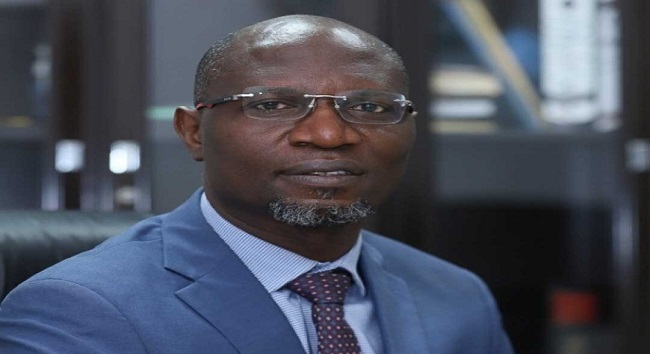
The Securities and Exchange Commission (SEC) has unveiled plans to make sustainability reporting mandatory for large public interest entities from 2027 as Nigeria moves to align its corporate disclosure framework with global environmental, social and governance (ESG) reporting standards.

The phased implementation will begin with voluntary adoption by early adopters and large public interest entities before becoming mandatory in 2027. The requirement will extend to other public interest entities in 2028 and small and medium-scale enterprises (SMEs) by 2030.
Dr Emomotimi Agama, Director-General of the SEC, disclosed this at the 2026 Financial Institutions Training Centre (FITC) Sustainability and ESG Conference 3.0 in Lagos, themed ‘Building a Sustainable Africa: Integrating Environmental Stewardship, Social Investment, and Strong Governance for a Prosperous Future’.
Agama said Nigeria’s sustainability disclosure regime is being aligned with the International Sustainability Standards Board (ISSB) framework, including IFRS S1 and IFRS S2, which have emerged as the global benchmark for sustainability reporting.
He said that institutional investors increasingly consider ESG performance a key determinant of capital allocation rather than a peripheral corporate responsibility issue, noting that the price of entry is disclosure.
He said the reforms would strengthen investor confidence and position Nigerian businesses to access global capital markets, where sustainability disclosures are becoming an essential investment requirement.
According to him, Nigeria’s capital market has recorded significant expansion, with market capitalisation growing from about N130 trillion to nearly N160 trillion following recent market reforms, while assets under management have surpassed N9 trillion.
To deepen sustainable finance, Agama said the commission was promoting infrastructure, green and municipal bonds, alongside infrastructure-focused investment funds, to mobilise long-term capital for critical national projects.
He added that the SEC would also encourage investments in the blue economy and support financing for the power sector through green energy bonds, project bonds and public-private investment structures.
The SEC chief cited the recent launch of the Nigerian Exchange (NGX) Impact Board as another milestone in advancing sustainable finance and urged companies, regulators and investors to move beyond commitments by embedding sustainability into governance, operations and investment decisions.
Managing Director and Chief Executive Officer of the Financial Institutions Training Centre (FITC), Dr Chizor Malize, said sustainability and ESG had evolved from compliance issues to core drivers of business competitiveness, investment decisions and economic development.
She said the conference, now in its third edition since 2024, had become a leading platform for advancing sustainability discourse in Africa, adding that this year’s gathering was designed to move stakeholders “from conversation to commitment”.
Chairman of the FITC Advisory Board, Prof Fabian Ajogwu, described governance as the foundation of sustainable development, arguing that Africa must become a standard-setter rather than merely adopting frameworks developed elsewhere.
Although Africa contributes less than four per cent of global greenhouse gas emissions, he said, the continent bears a disproportionate share of climate-related impacts, including worsening floods and increasingly erratic weather patterns.
Ajogwu also cited estimates that poor governance costs Africa between $88 billion and $90 billion annually, while highlighting technology-driven agricultural initiatives, including a partnership involving Morocco’s OCP Group and the Nigeria Sovereign Investment Authority (NSIA), as examples of practical models that should be replicated across the continent.
Delivering the keynote address, Chairman of the MTN Nigeria Foundation, Mosun Belo-Olusoga, said the debate over the relevance of sustainability and ESG had ended, with the real challenge now centred on implementation.
She observed that global investors increasingly evaluate businesses on governance quality, resilience and their ability to manage environmental and social risks, in addition to profitability.
Belo-Olusoga noted that despite contributing the least to global carbon emissions, Africa possesses vast arable land, abundant renewable energy resources and critical minerals required for the global energy transition.
She identified four leadership priorities for the continent: shifting from short-term performance to long-term value creation, replacing corporate philanthropy with strategic social investment, moving beyond regulatory compliance to responsible leadership, and strengthening collaboration among governments, businesses and development partners.
She also outlined five priorities for Africa’s ESG agenda over the next decade, including embedding sustainability into corporate strategy and governance, investing in human capital, mobilising indigenous capital through instruments such as green bonds and pension funds, strengthening institutional accountability, and fostering partnerships in renewable energy, digital technology and climate-smart agriculture.
“The defining challenge before Africa is not a shortage of vision; it is execution,” Belo-Olusoga said, urging governments to create enabling policies, businesses to integrate ESG into enterprise risk management, and financial institutions to develop innovative financing mechanisms that support a green and inclusive economy.


Nigeria’s Bank Verification Number (BVN) database expanded to 69.55 million as of July 5 2026 from 69.32 million in June 2026, according to latest data released by the Nigeria Inter-Bank Settlement System (NIBSS).

BVN is an 11-digit biometric identification system introduced by the Central Bank of Nigeria and managed by the Nigeria Inter-Bank Settlement System (NIBSS) to secure customer accounts and reduce fraud.
This means that BVN enrolments increased by 228,947 between June and July 5 this year.
With the BVN database standing at 67.8 million as of December 31, 2025, it also means that the database grew by 1.75 million between the end of last year and July 5, 2026.
Specifically, with less than 1.8 million BVN enrolments so far recorded for this year, it is looking highly unlikely that BVN registrations at the end of 2026 will come close to the 4.3 million total registrations recorded in 2025.
Analysts note that while the expansion in the BVN database last year was largely driven by the introduction of the NonResident Bank Verification Number (NRBVN) initiative, which enables Nigerians in the diaspora to do their BVN enrolment remotely, thereby removing physical barriers and boosting cross-border financial engagement, the Central Bank of Nigeria (CBN) in March this year, announced a revised BVN regulatory framework, that saw it introducing stricter controls on suspected fraudulent transactions, BVN enrollment, and data access within the banking system.
According to the regulator, the amendments to the BVN framework, which came into effect on May 1, 2026, were aimed at strengthening fraud monitoring, improving identity management within the financial system and safeguarding the integrity of banking transactions, by strengthening identity verification and ensuring that BVN registration aligns with legally recognised age thresholds.
Thus, under the revised BVN framework, the apex bank introduced a stricter age requirement for BVN enrolment, limiting registration to 18-year-old individuals and above.
Also, under the new framework, customers will only be allowed to change the phone number associated with their BVN once. The CBN further stated: “Under the new guidelines, financial institutions are required to establish and maintain a temporary watch-list for BVNs linked to suspected fraudulent transactions reported within the banking system.
“A BVN may remain on this temporary Watch-list for a maximum period of twentyfour (24) hours, during which the BVN owner shall be contacted to provide clarification regarding the identified transaction(s).”
Launched on February 14, 2014, by the CBN in collaboration with the Bankers’ Committee, the NIBSS, and the German firm Dermalog, the BVN scheme was designed to capture the biometrics of all bank customers and provide each with a unique 11-digit identification number that can be verified across the Nigerian banking industry.

Central Bank of Nigeria (CBN) has reaffirmed that the standard N100 banknote remains legal tender across the country, warning that its rejection by individuals, businesses and institutions violates the law.

The clarification follows reports that some members of the public have refused to accept the standard N100 note over concerns about its legal tender status following the introduction of the commemorative N100 banknote issued to mark Nigeria’s centenary.
In a statement signed by Mrs. Hakama Sidi-Ali, acting director of Corporate Communications, the apex bank stressed that “both the commemorative N100 banknote and the standard N100 banknote are valid legal tender and must be accepted for all transactions nationwide.”
The CBN explained that the commemorative N100 note was introduced to celebrate Nigeria’s centenary and did not replace the existing standard N100 banknote.
The CBN cautioned individuals, businesses, financial institutions and other economic agents against rejecting the standard N100 note, noting that such action contravenes the provisions of the CBN Act and undermines public confidence in the national currency.
It warned that appropriate enforcement measures would be taken against any person or organisation found violating the law.
The apex bank reaffirmed its commitment to protecting the integrity of the naira, maintaining confidence in all duly issued banknotes and ensuring the smooth circulation of currency across the country.
The CBN also urged members of the public to continue accepting and transacting with all banknotes legally issued by the Bank and advised anyone seeking further clarification to use its official communication channels.

Police Busts Syndicate Who Allegedly Stole N3Bn from Financial Institution

MTN Accelerates Network Expansion to Meet Surging Telecom Demand

Court Remands Akujobi, Ex Access over alleged Theft of N294.5m

TeKnowledge, Equinix Partner to Advance Nigerian Digital Infrastructure

NSIB Faults Runway Identification, Reveals Cockpit Disagreement in Asaba Jet Incident

NASENI Moves to Digitize CCB’s 5m Assets Declaration and Operations

Mobile Internet Gender Gap Widest in Africa – GSMA

Nigeria Launches FreeTV Nationwide

CANAL+ Partners Samsung to Pre-Load DStv Stream on New Samsung TVs In Nigeria, Other African Countries

Lebara Nigeria Launches Lebara Play, Africa’s First Telecom-Owned Micro-Drama Platform




 Telecom2 days ago
NCC Seeks Cost-Based Pricing Framework for Ducts

 E-Financial2 days ago
CBN Warns against Rejection of N100 Banknotes

 News2 days ago
Flutterwave Secures Circle Ventures Investment to Deepen USDC Payment

 Telecom1 day ago
Fixed Wired Internet Market Lags as Mobile Gains Ground

 Telecom2 days ago
Meta Introduces Muse Image With Advanced AI Image Editing Across WhatsApp and Instagram

 E-Financial2 days ago
BVN Enrollments Hit 69.55m- NIBSS

 News2 days ago
How EFCC Turned Recovered Loot Into School Supplies for Thousands of Nigerian Students

 News2 days ago
CJN Warns Judges: Reject Gifts or Risk Petitions and Ruined Careers