

General News
UBA Unveils Nigeria’s First Cash Deposit ATMs

United Bank for Africa (UBA) Plc has taken the wrapper off the first intelligent cash deposit Automated Teller Machine (ATM) in the country.
Customers can now make cash lodgements to their accounts via these ATM machines.
The product was the result of years of knowledge and experience in electronic payments and processing which the bank leveraged on to improve customer experience.
It also follows the successful deployment of the intelligent cheque deposit ATMs in November last year, thus making it possible for the bank to provide round the clock access to cash and cheque deposits to its customers.
The intelligent cash deposit ATM recognises the Nigerian currency, accepts all N100, N200, N500 and N1000 denominations of the naira notes and is capable of intelligently detecting counterfeit or effaced cash through the multilevel security features.
Mr. Tony Elumelu, group managing director/CEO, UBA Plc said the deployment of the cash deposit ATM was a defining moment in the banking industry in Nigeria. According to him “the pull effect of this development would transform the entire banking industry. Expectedly other banks will follow suit by deploying cash deposit ATMs like we have done, for the ultimate benefit of the bank customers and the general public”.
The novel product, according to Mr. Charles Ogunmola, director, group e-banking services, is the resulting combination of new technology together with a re-engineering of the ATM deposit processes has enabled UBA make the overall processes more assuring and less costly for the customers.
UBA has remained customer-centric bank and is always looking at innovative ways of bringing banking convenience to its customers.
Ogunmola said the cash ATM is designed to further promote self service culture thereby putting control in the hands of the customer. At the end of each cash deposit, the customer would receive a receipt printouts indicating the denomination breakdown of the amount deposited and confirmation that the transaction was successfully credited to the account. The customer will also receive an SMS alert if he or she subscribes to the service” he explained.
As the acclaimed leader in retail banking, UBA ranks as the bank with the largest e-banking platform. Statistics show that UBA has 8.3 million cards in circulation, about 1535 ATM machines, 3,767 active point of sales (PoS) terminals whilst web acquired transactions carried out in through the bank’s network was valued at N8.8 billion in 2008 or 47 per cent of the entire transactions for the year. The deployment of these ATMs will give boost to UBA’s ability to capture and mobilise deposits in line with customer lifestyles.
United Bank for Africa is one of Africa’s leading financial institutions offering universal banking services to more than 7 million customers across 750 branches in 19 African countries. With presence in New York, London and Paris and assets in excess of $19billion, UBA is the ideal partner for banking services for Africans and African related businesses globally.



Gov. Hope Uzodimma of Imo has commended the National Agency for Science and Engineering Infrastructure (NASENI) for expanding access to technology-driven skills with the inauguration of a Skills Acquisition Centre in Owerri.

L-R: Chairman, Senate Committee on NASENI, Senator Ezenwa Onyewuchi; First Lady of Imo State, Barr. Chioma Uzodimma; Governor of Imo State, Senator Hope Uzodimma; EVC/CEO of NASENI, Mr. Khalil Suleiman Halilu and other dignitaries during the commissioning of the NASENI Skills Acquisition Centre in Owerri North LGA, Imo State yesterday.
The governor described the initiative as a strategic investment in youth empowerment, entrepreneurship and economic development.
The centre, established under the NASENI Sustainable Empowerment Programme (NSEP) in partnership with the Senator representing Imo East Senatorial District, Sen. Ezenwa Onyewuchi, is designed to equip young Nigerians with practical and industry-relevant skills.
Speaking at the inauguration, Uzodimma said technology remained central to Nigeria’s economic growth and lauded NASENI for supporting President Bola Tinubu’s Renewed Hope Agenda through initiatives that empower citizens.
He said the project would provide young people with practical skills needed to build sustainable livelihoods.
“This is not about giving people fish; it is about teaching them how to fish,” the governor said.

Uzodimma urged that beneficiaries of the programme be supported with start-up capital to enable them establish businesses and create employment opportunities for others.
He also commended NASENI for its continued developmental interventions in Imo and called on the host community and relevant stakeholders to protect the facility.
Responding, the Executive Vice Chairman and Chief Executive Officer of NASENI, Mr Khalil Suleiman Halilu, described the centre as another demonstration of the agency’s commitment to developing the human capital required to drive Nigeria’s industrialisation.
According to Halilu, the centre reflects NASENI’s conviction that industrial development begins with investing in people and equipping them with practical skills.
“The commissioning of this centre is not merely the opening of another facility. It is the opening of opportunities for young Nigerians to acquire practical skills that solve real problems, create businesses and generate employment.
“At NASENI, we believe our greatest investment is in the talent of our people,” he said.
Halilu said the centre would offer training in high-demand areas, including solar installation and maintenance, graphic design and printing, phone repair, fisheries and aquaculture, as well as other vocational and technology-based disciplines.
He explained that the project aligned with NASENI’s strategic focus on creation, collaboration and commercialisation, aimed at strengthening innovation, expanding local capacity and reducing dependence on imported technologies.
The NASENI boss commended Onyewuchi for partnering with the agency to deliver the project.
Onyewuchi said the centre was established to address youth unemployment through skills acquisition and entrepreneurship.
He disclosed that beneficiaries would receive support to establish small businesses after completing their training, enabling them to become employers of labour.
The lawmaker said the initiative would contribute to economic growth by empowering young Nigerians with skills relevant to today’s economy.
The commissioning of the centre, according to NASENI, reinforces the agency’s commitment to equipping Nigerians with practical skills, fostering innovation and building the workforce required for Nigeria’s industrial and economic development.


Federal government has launched Credit for Laptops, Internet, Connectivity and Knowledge Digital Devices (C.L.I.C.K.D.), a new consumer credit initiative, to provide affordable financing for locally assembled laptops and other digital devices.

L-R: Mr Uzoma Nwagba, managing director and chief executive officer, CREDICORP, and Dr Bosun Tijani, minister of Communications, Innovation and Digital Economy, at the launch
The initiative by the Nigerian Consumer Credit Corporation (CREDICORP) and the Federal Ministry of Communications, Innovation and Digital Economy, is aimed at equipping Nigerians with the tools needed to participate in the country’s growing digital economy.
During the launch, Dr Bosun Tijani, minister of Communications, Innovation and Digital Economy, described access to credit as critical to improving productivity and driving economic growth.
Dr Tijani said no nation could achieve sustainable development without a strong credit system that enables individuals and businesses to access resources needed to become more productive.
He noted that in today’s digital age, technology has become indispensable for education, innovation and wealth creation.
The minister explained that many talented young Nigerians possess the skills required to succeed in the digital economy but remain constrained by their inability to own computers and other digital tools.
Drawing from his personal experience, Dr Tijani recalled how his first laptop as a student in the university opened doors to international opportunities and eventually inspired him to establish one of Nigeria’s pioneering technology hubs.
He said the new programme would ensure that more young Nigerians are not denied similar opportunities because of financial barriers.
According to him, the initiative aligns with President Bola Tinubu’s vision of building a one-trillion-dollar economy by expanding access to technology, boosting productivity and supporting local manufacturing.
Mr Uzoma Nwagba, managing director and chief executive officer, CREDICORP, described the programme as a strategic investment in Nigeria’s future workforce and digital transformation.
Mr Nwagba said that while improvements in internet connectivity and digital skills training have positioned Nigeria for the Fourth Industrial Revolution, access to devices remains a major challenge preventing many young people from fully participating in the digital economy.
He explained that C.L.I.C.K.D. would bridge that gap by providing affordable consumer credit that enables beneficiaries to acquire laptops and other internet-enabled devices while they develop in-demand digital skills
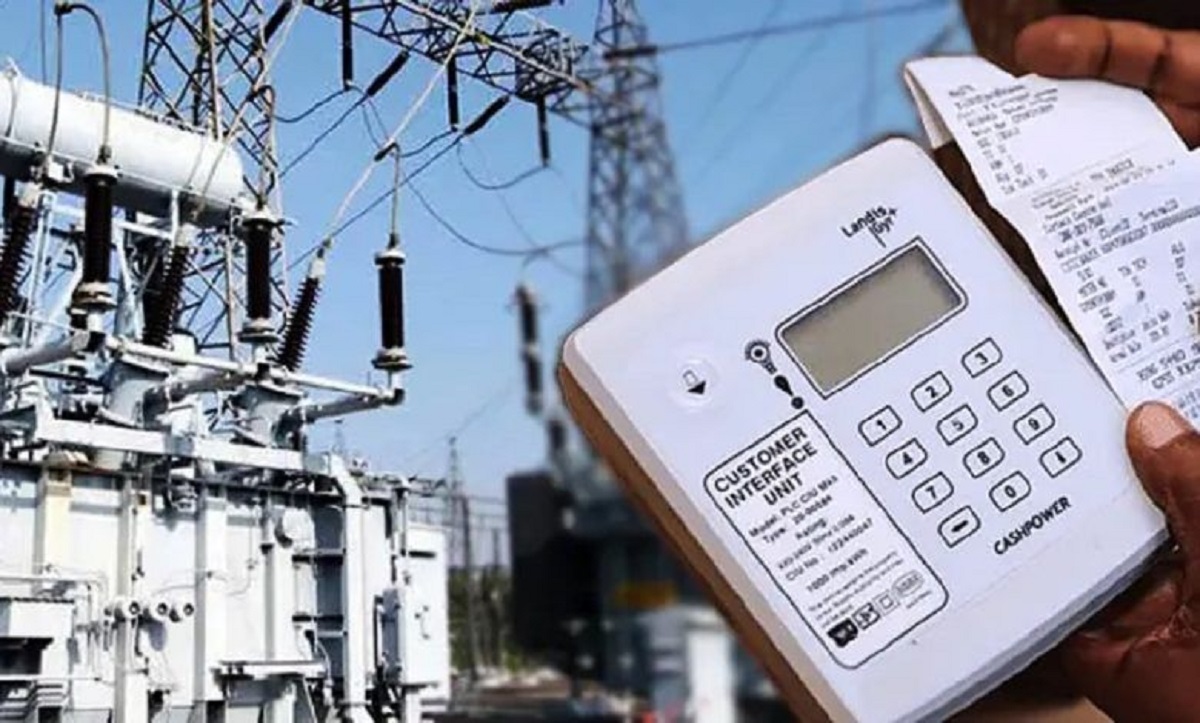
Federal Government has announced the disbursement of about N333 billion to eight electricity generation companies (GenCos) as part of measures to resolve outstanding debts in the power sector.

The government also disclosed the issuance of a second bond valued at N729 billion to settle verified legacy obligations and improve liquidity within the Nigerian Electricity Supply Industry (NESI).
The disclosures were made on Tuesday at an investors’ forum organised by the Nigerian Bulk Electricity Trading (NBET) Plc in Abuja.
Government representatives said the latest bond issuance marked the completion of the initial phase of the Presidential Power Sector Debt Reduction Programme, which was designed to address verified liabilities and attract private sector investment across the electricity value chain.
The Special Adviser to the President on Energy, Mrs Olu Verheijen, said the implementation of the first series of the programme demonstrated the administration’s commitment to meeting its financial obligations and improving investor confidence.
Verheijen disclosed that the Federal Government in February 2026 allocated about N501 billion under the first tranche of the programme, comprising N300 billion in cash and N201 billion in non-cash bond instruments to offset verified debts owed to power producers.
She said N333 billion had so far been disbursed to eight participating GenCos operating 17 power plants.
According to her, the government also paid the first coupon of about N63.5 billion on the seven-year bond in full on July 14, 2026.
She explained that the payments had enabled generation companies to meet critical obligations to gas suppliers, lenders and operations and maintenance contractors, thereby improving their operational capacity.
“Markets do not reward promises; they reward performance. Capital follows credibility,” Verheijen said.
She added that the second bond series would further strengthen liquidity in the electricity market and create a more stable financial environment capable of attracting long-term private investment.
The Presidential Power Sector Debt Reduction Programme is part of broader Federal Government efforts to address challenges affecting electricity generation, distribution and investment in Nigeria’s power sector.

NDIC Begins Payment to Depositors of 46 Failed Microfinance Banks

Telcos Seek Clear Regulatory Framework on Airtime Credit Services

FG Says Rumours, Fear, Can Crash Banks

MTN Warns Customers against Fake Promo

EU Debunks Fake Compensation Scheme Targeting West African Bank Customers

NRC, Ponzi Scheme Collapses Resulting Loss of Billions of Naira

NASENI Moves to Digitize CCB’s 5m Assets Declaration and Operations

Lebara Nigeria Launches Lebara Play, Africa’s First Telecom-Owned Micro-Drama Platform

Tokenization, Blockchain Technology will Transform Financial Institutions – IMF

EFCC Busts NIS Visa Overstay Racket, Uncovers N700m in an Account




 News2 days ago
YEDC Warns Customers, Says 20 Percent Electricity Bonus is Scam

 News2 days ago
PFIPC Probe: Dollar, Pounds Accounts of Fake Agency Inactive – CBN

 Broadcasting2 days ago
NBC, INEC, Plan Joint Broadcast Monitoring Framework ahead of 2027 Elections

 News2 days ago
STEM Africa Fest to Nurture Nigeria’s Future Innovators

 E-Financial2 days ago
No Going Back on July 31 Deadline for Insurance Firms’ Recapitalisation – NAICOM

 E-Business2 days ago
Jumia Nigeria Expands Flexible Payment Options with Klump Partnership

 E-Business2 days ago
Lagos Unveils N10m Single-digit Loan Scheme for MSMEs

 E-Financial2 days ago
Court Affirms FCCPC’s Power to Regulate Digital Lending