

Telecom
UK Firm Urges African Businesses to Move Beyond Coping with COVID-19

TEXEM UK, an international consulting outfit, has called on business and public sector executives and leaders of organisations from Nigeria and other African countries to look for ways of surviving COVID-19.
The firm advocates that the executives and leaders should move beyond coping and develop actionable strategies to win in periods of uncertainty when the global pandemic is still rampant.
According to the platform’s website, accessed on Wednesday, leaders know that they need strategies for coping and surviving but the billion Naira question is how they can achieve growth when the economic outlook is negative.
The platform notes that during challenging periods like COVID-19 pandemic, countries, organisations need leaders to inspire the implementation of timely, and practical strategic insights that will help them thrive when others are failing.
It says that organisations also need strategic and visionary leaders for effective navigation of uncertainties and to help them achieve sustainable success in the face of unprecedented volatility.
Caroline Lucas, director, TEXEM discloses that the platform is, therefore, inviting leaders in the public and private sector to participate in engaging live virtual sessions on strategies for surviving the volatile periods of such global pandemics.
Lucas says that the 2-day senior executive programme has as its theme, “Beyond Survival: Developing Actionable Strategies for Success in an Era of Negative Growth”.
According to the website, the programme will leverage the firm’s impeccable pedigree of helping organisations to win.
It also promises online participants the opportunity of learning practical strategies to give their organisations the best chances of achieving sustainable, profitable growth.
Among resource persons to deliver lectures are world-renowned faculties such as Prof. Christian Stadler from Warwick Business School, UK, and Prof. John Peters, a former Royal Air Force fighter, and Chairman, Association of MBAs.
Also, the sessions, slated for Oct. 7 and Oct. 8, will attract highly experienced corporate leaders like Samer Chidiac who is Regional Director & Resident Chief Innovation Officer, Microsoft Technology Centers across Middle East and Africa will share insights on how analytics can help leaders to achieve their goals effectively and efficiently.
Other sub-themes of the programme include, ‘Developing an innovative mind-set for organisational successes, ‘the superiority of an ambidextrous organisation: lessons from case studies’, and ‘Moving outside the conventional activities of learning’.
One of the resource persons, Prof John Peters in his comment on the coming event, notes that: “The African economy is facing a downturn, if not a complete recession for the next 12-24 months.
“Besides the fact that leading indicators such as GDP have softened in most countries, African organisations are facing dramatic forex fluctuations, negative growth, operating income shortages, low morale, and diminishing productivity.
“If history serves as a guide, most leaders will prepare too little, too late, and too conservatively. Yet slowdowns bring tremendous opportunities despite the challenges.
“Organisations can benefit competitively during and after the recession, and a common set of actions can bring about that success which this programme will help organisations achieve this and more,” Peters said.
According to TEXEM it is one of the world’s top learning platforms for African executives and organisations.



Google has launched its Search Live feature globally to over 200 countries, including Nigeria, where AI Mode is available, enabling voice-and-camera conversations in users’ preferred languages.

Powered by the new multilingual Gemini 3.1 Flash Live model, it delivers natural, real-time interactions via the Google app on Android or iOS—tap the Live icon under the Search bar.
Ideal for hands-free help, users can speak queries for audio replies, follow-ups, or web links. Camera integration adds visual context, like troubleshooting a shelving unit, or pairs with Google Lens for real-world chats.
From the app or Lens, Nigerians can now explore, learn, or solve tasks instantly, boosting everyday productivity worldwide.

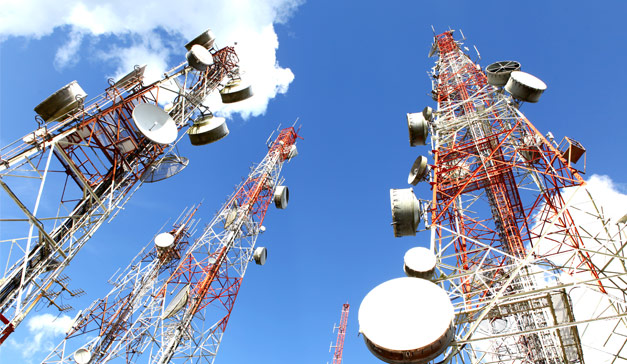
Clean and reliable power for telecom networks in Ethiopia, Liberia, and Sierra Leone will be expanded following a $45 million investment by the International Finance Corporation (IFC) in IPT PowerTech.

The investment targets countries where limited power supply continues to slow digital connectivity and broader economic participation, the institution stated earlier this week.
To enable this expansion, the IFC is providing a $45 million corporate financing package consisting of an A-loan of $27 million and $18 million in blended finance.
The blended portion is sourced from the Canada-IFC Blended Climate Finance Programme and the IDA20 Private Sector Window Blended Finance Facility.
The initiative marks the IFC’s first direct infrastructure engagement in Liberia in a decade and in Sierra Leone in six years.
It will help scale solar- and battery-based power systems that reduce reliance on diesel and support greener, more resilient telecom networks.
By improving the quality and stability of power to telecom towers, the initiative will strengthen mobile coverage and ensure that households, schools, health centres, and small businesses can depend on consistent digital services, said the IFC.
The funding supports the modernisation, operation, and maintenance of 2 235 telecom sites across the three nations. More than 90% of these are located in off-grid or weak-grid locations.
With new solar and battery systems powering these sites, mobile networks will experience fewer outages and improved service quality.
Optimising the energy mix is estimated to reduce power costs for operators by up to 30% in Liberia, 26% in Sierra Leone, and 52% in Ethiopia.
This transition is also expected to cut emissions by more than 10 624 tonnes of carbon dioxide annually. Furthermore, the partnership will promote gender inclusion by expanding opportunities for women in technical, operational, and leadership roles within the sector, says the IFC.
This agreement reflects a shared vision for a greener telecom industry and empowers the company to scale its innovative energy platforms, according to Nabil Haddad, CEO of IPT PowerTech Group.
Reliable and affordable power for telecom networks is a cornerstone of Africa’s digital transformation, said Nathalie Kouassi-Akon, IFC regional director for West Africa and the Gulf of Guinea.
Through this partnership, the institution is supporting a scalable, private sector-led solution that enables mobile operators to reach underserved and fragile communities more sustainably, added Kouassi-Akon.
The project advances the World Bank Group and African Development Bank’s Mission 300 initiative, which aims to provide electricity to 300 million Africans by 2030.

Expedier has unveiled “Expedier for Business,” an online pro-banking platform to simplify global payments, multi-currency transactions, and financial operations for expanding companies.

Kingsley Madu
The tool centralizes payments, invoicing, payroll, and treasury into one secure dashboard, tackling challenges like fragmented systems and poor visibility that hinder international scaling.
Kingsley Madu, Co-Founder and CEO of Expedier, said: “African businesses are increasingly global… Expedier for Business was built to simplify how companies manage money across borders while maintaining visibility, control, and compliance.”
Key features include customizable dashboards for payments, invoices, and workflows; support for USD, CAD, GBP, EUR, and more; virtual cards; automated payroll/invoicing; currency swaps; and real-time tracking.
Security measures cover two-factor authentication, KYC/KYB verification, and team access controls.
As cross-border trade and remote work boom in Africa, the platform aids firms dealing with international suppliers, teams, and customers. It is now available for organizations scaling globally.

Anti Graft Agencies Raise Alarm over Rising Crypto-Linked Financial Crimes

NITDA Takes Over National Digital Architecture System

NDIC Insures 99 Percent of Bank Customers

FG Shifting Focus to “Meaningful Connectivity” to Drive Inclusion – Minister

CBN Bars Chronic Loan Defaulters from Accessing Loans

Spotify’s Loud & Clear Report Reveals Over ₦60Bn Revenue for Nigerian Artists in 2025

Madonna University Taps Tech Guru Adote for Strategic Board Role

China Threatens to Shut Nigeria’s Satellite Over $11.44m Unpaid Debt

MTN Nigeria Posts Record N1.70 Trillion Pre‑Tax Profit, Declares N20 Dividend for 2025

Jumia Tech Week 2026 Begins with Tech Deals on Smartphones, Electronics, and Everyday Technology




 General News2 days ago
NCC to Curb SIM Fraud, Strengthen Digital Security with New Platform

 Broadcasting2 days ago
NBC Boss Urges Content Ceators to Participate in DSO

 General News2 days ago
Kidnappers Now Use Banks to Collect Ransoms — Expert

 E-Financial2 days ago
CBN Says Bank Customers Won’t Lose Deposits because of Recapitalisation

 E-Business2 days ago
Jury Finds Meta, Google Liable for Woman’s Social Media Addiction

 News2 days ago
Francis Okafor Stuns China, Emerges Second-Place Winner @ Tencent OpenClaw Hackathon

 E-Financial1 day ago
Breaking…..Kuda Lays Off Many Employees in Broad Restructuring

 Telecom2 days ago
IFC Invests $45m to Green African Telecom Sites