

News
Umunna, Nigerian Tipped as First Black British PM

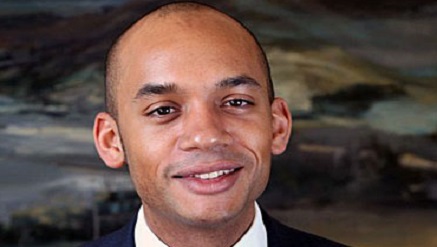
Chuka Umunna of Nigerian descent on May 7, 2015, could make history by becoming the first black Prime Minister of the United Kingdom.
Born in London in 1978, Chuka was bred in the UK. His late father, Bennett, hailed from Anambra State while his Irish mother, Patricia, is a solicitor.
He is a British Labour Party politician who has been the Member of Parliament for Streatham since 2010 and the Shadow Business Secretary since 2011.
Co-incidentally, Chuka shares startling similarities with the United States President, Barack Obama, who is the first black President of the world’s most powerful nation.
For instance, Chuka is of mixed race, being the child of a Nigerian father and an Irish mother while Obama is also of mixed race, being the offspring of a white American woman and a Kenyan father.

Also Chuka’s father, Bennett, was killed in a mysterious car accident in Nigeria in 1992 while Obama’s father was killed in a car accident in Kenya in 1982.
If history repeats itself as it is being predicted by British political observers, Chuka, who is also a six-foot tall lawyer like Obama, could become the first black Prime Minister in the UK.
Chuka’s life story is perhaps a better guide to his future political direction. It is the story of a rise from the streets of South London (scene of some of Britain’s worse race riots in the 1980s) to the parliament. But it is not the story that some might expect.
His father, Bennett, was a Nigerian labourer, who arrived in Britain in the sixties with one suitcase and no money.
Having borrowed the fare from Liverpool to London, he worked in a carwash, became a successful businessman and died in a car crash when his son was 13.
Bennett began an import-export business trading with Nigeria and was starting to make a decent living when he met Patricia Milmo, a solicitor, at a London party.
She happened to be the daughter of Sir Helenus Milmo, a Cambridge-educated High Court judge and a prosecutor at the Nuremberg Nazi trials. They later got married, a rare combination during a time of high social inequality and racism.
Chuka believed his father was killed because he refused to indulge in corrupt practices when he was running for the governorship of Anambra State during the administration of former military dictator, General Ibrahim Babangida (retd.).
Bennett died after his car ran into a lorry carrying logs along the Onitsha-Owerri highway in Anambra. Bennett had been splitting his time between London and Nigeria – where he unsuccessfully ran for the governorship of Anambra State and had taken a stand against bribery.
At a point Bennett was also the owner of the Rangers International Football Club of Enugu, the darling of the Igbo people.
When quizzed about his father on Sky News, he had this to say: “There was a lot of speculation in Nigeria at the time around his death. He was a national political figure standing on an anti-corruption ticket and refused to bribe anybody.
“We don’t really talk about it because it is not going to bring him back but I think he would be bowled over that his son is now a politician just like him.”
Chuka, an English and French Law graduate from the University of Manchester, who also holds a Master’s degree from Nottingham Law School, says his interest in politics was shaped by seeing extreme poverty while visiting his father’s relatives in Nigeria and the social divide in his own Streatham constituency in the UK. He says that he is “not super-religious” but that his soft-left values are “rooted in my Christianity.”
The 35-year-old Labour Party Member of Parliament, however, has two hurdles to cross if he is to make history in the UK. This is because in the UK, for one to become the Prime Minister, the person must first be a Member of Parliament, the person’s party must win majority of seats out of the 560 seats in the House of Commons during the parliamentary elections and the person must be the leader of his party.
Presently, Chuka is the Member of Parliament for Streatham, a position he has held since 2010 but must re-contest in 2015 and win to retain the seat.
He is also the Shadow Business Secretary, a position held by a member of Her Majesty’s Loyal Opposition. The duty of the office holder is to scrutinise the actions of the government’s Secretary of State for Business, Innovation and Skills and develop alternative policies. The office holder is a member of the Shadow Cabinet.
According to the UK Telegraph, Chuka is rumoured to have the strong support of a former British Prime Minister, Tony Blair, who was also a Labour Party leader.
According to the British newspaper, when asked if he was Blair’s anointed candidate, Chuka said, “I really don’t know anything about that.”
However, when he was pressed further whether he aspired to head his party, he said, “I don’t entertain any discussion beyond winning the election next year. That would be completely hypocritical of me. To start thinking about hypothetical scenarios would be totally indulgent. All my energy is focused on winning the election, and so should everyone’s. It will be very close.”
Chuka is one of the youngest MPs in the UK having been introduced into British politics by the current Labour Party leader, Ed Miliband, while he was in his 20s.
It was Milband that helped him become an MP and later made him his Parliamentary Private Secretary before he was promoted to the Shadow Cabinet in October 2011. He is tipped to become Miliband’s successor and could become the Prime Minister should the Labour Party win next year’s election.
Chuka, however, claims to hate the comparison of him and Obama which he terms the “construct of lazy journalists.” He sharply divides opinion in British politics. Good-looking, articulate, new-media-savvy and a good orator.
According to FT Magazine, he is not universally popular among his own colleagues, who see more style than substance.
“He just has a knack of alienating people,” said one experienced Labour MP. “He is probably the most natural communicator I’ve seen since Tony Blair. The problem is that each week he has fewer supporters than he did at the start of the week.”
Even potential allies recount stories of apparent slights or snubs. A senior party figure says, “Chuka has put people’s backs up.
They feel he is inaccessible.” Another long-serving MP adds, “The idea of learning the trade first is only for mere mortals, not for him.” Peter Mandelson, the former Labour business secretary who played a key role in Blair’s rise through to the top, thinks the explanation for this is quite simple, “Envy plays a big part in politics,” he says.
Like Blair, Chuka sometimes connects better with those beyond his own circle. John Cridland, head of the CBI employers’ group, calls him “a guy with whom we can do business.” Andrew Tyrie, Tory Chair of the Commons Treasury Committee, say: “He’s extremely talented and charming.” Andrew Adonis, a former Labour minister, sums up his cross-party appeal: “The best politicians are those who look outwards not inwards.”
However, allies of the current British PM, David Cameron, scoffed at the idea that Chuka might represent a threat to Cameron’s second term bid.
“I can’t think of any issue where he’s put us under pressure,” says one close friend of the prime minister. “He’s pretty average – he’s a slick corporate lawyer.”
Also, among his fellow party members, Chuka’s lack of political definition is another source of irritation as some claim they struggle to work out what he really believes in. But Chuka says people should show a bit more patience. “It would be rather unhealthy if after just three years in parliament I was setting out some blueprint for my country,” he says. “What do people expect?”
But some see him as the potential leader of a mainstream 21st-Century Labour party with the kind of crossover appeal of Blair’s New Labour. Despite initial reservations that Chuka might be a bit too left-wing, Blair has started seeing him regularly. “Chuka strikes Tony as very smart,” says one close ally of the former PM. “Business is a particularly important brief in tough economic times and Chuka seems to be rising to the challenge.”
As if Blair’s blessing was not enough, Chuka recalls the “honour” of spending “a small bit of private time with former US President, Bill Clinton, who he describes as one of his political heroes. “I think he defies the left-right description,” Mandelson says in approbation. “He’s part of a generation that transcends those labels.”
He has also recently been to Europe to meet his friend, the French PM, Manuel Valls.
According to statistics, almost 15 per cent of people in Britain describe themselves as “non-white” but the country has never had a party leader from an ethnic minority background. Nobody has ever come close. Chuka confesses that until his late teens he had not even thought about a career in politics because there was “nobody who looked like me” running the country.
Chuka has been vocal in the call for a reduction in government spending as well as issues on immigration. “They [the French] have something like 40 ministers compared to our 80,” he says.
On the EU itself, he has called for reform, saying not long ago that free movement of workers was not intended to mean free movement of jobseekers. “As one of the most pro-European shadow ministers, I don’t think you can ignore the impact that free movement has had on some of our communities,” he says, adding that it has changed because there are “many more EU members.”
He adds, “There’s a number of things we need to look at. Those who tend to raise the issue of immigration with me are my African and Asian constituents. They want confidence there are proper controls.
“They want to see people integrate, which is why we shouldn’t be spending all this money translating documents and [instead] directing resources to ensure people learn English. And you do need to look at free movement.”
Next year’s election may not be based on ethnicity but it obviously will be hard not to notice that a British-Nigerian could become the leader of one of the world’s wealthiest countries.
On the issue of ethnicity, Chuka has this to say, “A lot of people presume – because of my ethnicity – that I come from a particular social background. I am very quick to disabuse people of any sense that I’ve wanted and struggled in the way that, say, my father did. I come from a fairly middle-class background. People try and pigeonhole you in a box and I find that frustrating sometimes.”
If Chuka is hard to pigeonhole, that may be linked to his own pedigree. It seems likely, if not certain, that Chuka, whose name means God is the greatest, is destined to become a larger presence in his party and thus a bigger potential target despite being a person whose father came to the UK from Nigeria without a dime.



DataPro Rating Agency has upgraded the long-term credit rating of Dangote Cement Plc to AA+ from AA, citing the company’s strong financial performance, market leadership and ability to meet its financial obligations despite Nigeria’s challenging economic environment.

In its latest rating report, the technology-driven credit rating agency also affirmed Dangote Cement’s short-term rating at A1, with a Stable Outlook. The ratings are valid until June 16, 2027.
DataPro said the upgrade reflects the cement maker’s sustained financial strength, resilient operating performance and dominant position in Nigeria and across Africa.
According to the agency, the assessment followed a comprehensive review of the company’s capital base, earnings, liquidity, corporate governance, regulatory compliance and the sustainability of its financial performance over the medium to long term.
It noted that Dangote Cement’s strong brand, leading market share, solid earnings, robust asset base and experienced management continue to strengthen its ability to meet financial commitments on time.
The agency also highlighted the company’s outstanding financial performance in 2025.
According to the report, Dangote Cement posted N4.31 trillion in revenue during the year, representing a 20 per cent increase from the previous year. Profit before tax more than doubled, rising 109 per cent to N1.53 trillion, driven by higher sales, improved operating efficiency, lower finance costs and a stronger capital structure.
DataPro said the AA+ long-term rating indicates low credit risk and reflects excellent financial strength, business profile and operating performance relative to its rating benchmarks.
It added that the A1 short-term rating signifies good credit quality and shows that the company has a strong capacity to meet its short-term financial obligations as they fall due.
The rating agency, however, noted that the credit rating has a maximum shelf life of 12 calendar months in line with international best practice and should be used only as a reference, not as an offer to trade in securities or as a substitute for investors’ independent judgement.

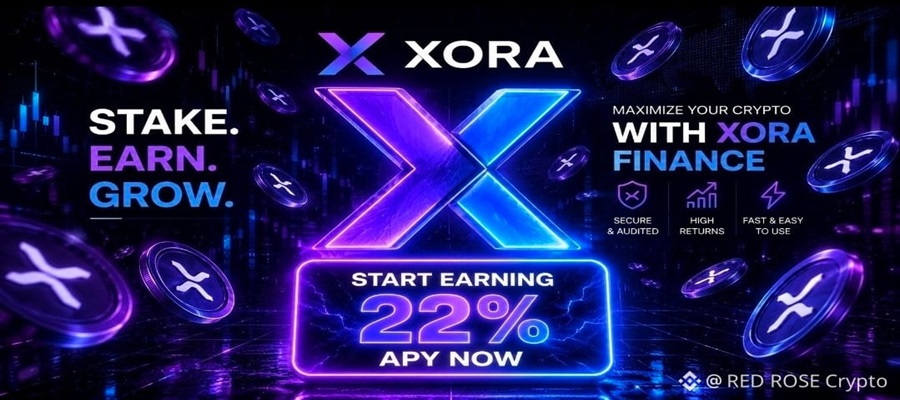
Xora Finance has announced it will no longer consider job applicants from Nigeria.

Xora Finance is a digital bank founded by Joren Lundgren, in February 2026 and allows users to deposit and earn interest on their XRP cryptocurrency.
Lundgren, founder, in an announcement on X (formerly Twitter), cited an ongoing pattern of misconduct, such as dishonesty and theft, from previous Nigerian hires as the reason for the decision.
This sudden blanket ban came just days after the company’s official career page was aggressively recruiting remote workers for marketing and content roles.
The announcement generated heavy backlash online, with many people upset that a blanket rule punishes honest job seekers.

Some lawyers have said that victims of Ponzi schemes have legal remedies, although recovering lost funds and prosecuting perpetrators remain major challenges.

A Ponzi scheme is an investment fraud that pays existing investors with funds collected from new participants rather than from actual profits.
Operators lure victims by promising high returns with little to no risk.
The scheme inevitably collapses when the flow of new investors slows down.
Some lawyers who spoke to News Agency of Nigeria (NAN) separate interviews with on Sunday, said that victims could pursue civil actions to recover their money.
Mr Chibuikem Opara, a lawyer at Justification Chambers, Ikeja,said many Nigerians continued to fall victim to Ponzi schemes in spite of repeated warnings.
Opara said it was wrong to attribute participation in Ponzi schemes to a lack of investment opportunities, noting that promoters often exploit investors’ greed through promises of unrealistic returns.
“What you cannot take away is the fact that many Nigerians have fallen and continue to fall victim to these schemes every time,” he said.
According to him, victims may individually or collectively institute civil actions against the beneficiary company for breach of contract or refund arising from failure of consideration.
Opara said victims could also unite to seek an order from the Federal High Court to wind up the beneficiary company.
He, however, noted that such efforts might yield little benefit if perpetrators had already siphoned the funds and left behind an empty shell.
The lawyer said available remedies largely depended on the actions of relevant authorities, adding that recipient accounts could be frozen to facilitate fund recovery and support winding-up proceedings.
Opara said regulators and law enforcement agencies often became aware of Ponzi schemes only after substantial losses had occurred.
According to him, victims frequently failed to report suspicious schemes early enough to enable timely intervention.
He added that funds are sometimes moved outside the country before authorities become aware of the fraud.
Opara also cited inadequate information and the deceptive nature of the schemes as major obstacles to investigation and prosecution.
“Most times, everything about the schemes is made to appear elusive, just like the profits promised to victims,” he said.
Also speaking, Mr Vincent Aminu of A.F. Aminu and Co. advised that victims of investment scams should report such cases to appropriate law enforcement agencies on time.
Aminu said victims could petition the Economic and Financial Crimes Commission (EFCC) or file reports with the police.
He said that after investigation, prosecutors could bring charges against suspects under relevant fraud-related laws, including provisions of the Criminal Code and the Advance Fee Fraud and Other Fraud Related Offences Act.
Beyond criminal prosecution, Aminu said .victims could pursue civil actions to recover their money
According to him, such actions may be based on breach of contract, unjust enrichment, or fraudulent misrepresentation, depending on the circumstances.
He added that victims could petition the Securities and Exchange Commission (SEC), which could investigate illegal operators, shut down unauthorised platforms, and freeze assets.
He identified the anonymity of online fraudsters as one of the biggest challenges confronting investigators.
According to him, many operators concealed their identities through fake digital profiles and technologies that made tracking them difficult.
Aminu also noted that victims who delayed taking legal action risked losing opportunities for redress.
He added that prolonged court proceedings often delayed justice for victims.
“Many fraud-related cases take years before the court reaches a verdict, thereby delaying justice for victims,” he said.
Also, Mr Chris Ayiyi of Ayiyi Chambers, Apapa, described Ponzi schemes as a gamble that benefited early participants at the expense of later investors.
Ayiyi said some early entrants received returns on their investments, thereby encouraging others to join the schemes.
He said the schemes eventually collapsed, leaving late investors to bear the losses
The lawyer called for a complete ban on Ponzi schemes or sustained public enlightenment campaigns against them.
He urged the National Assembly to enact laws that would strengthen regulation and provide greater protection for investors.
According to him, stronger legal safeguards are necessary in a country operating a capital-based economy.

Tinubu Orders NIMC to Enrol Every Nigerian by End of this Year – DG

Nigerians Accumulate $59Bn in Cryptocurrency Assets —FDC

Nearpays, Nigerian Fintech Becomes First African Startup to Win UN’s AI for Good Innovation Factory

Nokia’s 14 Years of Mobile-Phone Supremacy Ended in an Afternoon

MTN Nigeria Slashes Cost of Broadband Internet Router, Unwraps New Data Bundles for Low-Budget Users

NRC, Ponzi Scheme Collapses Resulting Loss of Billions of Naira

Nigeria Launches FreeTV Nationwide

NASENI Moves to Digitize CCB’s 5m Assets Declaration and Operations

Lebara Nigeria Launches Lebara Play, Africa’s First Telecom-Owned Micro-Drama Platform

CANAL+ Partners Samsung to Pre-Load DStv Stream on New Samsung TVs In Nigeria, Other African Countries




 News1 day ago
Xora Finance, Fintech Firm Refuses to Hire Nigerians over Alleged Dishonesty

 Telecom1 day ago
NCC Advances Dig Once Policy, Engages Stakeholders on Cost-Based Framework for Duct Sharing

 General News1 day ago
FG Secures Fresh $208.3m World Bank Loan for Cash Transfer

 Telecom1 day ago
NCC to Keynote Telecom Sector Sustainability Forum 7.0
 News1 day ago
How Ponzi Scheme Victims can Seek Legal Remedies — Lawyers

 General News1 day ago
SERAP Sues INEC over Alleged N800Bn 2027 Tinubu Campaign Fund

 News1 day ago
PalmPay Nigeria Appoints Samuel Oluyemi as Chief Operating Officer

 E-Business1 day ago
Kaigama,Catholic Archbishop of Abuja Warns against Misuse of AI