

Telecom
UNDP and Anambra State Foster Innovation with New Marketplace

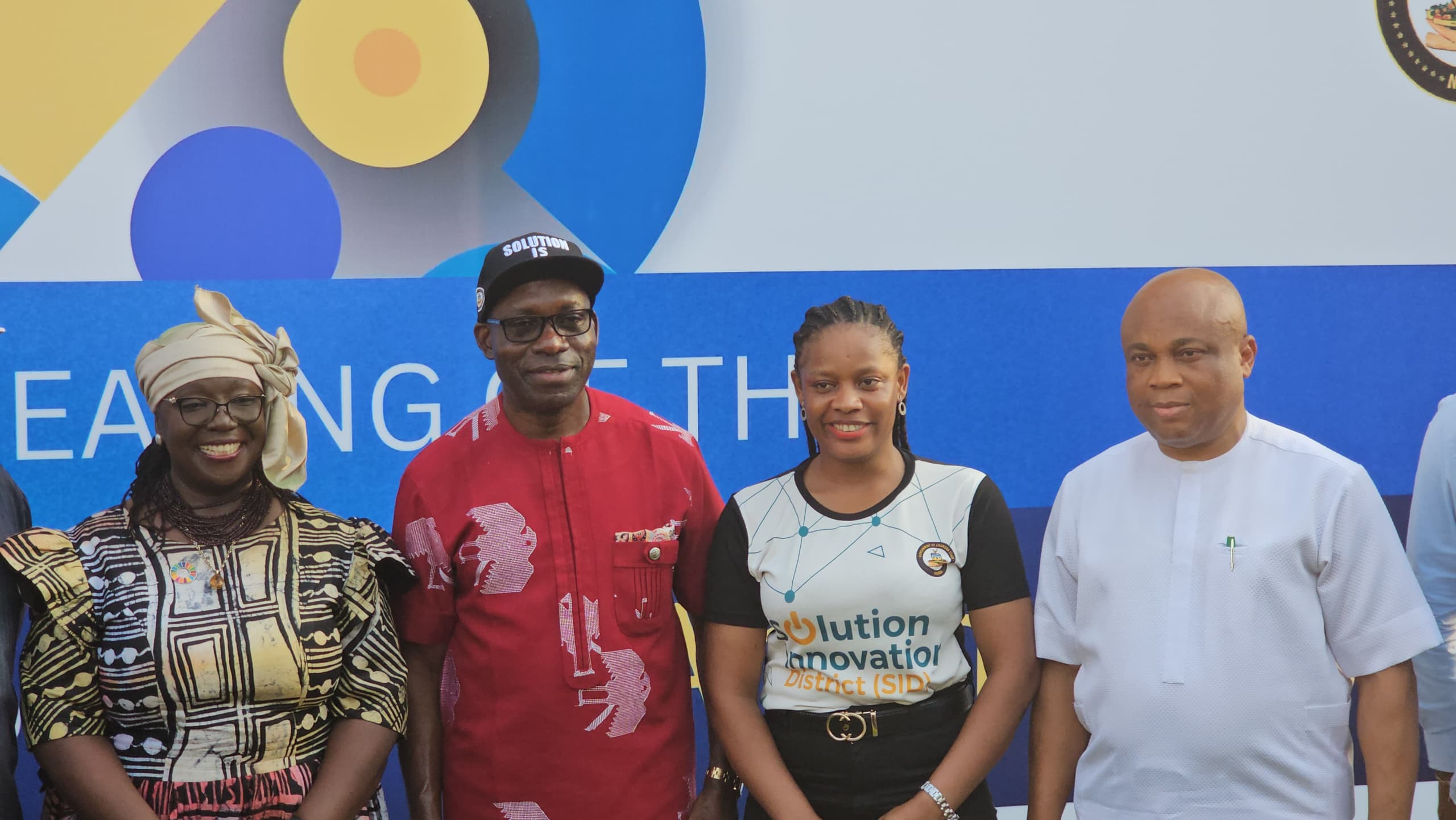
In the lead up to Anambra Innovation Week 2024, in a landmark collaboration poised to position Anambra State as Africa’s Silicon Valley, the United Nations Development Programme (UNDP) has partnered with the Anambra State Government through the Solution Innovation District (SID) to establish a cutting-edge Makerspace.

L-r: Ms. Elsie G Attafuah, United Nations Development Programme Resident Representative in Nigeria; Professor Charles Chukwuma Soludo,CFR; Chinwe Okoli, Special Adviser to Governor Soludo on Innovation and Business Incubation, and Christian Udechukwu, Commissioner for Industry, Anambra State, at the foundation laying ceremony for Anambra Innovation Marketplace.
This event was officiated by the Governor of Anambra State, Professor Charles Chukwuma Soludo, CFR and the United Nations Development Programme Resident Representative in Nigeria, Ms. Elsie G Attafuah.
This initiative aligns with Governor Charles Chukwuma Soludo’s visionary agenda of “Everything Technology, Technology Everywhere” and aims to empower youth, drive innovation, and foster economic growth across the state.
The Makerspace in Awka is designed to democratize access to entrepreneurship and technological innovation. It will create pathways for improved livelihoods by providing young people with the resources, skills, and collaborative environments to bring their ideas to life.
The Anambra Makerspace, strategically located in Awka, will prioritize inclusivity, with special programs tailored for young women, persons with disabilities, individuals with low literacy skills, and youth in underserved areas.
Speaking during the launch of the Makerspace, His Excellency Professor Chukwuma Charles Soludo, the Executive Governor of Anambra State stated that, This Makerspace will unlock new opportunities, drive economic growth, and empower local talent. Through collaborative partnerships such as the UNDP, we will pave the way for innovation.
I believe that technology is the bridge to a prosperous future, and we are immensely delighted to embark on this journey with UNDP. Our long-term vision is to raise a powerful Anambra Digital Tribe who will drive economic transformation through innovation, position Anambra as Africa’s Silicon Valley and make a significant impact on the global stage.
The value of Anambra’s Makerspace’s in entrepreneurship development is multifaceted.
The Makerspace will provide young entrepreneurs with the tools and resources needed to turn ideas into tangible prototypes, facilitating the testing and refinement of products. Breaking barriers to innovation, the space enables entrepreneurs to experiment and iterate without significant upfront costs. Thus, entrepreneurs are equipped with the resources to ignite ideas, permitting prototyping, testing and refinement of products.
What’s more, the Makerspace is forward-looking and promotes technological know-how through offering trainings and workshops, enabling skill refinement and keeping entrepreneurs abreast with emerging technologies.
In her remarks, Ms. Elsie G. Attafuah, UNDP Resident Representative expressed that the groundbreaking ceremony was “A landmark for young entrepreneurs, artisans, and innovators of the state and region at large.” Furthermore, she reflected on the significance of Nigeria’s youthful population, expressing that its talented youth are an invaluable asset and “The ability to create and innovate locally is not just a matter of choice; it is essential for economic resilience and growth.” Ms. Attafuah acknowledged the support of the Anambra state government and private sector partners, dedicated to ensuring the Makerspace remains sustainable, accessible, and impactful.
She extended gratitude to the Mastercard Foundation for its support in the establishment of the Makerspaces. Redefining entrepreneurship, Ms. Attafuah stated that, “The Makerspace puts young women, persons with disabilities, persons with low literacy skills and those living in non-urban areas at the forefront, for economic growth synonymous with social progress – leaving no one behind.”
The Makerspace is a launchpad for ideas that address real-state challenges extending to wider challenges of the nation. As such this space will bridge the gap between education and employability, enhancing the quality of life for all who live in Anambra and Nigeria. Empowering communities and preserving Nigeria’s rich culture, the space blends art, technology, and local craftsmanship, igniting creative capabilities in the region.
The Special Adviser to Governor Soludo on Innovation and Business Incubation, Chinwe Okoli, expressed enthusiasm for the partnership:
“We are immensely delighted to have UNDP support Mr. Governor’s vision for the Solution Innovation District as we continue to build the Anambra Innovation Ecosystem. The Solution Innovation District is designed to attract opportunities like this from leading institutions, further cementing Anambra’s position as a hub for innovation and creativity.”
She highlighted the Makerspace’s cutting-edge features, stating, “The facility will be equipped for robotics, textiles, and electronics, with dedicated sections for design, prototyping, and advanced technological experimentation.
“It will also include collaborative zones for brainstorming, ideation, and project pitching. Importantly, the Makerspace will integrate designs that celebrate Anambra’s rich heritage while meeting global standards.”
The project stems from the UNDP-Anambra Stakeholders Meeting on Digital Transformation and Tech Development held in August 2024.
This strategic dialogue highlighted critical gaps in the state’s innovation ecosystem, particularly within tertiary institutions, and laid the foundation for this transformative partnership.
The Makerspace will bridge these gaps by fostering collaboration among academia, industry, and government while serving as a launchpad for the commercialization of groundbreaking ideas.
The Makerspace will incorporate green building materials, energy-efficient systems, and sustainable waste management practices. By involving local youth and artisans in its design, construction, and operations, the project not only nurtures local talent but also reinforces its commitment to environmental stewardship and community ownership.
The Makerspace is a highlight of the upcoming Anambra Innovation Week 2024, scheduled for November 25–29, 2024. This event celebrates the state’s remarkable strides in technology and innovation under the theme “Creating the Future of Africa Now” serving as a premier platform to showcase and celebrate Africa’s dynamic innovation ecosystem.
The Makerspace aligns seamlessly with the vision to position Anambra as a regional leader in technology, entrepreneurship, and creativity. Local firms will lead the remodeling, repurposing, and furnishing of the facility, which is set to become fully operational within six months.


The International Rescue Committee (IRC) has announced the formation of Airbel Ventures, a new humanitarian impact investing fund aimed at accelerating the introduction and scaling of breakthrough technologies in crisis-affected communities.

The fund will invest in companies whose ideas have the potential to change humanitarian response, including digital infrastructure for frontline health systems and climate-resilient agriculture.
The launch of Airbel Ventures follows a period of rapid innovation at the IRC, despite the humanitarian sector facing record funding cuts.
In the past year, the IRC’s Airbel Impact Lab has advanced more than twenty Artificial Intelligence (AI) and technology initiatives—from anticipatory action tools powered by climate and vulnerability data, to frontline service delivery using safe, orchestrated AI systems, to breakthrough diagnostic tools for emerging diseases.
Airbel Ventures’ first impact investment is in Signalytic, a company delivering solar-powered computing devices that ensure reliable electricity and connectivity for remote health facilities.
Following the investment, the IRC will pilot Signalytic’s technology with its Nigeria Health team, demonstrating the viability of next-generation digital infrastructure in humanitarian settings.
“We know breakthrough solutions already exist—what’s missing is the path to scale in humanitarian contexts,” said Dr. Jeannie Annan, Senior Vice President for Research & Innovation at the IRC and head of the Airbel Impact Lab.


MTN Nigeria, the country’s largest telecommunications operator, recorded a historic surge in network disruptions in 2025, suffering 9,218 fibre cuts as of December 31, alongside 211 base station sites affected by theft and vandalism, incidents that disrupted mobile and data services relied upon daily by millions of Nigerians.

The data was revealed by Dr Karl Toriola, chief executive officer/managing director, MTN Nigeria via a social media post titled ‘MTN Nigeria 2025 Wrapped’.
The scale of the damage highlights the growing vulnerability of Nigeria’s telecommunications infrastructure, which has come under increasing pressure from road construction activities, cable theft and deliberate acts of vandalism.
MTN said 5,478 fibre cuts occurred within just the first seven months of 2025, with 760 incidents recorded in July alone, underscoring the intensity of the challenge.
Some of the incidents had wide-ranging consequences, knocking out connectivity across multiple states simultaneously and affecting voice calls, data services, digital payments and enterprise operations.
The company described the situation as a national infrastructure problem, rather than an isolated corporate issue, given the economy’s deep dependence on mobile networks.
“These gaps were shaped by real operational challenges such as fibre cuts, theft, and vandalism. Their impact is felt directly by customers and reflected in what they tell us,” Toriola,
The disruptions were reflected in customer feedback volumes, as MTN handled an unprecedented number of complaints during the year. The operator said it resolved 1,624,263 customer complaints in 2025, spanning call centres, social media platforms, emails and physical service centres nationwide.
Despite the setbacks, MTN pointed to signs of operational resilience. The company retained its ranking as Nigeria’s best network by Ookla, returned to profitability after a challenging period, declared an interim dividend, and expanded its subscriber base to over 85 million users by September 2025.
The figures show that while Nigeria’s telecom operators continue to invest heavily in network expansion and customer service, infrastructure sabotage remains a major drag on service quality and operating costs.
MTN acknowledged that performance improvements remain a work in progress. “We are not where we want to be yet. We see you. We hear you. We exist because of you. And we will get better,” Toriola said.
As the company enters its 25th year of operations in Nigeria, Toriola said MTN is doubling down on customer-centricity, treating every piece of feedback as a guide for improvement, while also stepping up engagement with government agencies.
The CEO renewed calls for stronger regulatory and legal protections for telecommunications infrastructure, urging policymakers to classify fibre cables, base stations and other critical assets as national infrastructure and criminalise vandalism to deter repeat attacks.
Nigerian Communications Commission (NCC) has granted operating licences to six new Internet Service Providers (ISPs), effective January 1, 2026, raising the total number of authorised ISPs in the country to 231 from 225 recorded in December 2025.

NCC
The newly licensed firms are Intellvision Technologies Limited, Granet Technologies Limited, Fiber Sonic Limited, Dasol Solution Services Ltd, Boost ISP Limited, and Amazon Kuiper Nigeria Limited.
Five of these companies are headquartered in Lagos, while Granet Technologies Limited operates from Owerri in Imo State, highlighting the persistent concentration of broadband infrastructure in major commercial hubs like Lagos, Abuja, and Port Harcourt.
This development intensifies competition in Nigeria’s broadband market, which faces pressure from dominant mobile network operators such as MTN and Airtel, alongside rapid expansion by satellite providers like Starlink.
Traditional ISPs continue to grapple with shrinking customer bases, aggressive data pricing from telcos, and satellite disruptions, even as NCC data from Q2 2025 showed Spectranet, Starlink, and FibreOne controlling about 65 per cent of the 313,713 active ISP subscribers.
The inclusion of Amazon Kuiper Nigeria Limited marks a significant entry of global satellite broadband competition, building on Nigeria’s recent approvals for other low Earth orbit providers to enhance connectivity in underserved areas.
Industry analysts view the licences as a strategic push to improve internet quality amid rising demand for digital services, though geographic clustering underscores ongoing infrastructure challenges outside urban centres.
NCC’s move aligns with broader efforts to foster a competitive telecoms sector critical to Nigeria’s digital economy ambitions.

PalmPay User Shares Experience on Fintech Apps to Trust in Nigeria

Stakeholders Demand Stronger Governance and Infrastructure to Drive Tech Adoption @ Lagos AI Summit

Nigerians Target Self-Improvement, Business Startups in 2026 Google Data

35 Million Nigerians Face Acute Hunger in 2026, UN Warns

How Inside Jobs and Policy Shocks Trigger Nigeria’s Rising Loan Crisis

Banks quietly move to enforce new ₦50 transfer levy from Jan. 1

Jumia CEO says Black Friday Signals Nigeria’s E-Commerce Maturity

Galaxy Backbone Celebrates the Federal Government’s Paperless Civil Service Milestone

19 Nigerian Banks Meet CBN Recapitalization Targets Ahead of March Deadline

DStv Offers Instant Package Upgrade for Customers from January to February




 E-Financial2 days ago
Zenith Bank Gets Regulatory Approval for Full Takeover of Paramount Bank

 Telecom2 days ago
MTN Nigeria Suffers 9,218 Fibre Cuts in 2025 as Vandalism, Theft Cripple Network

 E-Business2 days ago
Firm Detected a Fivefold Surge in QR Code Phishing Attacks in the Second Half of 2025

 Telecom2 days ago
New Investment Fund Targets Acceleration of Emerging Technology in Nigeria

 News2 days ago
NITDA Commits to Digital Inclusion for Persons with Disabilities

 Telecom2 days ago
NCC Licences Six New ISPs to Challenge Telcos, Satellite Giants

 E-Financial2 days ago
FCCPC Delists Non-Compliant Digital Lenders Post-January 5 Deadline

 E-Business2 days ago
JustMarkets Unveils Top 5 Trading Assets for 2026 Profits